shift linkage
CN → US| HS Code | Tariff Rate | Origin | Destination | Doc |
|---|---|---|---|---|
| 3926305000 | 22.8% | CN | US | Official Doc |
| 8708407580 | 37.5% | CN | US | Official Doc |
| 3926902500 | 24.0% | CN | US | Official Doc |
| 8714998000 | 27.5% | CN | US | Official Doc |
| 8708996890 | 87.5% | CN | US | Official Doc |
Product Images
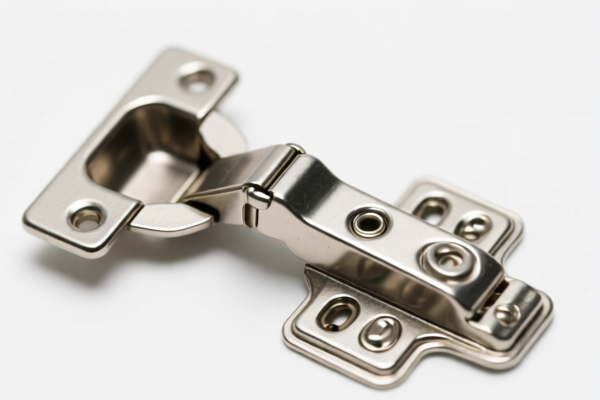
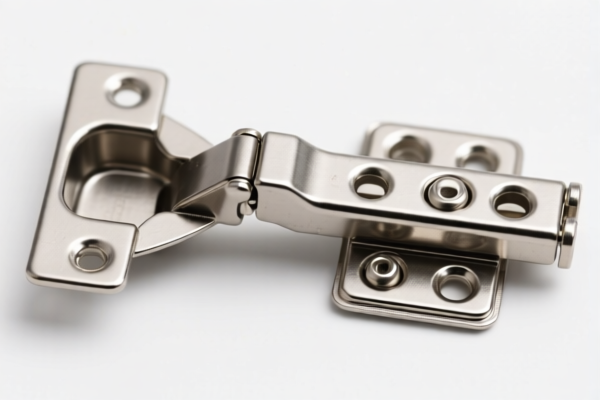
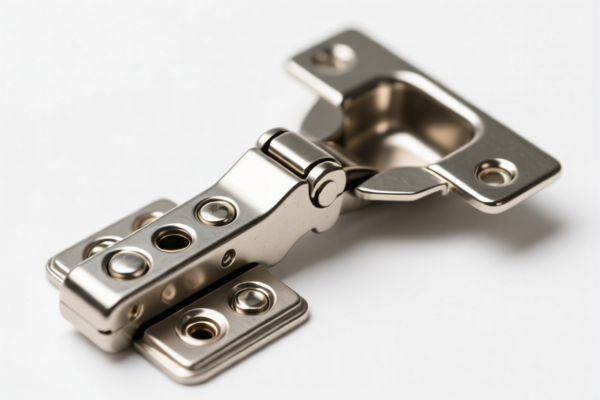
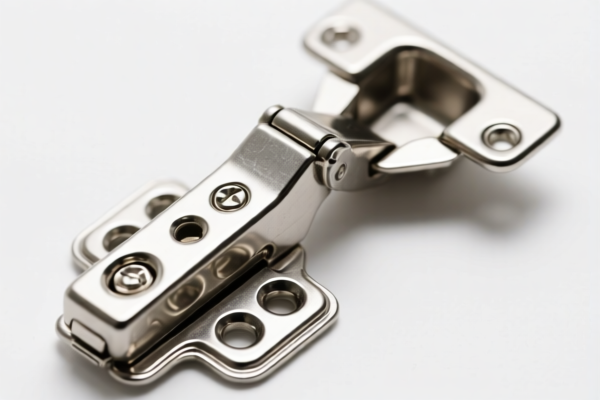
AI Analysis
🚗 Shift Linkage Heads (Gear Shift Knobs / Shifters)
🌐 HS Code Reference & Customs Clearance Guide | 2026 Latest Tariff Analysis | Professional Clearance Strategy
📌 I. Product Definition & Classification: What is a "Shift Linkage"?
In the automotive aftermarket and manufacturing industry, "Shift Linkage" typically refers to the shift lever head (knob), the shifter knob, or the mechanical linkages connecting the gear stick to the transmission. In customs classification, the key factors determining the HS Code are: 1. Material (Plastic, Metal, Rubber, Leather, etc.) 2. Function (Is it a part of the transmission system? Or is it an interior trim/accessory?) 3. Specific Form (Knob, handle, rod, or complex assembly)
⚠️ Critical Distinction:
- If the item is purely a plastic/rubber knob/handle for interior use → It falls under Chapter 39 or Chapter 39/87 accessories.
- If it is a mechanical part of the transmission/gearbox → It falls under Chapter 87 (Vehicle Parts).
- Material Conflict Warning: Metal parts often attract higher punitive tariffs (Section 301/122) compared to plastic parts, despite similar functions.
📦 II. HS Code Classification Details (2026 Latest Tariff Authority Mapping)
Based on the provided data, here are the 5 most probable HS Code classifications for Shift Linkage Heads/Knobs, ranked by commonality and tax implication:
| HS Code | Product Description & Logic | Taxonomic Reasoning |
|---|---|---|
| 3926.30.50.00 | Other articles of plastics: Articles for the body of vehicles | The shift knob is viewed as a body accessory/trim. Since it is likely plastic or has plastic components, it is classified under general plastic articles for vehicle bodies. Lowest Risk/Tax. |
| 3926.90.25.00 | Other plastic articles: Knobs, handles, and similar fittings | Specifically targets knobs and handles. If the shift linkage is primarily a plastic knob or handle, this is the most precise fit. Low Risk/Tax. |
| 8714.99.80.00 | Parts and accessories of vehicles of heading 87.11–87.13: Other | Classified as a general vehicle accessory/part. It doesn't fit specific engine/transmission sub-headings, so it goes to the "Other" bucket. Medium Risk. |
| 8708.40.75.80 | Parts and accessories of motor vehicles: Transmission gears and gearboxes: Other | Classified as a transmission part. If the linkage is mechanically integral to the gear shifting mechanism (not just a cosmetic knob), it falls here. High Risk (Metal/Plastic Mix). |
| 8708.99.68.90 | Parts and accessories of motor vehicles: Other: Other | A "Catch-all" (兜底) category for vehicle parts. If it cannot be clearly defined as an engine, body, or transmission part specifically, it ends up here. Highest Risk (Metal/Punitive Tariffs). |
🔍 Key Insight:
- Plastic Knobs generally fall under 3926 (Lower Tax).
- Mechanical/Metal Parts generally fall under 8708/8714 (Higher Tax due to Section 301/122).
- Misclassification Risk: Declaring a plastic knob as a transmission part (8708) invites scrutiny and higher taxes. Declaring a metal linkage as a plastic article (3926) invites rejection.
💰 III. 2026 Latest Tariff Rate Breakdown (US Market)
✅ Applicable Country: USA
✅ Country of Origin: China (CN)
✅ Effective Date: Includes Section 301, Section 122, and Base Tariffs.
🎯 1. 3926.30.50.00 – Plastic Articles for Vehicle Body
| Item | Detail |
|---|---|
| Base Duty | 5.3% |
| Section 301 (Additional) | 7.5% |
| Section 122 (Additional) | 10% |
| Total Effective Rate | 22.8% |
| Tax Calculation | CIF Value × 22.8% |
| Material Conflict | None (Plastic) |
📌 Explanation:
- This is the most favorable classification for plastic shift knobs.
- Section 122 (10%) and Section 301 (7.5%) are applied on top of the base rate.
- Total: 22.8% – Significantly lower than metal-part classifications.
🎯 2. 3926.90.25.00 – Plastic Knobs/Handles
| Item | Detail |
|---|---|
| Base Duty | 6.5% |
| Section 301 (Additional) | 7.5% |
| Section 122 (Additional) | 10% |
| Total Effective Rate | 24.0% |
| Tax Calculation | CIF Value × 24.0% |
| Material Conflict | None (Plastic) |
📌 Explanation:
- Slightly higher base rate (6.5%) than 3926.30, but still very competitive.
- Best for dedicated knobs/handles made of plastic.
- Total: 24.0% – Low cost entry for plastic aftermarket parts.
🎯 3. 8714.99.80.00 – Other Vehicle Parts/Accessories
| Item | Detail |
|---|---|
| Base Duty | 10.0% |
| Section 301 (Additional) | 7.5% |
| Section 122 (Additional) | 10% |
| Total Effective Rate | 27.5% |
| Tax Calculation | CIF Value × 27.5% |
| Material Conflict | None (General Accessory) |
📌 Explanation:
- Used when the part is not clearly "plastic article" or "transmission part."
- Higher base duty (10%) drives the total to 27.5%.
- Total: 27.5% – Moderate cost, acceptable for general accessories.
🎯 4. 8708.40.75.80 – Transmission Parts
| Item | Detail |
|---|---|
| Base Duty | 2.5% |
| Section 301 (Additional) | 25.0% |
| Section 122 (Additional) | 10% |
| Total Effective Rate | 37.5% |
| Tax Calculation | CIF Value × 37.5% |
| Material Conflict | Low (Plastic/Metal mix) |
📌 Explanation:
- Warning: Section 301 tariff jumps to 25% for transmission parts (often considered strategic or high-tech).
- Despite low base duty (2.5%), the punitive tariff makes it expensive.
- Total: 37.5% – Avoid if possible for simple knobs.
🎯 5. 8708.99.68.90 – Other Vehicle Parts (Catch-All)
| Item | Detail |
|---|---|
| Base Duty | 2.5% |
| Section 301 (Additional) | 25.0% |
| Section 122 (Additional) | 10% |
| Steel/Aluminum/Copper Penalty | +50% (If metallic) |
| Total Effective Rate | 87.5% (or 137.5% for metals) |
| Tax Calculation | CIF Value × 87.5%~137.5% |
| Material Conflict | HIGH (Metallic components trigger +50%) |
📌 Explanation:
- CRITICAL WARNING: This is the worst-case scenario.
- If the shift linkage contains steel, aluminum, or copper, an additional 50% tariff is applied on top of the 37.5% base punitive rate.
- Total: 87.5% (Plastic/Non-metal) or 137.5% (Metal).
- Recommendation: Never classify simple knobs here unless forced by strict mechanical definitions.
🛠️ IV. Customs Clearance Practical Advice (Real-World Pitfall Avoidance)
✅ 1. Preparation Checklist (Non-Negotiable)
| Document | Mandatory? | Description |
|---|---|---|
| ✅ Product Specifications | ✔️ | Must clearly state Material (e.g., "ABS Plastic," "Aluminum Alloy"). |
| ✅ Material Declaration | ✔️ | Specify % of metal vs. plastic. Critical for avoiding the +50% metal penalty. |
| ✅ Functional Description | ✔️ | Is it a "Cosmetic Knob" (Body Trim) or a "Mechanical Linkage" (Transmission Part)? |
| ✅ Photos (Clear & Detailed) | ✔️ | Show the product alone, with packaging, and any labels. Highlight material texture. |
| ✅ Commercial Invoice | ✔️ | Use precise language: e.g., "Plastic Shift Lever Knob for Automotive Interior," NOT just "Car Part." |
| ✅ Packing List | ✔️ | Ensure quantity matches invoice. |
✅ 2. Declaration Strategy (Key Mnemonics)
🔥 "Material First, Function Second, Avoid Metals, Seek 3926!"
| Scenario | Recommended HS Code | Rationale |
|---|---|---|
| Plastic Shift Knob | 3926.30.50.00 or 3926.90.25.00 |
Lowest Tax (22.8%~24%). Classified as plastic body accessory/knob. |
| Leather/Wood Knobs | 3926.90.25.00 or 8714.99.80.00 |
If not primarily plastic, may fall to 8714 (27.5%). |
| Metal Linkage Rods | 8708.40.75.80 or 8708.99.68.90 |
High Tax. Avoid if possible. If mandatory, expect 37.5%+. |
| Mixed Material (Plastic+Metal) | 3926 (if plastic is dominant) |
Argue that the primary material is plastic. If metal is >50% or structural, risk jumps to 8708 categories. |
📌 Pro Tip:
- If your product is a plastic knob with a small metal insert, argue for 3926.
- If it is a metal knob with plastic coating, argue for 8708 (but prepare for higher tax).
- Never declare a plastic knob as a transmission part (8708.40) just to be safe; the higher tax is not worth the "safety."
✅ 3. Special Handling for Metallic Components
| Situation | Action | Consequence |
|---|---|---|
| Product contains Steel/Aluminum | Declare accurately under 8708.99.68.90 | 87.5% or 137.5% Tax. High cost. |
| Product is Plastic with minor metal hardware | Declare under 3926 | 22.8% Tax. Ensure metal parts are not "substantial" enough to change classification. |
| Product is All Plastic | Declare under 3926 | 22.8% Tax. Ideal scenario. |
🌍 V. Global Market Comparison (2026 Latest)
| Market | Recommended HS Code | Estimated Total Tax | Notes |
|---|---|---|---|
| 🇺🇸 USA | 3926.90.25.00 |
24.0% | Best for plastic knobs. Avoid 8708 if plastic. |
| 🇨🇳 China | 3926.90.90.90 |
5%~10% | No Section 301/122. Lower barriers. |
| 🇪🇺 EU | 3926.90.97 |
3.5% | No punitive tariffs. Standard MFN rate. |
| 🇬🇧 UK | 3926.90.90 |
3.5% | Post-Brexit MFN. No Section 301. |
| 🇨🇦 Canada | 3926.90.90 |
5.5% | CUSMA benefits may apply for local goods. |
📌 Conclusion:
- USA is the most challenging market due to Section 301/122 tariffs.
- Plastic classification (3926) is key to cost control in the US.
- Metal parts are heavily penalized in the US. Consider sourcing non-metal parts or alternative markets for metallic linkages.
📌 VI. Common Errors & Pitfalls (Lessons Learned)
❌ Error 1: Declaring a plastic knob as a transmission part (8708.40)
👉 Result: Tax jumps from 24% to 37.5%. Unnecessary cost increase.
❌ Error 2: Declaring a metal linkage as a plastic article (3926)
👉 Result: Customs rejection, fines, and potential seizure for misclassification.
❌ Error 3: Ignoring metal content in mixed-material parts
👉 Result: If metal triggers the +50% penalty under 8708.99.68.90, tax becomes 137.5%. Disaster.
❌ Error 4: Vague description: "Car Part"
👉 Result: Customs officer may choose the highest taxable category. Always specify "Plastic Shift Knob" or "Transmission Linkage."
✅ Correct Approach:
"Plastic Gear Shift Knob for Automotive Interior, Model XYZ, 100% ABS Plastic, No Mechanical Transmission Function."
🎯 VII. Conclusion: Smart Classification Saves Money!
🎯 Remember the Mantra:
🔹 "Plastic Knob = 3926 = 24% Cost"
🔹 "Metal Linkage = 8708 = 37.5%~137.5% Cost"
🔹 "Don't Over-Classify Plastic as Metal!"
📌 Pro Tip:
- If your shift linkage is primarily plastic, insist on 3926.30.50.00 or 3926.90.25.00.
- If it is metal, budget for 37.5% or higher.
- Pre-ruling (Advance Ruling) is highly recommended for complex mixed-material parts to avoid surprise tariffs.
📣 Immediate Action:
📞 Contact your customs broker with product photos and material specs.
🚀 Apply for a binding ruling if unsure.
💡 Optimize design: Use plastic where possible to stay in the 3926 bracket for US exports.
✨ Professional Clearance Starts with Accurate Classification!
💼 Your profit margin depends on these 13.2% tax differences!
Customer Reviews
About HS Code Classification
The Harmonized System (HS) is an internationally standardized nomenclature developed by the World Customs Organization (WCO) to classify traded products. Over 200 countries use the HS system as the basis for customs tariffs, trade statistics, and import/export regulations.
Each HS code follows a hierarchical structure:
- Chapter (2 digits) — Broad category of goods (e.g., Chapter 84: Machinery and Mechanical Appliances)
- Heading (4 digits) — More specific grouping within the chapter
- Subheading (6 digits) — Internationally standardized breakdown, used by all WCO member countries
- National subdivisions (8-10 digits) — Country-specific extensions for further classification, such as US HTSUS 10-digit codes
Correct HS code classification is essential for smooth customs clearance, accurate duty payment, and compliance with trade regulations. Misclassification can lead to customs delays, overpayment of duties, or penalties.
When importing from CN to US, the applicable tariff rates may include:
- Most-Favored-Nation (MFN) rate — The standard duty rate applied to WTO members
- General rate — Applied to countries without trade agreements
- Trade remedy duties — Additional tariffs such as Section 301 (anti-dumping), Section 232 (national security), or countervailing duties
The information provided on this page is for reference purposes only. For official classification, please consult with your local customs authority or a licensed customs broker.