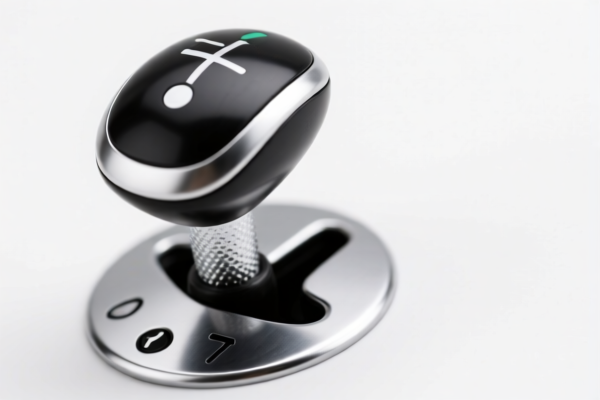
shifter
CN → US| HS Code | Tariff Rate | Origin | Destination | Doc |
|---|---|---|---|---|
| 8708401150 | 0.0% | CN | US | Official Doc |
| 8708996890 | 87.5% | CN | US | Official Doc |
| 8483604040 | 37.8% | CN | US | Official Doc |
| 8483608000 | 37.8% | CN | US | Official Doc |
Product Images


AI Analysis
🚗 Shifter & Gearbox Components (Automotive Transmission Parts)
🌐 HS Code Reference & Customs Clearance Guide | 2026 Latest Tariff Analysis | Professional Clearance Strategy
📌 I. Product Definition & Classification: What Exactly is a "Shifter"?
In the automotive supply chain, the term "Shifter" is often used loosely. However, under international trade rules (HS Code), it strictly refers to parts of transmission systems. The classification depends heavily on which vehicle type the part serves and its specific mechanical function (gearbox vs. clutch vs. general accessory).
Misclassification here is costly because "Shifter" parts for trucks, heavy machinery, and passenger cars fall into entirely different chapters (87 vs. 84).
⚠️ Key Distinction Points: - For Heavy Trucks/Tractors (Headings 8701-8705): Gearboxes and their specific parts are classified under 8708. - For General Mechanical Transmission (Clutches/Couplings): Classified under 8483. - Generic "Other" Parts: If it doesn’t fit the specific gearbox/clutch definition, it might be "Other Parts" under 8708.99.
📦 II. HS Code Classification Details (2026 Latest Tariff Authority对照)
Based on your input data, here are the precise mappings for automotive shifters, gearboxes, and clutch components:
| HS Code | Product Description | Application Scenario | Tax Rate (US/China) |
|---|---|---|---|
8708.40.11.50 |
Gear boxes and parts thereof: For vehicles of subheading 8701.21-29 or headings 8702-8704 | Heavy trucks, buses, special vehicles. Specific to the gearbox assembly or its direct parts. | 27.5% (Base 2.5% + Additional 25.0%) |
8708.99.68.90 |
Other parts and accessories: Other parts for power trains | General transmission shafts, bearings, or non-specific gearbox components that don't fit the "Gear Box" sub-heading. Includes steel/aluminum/copper components. | 77.5% (Base 2.5% + Additional 25.0% + Steel/Al/Cu 50%) |
8483.60.40.40 |
Clutches and shaft couplings: Clutches and universal joints; Clutches | Mechanical clutches, universal joints used in transmission lines. Zero tariff! | 0.0% (Base 0.0% + Additional 0.0%) |
8483.60.80.00 |
Clutches and shaft couplings: Other | Other clutch parts or couplings not specified elsewhere. | 27.8% (Base 2.8% + Additional 25.0%) |
🔍 Critical Insight: -
8708.40.11.50is the "Gold Standard" for gearboxes for heavy vehicles. -8483.60.40.40is the "Golden Ticket" for clutches – it has 0% tariff. Ensure your product is genuinely a clutch, not a gearbox part, to save 27.5%+. -8708.99.68.90is a "Trap" for metal components. If your shifter part is made of steel, aluminum, or copper, the additional 50% tariff kicks in, totaling 77.5%. This is punitive for raw material-based parts.
💰 III. 2026 Latest Tariff Rate Breakdown (Detailed Tax Clauses)
✅ Applicable Country: USA (US)
✅ Origin: China (CN)
✅ Effective Date: Current Trade Rules (Section 301 & IEEPA)
🎯 1. 8708.40.11.50 —— Gearboxes for Heavy Vehicles
| Item | Detail |
|---|---|
| Base Tariff | 2.5% |
| Section 301 Additional Tariff | +25.0% |
| Total Tariff | 27.5% |
| Calculation Basis | CIF Value × 27.5% |
| De Minimis | ❌ Not Eligible |
📌 Explanation:
This code applies specifically to gearboxes and their direct parts for heavy-duty vehicles (trucks, tractors, buses). If your "shifter" is a mechanism inside the gearbox or a direct linkage for it, use this.
🎯 2. 8708.99.68.90 —— Other Power Train Parts (Metal Components)
| Item | Detail |
|---|---|
| Base Tariff | 2.5% |
| Section 301 Additional Tariff | +25.0% |
| Steel/Al/Cu Additional Tariff | +50.0% (Due to material composition) |
| Total Tariff | 77.5% |
| Calculation Basis | CIF Value × 77.5% |
📌 Explanation:
This is the highest risk code. If the part is classified as "Other Parts" for power trains AND is made of steel, aluminum, or copper, the US imposes an extra 50% tariff on top of the standard 27.5%.
Avoid this classification if possible by proving the part is a specific clutch (8483) or a specific gearbox part (8708.40).
🎯 3. 8483.60.40.40 —— Clutches (Zero Tariff!)
| Item | Detail |
|---|---|
| Base Tariff | 0.0% |
| Section 301 Additional Tariff | 0.0% |
| Total Tariff | 0.0% |
| Calculation Basis | No Tariff |
📌 Explanation:
Huge Savings Opportunity! If the "shifter" mechanism is technically a clutch (connecting/disconnecting power) or a universal joint, classify it here. The tariff is ZERO.
Condition: Must be verifiable as a clutch/universal joint in function and structure.
🎯 4. 8483.60.80.00 —— Other Clutch/Coupling Parts
| Item | Detail |
|---|---|
| Base Tariff | 2.8% |
| Section 301 Additional Tariff | +25.0% |
| Total Tariff | 27.8% |
| Calculation Basis | CIF Value × 27.8% |
📌 Explanation:
If the part is a clutch component but doesn’t fit the specific "Clutches" sub-heading (8483.60.40), it falls here. Still significantly cheaper than the "Other Parts" (8708.99) category.
🛠️ IV. Customs Clearance Practical Advice (Real-World Pitfalls)
✅ 1. Prepare the Correct Documentation (Non-Negotiable)
| Document | Required? | Why? |
|---|---|---|
| ✅ Technical Drawing | ✔️ Essential | Must clearly show if it’s a Clutch (8483) or Gearbox Part (8708). Without this, customs may default to the higher tariff 8708.99. |
| ✅ Product Photos (Internal/External) | ✔️ Essential | Show connection points, shafts, and housing. |
| ✅ Function Description | ✔️ Essential | Explicitly state: "This is a clutch for connecting shafts" vs. "This is a gear for torque conversion." |
| ✅ Material Declaration | ✔️ Critical | If material is Steel/Al/Copper, and you claim 8708.99, expect 77.5%. Prove it’s not "Other Parts" or use 8483 if applicable. |
| ✅ Commercial Invoice | ✔️ Required | Describe accurately: e.g., "Clutch Assembly, Model XYZ" NOT just "Shifter Part". |
✅ 2. Classification Strategy (The "Golden Rule")
🔥 “Clutch is 0%, Gearbox is 27.5%, Other Metal Parts are 77.5%!”
| Scenario | Correct HS Code | Tariff | Reason |
|---|---|---|---|
| Clutch Disc / Pressure Plate | 8483.60.40.40 |
0.0% | It’s a clutch. Save 27.5%+. |
| Gearbox Housing / Gear Set | 8708.40.11.50 |
27.5% | It’s a gearbox part for heavy vehicles. |
| Transmission Shaft (Steel) | 8708.99.68.90 |
77.5% | Trap! Steel part classified as "Other". High tax. |
| Universal Joint | 8483.60.40.40 |
0.0% | It’s a coupling/universal joint. Save 27.5%+. |
| Generic Linkage Rod | 8708.99.68.90 |
77.5% | High risk if metal. Try to argue it’s part of a clutch system (8483) if possible. |
📌 Pro Tip:
If your part is a "Shifter Lever" that connects the driver to the clutch, try to argue it’s part of the clutch operating mechanism (8483.60) rather than a standalone "other part" of the vehicle (8708.99). This can drop the tariff from 77.5% to 0% or 27.8%.
✅ 3. Special Cases & Risk Mitigation
| Case | Advice |
|---|---|
| OEM Parts for Heavy Trucks | Ensure the invoice says "For [Truck Make/Model] Gearbox". Use 8708.40.11.50. |
| Mixed Metal Components | If the part has steel shafts but plastic housing, try to argue it’s NOT a "Steel/Al/Cu product" for the 50% penalty, but this is risky. Better to classify by function (8483 or 8708.40). |
| Clarification Request from CBP | If CBP asks, provide a Function Flow Diagram: Show how the part engages/disengages power (Clutch) vs. changes speed (Gearbox). |
| De Minimis (Section 321) | ❌ Not Applicable. These are mechanical parts, not eligible for the $800 de minimis exemption due to high tariffs. |
🌍 V. Global Market Comparison (2026)
| Market | Recommended HS Code | Tariff (China Origin) | Notes |
|---|---|---|---|
| 🇺🇸 USA | 8483.60.40.40 (Clutch) |
0.0% | Best Case. Use if applicable. |
| 🇺🇸 USA | 8708.40.11.50 (Gearbox) |
27.5% | Standard for heavy vehicle gearboxes. |
| 🇺🇸 USA | 8708.99.68.90 (Other) |
77.5% | Avoid if possible. High penalty for metal parts. |
| 🇪🇺 EU | 8708.40 / 8483.60 | Varies (0-5%) | No Section 301 tariffs. Much cheaper. |
| 🇨🇳 China | 8708.40 / 8483.60 | Varies (5-10%) | Lower import duties, but watch for domestic taxes. |
📌 Conclusion:
The US market is the most expensive due to Section 301 tariffs.
Strategy: Maximize the use of8483.60.40.40(Clutches) at 0% tariff. Minimize exposure to8708.99.68.90(77.5%).
📌 VI. Common Errors & Pitfalls (Learn from Mistakes)
❌ Error 1: Calling a "Clutch" a "Shifter" and classifying under 8708.99.68.90
👉 Result: Pay 77.5% tariff instead of 0%.
👉 Fix: Use technical name "Clutch Assembly" and classify under 8483.60.40.40.
❌ Error 2: Ignoring material composition for 8708.99
👉 Result: Unpaid 50% steel/aluminum tariff → Penalty + Back Taxes.
👉 Fix: If classified as "Other Parts", declare material accurately and consider alternative classification.
❌ Error 3: Mixing "Gearbox Parts" and "Clutch Parts" in one shipment without clear separation
👉 Result: CBP may audit the whole shipment and apply the highest rate.
👉 Fix: Clearly separate invoices and HS codes for different functional parts.
✅ Correct Description Example:
"Automotive Clutch Assembly, Model XYZ, for Heavy Duty Truck, Consisting of Pressure Plate and Disc, Function: Engage/Disengage Power Transfer"
→ HS: 8483.60.40.40 | Tax: 0.0%
🎯 VII. Conclusion: Smart Classification Saves Money!
🎯 Remember the Golden Rules:
🔹 "Clutch is 0%, Gearbox is 27.5%, Other Metal Parts are 77.5%!"
🔹 "If it’s a Shifter, ask: Is it part of the Clutch? If yes, use 8483!"
🔹 "Don’t let 'Other Parts' trap you into 77.5% tax!"
📌 Pro Tip:
If your part is ambiguous (e.g., a "shift linkage"), consult a customs broker to argue for
8483.60(Clutch/Coupling system) rather than8708.99(Other Parts). The 77.5% vs 0% difference is life-changing for margins.
📣 Immediate Action:
📞 Review your BOM (Bill of Materials).
📄 Update your Invoice Description to reflect the mechanical function (Clutch vs. Gearbox).
🚀 Optimize your HS Code to save up to 77.5% in tariffs!
✨ Precision Classification is the Key to Profitability!
💼 Don’t pay 77.5% when you could pay 0%.
Customer Reviews
About HS Code Classification
The Harmonized System (HS) is an internationally standardized nomenclature developed by the World Customs Organization (WCO) to classify traded products. Over 200 countries use the HS system as the basis for customs tariffs, trade statistics, and import/export regulations.
Each HS code follows a hierarchical structure:
- Chapter (2 digits) — Broad category of goods (e.g., Chapter 84: Machinery and Mechanical Appliances)
- Heading (4 digits) — More specific grouping within the chapter
- Subheading (6 digits) — Internationally standardized breakdown, used by all WCO member countries
- National subdivisions (8-10 digits) — Country-specific extensions for further classification, such as US HTSUS 10-digit codes
Correct HS code classification is essential for smooth customs clearance, accurate duty payment, and compliance with trade regulations. Misclassification can lead to customs delays, overpayment of duties, or penalties.
When importing from CN to US, the applicable tariff rates may include:
- Most-Favored-Nation (MFN) rate — The standard duty rate applied to WTO members
- General rate — Applied to countries without trade agreements
- Trade remedy duties — Additional tariffs such as Section 301 (anti-dumping), Section 232 (national security), or countervailing duties
The information provided on this page is for reference purposes only. For official classification, please consult with your local customs authority or a licensed customs broker.