ship loading and unloading machine
CN → US| HS Code | Tariff Rate | Origin | Destination | Doc |
|---|---|---|---|---|
| 8428900390 | 35.0% | CN | US | Official Doc |
| 8428390000 | 35.0% | CN | US | Official Doc |
| 8709190030 | 35.0% | CN | US | Official Doc |
| 8709110030 | 35.0% | CN | US | Official Doc |
Product Images
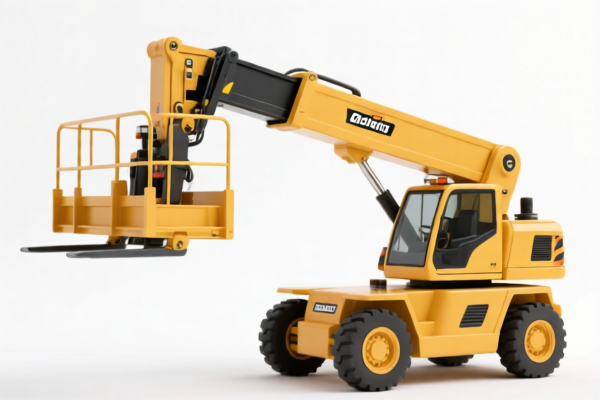
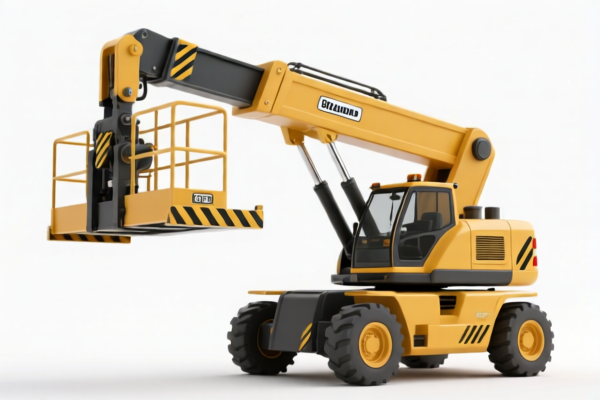
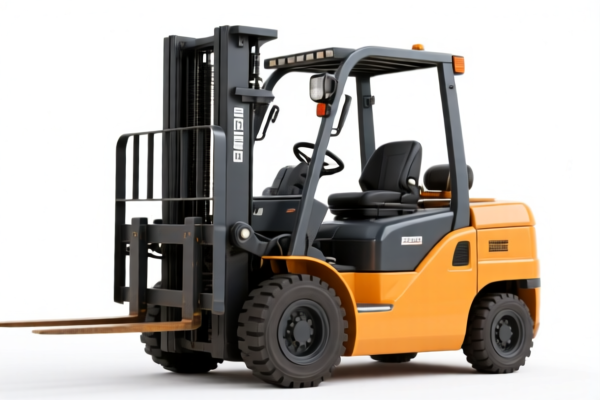
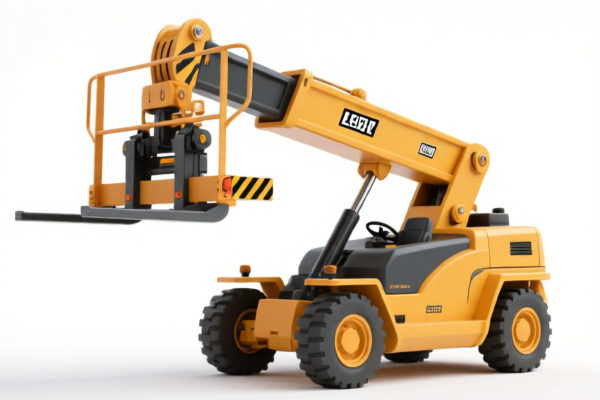
AI Analysis
🏗️ Ship Loading and Unloading Machines & Industrial Handling Equipment
🌐 HS Code Reference & Clearance Guide | 2026 Latest Tariff Analysis | Professional Customs Strategy
📌 I. Product Definition & Classification: Do You Know the Difference Between "Lifting" and "Handling"?
In international trade, "Ship Loading and Unloading Machines" is a broad term that covers a wide range of equipment. However, customs classification depends heavily on the mechanism of operation and the specific use case. The data provided focuses on two main categories: 1. Continuous-Action Elevators and Conveyors (for bulk materials like grain, coal, ore). 2. Other Lifting/Handling Machinery (general mechanical handling equipment).
⚠️ Key Distinction:
- If the machine uses a continuous stream (belt, screw, pneumatic) to move goods → It is classified under Conveyors.
- If it is a general lifting mechanism (crane, hoist, grab) not specified elsewhere → It is classified under Other Lifting Machinery.
- Note: Self-propelled forklifts or industrial trucks used inside warehouses/factories are NOT included in this dataset (they fall under HS 8709, which is excluded from the provided<DATA>).
📦 II. HS Code Classification Details (2026 Latest Tariff Authority对照)
Based on the provided <DATA>, there are two primary HS Codes relevant to general ship loading/unloading machinery:
| HS Code | Product Description | Typical Application | Mechanism Type |
|---|---|---|---|
8428.39.00.00 |
Other continuous-action elevators and conveyors, for goods or materials | Belt conveyors, screw conveyors, pneumatic tubes for bulk cargo | ✅ Continuous Flow |
8428.90.03.90 |
Other lifting, handling, loading or unloading machinery (Other) | General cranes, hoists, grab unloaders, non-conveyor systems | ✅ Discrete/Lifting |
🔍 Critical Warning:
- Do NOT confuse with HS 8431 (Parts of lifting machinery) or HS 8709 (Industrial trucks). The provided data only contains8428.39.00.00and8428.90.03.90.
- If your equipment is a ship-mounted crane or a fixed terminal conveyor, these are the correct codes from the dataset.
- If you are importing forklifts for port operations, check HS 8709 (not in this dataset), but note that the dataset explicitly lists "Other lifting... machinery" which often captures non-standard port equipment.
💰 III. 2026 Latest Tariff Rate Details (Detailed Breakdown)
✅ Applicable Country: United States (US)
✅ Origin: China (CN) (Inferred from the "25% additional tariff" typical of Section 301 measures)
✅ Effective Date: Current (2026)
🎯 1. 8428.39.00.00 —— Other Continuous-Action Elevators and Conveyors
| Item | Content |
|---|---|
| Base Tariff Rate | 0% (Ad Valorem) |
| Section 301 Additional Tariff | +25.0% |
| Total Tariff Rate | 25.0% |
| Tax Calculation | CIF Value × 25.0% |
| Legal Basis Path | USITC:8428.39.00.00 → Section 301 Footnote |
📌 Explanation:
- Base Rate: 0%. This is because continuous conveyors are often considered capital goods essential for infrastructure.
- Additional Tax: The 25.0% is a Section 301 tariff applied to Chinese-origin goods in this category.
- Total Cost Impact: For every $100,000 of equipment, you pay $25,000 in additional duties.
🎯 2. 8428.90.03.90 —— Other Lifting, Handling, Loading or Unloading Machinery
| Item | Content |
|---|---|
| Base Tariff Rate | 0% (Ad Valorem) |
| Section 301 Additional Tariff | +25.0% |
| Total Tariff Rate | 25.0% |
| Tax Calculation | CIF Value × 25.0% |
| Legal Basis Path | USITC:8428.90.03.90 → Section 301 Footnote |
📌 Explanation:
- Base Rate: 0%.
- Additional Tax: The 25.0% applies equally to this category of "other handling machinery."
- Total Cost Impact: Identical to conveyors. $25,000 duty on every $100,000 CIF value.
🛠️ IV. Customs Clearance Practical Advice (Pitfall Avoidance Guide)
✅ 1. Essential Documentation List (缺一不可)
| Document | Required | Purpose |
|---|---|---|
| ✅ Technical Specification Sheet | ✔️ | Must detail: Type (continuous vs. discrete), capacity (tons/hour), power source, dimensions. |
| ✅ Flow Diagram / Operation Manual | ✔️ | Critical for 8428.39.00.00 to prove it is a "continuous-action conveyor" and not a crane. |
| ✅ Product Photographs (Clear) | ✔️ | Show the mechanism (belt, screw, etc.) and control panel. |
| ✅ Commercial Invoice | ✔️ | Must clearly state "Ship Loading Conveyor" or "Handling Machinery," NOT just "Machine." |
| ✅ Packing List | ✔️ | List all spare parts separately if applicable. |
| ✅ Certificate of Origin (CO) | ✔️ | Confirm Chinese origin to assess the 25% tariff liability. |
✅ 2. Declaration Tips (Key Mnemonics)
🔥 “Continuous = Conveyor (8428.39), Discrete = Other (8428.90). Name it right, tax stays light!”
| Scenario | Correct HS Code | Wrong Approach |
|---|---|---|
| Belt conveyor for grain ships | 8428.39.00.00 |
Misclassified as "Crane" → Risk of re-classification |
| Hydraulic lift platform at dock | 8428.90.03.90 |
Misclassified as "Elevator" → Wrong subheading |
| Ship-mounted crane | 8428.90.03.90 (or 8428.33/8428.39 depending on type) |
Do not use 8425 (Cranes) unless explicitly supported by data |
| Forklift used in port | NOT in Dataset | Do not force-fit into 8428. Check HS 8709 separately. |
✅ 3. Special Situations Handling
| Situation | Recommendation |
|---|---|
| Modular Conveyors | Declare as a complete system. Do not split into "motor" + "belt" parts unless invoiced separately as accessories. |
| Used Equipment | Provide maintenance logs and age certification. US Customs may inspect for safety standards. |
| Parts vs. Whole | If importing only a "roller" for a conveyor, it may be classified as a part (8428.90.99 or 8428.90.03.90 depending on specificity). Ensure the invoice says "Part of Conveyor." |
| Software Control Systems | If the software is embedded, declare with the hardware. If standalone, consider HS 8523 or 8528 (not in this dataset). |
🌍 V. Global Market Clearance Comparison (2026 Latest)
| Country/Region | Recommended HS Code | Tariff Rate (China Origin) | Key Certification | Note |
|---|---|---|---|---|
| 🇺🇸 USA | 8428.39.00.00 / 8428.90.03.90 |
25.0% (Section 301) | CE/UL (Safety) | High tariff burden. Plan for 25% added cost. |
| 🇨🇳 China | 8428.39.00.00 / 8428.90.03.90 |
0% - 5% | CCC (if applicable) | Low duty, high volume trade. |
| 🇪🇺 EU | 8428.39.00.00 / 8428.90.03.90 |
0% - 2% | CE Marking | No Section 301 equivalent. Favorable trade. |
| 🇦🇺 Australia | 8428.39.00.00 / 8428.90.03.90 |
0% - 5% | RCM / WorkSafe | Preferential rates under ChAFTA. |
| 🇯🇵 Japan | 8428.39.00.00 / 8428.90.03.90 |
0% - 2% | PSE / JIS | Low tariffs, strict safety checks. |
📌 Conclusion:
- USA is the only major market with the 25% Section 301 tariff for these goods.
- EU, Japan, Australia offer much lower or zero tariffs.
- Strategic Advice: If targeting the US market, consider supply chain diversification or value-added processing in third countries (Vietnam, Mexico) to mitigate the 25% tariff, ensuring compliance with rules of origin.
📌 VI. Common Errors & Pitfalls (Lessons Learned)
❌ Error 1: Misclassifying "Conveyor" as "General Machinery" (HS 8431 or 8479)
👉 Consequence: Wrong HS Code leads to audit flags and potential penalties. Always use 8428 for lifting/handling.
❌ Error 2: Declaring "Ship Crane" under 8428.39.00.00
👉 Consequence: 8428.39 is for continuous flow (conveyors). Cranes are discrete. This mismatch causes customs delays and re-classification fines.
❌ Error 3: Ignoring the 25% Tariff in Costing
👉 Consequence: Profit margin erosion. A 25% duty on $500k equipment is $125,000 extra cost. Must be factored into FOB/CIF pricing.
❌ Error 4: Incomplete Technical Specs
👉 Consequence: Customs cannot distinguish between 8428.39 (conveyor) and 8428.90 (other). Leads to classification uncertainty and possible detention.
✅ Correct Approach:
"Industrial Belt Conveyor, 10m Length, 500kg/m Capacity, for Bulk Cargo Handling, Model XYZ, CE Certified"
HS Code:8428.39.00.00
🎯 VII. Conclusion: Professional Declaration, Cost Control, Efficiency!
🎯 Remember the Mnemonic:
🔹 “Conveyor = 8428.39, Other Handling = 8428.90. Both 25% in USA. Name it right, avoid the pitfall!”
🔹 “Continuous flow vs. Discrete lift. Clear specs save your shipment.”
📌 Pro Tip:
If your lifting equipment is modular or custom-built, provide a detailed diagram to customs brokers. For US imports, pre-classification rulings are highly recommended to avoid the 25% tariff surprise if a re-classification opportunity exists.
📣 Immediate Action:
📞 Contact a professional customs broker + Provide technical specs + Budget for 25% US duty.
🚀 Ensure your ship loading/unloading machinery clears customs smoothly, efficiently, and cost-effectively!
✨ Professional customs clearance starts with precise classification!
💼 Your every cent of cost deserves precise calculation!
Customer Reviews
About HS Code Classification
The Harmonized System (HS) is an internationally standardized nomenclature developed by the World Customs Organization (WCO) to classify traded products. Over 200 countries use the HS system as the basis for customs tariffs, trade statistics, and import/export regulations.
Each HS code follows a hierarchical structure:
- Chapter (2 digits) — Broad category of goods (e.g., Chapter 84: Machinery and Mechanical Appliances)
- Heading (4 digits) — More specific grouping within the chapter
- Subheading (6 digits) — Internationally standardized breakdown, used by all WCO member countries
- National subdivisions (8-10 digits) — Country-specific extensions for further classification, such as US HTSUS 10-digit codes
Correct HS code classification is essential for smooth customs clearance, accurate duty payment, and compliance with trade regulations. Misclassification can lead to customs delays, overpayment of duties, or penalties.
When importing from CN to US, the applicable tariff rates may include:
- Most-Favored-Nation (MFN) rate — The standard duty rate applied to WTO members
- General rate — Applied to countries without trade agreements
- Trade remedy duties — Additional tariffs such as Section 301 (anti-dumping), Section 232 (national security), or countervailing duties
The information provided on this page is for reference purposes only. For official classification, please consult with your local customs authority or a licensed customs broker.