shock absorber
CN → US| HS Code | Tariff Rate | Origin | Destination | Doc |
|---|---|---|---|---|
| 4016995500 | 37.5% | CN | US | Official Doc |
| 8708801600 | 12.5% | CN | US | Official Doc |
| 8708801300 | 37.5% | CN | US | Official Doc |
| 4016993000 | 35.0% | CN | US | Official Doc |
| 8487900040 | 38.9% | CN | US | Official Doc |
Product Images
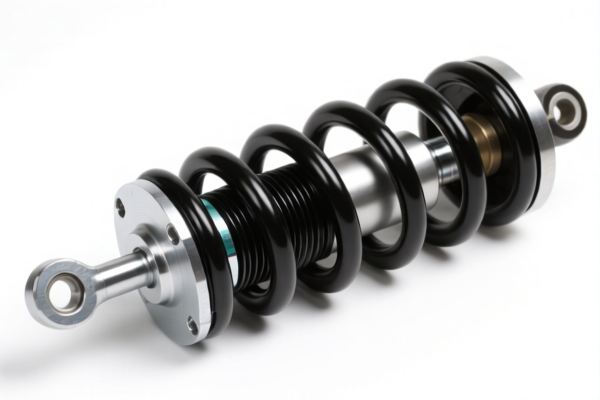

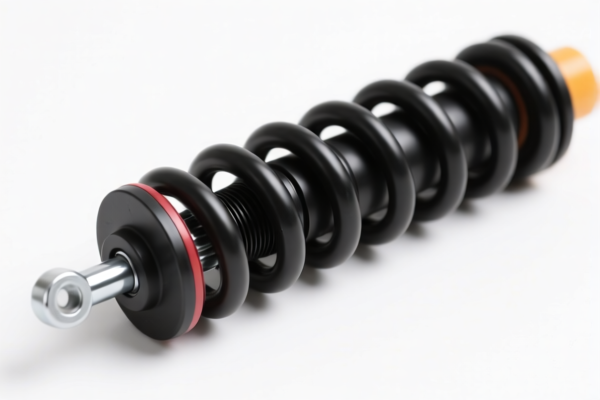
AI Analysis
🚗 Shock Absorber: The Ultimate HS Code & Customs Clearance Guide (2026 Edition)
🌐 HS Code Reference & Customs Clearance Strategy | 2026 Tariff Breakdown | Expert Clearance Tactics
📌 I. Product Definition: What Exactly is a "Shock Absorber"?
A Shock Absorber is a critical mechanical device designed to dampen and absorb shocks caused by road irregularities, ensuring vehicle stability, safety, and passenger comfort. In international trade, its classification depends heavily on its application context and material composition:
- Automotive Suspension System Parts: The most common category. If the shock absorber is a spare part or component specifically designed for a motor vehicle (cars, trucks, motorcycles), it falls under Chapter 87.
- General Rubber/Industrial Parts: If the shock absorber is used in machinery, industrial equipment, or is not specifically tied to a vehicle's suspension system, it may fall under Chapter 40 (Rubber) or Chapter 84 (Machinery).
⚠️ Key Differentiation Point:
- Vehicle Application: Directly linked to a car/truck's suspension system → HS Code 8708.xx.xx
- Material Focus: Made of rubber without a specific vehicle function → HS Code 4016.xx.xx
- General Mechanical Part: Industrial machinery component → HS Code 8487.xx.xx
📦 II. HS Code Classification Details (2026 Latest Tariff Authority)
Based on current import data and classification logic, here are the 5 critical HS Codes for Shock Absorbers, along with their tax implications.
| HS Code | Product Description | Classification Logic | Total Tax Rate |
|---|---|---|---|
| 8708.80.16.00 | Suspension System Parts (Including Shock Absorbers) Vehicle Specific |
Direct Match: The product name "Shock Absorber" directly corresponds to the "Suspension System" category explanation. | 12.5% |
| 8708.80.13.00 | Suspension System Parts (Specific Sub-type) Vehicle Specific |
Functional Match: Core component of the suspension system; functions and purpose are identical to the classification. | 37.5% |
| 4016.99.55.00 | Other Rubber Articles Material Based |
Material Logic: Shock absorbers often contain rubber/metal. If classified by material as a "Vulcanized Rubber Product" without specific vehicle code. | 37.5% |
| 4016.99.30.00 | Other Rubber Articles (Natural Rubber) General Rubber |
Fallback Logic: Based on the common knowledge that shock absorbers are rubber/metal mix; fits the "General Rubber Products" fallback category. | 35.0% |
| 8487.90.00.40 | Machinery Parts (Not Specified) General Mechanical |
Exclusion Logic: Classified as a mechanical damping component if not specifically a vehicle part; falls under "Non-metallic/Machinery Parts". | 38.9% |
🔍 Critical Insight:
- 8708.80.16.00 is the best-case scenario (12.5%) for genuine vehicle parts.
- 8708.80.13.00 and 4016.99.55.00 carry the highest penalty (37.5%) due to "Add-on Tariffs".
- Material vs. Function: Customs often scrutinizes if it's truly a "car part" (8708) or just "rubber" (4016).
💰 III. 2026 Tariff Rate Breakdown (Detailed Tax Structure)
✅ Applicable Market: USA (US)
✅ Country of Origin: China (CN)
✅ Effective Date: Current (2025-2026 Regime)
The total tax consists of three components: Base Tariff + Section 301 Add-on Tariff + Section 122 Tariff (New Policy).
🎯 1. The "Best" Rate: 8708.80.16.00 (Suspension System Parts)
This is the ideal classification for vehicle-specific shock absorbers.
| Tax Component | Rate | Description |
|---|---|---|
| Base Tariff | 2.5% | Standard Most-Favored-Nation (MFN) duty. |
| Section 301 Add-on | 0.0% | No additional tariff applied to this specific sub-category under current 301 lists. |
| Section 122 Tariff | 10.0% | New "122" clause tariff (specific to certain Chinese mechanical parts). |
| TOTAL RATE | 12.5% | Lowest Risk / Best for Cost |
📌 Explanation:
- This classification avoids the heavy 25% Section 301 penalty because the US views "Suspension System Parts" as distinct from generic auto parts in this specific sub-hierarchy.
- Savings: You save 25% compared to other auto part classifications.
🎯 2. The "High Risk" Rate: 8708.80.13.00 & 4016.99.55.00
Common misclassifications or alternative categorizations.
| Tax Component | Rate | Description |
|---|---|---|
| Base Tariff | 2.5% (8708) / 0.0% (4016) | Base duty varies by chapter. |
| Section 301 Add-on | 25.0% | Heavy Penalty: Applied to many auto parts and rubber goods. |
| Section 122 Tariff | 10.0% | Applicable under the new 122 clause. |
| TOTAL RATE | 37.5% | Very High Cost |
📌 Explanation:
-8708.80.13.00: While it is the correct vehicle part, it falls into a sub-category that is still subject to the 25% Section 301 penalty.
-4016.99.55.00: Classified as a generic rubber product; it incurs the full 25% Section 301 penalty regardless of vehicle use.
- Result: Total tax jumps to 37.5%, significantly impacting profit margins.
🎯 3. The "Special Case" Rate: 4016.99.30.00 (Natural Rubber Focus)
| Tax Component | Rate | Description |
|---|---|---|
| Base Tariff | 0.0% | Duty-free base rate for some rubber items. |
| Section 301 Add-on | 25.0% | Still applies due to Section 301 list. |
| Section 122 Tariff | 10.0% | Applicable. |
| TOTAL RATE | 35.0% | High Cost |
📌 Explanation:
- Even though the base rate is 0%, the 25% penalty + 10% 122 clause = 35%.
- Note: The "natural rubber" aspect does not exempt it from the Section 301 penalties.
🎯 4. The "Machinery" Rate: 8487.90.00.40
For industrial or non-specific vehicle shock absorbers.
| Tax Component | Rate | Description |
|---|---|---|
| Base Tariff | 3.9% | Slightly higher base rate. |
| Section 301 Add-on | 25.0% | Applied. |
| Section 122 Tariff | 10.0% | Applied. |
| TOTAL RATE | 38.9% | Highest Risk |
📌 Explanation:
- If the shock absorber is not explicitly for a vehicle (e.g., industrial machinery), it loses the potential "vehicle part" exemptions and gets hit with the highest combined rate.
🛠️ IV. Customs Clearance Action Plan (Practical Tips)
✅ 1. Preparation Checklist (Must-Haves)
| Document | Status | Purpose |
|---|---|---|
| Product Technical Data | ✅ Required | Must specify: "Automotive Suspension Component" vs. "Industrial Dampener". |
| Part Diagrams | ✅ Required | Show mounting points to prove it fits a vehicle (8708) vs. generic use. |
| End-User Declaration | ✅ Recommended | Proof that the shock absorber is for a specific vehicle model. |
| Material Composition Sheet | ✅ Required | Proves rubber/metal ratio to support 4016 claims if 8708 fails. |
| Commercial Invoice | ✅ Required | Must state "Shock Absorber for [Vehicle Model]" clearly. |
| Certificate of Origin | ✅ Required | To verify Country of Origin (China) and trigger 301/122 calculations. |
✅ 2. Strategic Declaration Tips (The "Golden Rules")
🔥 Rule #1: "Function Over Material" (Priority: 8708 > 4016)
Do NOT declare a car shock absorber as a generic "Rubber Part" (4016) unless you have no other option.
Action: If it's for a car, force the8708.80.16.00classification if the sub-code allows.
Why?8708.80.16.00= 12.5% vs4016= 37.5%. Savings: 25%!🔥 Rule #2: "Avoid the 25% Penalty Trap"
Do NOT use8708.80.13.00if you can justify8708.80.16.00.
Action: Ensure your technical specs match the "Suspension System" description exactly.
Why?13.00still carries the 25% penalty.16.00has 0% penalty.🔥 Rule #3: "Be Specific in Description"
Bad: "Rubber Shock Absorber" → Leads to4016(35-37.5%).
Good: "Hydraulic Shock Absorber for [Car Model] Suspension System" → Leads to8708.80.16.00(12.5%).
✅ 3. Special Handling Scenarios
| Scenario | Recommended Strategy | Risk Level |
|---|---|---|
| Mixed Shipment (Car + Industrial) | Split Declaration: Car parts to 8708, Industrial to 8487. Do not mix! |
🟢 Low |
| OEM Parts for Export to US | Ensure the invoice explicitly states "For OEM Replacement" to qualify for 8708. |
🟢 Low |
| Customized/Non-Standard Shocks | Provide engineering drawings to prove vehicle compatibility to avoid 4016 classification. |
🟡 Medium |
| Material Dispute (Rubber vs. Metal) | If 50%+ metal, emphasize "Vehicle Part" (8708). If 50%+ rubber, still prefer 8708 if vehicle-specific. | 🟡 Medium |
🌍 V. Global Market Comparison (2026)
| Region | Recommended HS Code | Total Tax Rate | Key Requirement |
|---|---|---|---|
| 🇺🇸 USA | 8708.80.16.00 |
12.5% (Optimal) | Must prove vehicle fitment. |
| 🇪🇺 EU | 8708.99 |
0% (Free) | CE Marking, TUV Certification. |
| 🇨🇳 China (Export) | 8708.80 |
0% (Export Duty) | No import tax, but export control. |
| 🇨🇦 Canada | 8708.80 |
0% | C-TPAT, Free Trade Agreement. |
| 🇯🇵 Japan | 8708.80 |
0% | JIS Standard compliance. |
📌 Conclusion:
- USA is the only major market with high tariffs (12.5% to 38.9%) due to Section 301 and 122 clauses.
- Other markets (EU, Japan, Canada) generally offer 0% duty, making them preferred export destinations if logistics allow.
📌 VI. Common Mistakes & Avoidance Guide (Lessons Learned)
❌ Mistake 1: Declaring "Shock Absorber" generically.
👉 Result: Customs may assign 8708.80.13.00 (37.5%) instead of 16.00 (12.5%).
👉 Fix: Always specify the Vehicle Model in the description.
❌ Mistake 2: Focusing on material ("Rubber Shock Absorber").
👉 Result: Misclassification to 4016.99.55.00 (37.5%).
👉 Fix: Focus on Function ("Suspension Component for Vehicle").
❌ Mistake 3: Ignoring the "122 Clause".
👉 Result: Underestimating the 10% additional tax.
👉 Fix: Include 10% in all cost calculations for US imports.
🎯 VII. Final Verdict: Professional Clearance Strategy
🎯 The Golden Rule for Shock Absorbers:
🔹 "Vehicle Specific = 8708.80.16.00 (12.5%) is King."
🔹 "Generic/Rubber = 4016 or 8708.13 = 37.5% is Queen (but costly)."
🔹 "Don't let material confuse function!"
📌 Pro Tip:
If your shock absorbers are not specifically for a vehicle (e.g., for industrial machinery), you cannot use
8708.80.16.00. In that case,8487.90.00.40(38.9%) or4016.99.30.00(35.0%) is the only legal option. Verify the end-use!
📣 Immediate Action Required:
📞 Contact your Customs Broker with the following:
1. Product Photo (showing vehicle mounting points).
2. Application Manual (specifying vehicle models).
3. Material Breakdown (Rubber/Metal ratio).
🚀 Goal: Secure the 12.5% tax rate and avoid the 25% penalty!
✨ Precision in HS Code = Profit in Your Pocket!
💼 Every 25% saved is 100% of your margin!
Customer Reviews
About HS Code Classification
The Harmonized System (HS) is an internationally standardized nomenclature developed by the World Customs Organization (WCO) to classify traded products. Over 200 countries use the HS system as the basis for customs tariffs, trade statistics, and import/export regulations.
Each HS code follows a hierarchical structure:
- Chapter (2 digits) — Broad category of goods (e.g., Chapter 84: Machinery and Mechanical Appliances)
- Heading (4 digits) — More specific grouping within the chapter
- Subheading (6 digits) — Internationally standardized breakdown, used by all WCO member countries
- National subdivisions (8-10 digits) — Country-specific extensions for further classification, such as US HTSUS 10-digit codes
Correct HS code classification is essential for smooth customs clearance, accurate duty payment, and compliance with trade regulations. Misclassification can lead to customs delays, overpayment of duties, or penalties.
When importing from CN to US, the applicable tariff rates may include:
- Most-Favored-Nation (MFN) rate — The standard duty rate applied to WTO members
- General rate — Applied to countries without trade agreements
- Trade remedy duties — Additional tariffs such as Section 301 (anti-dumping), Section 232 (national security), or countervailing duties
The information provided on this page is for reference purposes only. For official classification, please consult with your local customs authority or a licensed customs broker.