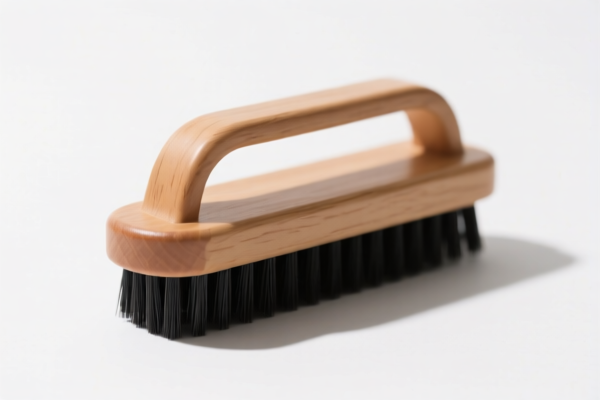
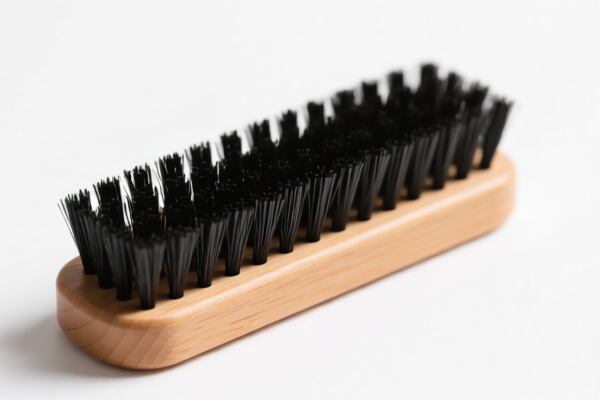
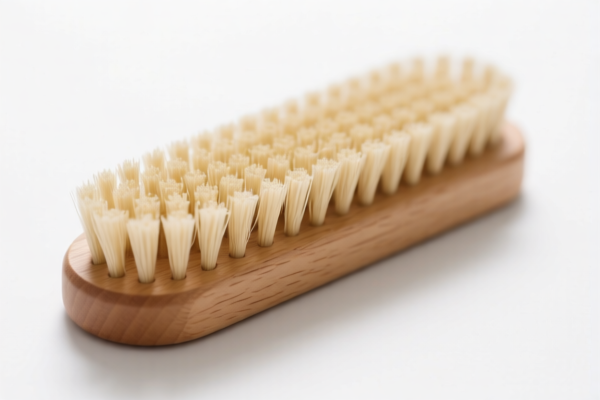
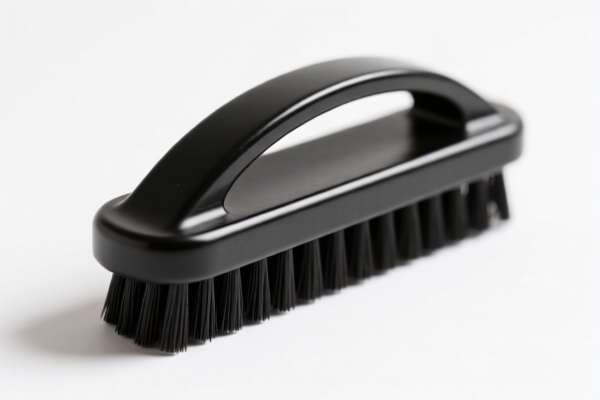
shoe brush
CN → US| HS Code | Tariff Rate | Origin | Destination | Doc |
|---|---|---|---|---|
| 9603298090 | 0.0% | CN | US | Official Doc |
| 4417008010 | 40.1% | CN | US | Official Doc |
| 4417006000 | 35.0% | CN | US | Official Doc |
| 4417008010 | 40.1% | CN | US | Official Doc |
| 4417006000 | 35.0% | CN | US | Official Doc |
Product Images
AI Analysis
👞 Shoe Brush (Shoe Cleaning Tools)
🌐 HS Code Reference & Customs Clearance Guide | 2026 Latest Tariff Analysis | Professional Clearance Strategy
📌 I. Product Definition & Classification: What is a "Shoe Brush"?
A shoe brush is a manual cleaning tool used for maintaining footwear. In international trade, its classification depends heavily on its primary material and composition. The two main categorization paths are:
- Bristle/Handle Brushes: Treated as "Articles for cleaning or scouring" (Chapter 96). This applies if the brush is primarily identified by its function as a cleaning tool with bristles (natural or synthetic) and a handle.
- Wooden Tools: Treated as "Tools, implementors, spades, rakes... of wood" (Chapter 44). This applies if the item is inferred or declared as a purely wooden tool, or if the wooden handle constitutes the essential character in specific interpretations.
⚠️ Key Distinction:
- If the product is explicitly a brush with bristles for cleaning → Chapter 96 is the most accurate functional classification.
- If the product is inferred as a wooden tool (e.g., a wooden sole scraper or purely wooden implement) → Chapter 44 applies.
- Risk: Misclassification leads to significant tariff discrepancies due to US Section 301 and 1221 duties.
📦 II. HS Code Classification Details (2026 Latest Tariff Authority对照)
| HS Code | Product Description | Applicable Scenario | Material/Feature |
|---|---|---|---|
9603.29.80.90 |
Other brushes, including brushes constituted as parts of machines, appliances, or vehicles; brooms or mops made of plaited materials or of vegetable materials, whether or not assembled with handles | Shoe brush classified as a brush for personal use, fitting "other brushes for the human body" | ✅ Brush/Tool |
4417.00.80.10 |
Wooden tool, implement, spade, rake... of wood, other than wooden tools of heading 82.05 | Shoe brush inferred as a wooden tool based on common sense | ✅ Wooden Tool |
4417.00.60.00 |
Wooden tool, implement, spade, rake... of wood, other than wooden tools of heading 82.05 | Shoe brush as a brush tool, fitting wooden tool attributes | ✅ Wooden Tool |
4417.00.80.10 |
Wooden tool, implement, spade, rake... of wood, other than wooden tools of heading 82.05 | Bristle shoe brush inferred as synthetic/natural bristles, fitting tool category | ✅ Tool Category |
4417.00.60.00 |
Wooden tool, implement, spade, rake... of wood, other than wooden tools of heading 82.05 | Bristle shoe brush inferred to contain wooden handle, fitting wooden tool attributes | ✅ Wooden Handle |
🔍 Key Reminder:
- Chapter 96 (9603.29.80.90) is the most precise for "Shoe Brush" as a cleaning article. It has the lowest tariff. - Chapter 44 (4417.00.80.10/4417.00.60.00) applies if customs authorities interpret the item as a "wooden tool" rather than a "brush." This results in significantly higher tariffs. - Do not mix descriptions. If it is a brush, declare it as such under Chapter 96 to avoid penalties.
💰 III. 2026 Latest Tariff Rate Details (Including Surcharges & Policy Add-ons)
✅ Applicable Country: United States (US)
✅ Origin: China (CN)
✅ Effective Time: 2025-11-10 onwards (Including subsequent imports)
🎯 1. 9603.29.80.90 —— Shoe Brush (Brush Category)
| Item | Content |
|---|---|
| Base Tariff | 0.3¢ each + 3.6% (ad valorem) |
| Section 301 Surcharge | 0.0% |
| Section 1221 Tariff | 10.0% |
| Total Effective Rate | 3.6% + 0.3¢/ea + 10% (on top of base) |
| Tax Calculation | (CIF Value × 3.6%) + (Quantity × $0.003) + (CIF Value × 10%) |
| De Minimis Exemption | ❌ Not Eligible (deny_de_minimis) |
| Legal Basis Path | USITC:9603.29.80.90 → Section 1221:10% |
📌 Explanation:
- This is the most favorable classification for shoe brushes. - The "Section 1221 Tariff 10%" is a specific surcharge applied to certain Chinese goods. - Note the specific duty: 0.3¢ per brush. For bulk shipments, this adds up. - Total Impact: Roughly 13.6% + $0.003/unit on CIF value.
🎯 2. 4417.00.80.10 —— Wooden Tool (Inferred Shoe Brush)
| Item | Content |
|---|---|
| Base Tariff | 5.1% |
| Section 301 Surcharge | 25.0% |
| Section 1221 Tariff | 10.0% |
| Total Effective Rate | 40.1% |
| Tax Calculation | CIF Value × 40.1% |
| De Minimis Exemption | ❌ Not Eligible |
| Legal Basis Path | USITC:4417.00.80.10 → Section 301:25% → Section 1221:10% |
📌 Explanation:
- This classification assumes the item is a "wooden tool." - The 25% Section 301 surcharge is a major cost driver. - Total 40.1% is significantly higher than the brush classification. - Risk: If you declare as "Shoe Brush" but customs classifies as "Wooden Tool," you will owe the difference plus penalties.
🎯 3. 4417.00.60.00 —— Wooden Tool (Alternative Classification)
| Item | Content |
|---|---|
| Base Tariff | 0.0% |
| Section 301 Surcharge | 25.0% |
| Section 1221 Tariff | 10.0% |
| Total Effective Rate | 35.0% |
| Tax Calculation | CIF Value × 35.0% |
| De Minimis Exemption | ❌ Not Eligible |
| Legal Basis Path | USITC:4417.00.60.00 → Section 301:25% → Section 1221:10% |
📌 Explanation:
- Similar to4417.00.80.10but with a lower base rate (0% vs 5.1%). - Total 35.0% is still much higher than the Chapter 96 classification. - Avoid this classification unless the product is purely wooden without bristles.
🛠️ IV. Customs Clearance Practical Advice (Pitfall Avoidance Guide)
✅ 1. Document Preparation Checklist (No Omissions)
| Document | Required | Description |
|---|---|---|
| ✅ Product Specification Sheet | ✔️ | Must clearly state: "Shoe Brush," bristle material (synthetic/natural), handle material, dimensions. |
| ✅ Product Photos | ✔️ | Clear images showing bristles, handle, and overall structure. |
| ✅ Commercial Invoice | ✔️ | Must use consistent name: "Shoe Cleaning Brush" or "Shoe Brush." Avoid vague terms like "Wooden Tool." |
| ✅ Packing List | ✔️ | Detail quantity per carton to support the "0.3¢ each" specific duty calculation. |
| ✅ HS Code Pre-ruling (Optional) | ✔️ | Recommended to confirm 9603.29.80.90 status. |
✅ 2. Declaration Tips (Key Mantra)
🔥 “Declare as Brush, Not Tool; Save 30% in Tariff!”
| Scenario | Correct Declaration | Incorrect Declaration |
|---|---|---|
| Standard Shoe Brush | 9603.29.80.90 (Shoe Brush) |
4417.00.80.10 (Wooden Tool) |
| Bristle Material | Clearly state "Synthetic/Natural Bristles" | Omit bristle details |
| Handle Material | Mention "Wooden Handle" but emphasize "Brush" | Describe as "Wooden Scraper" |
✅ 3. Special Situation Handling
| Situation | Handling Advice |
|---|---|
| Mixed Material (Wood + Plastic + Bristles) | Declare as 9603.29.80.90 (Brush). The brush function is primary. |
| Pure Wooden Sole Scraper (No Bristles) | Declare as 4417.00.60.00 or 4417.00.80.10. Do not call it a "brush." |
| OEM Custom Brushes | Provide design drawings to prove it is a "brush" and not a "tool." |
| Bulk Shipments | Ensure quantity is accurately reported to calculate the "0.3¢ each" duty correctly. |
🌍 V. Global Market Customs Clearance Comparison (2026 Latest)
| Country/Region | Recommended HS Code | Tariff (China Origin) | Certification Requirement | Notes |
|---|---|---|---|---|
| 🇺🇸 USA | 9603.29.80.90 |
~13.6% + $0.003/ea | None (Standard) | Best Rate. Avoid 4417 codes. |
| 🇨🇳 China | 9603.29.80.90 |
6.5% | None | Lower base rate, no Section 1221. |
| 🇪🇺 EU | 9603.29.80.90 |
4.5% | None | No additional surcharges. |
| 🇦🇺 Australia | 9603.29.80.90 |
5.0% | None | Competitive rate. |
| 🇯🇵 Japan | 9603.29.80.90 |
6.0% | None | Standard rate. |
📌 Conclusion:
- USA is the most complex market due to Section 301 and Section 1221 tariffs. - Classification as9603.29.80.90is critical to minimize costs. - Misclassification as a "wooden tool" (4417) can increase tariffs by ~26-27%.
📌 VI. Common Errors & Pitfall Guide (Lessons Learned)
❌ Error 1: Declaring a shoe brush as a "Wooden Tool" (4417)
👉 Consequence: Tariff jumps from ~13.6% to 35-40.1% → High cost!
❌ Error 2: Not specifying the number of brushes in the packing list
👉 Consequence: Incorrect calculation of the "0.3¢ each" specific duty → Customs delay or adjustment.
❌ Error 3: Using vague terms like "Cleaning Tool" or "Scrubber"
👉 Consequence: Customs may reclassify to a higher-tariff code → Penalties and back taxes.
❌ Error 4: Assuming De Minimis applies
👉 Consequence: Shoe brushes are excluded from De Minimis ($800 threshold) for China-origin goods → Full duty payable.
✅ Correct Approach:
"Shoe Brush, Synthetic Bristles, Wooden Handle, Model ABC, for cleaning leather and canvas shoes"
🎯 VII. Conclusion: Professional Declaration, Cost Optimization!
🎯 Remember the Mantra:
🔹 “Brush, not Tool; 13.6% vs 40%, Save Big!”
🔹 “Specify Quantity for Specific Duty; Avoid 301 on Tools!”
📌 Pro Tip:
If your shoe brush contains significant plastic parts or non-wooden handles, it still likely falls under 9603.29.80.90 as a "brush." Focus on the function (cleaning) and form (bristles) to support this classification.
📣 Immediate Action:
📞 Consult with a licensed customs broker to confirm
9603.29.80.90eligibility.
🚀 Ensure your invoices and packing lists explicitly state "Shoe Brush" to align with customs expectations.
✨ Professional clearance starts with precise classification!
💼 Every dollar saved in tariff is pure profit!
Customer Reviews
About HS Code Classification
The Harmonized System (HS) is an internationally standardized nomenclature developed by the World Customs Organization (WCO) to classify traded products. Over 200 countries use the HS system as the basis for customs tariffs, trade statistics, and import/export regulations.
Each HS code follows a hierarchical structure:
- Chapter (2 digits) — Broad category of goods (e.g., Chapter 84: Machinery and Mechanical Appliances)
- Heading (4 digits) — More specific grouping within the chapter
- Subheading (6 digits) — Internationally standardized breakdown, used by all WCO member countries
- National subdivisions (8-10 digits) — Country-specific extensions for further classification, such as US HTSUS 10-digit codes
Correct HS code classification is essential for smooth customs clearance, accurate duty payment, and compliance with trade regulations. Misclassification can lead to customs delays, overpayment of duties, or penalties.
When importing from CN to US, the applicable tariff rates may include:
- Most-Favored-Nation (MFN) rate — The standard duty rate applied to WTO members
- General rate — Applied to countries without trade agreements
- Trade remedy duties — Additional tariffs such as Section 301 (anti-dumping), Section 232 (national security), or countervailing duties
The information provided on this page is for reference purposes only. For official classification, please consult with your local customs authority or a licensed customs broker.