shoe covers non woven thickened
CN → US| HS Code | Tariff Rate | Origin | Destination | Doc |
|---|---|---|---|---|
| 6307906090 | 17.5% | CN | US | Official Doc |
| 3926909989 | 22.8% | CN | US | Official Doc |
| 6307909891 | 24.5% | CN | US | Official Doc |
| 6115999000 | 27.4% | CN | US | Official Doc |
| 6115298040 | 26.0% | CN | US | Official Doc |
Product Images
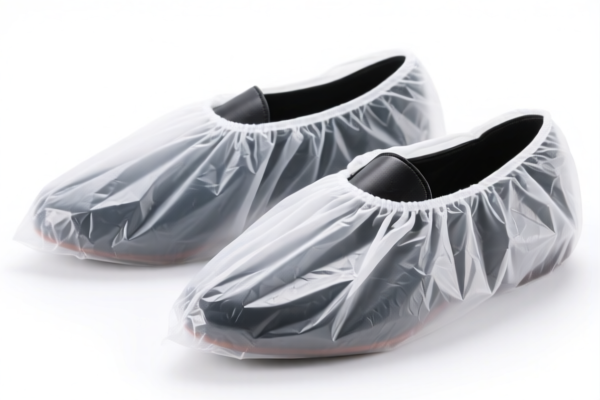
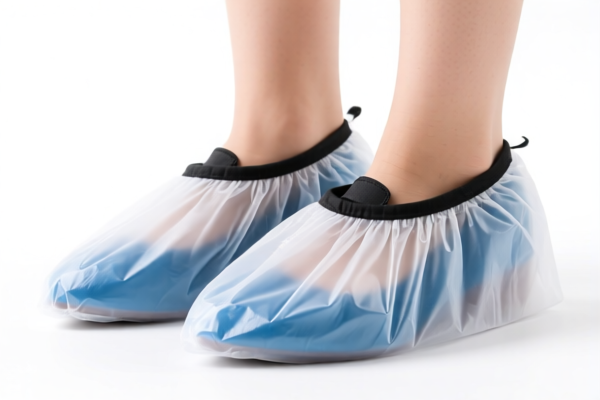
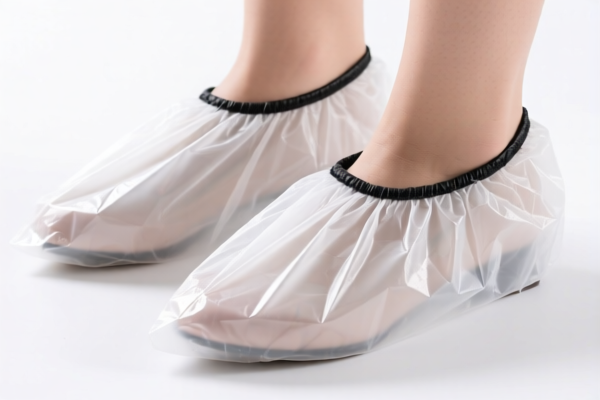
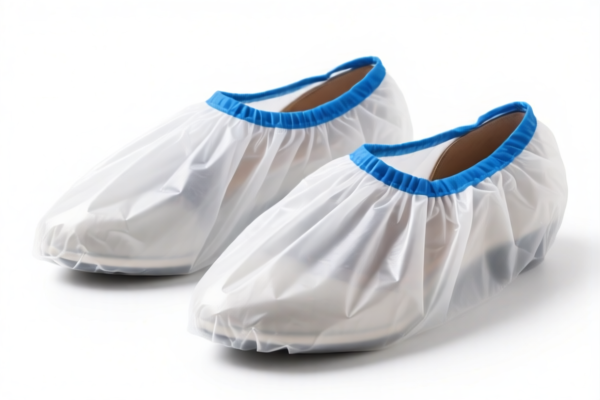
AI Analysis
🥿 Shoe Covers, Non-Woven, Thickened: The Ultimate Customs Classification & Duty Guide
🌐 HS Code Reference & Customs Clearance Guide | 2026 Latest Tariff Analysis | Professional-Level Entry Strategy
📌 Part I: Product Definition & Classification: What Exactly Are "Non-Woven Thickened Shoe Covers"?
Shoe covers (also known as overshoes or booties) are protective garments worn over footwear to prevent contamination, preserve cleanliness, or offer slip resistance. In international trade, specifically under the Harmonized System (HS), they are a contentious item because they straddle the line between textile products, plastic articles, and footwear accessories.
The key to classification lies in the material composition and functional intent:
1. Textile-Based (Non-Woven Fabric):
If made primarily from spunbond polypropylene or other textile-like non-woven mats, they are often viewed as textile articles.
2. Plastic-Based (Polymer Filaments):
If the material is treated as a plastic film or molded plastic polymer, they may fall under plastic articles.
3. Footwear Accessory:
If designed specifically as an attachment to shoes, they might be classified under footwear parts/accessories.
⚠️ Key Distinction Point:
- If the material is loose, breathable non-woven fabric (like medical gowns) → Textile/Article of Apparel (Chapter 63).
- If the material is stiff, plastic-like, or rubberized → Plastic Articles (Chapter 39).
- If it mimics a shoe sole or is firmly attached to a shoe → Footwear Parts (Chapter 61/64).
📦 Part II: HS Code Classification Matrix (Based on Provided Data)
Below is the breakdown of the 5 specific HS Codes provided in your dataset, explained in order of complexity and tax implication.
| HS Code | Product Description & Logic | Total Tax Rate | Tax Detail Breakdown |
|---|---|---|---|
| 6307.90.60.90 | Other Made-Up Textile Articles Viewed as a textile product made of non-woven fabric. Fits the "textile-based substrate" attribute. |
17.5% | Base Tariff: 0.0% Add-on Tariff (Section 301): 7.5% Section 122 Tariff: 10% |
| 3926.90.99.89 | Other Plastic Articles Viewed as a plastic product where the non-woven material is treated as polypropylene plastic fibers formed into a cover. |
22.8% | Base Tariff: 5.3% Add-on Tariff (Section 301): 7.5% Section 122 Tariff: 10% |
| 6307.90.98.91 | Other Made-Up Textile Articles Another textile classification, emphasizing the "made-up" nature of the textile non-woven material. |
24.5% | Base Tariff: 7.0% Add-on Tariff (Section 301): 7.5% Section 122 Tariff: 10% |
| 6115.99.90.00 | Knitted/Crocheted Footwear Covers Classified as a knitted covering for feet/shoes, made of textile material. High base tariff due to footwear-related chapter. |
27.4% | Base Tariff: 9.9% Add-on Tariff (Section 301): 7.5% Section 122 Tariff: 10% |
| 6115.29.80.40 | Other Knitted Hosiery & Accessories Classified as a footwear accessory/part made of non-cotton/non-wool textile. High base tariff reflects the "footwear part" logic. |
26.0% | Base Tariff: 16.0% Add-on Tariff (Section 301): 0.0% Section 122 Tariff: 10% |
🔍 Critical Observation:
- Lowest Duty Option:6307.90.60.90(17.5% total). This treats the item as a generic textile article with 0% base tariff.
- Highest Base Tariff:6115.29.80.40(16.0% base), but it avoids the 7.5% Section 301 add-on, resulting in 26.0% total.
- The "Section 122" Factor: All listed codes include a 10% Section 122 tariff, which is a critical, non-negotiable cost in this dataset.
💰 Part III: Detailed Tariff Structure Explanation (2026 Context)
✅ Applicable Market: United States (US)
✅ Origin: China (CN) (Implied by Section 301/122 tariffs)
✅ Validity: Current as per provided dataset
🎯 1. Why the Rates Differ: The "Base Tariff" War
The total tax is a sum of three components: 1. Base MFN Tariff: The standard duty for the HS code. 2. Section 301 Add-on (7.5% or 0%): A punitive tariff on Chinese goods. 3. Section 122 Tariff (10%): A specific tariff applicable to certain Chinese imports (often related to trade enforcement or specific product lists).
| HS Code | Base Tariff | Sec 301 Add-on | Sec 122 Tariff | Total Effective Rate | Why? |
|---|---|---|---|---|---|
6307.90.60.90 |
0.0% | 7.5% | 10% | 17.5% | Best strategy: Avoids high base tariffs by classifying as a general textile article. |
3926.90.99.89 |
5.3% | 7.5% | 10% | 22.8% | Plastic classification incurs a moderate base tariff. |
6307.90.98.91 |
7.0% | 7.5% | 10% | 24.5% | Another textile route, but with a higher base duty than 60.90. |
6115.29.80.40 |
16.0% | 0.0% | 10% | 26.0% | Footwear accessory route. High base, but escapes Section 301. |
6115.99.90.00 |
9.9% | 7.5% | 10% | 27.4% | Footwear cover route. High base + Section 301 = Highest cost. |
📌 Explanation:
- "Section 301 Add-on 7.5%": This is a standard punitive tariff on Chinese goods under US Trade Law Section 301. It applies to almost all textile and plastic imports from China unless exempted.
- "Section 122 Tariff 10%": This is a specialized tariff, often applied to specific categories of Chinese imports to address trade imbalances or intellectual property issues. It is compounded on top of the base and Section 301 rates.
- "Base Tariff": Varies by HS chapter. Textiles (Ch 61/63) can have 0% base if classified as "other made-up articles," while Footwear (Ch 61) or Plastics (Ch 39) often have higher base duties.
🛠️ Part IV: Customs Clearance Practical Advice (Avoid Pitfalls)
✅ 1. Documentation Checklist (Mandatory)
| Document | Required? | Purpose |
|---|---|---|
| ✅ Product Specification Sheet | ✔️ | Must state: "Non-Woven," "Polypropylene," "Thickness," "Reinforced/Thickened." |
| ✅ Material Composition Statement | ✔️ | Critical for distinguishing between Textile (Ch 63) and Plastic (Ch 39). Must specify % of polymer vs. fiber. |
| ✅ Commercial Invoice | ✔️ | Clearly describe as "Non-Woven Shoe Covers" not "Footwear" to avoid Chapter 64 misclassification. |
| ✅ Packing List | ✔️ | Detail quantity per box. |
| ✅ Photos of Product | ✔️ | Show texture (soft/non-woven) vs. rigid plastic to support Textile classification. |
| ✅ Labeling | ✔️ | Must include country of origin (China), material content, and size. |
✅ 2. Classification Strategy: How to Choose the Right HS Code
🔥 Golden Rule: "Classify by Material, Not Just Function!"
| Scenario | Recommended HS Code | Reasoning |
|---|---|---|
| Soft, Fabric-Like, Reusable/Disposable | 6307.90.60.90 |
Best for cost. Classified as a textile article. Lowest total duty (17.5%). |
| Stiff, Plastic-Film Like, Waterproof | 3926.90.99.89 |
If the material is clearly plastic/polymer, use this. Moderate duty (22.8%). |
| Medical/Surgical Grade, Non-Woven | 6307.90.60.90 or 6307.90.98.91 |
Medical non-wovens often fall under general textile articles. |
| Attached to Shoe Sole (Part of Shoe) | 6115.99.90.00 |
Only if it is a permanent part of a shoe unit. High duty. |
⚠️ Warning: Do NOT classify as
6401or6402(Footwear) unless it is a complete shoe with a sole. Shoe covers are generally considered accessories or articles, not footwear itself.
✅ 3. Special Cases & Risk Mitigation
| Situation | Advice |
|---|---|
| OEM/White Label Products | Ensure the supplier provides the Material Safety Data Sheet (MSDS) if claiming plastic classification. |
| "Thickened" Claim | If "thickened" means a multi-layer non-woven, emphasize the textile nature to support 6307.90.60.90. |
| Customs Audit Risk | If using 6307.90.60.90, be prepared to prove the material is not a plastic film. Provide lab tests if challenged. |
| Section 122 Liability | All codes include 10% Section 122. Check current enforcement status as this tariff can be subject to legal challenges or exemptions. |
🌍 Part V: Global Market Comparison (Contextual Note)
| Market | Typical Classification for Non-Woven Shoe Covers | Approx. Duty (China Origin) | Notes |
|---|---|---|---|
| 🇺🇸 USA | 6307.90.60.90 (Preferred) |
17.5% (as per data) | High complexity due to Sec 301 & 122. |
| 🇪🇺 EU | 6307.90.98 (Other made-up articles) |
0% - 6% | No Section 301/122. Much simpler. |
| 🇨🇳 China | 6307.90.90 |
5% - 10% | Import duties for foreign goods. |
| 🇯🇵 Japan | 6307.90.90 |
0% - 6% | Often duty-free for textile articles. |
📌 Conclusion:
- USA is the most challenging market due to layered tariffs.
- Optimal Strategy: Aim for6307.90.60.90to minimize base duty to 0%, despite the 17.5% total.
- Avoid footwear classifications (6115.x) unless the product is structurally inseparable from a shoe, as they carry higher base tariffs.
📌 Part VI: Common Mistakes & Pitfalls (Learn from Errors)
❌ Mistake 1: Classifying as Footwear (Chapter 64).
👉 Consequence: Rejected by customs because shoe covers are not "footwear" with soles. Leads to delays and reclassification.
❌ Mistake 2: Using 6115.99.90.00 without justification.
👉 Consequence: 27.4% duty. Unnecessarily high if the item is just a loose non-woven cover.
❌ Mistake 3: Ignoring Section 122.
👉 Consequence: Underestimating landed cost by 10%. All codes in the dataset include this, so it must be budgeted.
❌ Mistake 4: Describing as "Plastic Gloves" in invoice.
👉 Consequence: Misclassification. Shoe covers are not gloves. Must be described as "Non-Woven Shoe Covers."
✅ Correct Declaration Example:
"Non-Woven Polypropylene Shoe Covers, Thickened, Disposable, for Medical/Industrial Use. Material: 100% Spunbond PP. Not Footwear."
🎯 Part VII: Final Recommendations & Action Plan
🎯 Key Takeaway:
🔹 Lowest Cost:
6307.90.60.90(17.5% Total).
🔹 Why: 0% Base Tariff + 7.5% Sec 301 + 10% Sec 122.
🔹 Risk: Must prove textile nature, not plastic film.🔹 High Cost Avoidance: Avoid
6115.99.90.00(27.4%) unless necessary.
🔹 High Base Tariff Avoidance: Avoid6115.29.80.40(16% Base) unless Sec 301 exemption applies.
📌 Pro Tip:
- Pre-Arrival: Submit an Advance Ruling request to US Customs (CBP) for
6307.90.60.90to lock in the 17.5% rate.- Documentation: Ensure all commercial invoices explicitly state "Non-Woven Fabric" and "Not Plastic Film" to support textile classification.
- Costing: Factor in 17.5% duty for US imports from China. For other markets, research local Chapter 63 rules.
📣 Immediate Action:
📞 Consult a licensed customs broker to verify the Section 122 applicability and confirm Section 301 exemptions if any apply to your specific supplier.
🚀 Classify Smartly, Save Big, Clear Fast!
✨ Professional Customs Clearance Starts with Accurate Classification!
💼 Every percentage point in duty matters! Choose the right HS Code today.
Customer Reviews
About HS Code Classification
The Harmonized System (HS) is an internationally standardized nomenclature developed by the World Customs Organization (WCO) to classify traded products. Over 200 countries use the HS system as the basis for customs tariffs, trade statistics, and import/export regulations.
Each HS code follows a hierarchical structure:
- Chapter (2 digits) — Broad category of goods (e.g., Chapter 84: Machinery and Mechanical Appliances)
- Heading (4 digits) — More specific grouping within the chapter
- Subheading (6 digits) — Internationally standardized breakdown, used by all WCO member countries
- National subdivisions (8-10 digits) — Country-specific extensions for further classification, such as US HTSUS 10-digit codes
Correct HS code classification is essential for smooth customs clearance, accurate duty payment, and compliance with trade regulations. Misclassification can lead to customs delays, overpayment of duties, or penalties.
When importing from CN to US, the applicable tariff rates may include:
- Most-Favored-Nation (MFN) rate — The standard duty rate applied to WTO members
- General rate — Applied to countries without trade agreements
- Trade remedy duties — Additional tariffs such as Section 301 (anti-dumping), Section 232 (national security), or countervailing duties
The information provided on this page is for reference purposes only. For official classification, please consult with your local customs authority or a licensed customs broker.