silica gel pentagram beads
CN → US| HS Code | Tariff Rate | Origin | Destination | Doc |
|---|---|---|---|---|
| 3926903500 | 24.0% | CN | US | Official Doc |
| 3916905000 | 40.8% | CN | US | Official Doc |
| 7117907500 | 10.0% | CN | US | Official Doc |
| 7117905500 | 24.7% | CN | US | Official Doc |
| 3926909989 | 22.8% | CN | US | Official Doc |
Product Images
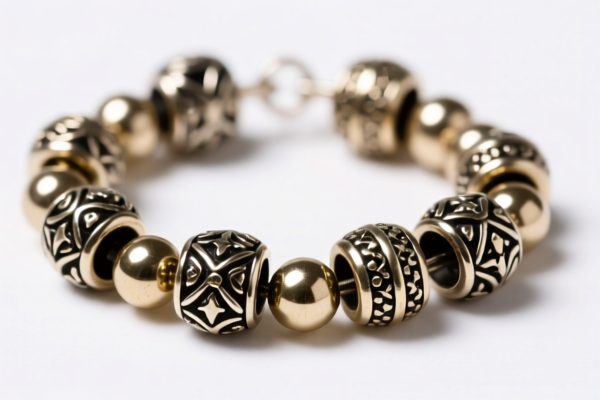
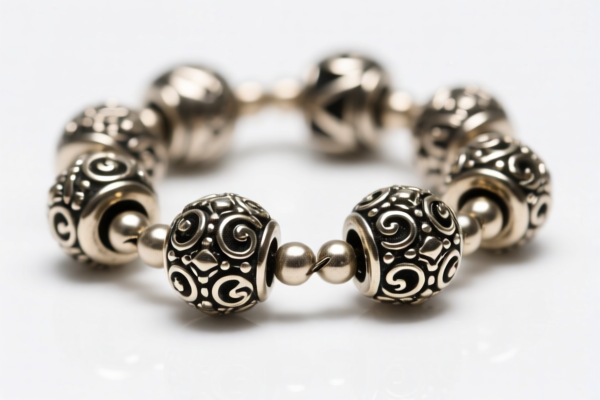
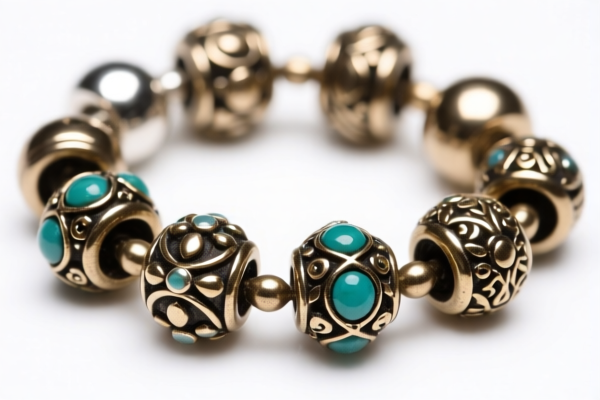
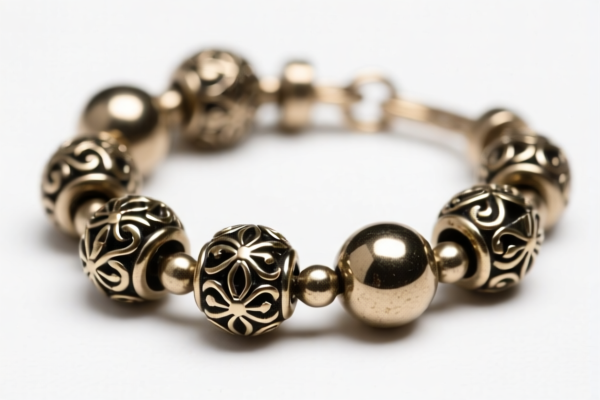
AI Analysis
📿 Silica Gel Pentagram Beads (HS Code Classification & U.S. Customs Clearance Guide)
🌐 HS Code Reference & Clearance Strategy | 2026 Latest Tariff Analysis | Professional Compliance Guide
📌 I. Product Definition & Classification: What Exactly Are "Silica Gel Pentagram Beads"?
Silica gel pentagram beads are decorative accessories made from silicone (a synthetic rubber/plastic polymer), shaped into five-pointed stars (pentagrams). They are primarily used in: - Jewelry making (bracelets, necklaces, keychains) - Craft projects (scrapbooking, doll clothes, toy parts) - Fashion accessories (bag charms, zipper pulls)
In international trade, these items fall into a critical gray area: Are they "Plastics/Artificial Materials" (Chapter 39) or "Imitation Jewelry" (Chapter 71)? This distinction drastically affects tariff rates.
⚠️ Key Distinction Point:
- If classified as Plastics/Rubber articles: High tariff due to Section 301 & IEEPA penalties.
- If classified as Imitation Jewelry: Lower base tariff, but still subject to IEEPA penalties.
- Misclassification leads to massive overpayment or customs seizures.
📦 II. HS Code Classification Details (2026 U.S. Harmonized Tariff Schedule)
Based on the provided data, there are 5 possible HS Codes for silica gel pentagram beads. Below is the detailed breakdown:
| HS Code | Product Description | Total Tax Rate | Tax Breakdown |
|---|---|---|---|
3916.90.50.00 |
Plastic/Rubber Articles: Other rods, sticks & shapes; Not specifically shaped (General Plastics) | 40.8% | Base: 5.8% Add'l: 25.0% IEEPA: 10% |
7117.90.75.00 |
Imitation Jewelry: Other; Accessories or parts (Plastic Material) | 10.0% | Base: 0.0% Add'l: 0.0% IEEPA: 10% |
7117.90.55.00 |
Imitation Jewelry: Other; Made of Plastics/Synthetic Materials | 24.7% | Base: 7.2% Add'l: 7.5% IEEPA: 10% |
3926.90.99.89 |
Other Plastic Articles: Not elsewhere specified (General Plastic Goods) | 22.8% | Base: 5.3% Add'l: 7.5% IEEPA: 10% |
3916.90.30.00 |
Plastic/Rubber Articles: Semi-finished or primary forms (Rods/Sticks) | 41.5% | Base: 6.5% Add'l: 25.0% IEEPA: 10% |
🔍 Critical Insight:
-7117.90.75.00offers the lowest tax burden (10%) but requires proving the item is an accessory/part of jewelry.
-3916.90.50.00and3916.90.30.00carry the highest burden (40.8–41.5%) because they are treated as general plastic industrial products, attracting 25% Section 301 tariffs.
-7117.90.55.00is a middle ground, treating the bead as an imitation jewelry component with moderate Section 301 impact.
💰 III. 2026 Tariff Rate Breakdown (Including Surcharges & Policy Add-ons)
✅ Applicable Country: United States (US)
✅ Origin: China (CN)
✅ Effective Date: From November 10, 2025 (including subsequent imports)
🎯 1. 3916.90.50.00 & 3916.90.30.00 – Plastic/Rubber Articles (High Tariff Risk)
| Item | Detail |
|---|---|
| Base Tariff | 5.8% – 6.5% (HTSUS general rate) |
| Section 301 Surcharge | +25.0% (USITC Footnote 9903.88.01) |
| IEEPA Surcharge | +10.0% (Executive Order on China Imports, Nov 2025) |
| Total Effective Rate | 40.8% – 41.5% |
| Tax Calculation | CIF Value × 41.5% |
| De Minimis Eligibility | ❌ NOT ELIGIBLE (Section 301 goods excluded from $800 de minimis) |
| Legal Path | HTSUS:3916.90.x0.00 → USITC:Footnote 9903.88.01 → IEEPA:9903.01.24 |
📌 Explanation:
- These codes classify the beads as raw plastic materials or semi-finished goods, not consumer accessories.
- The 25% Section 301 tariff applies because "plastic articles of a kind used for making articles of chapter 39" are specifically targeted.
- Result: Nearly 42% tax makes this classification extremely costly for importers.
🎯 2. 7117.90.75.00 – Imitation Jewelry Accessories (Lowest Risk)
| Item | Detail |
|---|---|
| Base Tariff | 0.0% |
| Section 301 Surcharge | 0.0% |
| IEEPA Surcharge | +10.0% |
| Total Effective Rate | 10.0% |
| Tax Calculation | CIF Value × 10% |
| De Minimis Eligibility | ✅ Potentially Eligible (If under $800 & properly classified as jewelry parts) |
| Legal Path | HTSUS:7117.90.75.00 → IEEPA:9903.01.24 |
📌 Note:
- This is the best-case scenario if the beads are clearly marketed and used as jewelry components.
- No Section 301 tariff applies to certain jewelry accessories, saving ~30% in taxes.
- Must be documented as "Part/Accessory of Imitation Jewelry", not just "plastic beads."
🎯 3. 7117.90.55.00 – Imitation Jewelry Components (Moderate Risk)
| Item | Detail |
|---|---|
| Base Tariff | 7.2% |
| Section 301 Surcharge | +7.5% |
| IEEPA Surcharge | +10.0% |
| Total Effective Rate | 24.7% |
| Tax Calculation | CIF Value × 24.7% |
| De Minimis Eligibility | ❌ NOT ELIGIBLE (Due to Section 301) |
| Legal Path | HTSUS:7117.90.55.00 → USITC:Footnote 9903.88.01 → IEEPA:9903.01.24 |
📌 Note:
- This code treats the beads as imitation jewelry items themselves (not just parts).
- Still subject to 7.5% Section 301, making it cheaper than plastic codes but more expensive than7117.90.75.00.
🎯 4. 3926.90.99.89 – Other Plastic Articles (Mid-Tier Risk)
| Item | Detail |
|---|---|
| Base Tariff | 5.3% |
| Section 301 Surcharge | +7.5% |
| IEEPA Surcharge | +10.0% |
| Total Effective Rate | 22.8% |
| Tax Calculation | CIF Value × 22.8% |
| De Minimis Eligibility | ❌ NOT ELIGIBLE |
| Legal Path | HTSUS:3926.90.99.89 → USITC:Footnote 9903.88.01 → IEEPA:9903.01.24 |
📌 Note:
- A catch-all for "other plastic goods."
- Lower Section 301 impact than3916codes, but still no IEEPA exemption.
🛠️ IV. Customs Clearance Practical Advice (Real-World Pitfall Avoidance)
✅ 1. Required Documentation Checklist
| Document | Mandatory? | Purpose |
|---|---|---|
| ✅ Product Specifications | ✔️ | Define material (100% Silicone/Gel), shape (pentagram), size |
| ✅ Usage Description | ✔️ | Must state "For use in making imitation jewelry" or "Jewelry accessory" |
| ✅ Photos | ✔️ | Show beads alongside finished jewelry items (bracelets, necklaces) |
| ✅ Commercial Invoice | ✔️ | Use precise language: "Silica Gel Beads, Imitation Jewelry Accessories, HS 7117.90.75" |
| ✅ Material Safety Data Sheet (MSDS) | ✔️ | Prove it’s food-grade/skin-safe silicone, not industrial plastic |
| ✅ Origin Certificate | ✔️ | Required for IEEPA penalty calculation |
✅ 2. Declaration Strategy (Key Mnemonics)
🔥 "Declare as Jewelry Parts, Not Plastic Toys!"
| Scenario | Correct Declaration | Wrong Declaration |
|---|---|---|
| Beads sold in bulk for crafting | 7117.90.75.00 – "Jewelry Accessories" |
"Plastic Beads" → 3916.90.50.00 (40.8%) |
| Beads sold as finished keychains | 7117.90.55.00 – "Imitation Jewelry" |
"Plastic Keychain" → 3926.90.99.89 (22.8%) |
| Raw silicone rods cut into stars | 3916.90.30.00 – "Semi-finished" |
Claiming as "finished jewelry" → Fraud risk |
✅ 3. Special Handling Cases
| Situation | Handling Advice |
|---|---|
| Mixed Shipments (Jewelry + Plastic Parts) | Split HS Codes! Do not lump all items under one code. Separate jewelry accessories from general plastic goods. |
| OEM Custom Beads | Provide design drawings showing intent for jewelry use. Attach a letter of use from the buyer. |
| De Minimis ($800) Shipment | Only 7117.90.75.00 may qualify if properly documented as jewelry parts. Plastic codes (39xx) are excluded. |
| FDA/CPSC Compliance | If marketed for children or food contact, ensure CPSIA compliance. Non-compliance leads to border rejection, regardless of HS code. |
🌍 V. Global Market Comparison (2026 Update)
| Market | Recommended HS Code | Est. Tariff | Certification | Notes |
|---|---|---|---|---|
| 🇺🇸 USA | 7117.90.75.00 |
10% | FDA (if food contact), CPSIA (if kids) | Avoid 3916 codes (40%+) |
| 🇪🇺 EU | 7117.19.90 |
~2% + VAT | REACH, LFGB | Lower Section 301 impact |
| 🇨🇳 China | 7117.90.90 |
0% – 5% | CCC (if electronic accessories) | No extra surcharges |
| 🇬🇧 UK | 7117.19.90 |
~2% + VAT | UKCA, REACH | Post-Brexit rules apply |
📌 Conclusion:
- USA is the most punitive market for plastic/jewelry imports due to IEEPA + Section 301.
- Correct classification as7117.90.75.00can save ~30% in taxes compared to plastic codes.
📌 VI. Common Mistakes & Pitfalls (Blood Lessons)
❌ Mistake 1: Declaring jewelry beads as "Plastic Beads" (HS 3916)
👉 Consequence: 40.8% Tax instead of 10%. Overpayment of 30% on every shipment.
❌ Mistake 2: Claiming De Minimis ($800) for 3916 or 3926 codes
👉 Consequence: Goods seized. Section 301 goods are explicitly excluded from de minimis relief.
❌ Mistake 3: Using vague descriptions like "Craft Supplies"
👉 Consequence: Customs officer uses default high-tax plastic code. Audit risk + Back taxes.
❌ Mistake 4: Mixing jewelry and non-jewelry plastic items in one invoice
👉 Consequence: Entire shipment may be assessed at the highest applicable tariff rate.
✅ Correct Practice:
"Silica Gel Star Beads, 10mm, for Imitation Jewelry Manufacturing, 100% Silicone, HS 7117.90.75.00"
🎯 VII. Conclusion: Precision in Classification = Savings in Tax
🎯 Remember These Rules:
🔹 "Jewelry Parts? Use 7117.90.75 → 10% Tax"
🔹 "Plastic Articles? Use 3916.90 → 40%+ Tax"
🔹 "No De Minimis for Section 301 Goods!"
🔹 "Document Usage: Jewelry Accessory, Not Craft Plastic!"
📌 Pro Tip:
If your silica gel beads are exported to the US, insist on 7117.90.75.00 in your commercial invoice. Provide a Letter of Use from your customer stating they are used for jewelry making. This is your best defense against high tariffs.
📣 Immediate Action Required:
📞 Consult a licensed customs broker for Pre-Ruling (Pre-Decision) on HS Code
7117.90.75.00.
🚀 Minimize tax burden, avoid seizures, and streamline U.S. clearance!
✨ Professional Clearance Starts with Accurate Classification!
💼 Your Profit Margin Depends on 30% Tax Savings!
Customer Reviews
About HS Code Classification
The Harmonized System (HS) is an internationally standardized nomenclature developed by the World Customs Organization (WCO) to classify traded products. Over 200 countries use the HS system as the basis for customs tariffs, trade statistics, and import/export regulations.
Each HS code follows a hierarchical structure:
- Chapter (2 digits) — Broad category of goods (e.g., Chapter 84: Machinery and Mechanical Appliances)
- Heading (4 digits) — More specific grouping within the chapter
- Subheading (6 digits) — Internationally standardized breakdown, used by all WCO member countries
- National subdivisions (8-10 digits) — Country-specific extensions for further classification, such as US HTSUS 10-digit codes
Correct HS code classification is essential for smooth customs clearance, accurate duty payment, and compliance with trade regulations. Misclassification can lead to customs delays, overpayment of duties, or penalties.
When importing from CN to US, the applicable tariff rates may include:
- Most-Favored-Nation (MFN) rate — The standard duty rate applied to WTO members
- General rate — Applied to countries without trade agreements
- Trade remedy duties — Additional tariffs such as Section 301 (anti-dumping), Section 232 (national security), or countervailing duties
The information provided on this page is for reference purposes only. For official classification, please consult with your local customs authority or a licensed customs broker.