silicon wafer doped, for power devices
CN → US| HS Code | Tariff Rate | Origin | Destination | Doc |
|---|---|---|---|---|
| 3818000020 | 60.0% | CN | US | Official Doc |
| 2804691000 | 15.3% | CN | US | Official Doc |
| 8541590040 | 60.0% | CN | US | Official Doc |
| 3818000095 | 60.0% | CN | US | Official Doc |
| 8541100040 | 60.0% | CN | US | Official Doc |
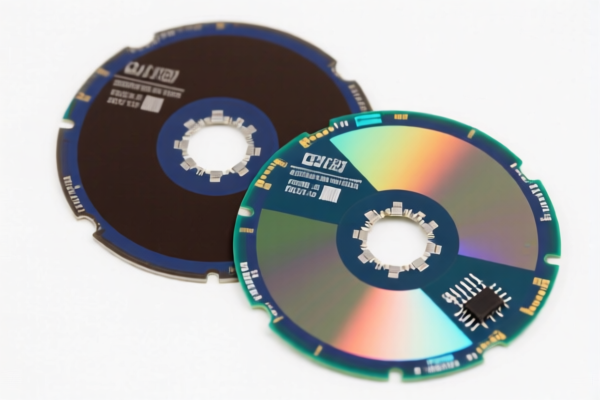
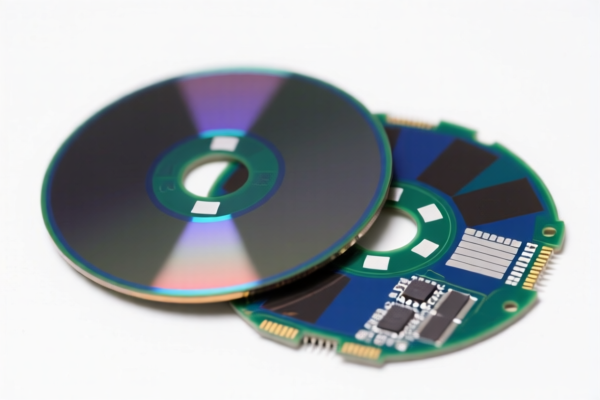
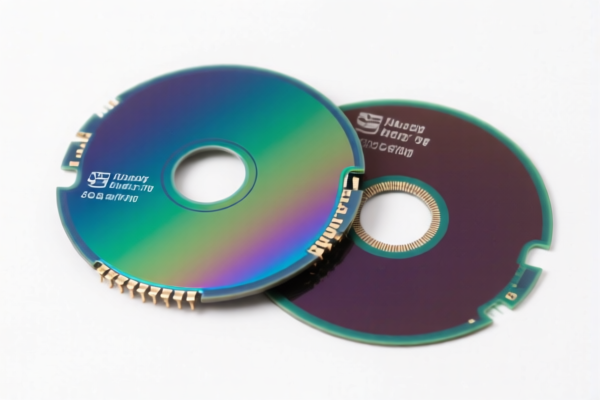
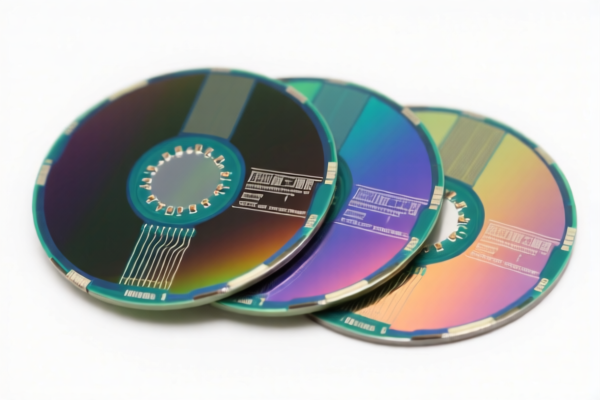
Product Images
AI Analysis
⚡ Silicon Wafer (Doped, For Power Devices)
🌐 HS Code Reference & Customs Clearance Guide | 2026 Latest Tariff Analysis | Professional Clearance Strategy
📌 I. Product Definition & Classification: Do You Really Understand "Doped Silicon Wafer"?
Silicon wafers are the foundational substrates for semiconductor manufacturing. In international trade, the classification depends heavily on material state (elemental vs. compound), purification level, and intended use.
For doped silicon wafers intended for power devices, two primary classification paths emerge based on how customs interprets the "compound" vs. "elemental" nature and the specific industry application:
- Prepared Elements (Chemical Preparations): Classified under Chapter 38, treating the doped silicon as a "prepared chemical element" for industrial use.
- Prepared Semiconductors/Elements: Classified under Chapter 28, treating the high-purity silicon as a specific chemical element preparation.
- Semiconductor Articles: Classified under Chapter 85, treating the wafer as a semi-finished semiconductor device component (diode/transistor substrate).
⚠️ Key Distinction Point:
- If classified as a "Prepared Element/Compound for Industrial Use" → HS 3818 or 2804.
- If classified as a "Semiconductor Device Component (Unassembled)" → HS 8541 or 8541.
- Crucial Note: The "Doped" status often triggers higher scrutiny under Chapter 38 due to its status as a "preparation," whereas Chapter 28 focuses on the elemental purity. Chapter 85 views it as a functional part of a chip.
📦 II. HS Code Classification Details (2026 Latest Tariff Authority Comparison)
| HS Code | Product Description | Application Scenario | Material/State Match |
|---|---|---|---|
3818.00.00.20 |
Silicon (Doped), For Power Devices | Matches success; material is silicon, form fits polysilicon wafer features, purpose aligns with electronics. | ✅ Primary Match (Industrial Compound/Preparation) |
2804.69.10.00 |
Silicon (Other), Wafer Form | Material is silicon, form is wafer; purity and purpose have no conflict in "Other" category. | ✅ Secondary Match (Elemental Preparation) |
8541.59.00.40 |
Silicon Wafers (Semiconductor) | Silicon wafers fall under wafer category; doping matches semiconductor device characteristics; fits unassembled chips/wafers. | ✅ Functional Match (Semi-finished Device) |
3818.00.00.95 |
Silicon Wafers (Other Chemicals) | Silicon wafers are electronic industrial doped compounds; no specific material conflict; matches material-based inference. | ⚠️ Fallback Match (General Preparation) |
8541.10.00.40 |
Silicon Wafers (Diodes) | Material is silicon, form is wafer; matches diode category features for unassembled chips/wafers. | ✅ Functional Match (Diode Substrate) |
🔍 Key Reminder:
-3818.00.00.20is often cited as the "Matching Success" classification for doped silicon specifically designated for power devices, emphasizing its status as a preparation for industrial use.
-2804.69.10.00is a lower-tariff alternative if the wafer is classified primarily as a chemical element preparation rather than a semiconductor device part.
-8541codes classify the wafer as a component of a semiconductor device (diode/transistor), which is also a valid functional classification but carries the same high tariff burden as3818in this context.
💰 III. 2026 Latest Tariff Rate Breakdown (Including Surcharges & Policy Add-ons)
✅ Applicable Country: United States (US)
✅ Country of Origin: China (CN)
✅ Effective Date: From November 10, 2025 (and subsequent imports)
🎯 1. 3818.00.00.20 & 8541.59.00.40 & 8541.10.00.40 & 3818.00.00.95
(High-Tariff Categories: Prepared Chemicals/Se-miconductor Articles)
| Item | Content |
|---|---|
| Base Tariff Rate | 0% (ad valorem) |
| USITC Additional Tariff | +50% (Section 301 / 122 Clauses) |
| IEEPA Additional Tariff | +10% (Targeting China/HK products, effective Nov 10, 2025) |
| Total Tax Rate | 60.0% |
| Tax Calculation | CIF Value × 60% |
| De Minimis Eligibility | ❌ Not Eligible (deny_de_minimis) |
| Legal Authority Path | Base: 0% → USITC: +50% (Section 301) → IEEPA: +10% |
📌 Explanation:
- The 50% USITC tariff is levied under Section 301 of the Trade Act, targeting specific Chinese technological goods, including semiconductors and silicon preparations.
- The 10% IEEPA tariff is an additional sanction under the International Emergency Economic Powers Act.
- Total 60% is an extremely high tariff, making direct imports from China highly cost-prohibitive.
🎯 2. 2804.69.10.00
(Lower-Tariff Category: Prepared Chemical Elements)
| Item | Content |
|---|---|
| Base Tariff Rate | 5.3% (ad valorem) |
| USITC Additional Tariff | 0% (Not subject to Section 301 in this specific subheading) |
| IEEPA Additional Tariff | +10% (Targeting China/HK products) |
| Total Tax Rate | 15.3% |
| Tax Calculation | CIF Value × 15.3% |
| De Minimis Eligibility | ❌ Not Eligible (deny_de_minimis) |
| Legal Authority Path | Base: 5.3% → IEEPA: +10% |
📌 Note:
- This classification offers a significant cost advantage (15.3% vs. 60%).
- It requires convincing customs that the product is a "prepared chemical element" (silicon) rather than a "semiconductor device part" or "industrial preparation."
- Risk: Customs may reclassify as3818or8541if the doping level or intended use strongly suggests it is a direct component of a power device.
🛠️ IV. Customs Clearance Practical Advice (Real-World Pitfall Guide)
✅ 1. Required Documentation List (Non-negotiable)
| Document | Must Provide | Description |
|---|---|---|
| ✅ Product Specification Sheet | ✔️ | Must detail doping concentration, resistivity, wafer thickness, and diameter. |
| ✅ Certificate of Analysis (CoA) | ✔️ | Proves purity and doping levels to support 2804 vs 3818 classification. |
| ✅ Product Photos (with Label) | ✔️ | Clear images of the wafer, packaging, and any marking indicating "Power Device" use. |
| ✅ Commercial Invoice | ✔️ | Description must be precise: e.g., "Doped Silicon Wafer for Semiconductor Manufacturing." |
| ✅ Certificate of Origin (CO) | ✔️ | Essential for determining IEEPA applicability. |
| ✅ Packing List | ✔️ | Details net/gross weight; ensure packaging doesn't imply a finished device. |
✅ 2. Declaration Tactics (Key Mantra)
🔥 "Material First, Function Second; Doping Level is Key!"
| Scenario | Correct Declaration Approach | Wrong Practice |
|---|---|---|
| High-Purity Doped Wafer | Emphasize "Chemical Preparation" → Aim for 2804.69.10.00 |
Over-emphasizing "Power Device" → Triggers 3818/8541 (60%) |
| Wafer with Specific Doping Profile | Provide detailed Doping Concentration data | Vague description "Silicon Wafer" |
| Part of a Kit | Declare as Bulk Wafer, not "Power Device Kit" | Packaging suggests final assembly → Higher scrutiny |
| OEM Custom Wafer | Provide Client Order + Tech Specs | Generic description → Delayed clearance |
✅ 3. Special Cases Handling
| Scenario | Handling Advice |
|---|---|
| Doping Level is Very High | May be classified as a "Preparation" (3818) rather than pure element (2804). Ensure CoA supports elemental classification. |
| Used in Power Electronics | If clearly marked for "Power Devices," customs may lean toward 3818.00.00.20 or 8541. Consider arguing for 2804 based on material nature over end-use. |
| Transshipment via 3rd Country | Risk: US Customs tracks origin. If processed in Vietnam/Malaysia, ensure substantial transformation occurs to avoid IEEPA surcharges. |
| Small Quantity Samples | De Minimis Still Denied: Even for samples, the 60% or 15.3% tariff applies. No $800 exemption. |
🌍 V. Global Market Comparison (2026 Latest)
| Country/Region | Recommended HS Code | Tariff Rate | Certification | Notes |
|---|---|---|---|---|
| 🇺🇸 USA | 2804.69.10.00 |
15.3% | N/A | Best rate; risk of reclassification to 60%. |
| 🇺🇸 USA | 3818.00.00.20 |
60.0% | N/A | High risk; matches "Preparation for Industrial Use." |
| 🇨🇳 China | 2804.69.10.00 |
5.3% | RoHS | No additional tariffs; easy import. |
| 🇪🇺 EU | 2804.69.10.00 |
0% (if eligible) | CE | No IEEPA equivalent; standard EU tariff. |
| 🇯🇵 Japan | 2804.69.10.00 |
0-2% | PSE | Low tariff; strict inspection on doping. |
📌 Conclusion:
- The US market is the most challenging due to high tariffs on semiconductor-related silicon products.
-2804.69.10.00(15.3%) is the strategic target for importers, but requires robust documentation proving it is a chemical preparation rather than a semiconductor device component.
📌 VI. Common Errors & Pitfall Guide (Lessons Learned)
❌ Error 1: Declaring "Doped Silicon Wafer" as 8541 (60%) when 2804 (15.3%) is applicable.
👉 Consequence: Overpaying 44.7% in tariffs.
👉 Fix: Provide CoA showing elemental silicon base; argue under Chapter 28.
❌ Error 2: Using "Silicon Wafer" without specifying doping.
👉 Consequence: Customs assigns highest default rate (often 60%) or holds for inspection.
👉 Fix: Always specify "Doped," resistivity, and orientation (e.g., (100), (111)).
❌ Error 3: Mislabeling as "Polysilicon" for monocrystalline wafers.
👉 Consequence: Misclassification; potential fraud charges.
👉 Fix: Accurate material description: "Monocrystalline Silicon Wafer, Phosphorus-Doped."
❌ Error 4: Assuming De Minimis ($800) applies to small shipments.
👉 Consequence: Shipment held, penalties applied.
👉 Fix: Pay duties upfront; do not rely on Section 321 exemption for semiconductor materials.
✅ Correct Declaration Example:
"Silicon Wafer, Monocrystalline, Phosphorus-Doped, for Semiconductor Manufacturing, Diameter 150mm, Orientation (100), HS 2804.69.10.00"
🎯 VII. Conclusion: Precision Classification Saves Millions!
🎯 Key Takeaway:
🔹 "Material vs. Function: The 60% vs. 15% Divide!"
🔹 "Argue Elemental (2804), Not Component (8541/3818)!"
🔹 "Documentation is Your Shield: CoA & Specs are Mandatory!"
📌 Pro Tip:
If your supplier is in China, consider supply chain diversification to Vietnam or Malaysia for subsequent processing, but ensure substantial transformation to avoid US IEEPA tariffs.
Request an Advance Ruling (Ruling Letter) from US CBP before large shipments to confirm 2804.69.10.00 eligibility.
📣 Immediate Action:
📞 Engage a Customs Broker with semiconductor expertise.
📤 Prepare Certificate of Analysis (CoA) and Technical Data Sheets.
🚀 Minimize Tariff Risk, Maximize Profit Margins!
✨ Professional Clearance Starts with Accurate Classification!
💼 Every percentage point of tariff saved is pure profit!
Customer Reviews
About HS Code Classification
The Harmonized System (HS) is an internationally standardized nomenclature developed by the World Customs Organization (WCO) to classify traded products. Over 200 countries use the HS system as the basis for customs tariffs, trade statistics, and import/export regulations.
Each HS code follows a hierarchical structure:
- Chapter (2 digits) — Broad category of goods (e.g., Chapter 84: Machinery and Mechanical Appliances)
- Heading (4 digits) — More specific grouping within the chapter
- Subheading (6 digits) — Internationally standardized breakdown, used by all WCO member countries
- National subdivisions (8-10 digits) — Country-specific extensions for further classification, such as US HTSUS 10-digit codes
Correct HS code classification is essential for smooth customs clearance, accurate duty payment, and compliance with trade regulations. Misclassification can lead to customs delays, overpayment of duties, or penalties.
When importing from CN to US, the applicable tariff rates may include:
- Most-Favored-Nation (MFN) rate — The standard duty rate applied to WTO members
- General rate — Applied to countries without trade agreements
- Trade remedy duties — Additional tariffs such as Section 301 (anti-dumping), Section 232 (national security), or countervailing duties
The information provided on this page is for reference purposes only. For official classification, please consult with your local customs authority or a licensed customs broker.