silicone bread proofing basket
CN → US| HS Code | Tariff Rate | Origin | Destination | Doc |
|---|---|---|---|---|
| 3924103000 | 22.8% | CN | US | Official Doc |
| 4419199000 | 13.2% | CN | US | Official Doc |
| 3924104000 | 13.4% | CN | US | Official Doc |
| 6911104100 | 16.3% | CN | US | Official Doc |
| 6911108010 | 38.3% | CN | US | Official Doc |
Product Images
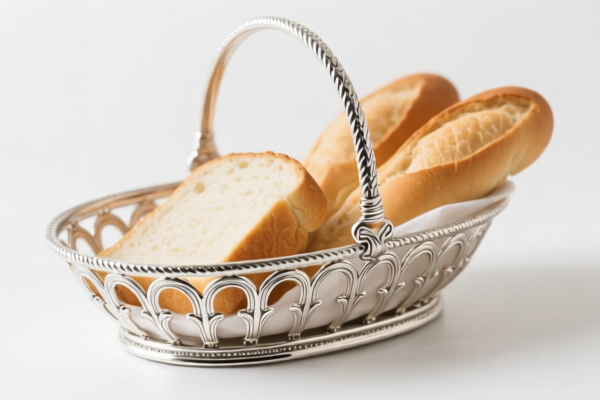
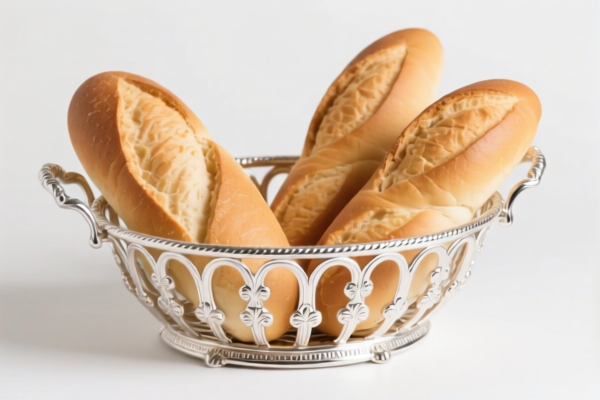
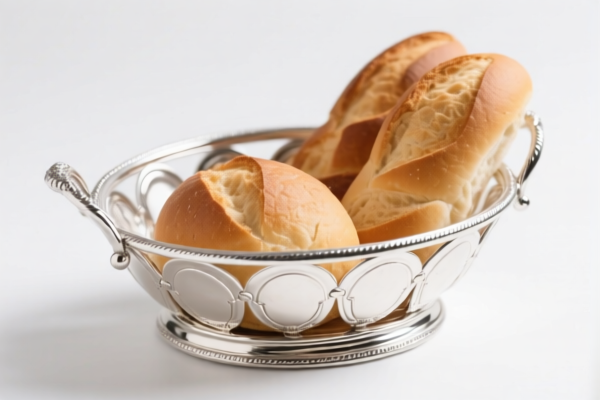
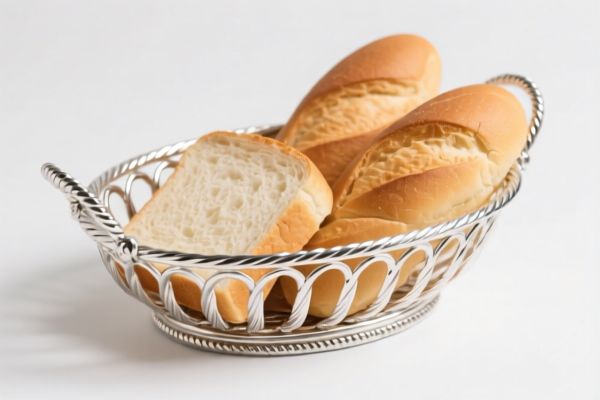
AI Analysis
🥖 Silicone Bread Proofing Basket (Banneton Alternative)
🌐 HS Code Reference & Customs Clearance Guide | 2026 Latest Tariff Analysis | Professional Clearance Strategy
📌 One, Product Definition & Classification: Do You Really Know a "Silicone Bread Basket"?
A Silicone Bread Proofing Basket (often called a banneton or proofing bowl) is a kitchen utensil made from food-grade silicone, designed to hold dough during the final rising (proofing) stage before baking. It helps maintain the shape of the bread and creates decorative patterns on the crust.
In international trade, it falls under Kitchen/Household Articles of Plastics. The key distinction lies in its material (Silicone/Plastic) and function (Food Preparation/Utensil).
⚠️ Critical Distinction:
- If made of Plastic/Silicone → Classified under Chapter 39 (Articles of Plastics);
- If made of Wood/Bamboo/Rattan → Classified under Chapter 44;
- If made of Ceramic → Classified under Chapter 69.
Misclassification leads to massive tariff differences (e.g., 22.8% vs. 13.2% vs. 16.3%).
📦 Two, HS Code Classification Details (2026 Latest Tariff Authoritative Comparison)
Based on your product being Silicone (Plastic), the relevant HS Codes from the provided data are primarily in Chapter 39.
| HS Code | Product Description | Application Scenario | Material | Total Tax Rate |
|---|---|---|---|---|
3924.10.30.00 |
Plastic Bread Baskets / Kitchen Utensils | Silicone/Bamboo-mix proofing baskets, plastic dough holders | Plastic/Silicone | 22.8% |
3924.10.40.00 |
Plastic Tableware/Household Articles (Unspecified) | Generic plastic silicone bread rings or liners | Plastic | 13.4% |
🔍 Key Note on Silicone:
In customs classification, Silicone is generally treated as a type of Plastic (Chapter 39) unless specifically exempted. Since3924.10covers "Tableware, kitchenware, other household articles and toilet articles, of plastics," silicone bread baskets fall here.
-3924.10.30.00is for specific "Bread Baskets" (Brotkörbe).
-3924.10.40.00is a residual category for other plastic tableware if not specifically listed as bread baskets.
💰 Three, 2026 Latest Tariff Rate Detailed Breakdown (Including Surtaxes & Policy Add-ons)
✅ Applicable Country: United States (US)
✅ Country of Origin: China (CN)
✅ Effective Date: November 10, 2025 onwards
🎯 1. 3924.10.30.00 — Plastic Bread Baskets (Silicone)
This is the most specific code for "Bread Baskets" made of plastic/silicone.
| Item | Content |
|---|---|
| Base Duty Rate | 5.3% |
| Section 301 Surtax | 7.5% |
| Section 122 Tariff | 10% |
| Total Tax Rate | 22.8% |
| Tax Calculation | CIF Value × 22.8% |
| De Minimis Exemption | ❌ Not Applicable (High-risk category for enforcement) |
| Legal Basis Path | Base Tariff → Section 301: 7.5% → Section 122: 10% |
📌 Explanation:
- Base Duty (5.3%): Standard MFN rate for plastic tableware.
- Section 301 (7.5%): Additional tariff on Chinese goods under US Trade Act Section 301.
- Section 122 (10%): Additional tariff under Section 122 of the Trade Expansion Act of 1962 (often applied to essential goods or to protect domestic industries).
- Total: 22.8%. This is a high tariff for kitchenware. You must plan your pricing accordingly.
🎯 2. 3924.10.40.00 — Other Plastic Tableware/Household Articles
If customs officers classify your silicone item as a generic "plastic kitchen article" rather than a specific "bread basket," this code may apply.
| Item | Content |
|---|---|
| Base Duty Rate | 3.4% |
| Section 301 Surtax | 0.0% |
| Section 122 Tariff | 10% |
| Total Tax Rate | 13.4% |
| Tax Calculation | CIF Value × 13.4% |
| De Minimis Exemption | ❌ Not Applicable |
| Legal Basis Path | Base Tariff → Section 122: 10% |
📌 Note:
- The base duty is lower (3.4% vs 5.3%).
- Section 301 (7.5%) is NOT applied here in this specific dataset (likely due to a specific tariff engineering or exclusion list for general plastic articles).
- However, Section 122 (10%) still applies.
- Total: 13.4%. This is significantly cheaper than3924.10.30.00.⚠️ Warning: Misdeclaring a "Bread Basket" as "General Plastic Tableware" to get 13.4% instead of 22.8% is high risk. CBP (Customs and Border Protection) may reclassify it based on function, leading to back taxes, penalties, and delays. Always declare accurately based on product name and function.
🛠️ Four, Customs Clearance Practical Advice (Battle-Tested Pitfall Guide)
✅ 1. Required Documentation Checklist
| Document | Mandatory? | Description |
|---|---|---|
| ✅ Product Specification Sheet | ✔️ | Must state: "Food Grade Silicone," "Plastic," dimensions, intended use (bread proofing). |
| ✅ Material Composition Certificate | ✔️ | Prove it is Silicone (Plastic), NOT ceramic or wood. |
| ✅ Product Photos | ✔️ | Clear images showing texture (silicone flexibility), shape (basket/bowl), and any logos. |
| ✅ Commercial Invoice | ✔️ | Description: "Silicone Bread Proofing Basket for Kitchen Use, Plastic Material." |
| ✅ Packing List | ✔️ | Weight and dimensions of each unit. |
| ✅ FDA Compliance Statement | ✔️ | Since it’s food-contact, proof of FDA compliance may be requested. |
✅ 2. Declaration Strategy (Key Mantra)
🔥 "Material First, Function Clear, HS Code Accurate, Tariff Predictable!"
| Scenario | Correct Declaration | Incorrect Practice |
|---|---|---|
| Silicone Bread Basket | 3924.10.30.00 (if specifically bread basket) OR 3924.10.40.00 (if generic plastic article) |
Declaring as "Wooden Banneton" → Misclassification |
| Bamboo/Silicone Mix | May fall under 4419.19.90.00 (Wood) if bamboo is principal material |
Ignoring bamboo content → Penalty |
| Plastic Liner Only | 3924.10.40.00 |
Declaring as "Basket" → Higher duty |
| Ceramic Banneton | 6911.10.41.00 or 6911.10.80.10 |
Declaring as Plastic → Major Violation |
✅ 3. Special Considerations for Silicone Products
| Issue | Advice |
|---|---|
| Food Contact Safety | Ensure your supplier provides FDA 21 CFR compliance. CBP may inspect for chemical safety if flagged. |
| Mixed Materials | If the basket has a wooden handle or bamboo base, it may be classified under Chapter 44 (Wood) instead of Chapter 39. This changes the tax from 22.8% to 13.2% (4419.19.90.00). Check material composition carefully! |
| Section 122 Application | Note that 10% Section 122 tariff applies to both plastic options. This is non-negotiable for Chinese origin. |
🌍 Five, Global Market Clearance Comparison (2026 Latest)
| Country/Region | Recommended HS Code | Duty Rate | Certification | Remarks |
|---|---|---|---|---|
| 🇺🇸 USA | 3924.10.30.00 |
22.8% | FDA | High duty due to Sec 301 + Sec 122. |
| 🇺🇸 USA | 3924.10.40.00 |
13.4% | FDA | Lower duty if classified as general plastic. |
| 🇨🇳 China | 3924.10.30.00 |
~5-7% | CCC (if applicable) | No Section 301/122 for exports to China. |
| 🇪🇺 EU | 3924.10.00 |
~3.5-4.5% | LFGB/FDA | No anti-dumping on silicone kitchenware. |
| 🇬🇧 UK | 3924.10.00 |
~4.5% | UKCA | Post-Brexit standards apply. |
| 🇯🇵 Japan | 3924.10.00 |
~2.7-4.5% | Food Sanitation Law | Strict food contact regulations. |
📌 Conclusion:
- USA is the most expensive market for silicone bread baskets due to Section 301 (7.5%) and Section 122 (10%).
- EU and UK are much more favorable, with standard WTO rates.
- If you are exporting to the US, consider warehousing in a third country (e.g., Vietnam) only if substantial transformation occurs, but be aware of rules of origin scrutiny.
📌 Six, Common Errors & Pitfall Guide (Lessons Learned)
❌ Error 1: Declaring "Silicone" as "Rubber"
👉 Consequence: Wrong HS Code (Chapter 40). CBP may reclassify and apply different duties.
👉 Fix: Clearly state "Silicone" in the description.
❌ Error 2: Ignoring the "Bread Basket" Specificity
👉 Consequence: Using 3924.10.40.00 for a clearly labeled "Bread Basket" may trigger an audit.
👉 Fix: If the product is exclusively for bread proofing, 3924.10.30.00 is safer. If it’s a generic silicone ring, 3924.10.40.00 is acceptable.
❌ Error 3: Mixed Material Confusion (Bamboo Handle)
👉 Consequence: If the basket has a wooden handle, customs may classify it under Chapter 44 (Wood), which has a 13.2% rate (4419.19.90.00).
👉 Fix: If bamboo/wood is the principal material, declare under 4419.19.90.00. This saves 9.6% compared to 3924.10.30.00.
❌ Error 4: Assuming De Minimis Exemption
👉 Consequence: Many US imports from China are subject to Section 301/122 taxes regardless of value.
👉 Fix: Always calculate taxes for B2B shipments. Section 321 (De Minimis) may still apply for individual packages under $800, but Section 301/122 duties often still apply depending on current enforcement. Check latest CBP memos.
✅ Correct Declaration Example:
"Silicone Bread Proofing Basket, Food Grade, Plastic Material, For Kitchen Use, Model XYZ, FDA Compliant"
HS Code:3924.10.30.00
Country of Origin: China
🎯 Seven, Conclusion: Professional Declaration Saves Money!
🎯 Remember the Mantra:
🔹 "Silicone is Plastic, Bread Basket is Specific, Sec 301 + 122 = 22.8%, Check Wood Mix to Save 9.6%!"
🔹 "Accurate HS Code Avoids Delays, Tariff Planning Protects Margin!"
📌 Pro Tip:
- If your product has bamboo or wooden components, investigate HS Code
4419.19.90.00(13.2% total tax). This is 9.6% cheaper than the plastic-specific bread basket code.- For large B2B shipments, consider Applying for an Advance Ruling from CBP to confirm the correct HS Code and duty rate.
- Ensure all packaging and labeling clearly indicate Food-Grade Silicone to avoid FDA inspection delays.
📣 Immediate Action:
📞 Contact your freight forwarder with the material composition sheet.
📦 If you have wooden handles, request a tariff comparison between Chapter 39 and Chapter 44.
🚀 Clearance Smooth, Costs Controlled, Profits Maximized!
✨ Professional Customs Clearance Starts with Precise Classification!
💼 Your Bottom Line Depends on Your HS Code!
Customer Reviews
About HS Code Classification
The Harmonized System (HS) is an internationally standardized nomenclature developed by the World Customs Organization (WCO) to classify traded products. Over 200 countries use the HS system as the basis for customs tariffs, trade statistics, and import/export regulations.
Each HS code follows a hierarchical structure:
- Chapter (2 digits) — Broad category of goods (e.g., Chapter 84: Machinery and Mechanical Appliances)
- Heading (4 digits) — More specific grouping within the chapter
- Subheading (6 digits) — Internationally standardized breakdown, used by all WCO member countries
- National subdivisions (8-10 digits) — Country-specific extensions for further classification, such as US HTSUS 10-digit codes
Correct HS code classification is essential for smooth customs clearance, accurate duty payment, and compliance with trade regulations. Misclassification can lead to customs delays, overpayment of duties, or penalties.
When importing from CN to US, the applicable tariff rates may include:
- Most-Favored-Nation (MFN) rate — The standard duty rate applied to WTO members
- General rate — Applied to countries without trade agreements
- Trade remedy duties — Additional tariffs such as Section 301 (anti-dumping), Section 232 (national security), or countervailing duties
The information provided on this page is for reference purposes only. For official classification, please consult with your local customs authority or a licensed customs broker.