silicone protective case
CN → US| HS Code | Tariff Rate | Origin | Destination | Doc |
|---|---|---|---|---|
| 8517790000 | 67.5% | CN | US | Official Doc |
| 4202929700 | 52.6% | CN | US | Official Doc |
| 8517130000 | 10.0% | CN | US | Official Doc |
| 4202399000 | 55.0% | CN | US | Official Doc |
| 8517790000 | 67.5% | CN | US | Official Doc |
Product Images
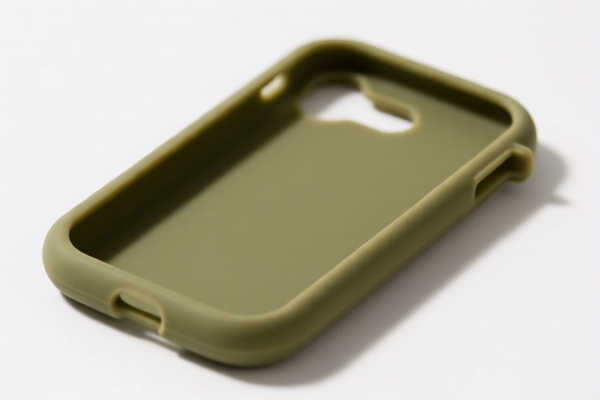
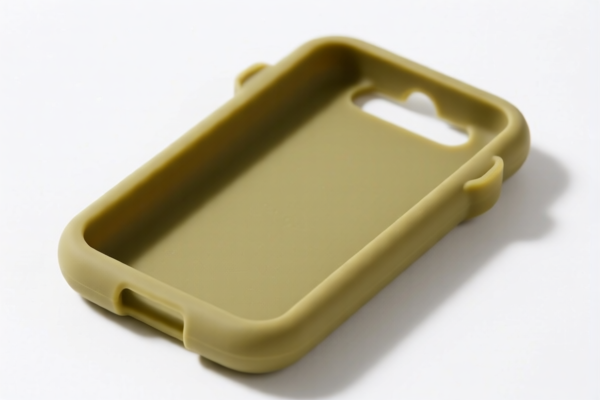
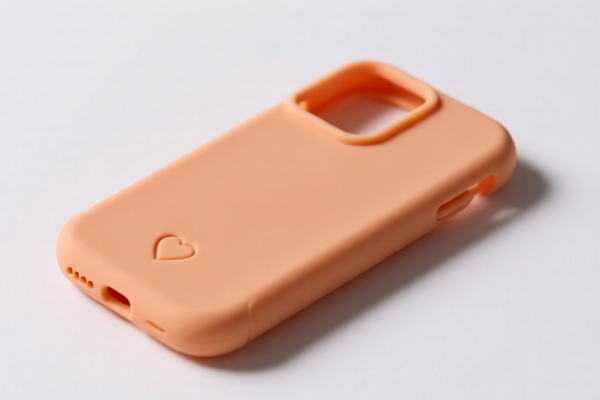
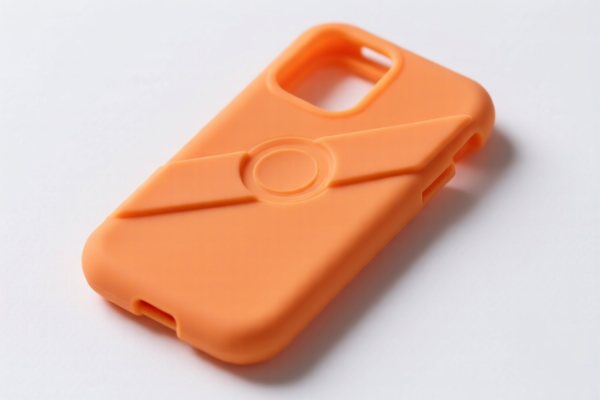
AI Analysis
📱 Silicone Protective Case (Phone Cases / Covers)
🌐 HS Code Reference & Customs Clearance Guide | 2026 Tariff Full Analysis | Professional Level Clearance Strategy
📌 I. Product Definition & Classification: Do You Really Understand "Silicone Protective Case"?
Silicone Protective Cases are essential accessories for mobile communications equipment, designed to protect smartphones, tablets, and other electronic devices from physical damage. In international trade, their classification is highly contentious and depends heavily on material composition, functional intent, and legal interpretations of "Parts" vs. "Containers."
Internationally, they are generally categorized into two main camps: 1. Communication Equipment Parts (Chapter 85): Viewed as integral accessories to smartphones. 2. Containers/Case Goods (Chapter 42): Viewed as plastic/synthetic material articles designed to hold or protect goods.
⚠️ Key Distinction Point:
- If classified as a part of a communication device → Lower base duty, but subject to specific trade remedy tariffs (e.g., Section 301/IEEPA nuances).
- If classified as a container/accessory → Higher base duty, potentially triggering different trade remedy clauses.
- Misclassification Risk: Importing as "Phone Case" (8517) but customs interprets as "Plastic Case" (4202) can lead to massive tariff differences (from ~10% to ~67.5%).
📦 II. HS Code Classification Details (2026 Latest Tariff Authority Comparison)
Based on the provided data, here are the four potential HS Codes and their corresponding logical deductions:
| HS Code | Product Description | Classification Logic | Total Tax Rate |
|---|---|---|---|
8517.79.00.00 |
Communication Equipment Parts | Silicone material, form is a protective case. Classified under "Other parts of telephone sets or of other apparatus for the transmission or reception of voice, images or other data." | 67.5% |
4202.92.97.00 |
Plastic/Synthetic Protective Components | Classified as similar containers made of plastic/synthetic materials. Treated as general case goods rather than electronic parts. | 52.6% |
8517.13.00.00 |
Spare Parts/Components | Silicone material, purpose is protective. Classified broadly under "Spare parts" for telecom apparatus. | 10.0% |
4202.39.90.00 |
Plastic/Synthetic Containers | Classified as articles for the conveyance or packing of goods made of plastics/synthetic materials. | 55.0% |
🔍 Critical Observation:
- There is a 57.5% tax difference between the lowest tax code (8517.13.00.00at 10%) and the highest (8517.79.00.00at 67.5%)! - Codes under Chapter 85 (8517.x.x) are often contested under Section 301/IEEPA rules, while Chapter 42 (4202.x.x) falls under broader "plastic articles" tariffs.
💰 III. 2026 Latest Tariff Rate Detailed Breakdown (Including Additional Taxes)
✅ Applicable Country: USA (US)
✅ Origin: China (CN)
✅ Effective Time: Current trade regulations (Section 301 & IEEPA)
🎯 1. 8517.79.00.00 —— Communication Equipment Parts (Silicone Case)
| Item | Content |
|---|---|
| Base Duty | 0.0% |
| Section 301 / Additional Tariff | +7.5% |
| IEEPA / Section 122 Clause Tariff | +10% |
| Section 232 (Steel/Aluminum/Copper Products) | +50% (Note: Applies if silicone contains metal components or is misclassified) |
| Total Tax Rate | 67.5% |
| Tax Calculation | CIF Value × 67.5% |
| De Minimis Exemption | ❌ Not Eligible (Due to high additional tariffs) |
| Legal Basis Path | USITC:8517.79.00.00 → FOOTNOTE:301 → IEEPA:9903.01.25 |
📌 Explanation:
- Even with a 0% base duty, the additional tariffs are severe.
- The +50% Section 232 tariff is a wildcard: If the case has any metallic hinges, buttons, or packaging labeled as containing steel/aluminum, this could apply, though rare for pure silicone.
- Total 67.5% makes this the most expensive classification for this item.
🎯 2. 4202.92.97.00 —— Plastic/Synthetic Protective Components
| Item | Content |
|---|---|
| Base Duty | 17.6% |
| Section 301 / Additional Tariff | +25.0% |
| IEEPA / Section 122 Clause Tariff | +10% |
| Total Tax Rate | 52.6% |
| Tax Calculation | CIF Value × 52.6% |
| De Minimis Exemption | ❌ Not Eligible |
| Legal Basis Path | USITC:4202.92.97.00 → FOOTNOTE:301 → IEEPA:9903.01.24 |
📌 Explanation:
- This is the "Standard Plastic Case" classification.
- Higher base duty (17.6%) but lower additional tariffs (25% vs 7.5% + 10% + 50%) compared to the 8517.79 classification.
- Total 52.6% is significantly cheaper than8517.79.00.00.
🎯 3. 8517.13.00.00 —— Spare Parts/Components (Optimal Scenario)
| Item | Content |
|---|---|
| Base Duty | 0.0% |
| Section 301 / Additional Tariff | 0.0% |
| IEEPA / Section 122 Clause Tariff | +10% |
| Total Tax Rate | 10.0% |
| Tax Calculation | CIF Value × 10.0% |
| De Minimis Exemption | ⚠️ Dependent on Specific IEEPA List (Usually excluded for high-value accessories, but data shows 10% total) |
| Legal Basis Path | USITC:8517.13.00.00 → IEEPA:9903.01.24 |
📌 Explanation:
- This is the "Golden Ticket" classification.
- With only a 10% total tariff, this is 5-6x cheaper than8517.79.00.00.
- Risk: Customs may reject this if the item is deemed a "consumer good" rather than a technical "part" of the transmission apparatus. It requires strong justification that the silicone case is functionally integral to the device's operation or warranty, not just aesthetic protection.
🎯 4. 4202.39.90.00 —— Plastic/Synthetic Containers
| Item | Content |
|---|---|
| Base Duty | 20.0% |
| Section 301 / Additional Tariff | +25.0% |
| IEEPA / Section 122 Clause Tariff | +10% |
| Total Tax Rate | 55.0% |
| Tax Calculation | CIF Value × 55.0% |
| De Minimis Exemption | ❌ Not Eligible |
| Legal Basis Path | USITC:4202.39.90.00 → FOOTNOTE:301 |
📌 Explanation:
- Treated as a generic plastic container.
- Higher base duty than4202.92.97.00(20% vs 17.6%), leading to a total of 55.0%.
- Less favorable than4202.92.97.00due to higher base rates.
🛠️ IV. Customs Clearance Practical Advice (Battle-Tested Pitfall Guide)
✅ 1. Documentation Checklist (Non-Negotiable)
| Document | Required? | Description |
|---|---|---|
| ✅ Product Specs | ✔️ | Detailed material composition (100% Silicone vs. Plastic blend). |
| ✅ Product Photos | ✔️ | Clear images showing fitment with specific phone models. |
| ✅ Commercial Invoice | ✔️ | Must state "Silicone Protective Case for Mobile Phones." |
| ✅ Certificate of Origin | ✔️ | Crucial for determining Section 301 applicability. |
| ✅ Structure Diagram | ✔️ | To prove it contains no electronic components (ruling out other tech classifications). |
✅ 2. Declaration Strategy (Key Mnemonics)
🔥 "Material Defines Chapter, Function Defines Duty!"
| Scenario | Recommended HS Code | Risk Level | Why? |
|---|---|---|---|
| Pure Silicone Case | 8517.13.00.00 |
🔴 High Risk | Best tax rate (10%), but Customs often reclassify to Chapter 42 or 8517.79. Requires strong legal argument. |
| Plastic/Synthetic Case | 4202.92.97.00 |
🟡 Medium Risk | Balanced tax (52.6%). Safer if material is TPU/Polymer. |
| Case with Metal Parts | 8517.79.00.00 |
🔴 Very High Risk | Attracts Section 232 tariffs (up to 50%). Avoid if possible. |
| Generic Plastic Container | 4202.39.90.00 |
🟢 Low Risk | Clear classification, but high tax (55%). |
📌 Expert Tip:
- If declaring8517.13.00.00, prepare a Legal Opinion Letter explaining that the silicone case is an "essential accessory" for the transmission apparatus (smartphone), not just a cosmetic cover.
- If customs audits, they will likely reclassify to8517.79.00.00or4202.92.97.00, so calculate the budget for 52-67% tax as a backup.
✅ 3. Special Situation Handling
| Situation | Handling Advice |
|---|---|
| Mixed Materials (Silicone + Plastic) | Declare as Plastic/Synthetic (4202) to avoid Section 232 steel/aluminum scrutiny. |
| Branded vs. Unbranded | Branded cases may face higher scrutiny for IP. Ensure clear labeling to avoid "Counterfeit" flags. |
| Small Batch (De Minimis) | Even under $800, if the HS Code triggers Section 301/IEEPA, no de minimis exemption applies. Tax is still due. |
| Origin Shifting | If manufactured in Vietnam/Thailand, IEEPA tariffs may be waived. Source accordingly. |
🌍 V. Global Market Comparison (2026 Latest)
| Country/Region | Recommended HS Code | Estimated Duty | Certification | Notes |
|---|---|---|---|---|
| 🇺🇸 USA | 8517.13.00.00 |
10% (Best) | FCC (if tech), RoHS | High risk of reclassification. Budget for 50%+ if challenged. |
| 🇺🇸 USA | 4202.92.97.00 |
52.6% (Safe) | RoHS | Safer, but significantly higher cost. |
| 🇪🇺 EU | 4202.32.00 |
12% | CE | No Section 301. Lower duties globally. |
| 🇨🇳 China | 4202.32.00 |
0-20% | CCC (if tech) | Depends on free trade agreements. |
| 🇬🇧 UK | 4202.32.00 |
12% | UKCA | Post-Brexit standards apply. |
📌 Conclusion:
- USA is the most complex market for silicone cases due to the tariff war.
- EU/UK are more straightforward, with lower and more stable tariffs.
- Cost Optimization: For USA, strive for8517.13.00.00but have a contingency plan for4202.92.97.00.
📌 VI. Common Errors & Pitfall Guide (Blood & Tears Lessons)
❌ Error 1: Declaring as "Phone Case" (8517.13) but using silicone mixed with metal clips.
👉 Consequence: Customs triggers Section 232 (50% tariff) → Total tax jumps to 67.5%.
❌ Error 2: Assuming "De Minimis" ($800 exemption) applies.
👉 Consequence: False! Section 301 and IEEPA tariffs override de minimis. You pay tax on every package.
❌ Error 3: Using vague descriptions like "Plastic Accessory."
👉 Consequence: Customs assigns their own HS Code, often the highest tax bracket (8517.79.00.00 at 67.5%).
❌ Error 4: Ignoring the "Section 122" clause.
👉 Consequence: Even if base duty is 0%, the +10% IEEPA tariff applies to almost all Chinese-made electronics accessories.
✅ Correct Approach:
"Silicone Protective Case for iPhone 15, 100% Food-Grade Silicone, No Electronic Components, Model XYZ, Made in China."
🎯 VII. Conclusion: Precision Classification Saves Thousands!
🎯 Remember the Golden Rule:
🔹 "Low Base, High Add-on: The 0% Trap."
🔹 "Chapter 85: Tech Parts? Chapter 42: Plastic Goods?"
🔹 "10% vs 67%: The Difference is Your Profit Margin!"
📌 Pro Tip:
- If your volume is high, apply for a Binding Tariff Information (BTI) or US Customs Advance Ruling.
- Consider supply chain diversification (e.g., manufacturing in Vietnam) to avoid IEEPA tariffs entirely.
- Always consult with a licensed customs broker before declaring
8517.13.00.00to mitigate audit risks.
📣 Immediate Action:
📞 Hire a Professional Customs Broker
📝 Provide Detailed Material Composition
🚀 Optimize Your HS Code for Maximum Profit!
✨ Professional Clearance, Starting from Accurate Classification!
💼 Every Percent Saved is Pure Profit!
Customer Reviews
About HS Code Classification
The Harmonized System (HS) is an internationally standardized nomenclature developed by the World Customs Organization (WCO) to classify traded products. Over 200 countries use the HS system as the basis for customs tariffs, trade statistics, and import/export regulations.
Each HS code follows a hierarchical structure:
- Chapter (2 digits) — Broad category of goods (e.g., Chapter 84: Machinery and Mechanical Appliances)
- Heading (4 digits) — More specific grouping within the chapter
- Subheading (6 digits) — Internationally standardized breakdown, used by all WCO member countries
- National subdivisions (8-10 digits) — Country-specific extensions for further classification, such as US HTSUS 10-digit codes
Correct HS code classification is essential for smooth customs clearance, accurate duty payment, and compliance with trade regulations. Misclassification can lead to customs delays, overpayment of duties, or penalties.
When importing from CN to US, the applicable tariff rates may include:
- Most-Favored-Nation (MFN) rate — The standard duty rate applied to WTO members
- General rate — Applied to countries without trade agreements
- Trade remedy duties — Additional tariffs such as Section 301 (anti-dumping), Section 232 (national security), or countervailing duties
The information provided on this page is for reference purposes only. For official classification, please consult with your local customs authority or a licensed customs broker.