silicone ring
CN → US| HS Code | Tariff Rate | Origin | Destination | Doc |
|---|---|---|---|---|
| 7117909000 | 28.5% | CN | US | Official Doc |
| 9601908000 | 21.2% | CN | US | Official Doc |
| 7113195091 | 23.0% | CN | US | Official Doc |
| 7115903000 | 38.9% | CN | US | Official Doc |
| 7117909000 | 28.5% | CN | US | Official Doc |
Product Images
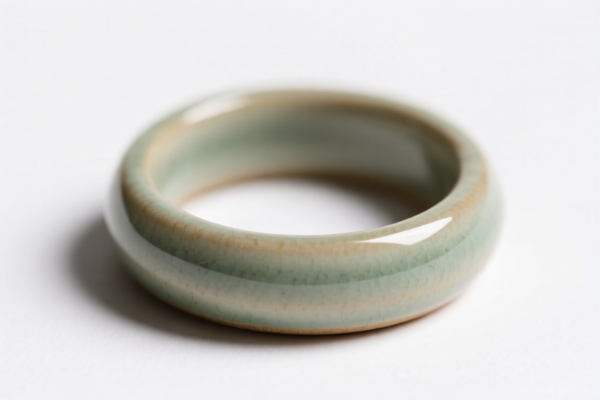
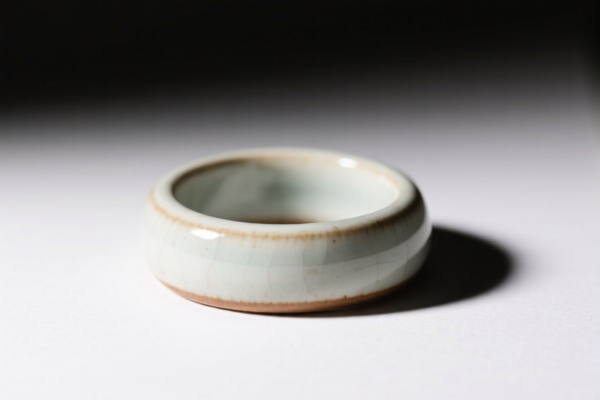
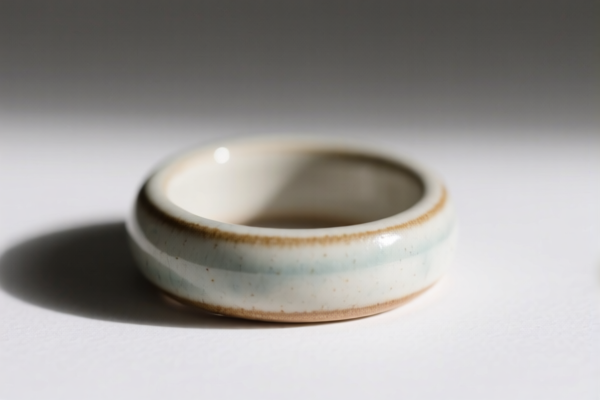
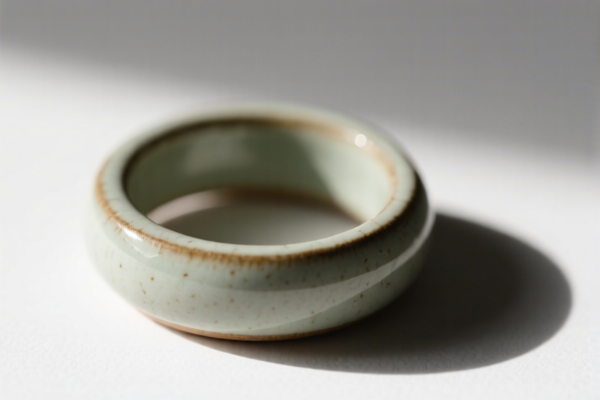
AI Analysis
💍 Silicone Rings (Fashion Jewelry & Accessories)
🌐 HS Code Reference & Clearance Guide | 2026 Latest Tariff Analysis | Strategic Customs Strategy
📌 I. Product Definition & Classification: What Exactly Is a "Silicone Ring"?
Silicone rings have surged in popularity as safe, durable, and comfortable alternatives to traditional metal jewelry. In international trade, they are generally classified as Imitation Jewelry (non-precious metal materials) unless specific material or functional characteristics push them into other categories. However, depending on how customs authorities interpret the material composition and intended use, multiple HS Code paths exist.
⚠️ Key Distinction Points:
- If viewed as fashion jewelry made of non-precious materials (silicone) → 7117.90.90.00 (Most Common)
- If viewed as carvings or craft materials (less common for rings, but possible) → 9601.90.80.00
- If mistakenly assumed to be precious metal (e.g., gold-plated silicone core) → 7113.19.50.91 or 7115.90.30.00
📦 II. HS Code Classification Details (2026 Latest Tariff Authority Comparison)
| HS Code | Product Description | Applicable Scenario | Material Assumption |
|---|---|---|---|
7117.90.90.00 |
Imitation Jewelry: Other: Of materials other than precious metal | Standard Silicone Ring (Fashion accessory, non-precious) | Silicone (Non-precious) |
9601.90.80.00 |
Worked Material (Animal/Hard substances): Other articles | Misclassification as Carving Material Product | Treated as craft/carving item |
7113.19.50.91 |
Jewelry of Gold or Gold Plated: Other | Misclassification as Precious Metal Jewelry | Assumed to be Gold/Precious Metal |
7115.90.30.00 |
Imitation Jewelry: Of base metal clad with precious metal | Misclassification as Gold-Clad Base Metal | Assumed to be Gold-Clad Base Metal |
7117.90.90.00 |
Imitation Jewelry: Other: Of materials other than precious metal | Reiteration: Silicone Ring as common metal-jewelry alternative | Silicone (Non-precious) |
🔍 Critical Warning:
- Silicone is NOT a precious metal. It is a polymer. Therefore, it should NOT be classified under Chapter 71 Sections related to Precious Metals (like7113or7115) unless it is heavily plated and declared as such (which is rare for silicone rings).
- The most accurate and safe classification for standard silicone rings is 7117.90.90.00 (Imitation Jewelry).
- Misclassifying as precious metal (7113.19.50.91) leads to lower tax rates but high risk of audit and penalties.
- Misclassifying as carving material (9601.90.80.00) is legally weak unless the ring is explicitly marketed as a craft artifact, not jewelry.
💰 III. 2026 Latest Tariff Rate Breakdown (Including Surtaxes & Policy Add-ons)
✅ Applicable Country: United States (US)
✅ Origin: China (CN)
✅ Effective Date: From 2025-11-10 onwards (including subsequent imports)
🎯 1. 7117.90.90.00 — Imitation Jewelry (Non-Precious) [Recommended]
| Item | Detail |
|---|---|
| Base Tariff | 11.0% (Ad Valorem) |
| Section 301 Surtax | +7.5% (Standard USITC 301 Tariff) |
| IEEPA Add-on | +10% (Targeting China/HK products under IEEPA) |
| Total Tariff Rate | 28.5% |
| Tax Calculation | CIF Value × 28.5% |
| De Minimis Eligibility | ❌ Not Eligible (High tariff rate usually excludes from $800 de minimis exemption if scrutinized, but technically depends on broker practice. However, high risk of seizure if misdeclared.) |
| Legal Basis Path | IEEPA:9903.01.25 → IEEPA:9903.01.24 → USITC:7117.90.90.00 → FOOTNOTE:301 Tariff |
📌 Explanation:
- Base 11%: Standard US MFN rate for imitation jewelry.
- 7.5% Section 301: Part of the ongoing trade war tariffs on Chinese goods.
- 10% IEEPA: Additional surcharge on Chinese-origin imitation jewelry under Executive Orders.
- Total 28.5%: This is a moderate-to-high tariff. Importers must budget for this cost.
🎯 2. 9601.90.80.00 — Worked Material (Carving/Art) [Risky Misclassification]
| Item | Detail |
|---|---|
| Base Tariff | 3.7% |
| Section 301 Surtax | +7.5% |
| IEEPA Add-on | +10% |
| Total Tariff Rate | 21.2% |
| Tax Calculation | CIF Value × 21.2% |
| De Minimis Eligibility | ❌ Not Eligible |
| Legal Basis Path | IEEPA:9903.01.25 → IEEPA:9903.01.24 → USITC:9601.90.80.00 → FOOTNOTE:301 Tariff |
📌 Warning:
- While the rate is lower (21.2%), classifying a wearable ring as "worked material/carving" is legally questionable. Customs may reject this if the item is clearly jewelry.
- Use only if the product is explicitly a craft item (e.g., raw silicone shape, not polished jewelry).
🎯 3. 7113.19.50.91 — Jewelry of Gold/Precious Metal [High Risk of Penalty]
| Item | Detail |
|---|---|
| Base Tariff | 5.5% |
| Section 301 Surtax | +7.5% |
| IEEPA Add-on | +10% |
| Total Tariff Rate | 23.0% |
| Tax Calculation | CIF Value × 23.0% |
| De Minimis Eligibility | ❌ Not Eligible |
| Legal Basis Path | IEEPA:9903.01.25 → IEEPA:9903.01.24 → USITC:7113.19.50.91 → FOOTNOTE:301 Tariff |
📌 Risk Alert:
- DO NOT USE for silicone rings. Silicone is not gold.
- Misdeclaring silicone as gold jewelry is fraud. If caught, you face 100% penalty + seizure + legal action.
- The lower rate (23.0%) is a trap; the risk is too high.
🎯 4. 7115.90.30.00 — Imitation Jewelry (Gold-Clad) [High Risk of Penalty]
| Item | Detail |
|---|---|
| Base Tariff | 3.9% |
| Section 301 Surtax | +25.0% (Heavy surtax for this subcategory) |
| IEEPA Add-on | +10% |
| Total Tariff Rate | 38.9% |
| Tax Calculation | CIF Value × 38.9% |
| De Minimis Eligibility | ❌ Not Eligible |
| Legal Basis Path | IEEPA:9903.01.25 → IEEPA:9903.01.24 → USITC:7115.90.30.00 → FOOTNOTE:301 Tariff |
📌 Warning:
- Even if you had a gold-clad base, the 25% surtax makes this the most expensive option.
- For silicone rings, this classification is factually incorrect and financially punishing.
🛠️ IV. Customs Clearance Practical Advice (Battle-Tested Pitfall Avoidance)
✅ 1. Required Documentation Checklist (Non-Negotiable)
| Document | Required? | Description |
|---|---|---|
| ✅ Product Specification Sheet | ✔️ | Must state: "100% Silicone," "Medical Grade," "No Precious Metals." |
| ✅ Material Safety Data Sheet (MSDS) | ✔️ | Proves silicone content; helps distinguish from plastic/metal. |
| ✅ Product Photos (Clear) | ✔️ | Show ring texture, no metallic shine, no plating. |
| ✅ Commercial Invoice | ✔️ | Clearly describe as "Silicone Fashion Ring, Imitation Jewelry, HS Code 7117.90.90.00." |
| ✅ Packing List | ✔️ | Include weight per unit (lightweight confirms non-metal). |
| ✅ Certificate of Origin | ✔️ | Required for US origin determination (China origin triggers tariffs). |
✅ 2. Declaration Strategy (Key Mantras)
🔥 “Silicone is Not Metal, Declare as Imitation Jewelry! Don’t Be Greedy, Don’t Be Sneaky!”
| Scenario | Correct Declaration | Wrong Declaration | Consequence |
|---|---|---|---|
| Standard Silicone Ring | 7117.90.90.00 (Imitation Jewelry) |
7113.19.50.91 (Gold Jewelry) |
Fraud Penalty + 23% Tax (Risk) |
| Silicone Ring | 7117.90.90.00 (Imitation Jewelry) |
9601.90.80.00 (Carving) |
Rejection/Inspection Delay |
| Silicone Ring | 7117.90.90.00 (Imitation Jewelry) |
7115.90.30.00 (Gold-Clad) |
38.9% Tax + Audit |
| Mixed Pack (Metal + Silicone) | Split Declaration | Bulk Declaration as One Item | Customs Segue + Penalty |
✅ 3. Special Handling Tips
| Situation | Recommendation |
|---|---|
| OEM Branded Rings | Provide brand authorization. Ensure "Silicone" is prominent on packaging. |
| Bundled with Metal Bands | Split the shipment. Declare metal bands separately (Chapter 71 Precious Metal). Mixing them causes valuation issues. |
| "Medical Grade" Claims | Ensure packaging states "Jewelry" not "Medical Device" to avoid FDA Chapter 90 classification. |
| Low-Value Shipments | Even under $800, high tariffs (28.5%) mean de minimis is NOT automatic. Brokers often flag high-tariff items. |
🌍 V. Global Market Clearance Comparison (2026 Latest)
| Country/Region | Recommended HS Code | Tariff (China Origin) | Certification | Notes |
|---|---|---|---|---|
| 🇺🇸 USA | 7117.90.90.00 |
28.5% (11% + 7.5% + 10%) | FCC (if electronic), CPSIA | Highest cost due to IEEPA + 301 |
| 🇨🇳 China | 7117.90.90.00 |
~10% | CCC (if applicable) | Lower entry barrier |
| 🇪🇺 EU | 7117.90.90.00 |
0-15% (Varies) | REACH, RoHS | No IEEPA/301 surcharges |
| 🇬🇧 UK | 7117.90.90.00 |
0-15% | UKCA | Post-Brexit rules apply |
| 🇦🇺 Australia | 7117.90.90.00 |
5% | RCM | Moderate tariff |
📌 Conclusion:
- USA is the most expensive market for silicone rings due to叠加 tariffs (IEEPA + Section 301).
- EU/UK/Australia are more favorable for silicone jewelry exports.
- Consider diversifying supply chain to Vietnam or Thailand for US market to avoid China-origin surcharges.
📌 VI. Common Errors & Pitfall Avoidance (Lessons from Blood)
❌ Error 1: Declaring Silicone Rings as "Gold Jewelry" to save 5.5% base tax.
👉 Result: 23% Tax + Fraud Investigation. The 10% IEEPA and 7.5% 301 still apply, plus penalties.
❌ Error 2: Declaring as "Carving Material" (9601.90.80.00) to get 21.2% rate.
👉 Result: Customs inspection reveals it’s a wearable ring. Rejection + Storage Fees.
❌ Error 3: Not declaring "Silicone" explicitly.
👉 Result: Customs assumes "Plastic" or "Metal" based on appearance. Misclassification Penalty.
❌ Error 4: Bundling silicone rings with metal watches in one HS Code.
👉 Result: Customs Segue. Both items audited. Potential seizure of entire shipment.
✅ Correct Declaration Example:
"Silicone Fashion Ring, 100% Medical-Grade Silicone, Non-Precious, Imitation Jewelry, HS Code 7117.90.90.00, Made in China."
🎯 VII. Conclusion: Professional Declaration Saves Money & Time
🎯 Remember the Mantra:
🔹 “Silicone is NOT Gold. Declare as Imitation Jewelry. 28.5% is the Cost. 100% Penalty is the Risk.”
🔹 “HS Code Defines Your Fate. Be Accurate, Be Safe, Be Profitable.”
📌 Pro Tip:
If you are exporting to the USA, calculate the total landed cost including the 28.5% tariff.
If margins are thin, consider:
1. Sourcing from Vietnam/Malaysia (to avoid China-origin surcharges).
2. Applying for HTS Exclusions (if applicable, though rare for jewelry).
3. Using a Pre-Arrival Review Program (PARP) or Advance Ruling to confirm classification.
📣 Immediate Action:
📞 Contact a Licensed Customs Broker
📦 Provide Clear Photos + Material Specs
🚀 Ensure Smooth Clearance, Maximize Profit, Avoid Legal Risks!
✨ Professional Clearance Starts with Accurate Classification!
💼 Every Cent Counts in International Trade!
Customer Reviews
About HS Code Classification
The Harmonized System (HS) is an internationally standardized nomenclature developed by the World Customs Organization (WCO) to classify traded products. Over 200 countries use the HS system as the basis for customs tariffs, trade statistics, and import/export regulations.
Each HS code follows a hierarchical structure:
- Chapter (2 digits) — Broad category of goods (e.g., Chapter 84: Machinery and Mechanical Appliances)
- Heading (4 digits) — More specific grouping within the chapter
- Subheading (6 digits) — Internationally standardized breakdown, used by all WCO member countries
- National subdivisions (8-10 digits) — Country-specific extensions for further classification, such as US HTSUS 10-digit codes
Correct HS code classification is essential for smooth customs clearance, accurate duty payment, and compliance with trade regulations. Misclassification can lead to customs delays, overpayment of duties, or penalties.
When importing from CN to US, the applicable tariff rates may include:
- Most-Favored-Nation (MFN) rate — The standard duty rate applied to WTO members
- General rate — Applied to countries without trade agreements
- Trade remedy duties — Additional tariffs such as Section 301 (anti-dumping), Section 232 (national security), or countervailing duties
The information provided on this page is for reference purposes only. For official classification, please consult with your local customs authority or a licensed customs broker.