silicone spacer
CN → US| HS Code | Tariff Rate | Origin | Destination | Doc |
|---|---|---|---|---|
| 3926904510 | 38.5% | CN | US | Official Doc |
| 4016935050 | 37.5% | CN | US | Official Doc |
| 3926904590 | 38.5% | CN | US | Official Doc |
| 4016935010 | 37.5% | CN | US | Official Doc |
| 8484900000 | 37.5% | CN | US | Official Doc |
Product Images
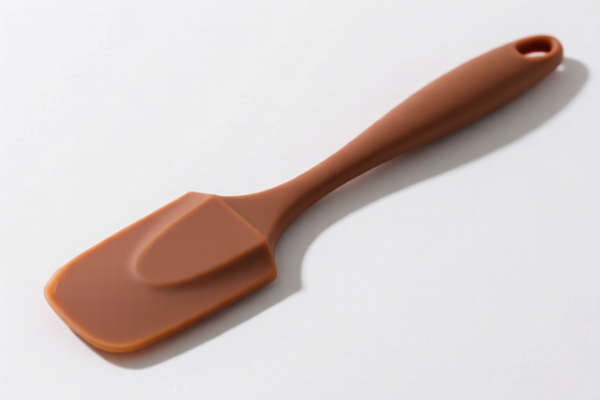
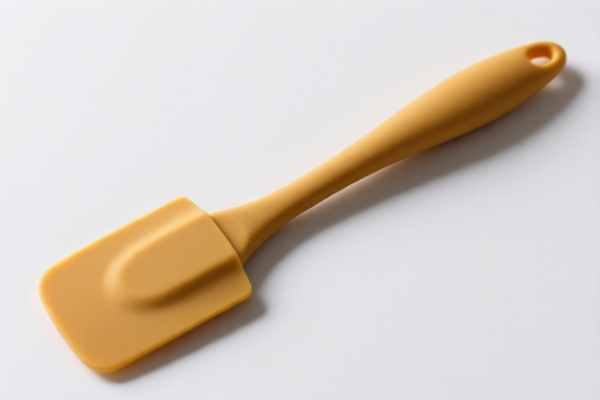
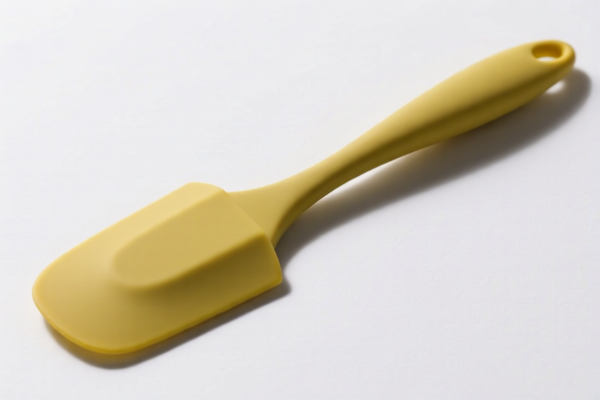
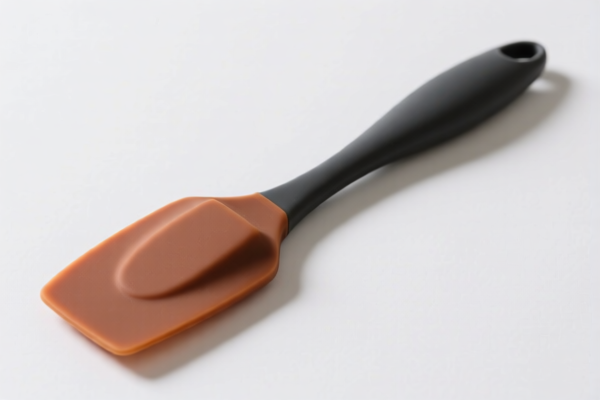
AI Analysis
🛠️ Silicone Spacer (Gaskets & Seals)
🌐 HS Code Reference & Customs Clearance Guide | 2026 Latest Tariff Analysis | Professional Entry Strategy
📌 I. Product Definition & Classification: Do You Really Understand "Spacers"?
A Silicone Spacer is a critical component used in construction, automotive, industrial machinery, and consumer goods to maintain distance, provide alignment, or create a seal between two surfaces. In international trade, the classification is heavily dependent on material composition, which is often ambiguous if not explicitly declared.
Since the product name "Silicone Spacer" implies a silicone-based material (a type of elastomer/rubber), customs authorities typically categorize it under Rubber Articles rather than Plastics, unless specific rigid plastic properties are proven. However, due to the lack of explicit material certification in the prompt, we analyze the most likely classifications based on industry norms and the provided data.
⚠️ Key Distinction Point:
- If the spacer is flexible, elastic, and seals against fluid/gas → Likely Rubber/Silicone (Chapter 40).
- If the spacer is rigid, hard plastic, and used purely for structural spacing → Likely Plastics (Chapter 39).
- Risk: Misclassification between Chapter 39 (Plastics) and Chapter 40 (Rubber) is the #1 cause of delays and penalties for this product.
📦 II. HS Code Classification Details (2026 Latest Tariff Authority Comparison)
Based on the provided data, the following HS Codes are the primary candidates for "Silicone Spacers." Note that all listed codes attract high additional tariffs due to US-China trade policies.
| HS Code | Product Description | Application Scenario | Material Assumption |
|---|---|---|---|
4016.93.50.50 |
Other vulcanized rubber articles (Sealing Gaskets) | Most Likely for Silicone (Elastomer). Used for sealing joints, pipes, engines. | ✅ Silicone Rubber (Vulcanized) |
4016.93.50.10 |
Other vulcanized rubber articles (Sealing Gaskets) | Alternative for Rubber/Silicone spacers. Broad "Other" category for sealing components. | ✅ Silicone Rubber |
3926.90.45.10 |
Plastic articles: Other (Gaskets, Washers, Seals) | If the spacer is rigid plastic (e.g., PVC, PE, PP) rather than flexible silicone. | ⚠️ Plastic (Inferred) |
3926.90.45.90 |
Plastic articles: Other (Gaskets, Washers, Seals) | "Other" plastic gaskets/seals. Used as a fallback if plastic material cannot be distinguished from rubber. | ⚠️ Plastic (Inferred) |
8484.90.00.00 |
Parts of Mechanical Appliances (Gaskets) | Rare for pure silicone spacers. Used if it’s a composite gasket (e.g., metal core + silicone layer). | ⚠️ Composite/Metal |
🔍 Critical Reminder:
- Silicone is technically a synthetic rubber. Therefore, codes under 4016.93 (Rubber articles) are generally more accurate for silicone spacers than plastic codes.
- Codes3926.90.45.xxassume the product is Plastic. If you ship "Silicone" but declare it as Plastic, you risk a Material Mismatch penalty.
- Code8484.90.00.00is a "catch-all" for mechanical gaskets. It is less precise for pure silicone spacers and should only be used if the gasket has a distinct mechanical/structural integration.
💰 III. 2026 Latest Tariff Rate Breakdown (Including Surtaxes & Policy Add-ons)
✅ Applicable Country: United States (US)
✅ Country of Origin: China (CN)
✅ Effective Date: Post-November 10, 2025 (Current Trade Policy)
🎯 1. 4016.93.50.50 & 4016.93.50.10 (Rubber/Silicone Spacers)
| Item | Content |
|---|---|
| Base Duty Rate | 2.5% |
| USITC Section 301 Surtax | +25% |
| IEEPA Section 122 Tariff | +10% |
| Total Effective Duty Rate | 37.5% |
| Tax Calculation | CIF Value × 37.5% |
| De Minimis Eligibility | ❌ Not Eligible (Deny De Minimis) |
| Legal Basis Path | IEEPA:9903.01.25 → IEEPA:9903.01.24 → USITC:4016.93.50.xx → FOOTNOTE:9903.88.01 |
📌 Explanation:
- Silicone Rubber falls under Chapter 40. The base rate is low (2.5%).
- However, due to Section 301 (25%) and Section 122 (10%), the total burden is 37.5%.
- This is a high-cost category. Cost optimization must focus on HS Code accuracy to avoid re-classification penalties.
🎯 2. 3926.90.45.10 & 3926.90.45.90 (Plastic Spacers - If Misclassified or Plastic)
| Item | Content |
|---|---|
| Base Duty Rate | 3.5% |
| USITC Section 301 Surtax | +25% |
| IEEPA Section 122 Tariff | +10% |
| Total Effective Duty Rate | 38.5% |
| Tax Calculation | CIF Value × 38.5% |
| De Minimis Eligibility | ❌ Not Eligible (Deny De Minimis) |
| Legal Basis Path | IEEPA:9903.01.25 → IEEPA:9903.01.24 → USITC:3926.90.45.xx → FOOTNOTE:9903.88.01 |
📌 Note:
- If the spacer is actually Plastic (not Silicone), these codes apply.
- The rate is 38.5%, which is 1% higher than the rubber classification.
- ⚠️ Warning: Do not use these codes for Silicone products. If audited, the discrepancy between "Silicone" product and "Plastic" HS Code will lead to fraud allegations.
🎯 3. 8484.90.00.00 (Mechanical Gasket Parts)
| Item | Content |
|---|---|
| Base Duty Rate | 2.5% |
| USITC Section 301 Surtax | +25% |
| IEEPA Section 122 Tariff | +10% |
| Total Effective Duty Rate | 37.5% |
| Tax Calculation | CIF Value × 37.5% |
| De Minimis Eligibility | ❌ Not Eligible (Deny De Minimis) |
| Legal Basis Path | IEEPA:9903.01.25 → IEEPA:9903.01.24 → USITC:8484.90.00.00 → FOOTNOTE:9903.88.01 |
📌 Caution:
- This code is for parts of machinery. A simple silicone spacer is rarely classified here unless it is part of a larger assembly or has a metallic reinforcement.
- Using this for a pure silicone spacer may be challenged by CBP as incorrect classification.
🛠️ IV. Customs Clearance Practical Advice (Real-World Pitfall Guide)
✅ 1. Required Documentation Checklist (Non-Negotiable)
| Document | Mandatory? | Description |
|---|---|---|
| ✅ Material Composition Statement | ✔️ | Must explicitly state "Silicone Rubber" or "Vulcanized Silicone." Avoid vague terms like "Flexible Polymer." |
| ✅ Product Specifications | ✔️ | Include hardness (Shore A), tensile strength, and temperature resistance to prove it is rubber/elastomer. |
| ✅ HS Code Justification Memo | ✔️ | Explain why Chapter 40 (Rubber) is chosen over Chapter 39 (Plastic) based on material properties. |
| ✅ Commercial Invoice | ✔️ | Clearly describe as "Silicone Rubber Gasket/Spacer" – NOT "Plastic Spacer." |
| ✅ Certificate of Origin | ✔️ | Essential for proving China origin to apply the correct surtaxes. |
| ✅ Photos (Clear & Detailed) | ✔️ | Show cross-section if composite, or texture to distinguish from rigid plastic. |
✅ 2. Declaration Tips (Golden Rules)
🔥 "Declare Material, Not Just Shape. Rubber vs. Plastic Determines Cost & Compliance."
| Scenario | Correct Declaration | Incorrect Action |
|---|---|---|
| Pure Silicone Spacer | HS 4016.93.50.50 (Rubber) |
Declaring as Plastic (3926...) → Customs Audit/Fine |
| Hard Plastic Spacer | HS 3926.90.45.10 (Plastic) |
Declaring as Rubber → Underpayment Penalty |
| Metal-Reinforced Gasket | HS 8484.90.00.00 (Check with Expert) |
Declaring as pure Silicone → Classification Error |
| Mixed Packaging | Total CIF Value | Splitting items to avoid surtax → Fraud Alert |
✅ 3. Special Situation Handling
| Situation | Advice |
|---|---|
| Silicone vs. Plastic Ambiguity | Conduct a material test (FTIR or Density Test). Silicone density is ~1.1-1.3 g/cm³; Plastics vary. Provide test report. |
| OEM Custom Spacers | Provide design drawings showing the material specification. CBP respects engineering specs over generic names. |
| Small Samples (De Minimis) | ❌ Do Not Ship via De Minimis. The policy explicitly denies de minimis for China-origin goods under these HS codes. It will be held and taxed. |
| Origin Diversification | Consider sourcing from Vietnam or Mexico if possible. Non-China origin may avoid Section 122 (10%) and potentially Section 301 (25%), reducing total duty to 2.5%-5%. |
🌍 V. Global Market Comparison (2026 Update)
| Country/Region | Recommended HS Code | Duty Rate (China Origin) | Certification | Notes |
|---|---|---|---|---|
| 🇺🇸 USA | 4016.93.50.50 |
37.5% | ASTM, FDA (if food contact) | Highest burden. Section 301 + 122 apply. |
| 🇨🇳 China | 4016.93.50.50 |
~5% | RoHS | No surtaxes. |
| 🇪🇺 EU | 4016.93.90 |
~0-3% (FTAA dependent) | REACH | Lower barriers if free trade agreement applies. |
| 🇬🇧 UK | 4016.93.90 |
~0-3% | UKCA | Similar to EU post-Brexit. |
| 🇦🇺 Australia | 4016.93.90 |
~5% | ACCC | Moderate duty. |
📌 Conclusion:
- USA is the most expensive market for silicone spacers due to layered tariffs.
- Compliance is critical: Misdeclaring Silicone as Plastic to "save" money is risky because the duty difference is minimal (38.5% vs 37.5%), but the penalty for fraud is severe.
- Best Strategy: Accurately classify as Rubber (4016) to avoid material mismatch claims, and consider supply chain relocation to avoid US surtaxes.
📌 VI. Common Errors & Pitfall Guide (Lessons Learned)
❌ Error 1: Calling it "Plastic Spacer" when it is Silicone.
👉 Consequence: Customs issues a Material Mismatch notice. Goods held. Potential civil penalties for false declaration.
❌ Error 2: Using De Minimis (Section 321) for shipments under $800.
👉 Consequence: Immediate seizure or delay. The policy explicitly blocks China-origin goods under these HS codes from de minimis entry.
❌ Error 3: Ignoring the "122 Clause" (Section 122).
👉 Consequence: Underpaying tariff by 10%. Back-taxes + Interest upon audit.
❌ Error 4: Vague Description "Gasket" without material.
👉 Consequence: Customs may assign a higher duty rate or request a lab test, causing 30-60 day delays.
✅ Correct Practice:
"Silicone Rubber Gasket/Spacer, Vulcanized, Shore A 60, Part No. XYZ, Made in China"
🎯 VII. Conclusion: Precision Classification, Cost Control
🎯 Remember the Mantra:
🔹 "Silicone is Rubber, Not Plastic. Declare True, Avoid the Trap."
🔹 "37.5% is the Baseline in the US. Don't Gamble with Code."
🔹 "De Minimis is Closed. Plan Your Logistics."
📌 Pro Tip:
If your silicone spacers are food-grade (FDA compliant) or medical-grade, ensure this is stated on the invoice. While it doesn’t change the HS code, it prevents additional regulatory holds by the FDA at US ports.
📣 Immediate Action Required:
📞 Verify Material: Confirm if your product is Silicone (Rubber) or Plastic.
📄 Prepare Docs: Get material test reports and accurate invoices.
🚀 Consider Origin: Evaluate if shifting production to non-China hubs (e.g., Vietnam) can save ~35% in duties.
✨ Professional Customs Clearance Starts with Accurate HS Codes!
💼 Every Percentage Point Matters in International Trade!
Customer Reviews
About HS Code Classification
The Harmonized System (HS) is an internationally standardized nomenclature developed by the World Customs Organization (WCO) to classify traded products. Over 200 countries use the HS system as the basis for customs tariffs, trade statistics, and import/export regulations.
Each HS code follows a hierarchical structure:
- Chapter (2 digits) — Broad category of goods (e.g., Chapter 84: Machinery and Mechanical Appliances)
- Heading (4 digits) — More specific grouping within the chapter
- Subheading (6 digits) — Internationally standardized breakdown, used by all WCO member countries
- National subdivisions (8-10 digits) — Country-specific extensions for further classification, such as US HTSUS 10-digit codes
Correct HS code classification is essential for smooth customs clearance, accurate duty payment, and compliance with trade regulations. Misclassification can lead to customs delays, overpayment of duties, or penalties.
When importing from CN to US, the applicable tariff rates may include:
- Most-Favored-Nation (MFN) rate — The standard duty rate applied to WTO members
- General rate — Applied to countries without trade agreements
- Trade remedy duties — Additional tariffs such as Section 301 (anti-dumping), Section 232 (national security), or countervailing duties
The information provided on this page is for reference purposes only. For official classification, please consult with your local customs authority or a licensed customs broker.