silicone straw
CN → US| HS Code | Tariff Rate | Origin | Destination | Doc |
|---|---|---|---|---|
| 4016990500 | 20.9% | CN | US | Official Doc |
| 3917290090 | 38.1% | CN | US | Official Doc |
| 3926904590 | 38.5% | CN | US | Official Doc |
| 4016996050 | 37.5% | CN | US | Official Doc |
| 3917400095 | 40.3% | CN | US | Official Doc |
Product Images
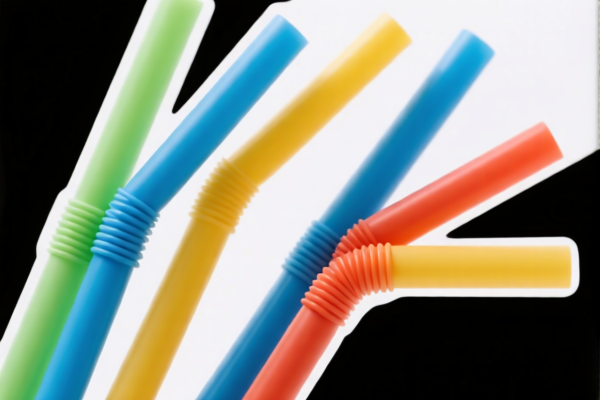
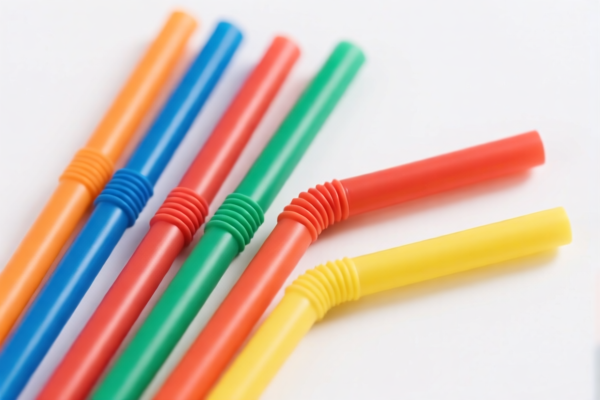
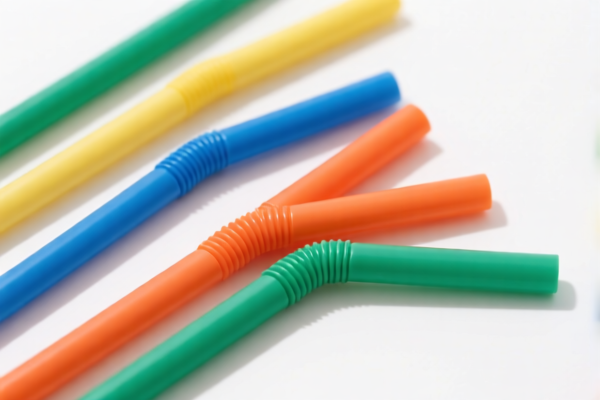
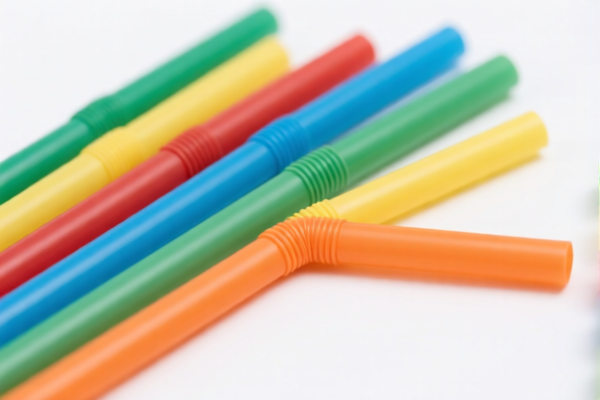
AI Analysis
🥤 Silicone Straws (Reusable Drinking Straws)
🌐 HS Code Reference & Customs Clearance Guide | 2026 Latest Tariff Analysis | Professional Clearance Strategy
📌 1. Product Definition & Classification: What Exactly Are "Silicone Straws"?
Silicone straws are flexible, heat-resistant, and BPA-free drinking accessories made from food-grade silicone rubber. In international trade, they are primarily classified based on their material composition and function.
Key Distinction:
Rubber vs. Plastic: Although often called "plastic" colloquially, silicone is technically an elastomer (rubber). However, customs may classify them under plastic headings if they are rigid or considered "accessories" to plastic pipes.
* Use Case:* The intended use (e.g., household item, industrial seal) heavily influences the HS Code selection.
⚠️ Critical Classification Point:
- If classified as household items made of rubber → 4016.99.05.00 (Lowest Tax)
- If classified as plastic pipe accessories → 3917.29.00.90 (High Tax)
- If classified as plastic seals/gaskets → 3926.90.45.90 (High Tax)
📦 2. HS Code Classification Details (2026 Latest Tariff Reference)
| HS Code | Product Description | Application Context | Material Basis | Total Tax Rate |
|---|---|---|---|---|
4016.99.05.00 |
Other vulcanized rubber articles, suitable for household or toilet use | Household silicone straws, reusable drinking accessories | Vulcanized Rubber | 20.9% |
3917.29.00.90 |
Other tubes, pipes, and hoses with composite outer surface | Silicone straws viewed as "pipe accessories" | Plastic | 38.1% |
3926.90.45.90 |
Other plastic articles, gaskets and washers | Silicone straws viewed as "seals" | Plastic | 38.5% |
4016.99.60.50 |
Other vulcanized rubber articles, no specific use | General-purpose silicone items | Vulcanized Rubber | 37.5% |
3917.40.00.95 |
Other fittings for tubes, pipes, and hoses (joints/connectors) | Silicone straws viewed as "connectors" | Plastic | 40.3% |
🔍 Key Insight:
-4016.99.05.00offers the lowest tax burden (20.9%) if the product can be clearly defined as a household item made of rubber.
- Other codes result in tax rates ranging from 37.5% to 40.3% due to higher additional tariffs on plastic goods.
- Strategy: Always aim for 4016.99.05.00 by emphasizing "household use" and "rubber material" in documentation.
💰 3. 2026 Latest Tariff Rate Breakdown (Including Surtaxes & Policy Add-ons)
✅ Applicable Country: United States (US)
✅ Country of Origin: China (CN)
✅ Effective Date: From November 10, 2025 (including subsequent imports)
🎯 1. 4016.99.05.00 —— Other vulcanized rubber articles, suitable for household or toilet use
| Item | Content |
|---|---|
| Base Duty | 3.4% |
| Section 301 Surcharge | +7.5% |
| Section 122 Tariff | +10% |
| Total Tax Rate | 20.9% |
| Tax Calculation | CIF Value × 20.9% |
| De Minimis Eligibility | ❌ No (Section 301 and Section 122 taxes apply) |
| Legal Basis Path | Section 122: 9903.01.04 → Section 301: 9903.01.03 → USITC: 4016.99.05.00 |
📌 Explanation:
- "Section 301 Surcharge 7.5%": Additional tariff under U.S. Trade Act Section 301 for Chinese goods.
- "Section 122 Tariff 10%": Additional 10% tariff under Section 122 of the Trade Expansion Act of 1962 for specific rubber articles.
- Total 20.9% is significantly lower than other potential classifications, making this the preferred HS Code.
🎯 2. 3917.29.00.90 —— Other tubes, pipes, and hoses with composite outer surface
| Item | Content |
|---|---|
| Base Duty | 3.1% |
| Section 301 Surcharge | +25.0% |
| Section 122 Tariff | +10% |
| Total Tax Rate | 38.1% |
| Tax Calculation | CIF Value × 38.1% |
| De Minimis Eligibility | ❌ No |
| Legal Basis Path | Section 122: 9903.01.04 → Section 301: 9903.01.03 → USITC: 3917.29.00.90 |
📌 Note:
- High tax rate due to the 25% Section 301 surcharge on plastic goods.
- Misclassification as "plastic pipe" instead of "household rubber item" leads to a 17.2% higher tax.
🎯 3. 3926.90.45.90 —— Other plastic articles, gaskets and washers
| Item | Content |
|---|---|
| Base Duty | 3.5% |
| Section 301 Surcharge | +25.0% |
| Section 122 Tariff | +10% |
| Total Tax Rate | 38.5% |
| Tax Calculation | CIF Value × 38.5% |
| De Minimis Eligibility | ❌ No |
| Legal Basis Path | Section 122: 9903.01.04 → Section 301: 9903.01.03 → USITC: 3926.90.45.90 |
📌 Warning:
- Even higher tax due to misclassification as "plastic gaskets."
- Avoid this classification unless the product is explicitly used as an industrial seal.
🎯 4. 4016.99.60.50 —— Other vulcanized rubber articles, no specific use
| Item | Content |
|---|---|
| Base Duty | 2.5% |
| Section 301 Surcharge | +25.0% |
| Section 122 Tariff | +10% |
| Total Tax Rate | 37.5% |
| Tax Calculation | CIF Value × 37.5% |
| De Minimis Eligibility | ❌ No |
| Legal Basis Path | Section 122: 9903.01.04 → Section 301: 9903.01.03 → USITC: 4016.99.60.50 |
📌 Note:
- Although the base duty is low (2.5%), the 25% Section 301 surcharge applies because it is not classified under the "household use" exemption.
- Still higher than4016.99.05.00(20.9%).
🎯 5. 3917.40.00.95 —— Other fittings for tubes, pipes, and hoses (joints/connectors)
| Item | Content |
|---|---|
| Base Duty | 5.3% |
| Section 301 Surcharge | +25.0% |
| Section 122 Tariff | +10% |
| Total Tax Rate | 40.3% |
| Tax Calculation | CIF Value × 40.3% |
| De Minimis Eligibility | ❌ No |
| Legal Basis Path | Section 122: 9903.01.04 → Section 301: 9903.01.03 → USITC: 3917.40.00.95 |
📌 Warning:
- Highest tax rate (40.3%).
- Only applicable if the product is explicitly marketed as a "connector" or "fitting" for plumbing, not a drinking straw.
🛠️ 4. Customs Clearance Practical Advice (Battle-Tested Pitfall Guide)
✅ 1. Documentation Checklist (Essential)
| Document | Required | Explanation |
|---|---|---|
| ✅ Product Specification Sheet | ✔️ | Must state "Food Grade Silicone," "Reusable," "Household Use." |
| ✅ Material Certificate | ✔️ | Proof that the material is vulcanized silicone rubber, not plastic. |
| ✅ Product Photos | ✔️ | Clear images showing the straw’s flexibility and household context (e.g., in a drink). |
| ✅ Commercial Invoice | ✔️ | Description must say "Silicone Drinking Straw for Household Use" – avoid words like "plastic" or "pipe." |
| ✅ Packing List | ✔️ | Detail quantities and weights. |
✅ 2. Declaration Strategy (Key Mnemonic)
🔥 "Rubber + Household = 20.9%; Plastic + Pipe = 38%+!"
| Scenario | Correct Declaration | Wrong Practice |
|---|---|---|
| Reusable drinking straw | 4016.99.05.00 |
Misreport as "plastic straw" → 38.1% |
| Straw packaged as gift item | 4016.99.05.00 |
Misreport as "accessory" → 37.5% |
| Industrial silicone seal | 3926.90.45.90 |
Misreport as "straw" → 38.5% |
| Straw used as a connector | 3917.40.00.95 |
Misreport as "household item" → 40.3% |
✅ 3. Special Circumstances
| Situation | Handling Advice |
|---|---|
| OEM/Customized Straws | Provide design files and confirm material is silicone, not plastic. |
| Multi-Pack Sets | Declare as a single unit of "household rubber articles" to avoid component-level scrutiny. |
| Food Contact Safety | Include FDA/LFGB compliance statements to reinforce "household/food use" classification. |
| Origin Misdeclaration | Ensure Certificate of Origin matches the actual manufacturing country to avoid Section 301/122 penalties. |
🌍 5. Global Market Clearance Comparison (2026 Latest)
| Country/Region | Recommended HS Code | Tariff | Certification | Note |
|---|---|---|---|---|
| 🇺🇸 USA | 4016.99.05.00 |
20.9% (China) | FDA + LFGB | Lowest among options |
| 🇨🇳 China | 4016.99.05.00 |
~5-10% | GB Standard | No Section 301/122 |
| 🇪🇺 EU | 4016.99.90 |
0-4% | REACH + LFGB | No surtaxes |
| 🇬🇧 UK | 4016.99.90 |
0-4% | UKCA + LFGB | Post-Brexit standards |
| 🇯🇵 Japan | 4016.99.90 |
0-5% | JIS + Food Sanitation | No surtaxes |
📌 Conclusion:
- The USA is the only market imposing Section 301 and Section 122 tariffs, making accurate classification critical.
- For other markets, standard HS codes apply with no additional punitive tariffs.
📌 6. Common Errors & Pitfall Guide (Lessons Learned)
❌ Error 1: Using "Plastic Straw" in the product description
👉 Consequence: Customs classifies as 3917.29.00.90 → 38.1% tax instead of 20.9%.
❌ Error 2: Not emphasizing "Household Use"
👉 Consequence: Classified as 4016.99.60.50 → 37.5% tax due to lack of household exemption.
❌ Error 3: Providing vague material info (e.g., "Silicone-like")
👉 Consequence: Customs may default to higher tax rates or reject the classification.
❌ Error 4: Claiming De Minimis Exemption
👉 Consequence: Denied. Section 301 and Section 122 taxes apply even to small shipments.
✅ Correct Approach:
"Food-Grade Silicone Reusable Drinking Straw, Household Use, BPA-Free, FDA Approved"
🎯 7. Conclusion: Professional Declaration, Cost Savings, Efficiency!
🎯 Remember the Mnemonic:
🔹 "Rubber + Household = 20.9%! Plastic + Pipe = 38%+!"
🔹 "One HS Code difference, $20,000 saved on $100,000 shipment!"
📌 Pro Tip:
If your silicone straws are originating from Vietnam, Mexico, Thailand, or Malaysia, you may qualify for IEEPA exemptions or lower tariffs.
Consider applying for an Advance Ruling before shipment to ensure smooth customs clearance.
📣 Take Action Now:
📞 Contact a professional customs broker + Provide product specs + Apply for HS Code Advance Ruling
🚀 Ensure your silicone straws clear customs smoothly, reduce costs, and maximize profits!
✨ Professional clearance starts with accurate classification!
💼 Every cent of your cost deserves precise calculation!
Customer Reviews
About HS Code Classification
The Harmonized System (HS) is an internationally standardized nomenclature developed by the World Customs Organization (WCO) to classify traded products. Over 200 countries use the HS system as the basis for customs tariffs, trade statistics, and import/export regulations.
Each HS code follows a hierarchical structure:
- Chapter (2 digits) — Broad category of goods (e.g., Chapter 84: Machinery and Mechanical Appliances)
- Heading (4 digits) — More specific grouping within the chapter
- Subheading (6 digits) — Internationally standardized breakdown, used by all WCO member countries
- National subdivisions (8-10 digits) — Country-specific extensions for further classification, such as US HTSUS 10-digit codes
Correct HS code classification is essential for smooth customs clearance, accurate duty payment, and compliance with trade regulations. Misclassification can lead to customs delays, overpayment of duties, or penalties.
When importing from CN to US, the applicable tariff rates may include:
- Most-Favored-Nation (MFN) rate — The standard duty rate applied to WTO members
- General rate — Applied to countries without trade agreements
- Trade remedy duties — Additional tariffs such as Section 301 (anti-dumping), Section 232 (national security), or countervailing duties
The information provided on this page is for reference purposes only. For official classification, please consult with your local customs authority or a licensed customs broker.