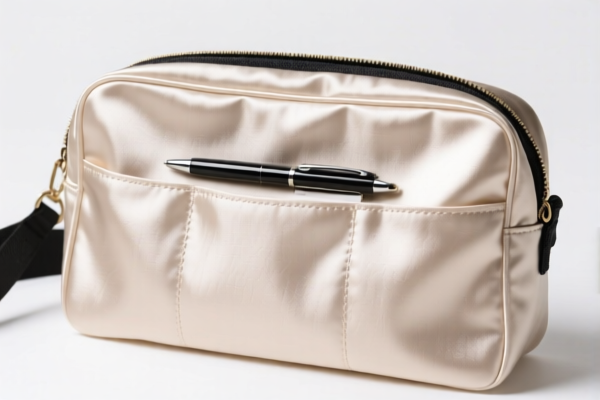
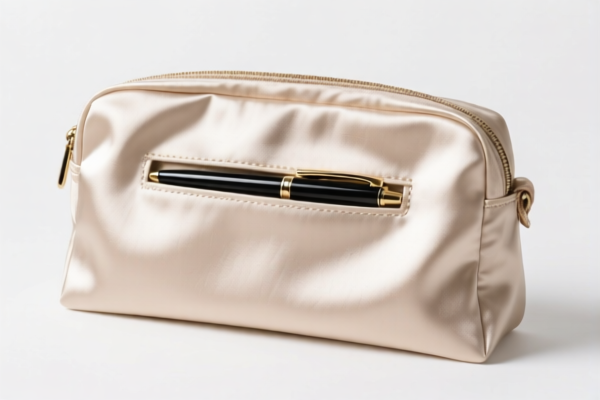
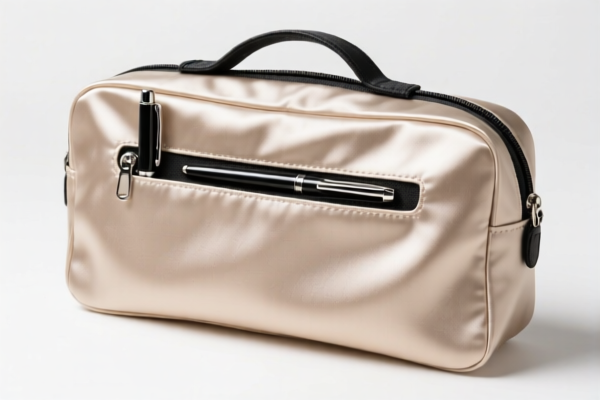
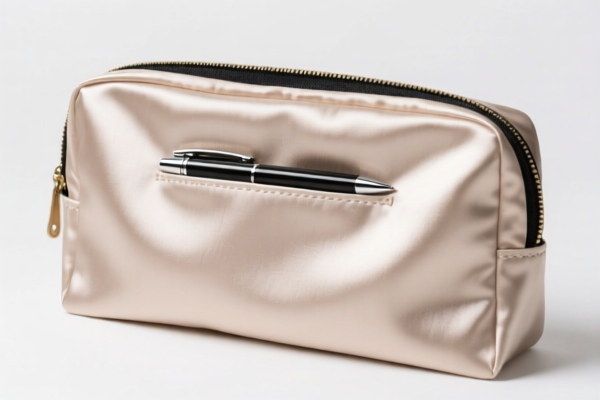
silk document organizer with pen slot
CN → US| HS Code | Tariff Rate | Origin | Destination | Doc |
|---|---|---|---|---|
| 4820300040 | 35.0% | CN | US | Official Doc |
| 4202328500 | 35.0% | CN | US | Official Doc |
| 4202329900 | 52.6% | CN | US | Official Doc |
Product Images
AI Analysis
🧣 Silk Document Organizer with Pen Slot
🌐 HS Code Reference & Customs Clearance Guide | 2026 Latest Tariff Analysis | Professional Clearance Strategy
📌 I. Product Definition & Classification: Do You Really Know Your "Silk Organizer"?
A Silk Document Organizer with Pen Slot is a sophisticated accessory designed for business professionals, lawyers, and luxury gift markets. It serves dual purposes: organizing documents (folders, reports, notebooks) and securing writing instruments.
In international trade, the classification hinges on two critical factors: 1. Material: Explicitly stated as "Silk" (a textile/fabric material). 2. Function/Form: A container/organizer ("bag-like" structure) vs. a paper product ("folder").
⚠️ Key Distinction:
- If viewed as a paper product (e.g., a rigid folder made of paper/cardboard with silk coating), it falls under Chapter 48.
- If viewed as a textile bag/container (sewn fabric with pockets), it falls under Chapter 42.
- Crucial Note: Pure silk organizers are typically sewn textiles, making Chapter 42 the more technically accurate classification for "bags," but Chapter 48 is often used if the item is rigid and primarily serves as a "file cover."
📦 II. HS Code Classification Details (Based on Provided Data)
The following HS Codes are derived from the provided dataset. Each reflects a different interpretive angle by customs officials or classifiers.
| HS Code | Product Description | Classification Logic (From Data) | Key Characteristic |
|---|---|---|---|
| 4820.30.00.40 | File Folders / Covers | Shape: "Document Organizer"; Material: "Silk" is treated as an exception/no conflict in "Other" category; Use: File organization fits classification logic. | Paper/Stationery Logic (Treated as a folder despite silk material) |
| 4202.32.85.00 | Travel/Fitted Cases | Shape: Fits "small portable items"; Material: "Silk" directly extracted; Use: Container for portable items. | Luxury Bag Logic (Focus on portability and material) |
| 4202.32.99.00 | Other Textile Bags | Shape: "Bag-like"; Material: "Silk" inferred as textile; Use: Container; No material/form conflict. | General Textile Bag Logic (Broader category for textile containers) |
🔍 Critical Insight:
- 4820.30.00.40 assumes the item is primarily a file cover, ignoring the textile nature due to lack of specific silk-folder codes.
- 4202.32.85.00 and 4202.32.99.00 treat it as a bag, acknowledging the silk (textile) composition.
- Discrepancy Alert: The tax rates differ significantly (35% vs 52.6%) based on whether it’s seen as a "folder" or a "bag."
💰 III. 2026 Latest Tariff Rate Breakdown (Including Surtaxes & Policy Add-ons)
✅ Applicable Country: United States (US)
✅ Origin: China (CN)
✅ Effective Date: From November 10, 2025 (including subsequent imports)
🎯 1. 4820.30.00.40 —— File Folders / Covers (Non-Traditional Material)
| Item | Content |
|---|---|
| Base Tariff | 0.0% |
| USITC Surtax | +25.0% |
| IEEPA Surtax | +10.0% |
| Total Tariff | 35.0% |
| Calculation Basis | CIF Value × 35% |
| De Minimis Eligibility | ❌ Not Eligible |
| Legal Basis Path | IEEPA:9903.01.25 → IEEPA:9903.01.24 → USITC:4820.30.00.40 |
📌 Explanation:
- "Base Tariff 0%": Standard duty for file folders under Chapter 48.
- "USITC 25%": Section 301 Additional Duty.
- "IEEPA 10%": International Emergency Economic Powers Act surcharge on Chinese goods.
- Total 35%: This is the lower-risk tariff if the item is successfully argued as a "folder."
🎯 2. 4202.32.85.00 —— Travel/Fitted Cases (Silk Material)
| Item | Content |
|---|---|
| Base Tariff | 0.0% |
| USITC Surtax | +25.0% |
| IEEPA Surtax | +10.0% |
| Total Tariff | 35.0% |
| Calculation Basis | CIF Value × 35% |
| De Minimis Eligibility | ❌ Not Eligible |
| Legal Basis Path | IEEPA:9903.01.25 → IEEPA:9903.01.24 → USITC:4202.32.85.00 |
📌 Explanation:
- Same tax structure as above.
- Risk: Requires proving it is a "travel/fitted case" and not a general bag. Customs may challenge this if it’s not designed for travel.
🎯 3. 4202.32.99.00 —— Other Textile Bags (General)
| Item | Content |
|---|---|
| Base Tariff | 17.6% |
| USITC Surtax | +25.0% |
| IEEPA Surtax | +10.0% |
| Total Tariff | 52.6% |
| Calculation Basis | CIF Value × 52.6% |
| De Minimis Eligibility | ❌ Not Eligible |
| Legal Basis Path | IEEPA:9903.01.25 → IEEPA:9903.01.24 → USITC:4202.32.99.00 |
📌 Warning:
- Base Tariff 17.6%: This is significantly higher than the other two codes.
- Total 52.6%: This is a high-cost classification.
- Why? This code is a "catch-all" for textile bags that don’t fit specific categories (like travel cases). If Customs views your organizer as a generic "bag" rather than a "travel case" or "folder," you pay this higher rate.
🛠️ IV. Customs Clearance Practical Advice (Avoid Pitfalls)
✅ 1. Document Checklist (Non-negotiable)
| Document | Required? | Notes |
|---|---|---|
| ✅ Product Specifications | ✔️ | Must clearly state "Silk" material and "Document Organizer" function. |
| ✅ Material Declaration | ✔️ | Explicitly confirm 100% Silk or Silk-blend. Do not use vague terms like "fabric." |
| ✅ Photos (Inside/Out) | ✔️ | Show the pen slot and document compartments. Prove it’s a "bag" (sewn seams) or "folder" (rigid structure). |
| ✅ Commercial Invoice | ✔️ | Describe as: "Silk Document Organizer with Pen Slot, for filing documents." |
| ✅ Packing List | ✔️ | Include all components (organizer, pen, etc.). |
| ✅ Certificate of Origin | ✔️ | Required for US origin determination and surcharge application. |
✅ 2. Declaration Strategy (Key Mantras)
🔥 "Material Defines Chapter, Function Defines Subheading!"
| Scenario | Recommended HS Code | Rationale |
|---|---|---|
| Rigid Folder-like | 4820.30.00.40 |
If the organizer is stiff, cardboard-backed, or primarily a "cover," argue for Chapter 48. Lower tax risk (35%). |
| Soft Bag-like (Travel) | 4202.32.85.00 |
If it’s a soft pouch designed for carrying documents in a briefcase, argue for "travel/fitted case." Tax 35%. |
| Soft Bag-like (General) | 4202.32.99.00 |
AVOID if possible. Only use if it doesn’t fit "travel" definition. High tax (52.6%). |
📌 Tip:
- If your organizer is soft and flexible, Customs is likely to classify it under Chapter 42.
- To avoid the 52.6% rate, try to justify 4202.32.85.00 by emphasizing its use as a "protective case for documents" (similar to a laptop sleeve).
✅ 3. Special Cases & Handling
| Situation | Advice |
|---|---|
| Silk-Coated Paper Folder | If it’s paper with silk coating, definitely use 4820.30.00.40. Argue material is primarily paper. |
| 100% Silk Sewn Bag | Must use Chapter 42. Try to support 4202.32.85.00 by showing it’s a "fitted case" for documents. |
| Gift Sets (Organizer + Pen) | Declare as a set. The primary character determines classification. If organizer is main, classify as organizer. |
| Customs Challenge | If Customs questions the "Silk" material, provide lab test reports or supplier declarations. |
🌍 V. Global Market Comparison (2026 Update)
| Country/Region | Recommended HS Code | Estimated Total Duty | Notes |
|---|---|---|---|
| 🇺🇸 USA | 4820.30.00.40 or 4202.32.85.00 |
35% | Avoid 4202.32.99.00 (52.6%) due to high cost. |
| 🇨🇳 China | 4820.30.00.40 |
~10-13% | No US-style surtaxes. Lower burden. |
| 🇪🇺 EU | 4202.32.85.00 |
~4-6% | Standard EU textile duty. No 301/IEEPA surtaxes. |
| 🇬🇧 UK | 4202.32.85.00 |
~4-6% | Post-Brexit rules similar to EU. |
| 🇦🇺 Australia | 4202.32.85.00 |
~5% | Low duty, GST applies separately. |
📌 Conclusion:
- USA is the most expensive market due to Section 301 and IEEPA surtaxes.
- European/Australian markets are far more favorable for silk textile products.
- For US imports, precise classification is critical to avoid the 52.6% rate.
📌 VI. Common Mistakes & Pitfalls (Lessons Learned)
❌ Mistake 1: Declaring as "Textile Bag" without justification → 52.6% Tax
👉 Fix: Provide evidence it’s a "fitted case" (4202.32.85.00) or "folder" (4820.30.00.40).
❌ Mistake 2: Using vague terms like "Silk Product" → Customs Delay
👉 Fix: Specify "100% Silk Document Organizer with Pen Slot."
❌ Mistake 3: Ignoring the "Pen Slot" → Misclassification
👉 Fix: The pen slot doesn’t change classification, but omitting it may lead to incomplete description. Always include it in the description.
❌ Mistake 4: Assuming "Silk" = Free Duty → Surprise Bill
👉 Fix: Silk items from China are subject to additional surtaxes in the US. Base duty may be low, but total duty is high.
🎯 VII. Conclusion: Smart Classification, Lower Costs!
🎯 Remember the Mantra:
🔹 "Folder or Bag? Folder wins on tax (35% vs 52.6%)."
🔹 "Silk is Textile, but if it’s a Folder, Chapter 48 applies."
🔹 "Always Aim for 35%, Never 52.6%!"
📌 Pro Tip:
If you have the flexibility, consider designing the organizer with a rigid backing or cardboard insert to strengthen the argument for Chapter 48 (File Folders). This can potentially secure the 35% rate via 4820.30.00.40, avoiding the ambiguity of Chapter 42 entirely.
📣 Immediate Action:
📞 Consult a licensed customs broker.
📸 Provide clear photos of the seams, lining, and structure.
📄 Obtain a Material Test Report confirming Silk content.
🚀 Pre-classify your goods with US Customs (CBP) via an Advance Ruling if the volume is high.
✨ Professional Customs Clearance Starts with Accurate Classification!
💼 Every Percent Counts in Your Margin!
Customer Reviews
About HS Code Classification
The Harmonized System (HS) is an internationally standardized nomenclature developed by the World Customs Organization (WCO) to classify traded products. Over 200 countries use the HS system as the basis for customs tariffs, trade statistics, and import/export regulations.
Each HS code follows a hierarchical structure:
- Chapter (2 digits) — Broad category of goods (e.g., Chapter 84: Machinery and Mechanical Appliances)
- Heading (4 digits) — More specific grouping within the chapter
- Subheading (6 digits) — Internationally standardized breakdown, used by all WCO member countries
- National subdivisions (8-10 digits) — Country-specific extensions for further classification, such as US HTSUS 10-digit codes
Correct HS code classification is essential for smooth customs clearance, accurate duty payment, and compliance with trade regulations. Misclassification can lead to customs delays, overpayment of duties, or penalties.
When importing from CN to US, the applicable tariff rates may include:
- Most-Favored-Nation (MFN) rate — The standard duty rate applied to WTO members
- General rate — Applied to countries without trade agreements
- Trade remedy duties — Additional tariffs such as Section 301 (anti-dumping), Section 232 (national security), or countervailing duties
The information provided on this page is for reference purposes only. For official classification, please consult with your local customs authority or a licensed customs broker.