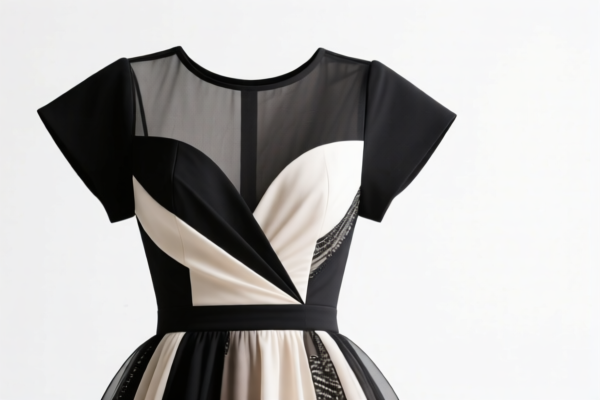
silk dress
CN → US| HS Code | Tariff Rate | Origin | Destination | Doc |
|---|---|---|---|---|
| 6204194000 | 18.5% | CN | US | Official Doc |
| 6104491000 | 18.4% | CN | US | Official Doc |
| 5007903090 | 35.8% | CN | US | Official Doc |
| 5007906090 | 38.9% | CN | US | Official Doc |
| 6204491000 | 24.4% | CN | US | Official Doc |
| 6104194000 | 18.4% | CN | US | Official Doc |
Product Images



AI Analysis
🧵 Silk Dress (真丝女装) – HS Code Guide & Customs Clearance Strategy
🌐 HS Code Reference & Clearance Guide | 2026 Latest Tariff Analysis | Professional Customs Strategy
📌 Section I: Product Definition & Classification – Do You Know Your "Silk Dress"?
Silk dresses are high-end garments made primarily from silk fibers (natural or regenerated), widely recognized for their elegance, breathability, and luxury appeal. In international trade, they are classified based on:
- Fabric composition (e.g., ≥70% silk, ≥85% silk)
- Garment type (e.g., dress, suit, skirt, blouse)
- Production method (knitted vs. woven)
- Intended use (female or girl wear)
⚠️ Critical Classification Rules: - Knitted silk dresses → Typically fall under Chapter 61 (Knitted or crocheted apparel) - Woven silk dresses → Typically fall under Chapter 62 (Not knitted or crocheted) - Raw silk fabric (not yet made into garments) → Falls under Chapter 50 (Silk yarn & woven fabrics)
📦 Section II: HS Code Classification Details (2026 Latest Tariff Reference)
Based on the provided data, here is the authorized HS Code list for Silk Dresses with corresponding tax breakdowns:
| HS Code | Product Description | Key Attributes | Total Tax Rate |
|---|---|---|---|
6204.19.40.00 |
Women's Silk Dresses (Woven), ≥70% Silk Content | Woven silk, female wear, dresses/skirts/suits | 18.5% |
6104.49.10.00 |
Knitted Silk Dresses, Silk Fiber Content | Knitted silk, female wear, dresses | 18.4% |
5007.90.30.90 |
Silk Woven Fabrics (Finished Garments), ≥85% Silk | Finished garments from ≥85% silk fabric | 35.8% |
5007.90.60.90 |
Silk Woven Fabrics (Finished Garments), General Silk | Finished garments from silk fabric | 38.9% |
6204.49.10.00 |
Women's Silk Dresses (Woven), General Silk Category | Woven silk, dresses | 24.4% |
6104.19.40.00 |
Knitted Silk Dresses/Suits, ≥70% Silk Content | Knitted silk, dresses/suits | 18.4% |
🔍 Important Notes: - Chapter 61 = Knitted silk garments - Chapter 62 = Woven silk garments - Chapter 50 = Silk yarn and woven fabrics (can include finished garments if specified)
💰 Section III: 2026 Tariff Rate Breakdown (Including Base + Additional Taxes)
✅ Applicable Country: United States (US)
✅ Origin: China (CN)
✅ Effective Date: From November 10, 2025 onward (includes future imports)
🎯 1. 6204.19.40.00 – Woven Silk Dresses (Women's), ≥70% Silk
| Item | Content |
|---|---|
| Base Duty | 1.0% |
| Section 301 Additional Duty | +7.5% |
| 122 Clause Duty | +10% |
| Total Duty | 18.5% |
| Tax Calculation | CIF Value × 18.5% |
| De Minimis Exemption | ❌ Not Applicable |
| Legal Reference Path | 122 Clause → Section 301 → 6204.19.40.00 |
📌 Explanation: - Base Duty: Standard tariff for silk garments. - Section 301 Additional Duty: Imposed due to trade measures against China. - 122 Clause Duty: Special additional tariff for certain categories. - Total: 18.5% — Moderate-to-High duty for silk apparel.
🎯 2. 6104.49.10.00 – Knitted Silk Dresses
| Item | Content |
|---|---|
| Base Duty | 0.9% |
| Section 301 Additional Duty | +7.5% |
| 122 Clause Duty | +10% |
| Total Duty | 18.4% |
| Tax Calculation | CIF × 18.4% |
| De Minimis Exemption | ❌ Not Applicable |
| Legal Reference Path | 122 Clause → Section 301 → 6104.49.10.00 |
📌 Note: - Knitted silk dresses have slightly lower base duty than woven, but same additional tariffs. - Ensure knitted structure is clearly defined in documentation.
🎯 3. 5007.90.30.90 – Silk Woven Fabrics (Finished Garments), ≥85% Silk
| Item | Content |
|---|---|
| Base Duty | 0.8% |
| Section 301 Additional Duty | +25.0% |
| 122 Clause Duty | +10% |
| Total Duty | 35.8% |
| Tax Calculation | CIF × 35.8% |
| De Minimis Exemption | ❌ Not Applicable |
| Legal Reference Path | 122 Clause → Section 301 → 5007.90.30.90 |
📌 Warning: - This classification applies to high-silk-content garments (≥85%) but is taxed much higher due to stricter Section 301 application. - Verify fabric composition carefully before declaring.
🎯 4. 5007.90.60.90 – Silk Woven Fabrics (Finished Garments), General Silk
| Item | Content |
|---|---|
| Base Duty | 3.9% |
| Section 301 Additional Duty | +25.0% |
| 122 Clause Duty | +10% |
| Total Duty | 38.9% |
| Tax Calculation | CIF × 38.9% |
| De Minimis Exemption | ❌ Not Applicable |
| Legal Reference Path | 122 Clause → Section 301 → 5007.90.60.90 |
📌 Caution: - Highest duty among silk garments due to high Section 301 rate. - Avoid misclassification as it leads to significant cost impact.
🎯 5. 6204.49.10.00 – Woven Silk Dresses (General)
| Item | Content |
|---|---|
| Base Duty | 6.9% |
| Section 301 Additional Duty | +7.5% |
| 122 Clause Duty | +10% |
| Total Duty | 24.4% |
| Tax Calculation | CIF × 24.4% |
| De Minimis Exemption | ❌ Not Applicable |
| Legal Reference Path | 122 Clause → Section 301 → 6204.49.10.00 |
📌 Note: - Higher base duty due to general silk dress classification. - Suitable for mixed-silk-content dresses.
🎯 6. 6104.19.40.00 – Knitted Silk Dresses/Suits, ≥70% Silk
| Item | Content |
|---|---|
| Base Duty | 0.9% |
| Section 301 Additional Duty | +7.5% |
| 122 Clause Duty | +10% |
| Total Duty | 18.4% |
| Tax Calculation | CIF × 18.4% |
| De Minimis Exemption | ❌ Not Applicable |
| Legal Reference Path | 122 Clause → Section 301 → 6104.19.40.00 |
📌 Tip: - Best option for knitted silk garments with ≥70% silk content. - Lowest base duty among listed codes.
🛠️ Section IV: Customs Clearance Practical Advice (Avoid Pitfalls)
✅ 1. Document Checklist (All Required)
| Document | Required? | Notes |
|---|---|---|
| ✅ Product Specifications | ✔️ | Include silk %, garment type, size, style |
| ✅ Fabric Composition Certificate | ✔️ | Must state % of silk content clearly |
| ✅ Product Photos (with Label) | ✔️ | Show brand, model, fabric type |
| ✅ Third-Party Test Reports | ✔️ | ISO, OEKO-TEX, if applicable |
| ✅ Commercial Invoice | ✔️ | Must specify "Silk Dress", HS Code, Origin |
| ✅ Packing List | ✔️ | Avoid splitting garments from accessories |
| ✅ Certificate of Origin | ✔️ | If eligible for tariff preference |
✅ 2. Declaration Tips (Key Rules)
🔥 "Silk % Matters, Knit vs Woven Decides, Name Must Match!"
| Situation | Correct Declaration | Wrong Approach |
|---|---|---|
| Woven silk dress, ≥70% silk | 6204.19.40.00 |
Misdeclare as 6104 → 18.4% vs 18.5% (minor but matters) |
| Knitted silk dress, ≥70% silk | 6104.49.10.00 |
Misdeclare as 6204 → May trigger audit |
| ≥85% silk finished garment | 5007.90.30.90 |
Use 6204 → Underpay tax → Penalty |
| General silk dress (mixed) | 6204.49.10.00 |
Use 5007 → Overpay tax |
| Silk + other fibers (<70%) | Not eligible for silk-specific codes | Declare under general apparel → Higher risk |
✅ 3. Special Cases Handling
| Case | Recommendation |
|---|---|
| OEM Silk Dresses | Provide design specs and client order to avoid "generic" classification |
| Silk + Cotton Blends | Declare based on predominant fiber (≥50%) |
| Silk Dresses with Embellishments | Still classified under silk dress codes; do not separate |
| Silk Fabrics for Future Garments | Declare under 5007 category; not as finished garments |
🌍 Section V: Global Market Customs Comparison (2026 Update)
| Country/Region | Recommended HS Code | Duty Rate | Certification | Notes |
|---|---|---|---|---|
| 🇺🇸 USA | 6204.19.40.00 / 6104.49.10.00 |
18.4%–38.9% | No special | High Section 301 + 122 Clause |
| 🇨🇳 China | 6204.19.40.00 / 6104.49.10.00 |
5%–10% | CCC + RoHS | No Section 301 |
| 🇪🇺 EU | 6204.49.10.00 / 6104.49.10.00 |
0%–12% | CE + Ecolabel | No Section 301 |
| 🇦🇺 Australia | 6204.19.40.00 |
5% | RCM | No Section 301 |
| 🇯🇵 Japan | 6204.19.40.00 |
0%–10% | PSE | No Section 301 |
📌 Conclusion: - USA has highest tariffs due to Section 301 + 122 Clause. - China/EU/Australia/Japan offer lower or zero duties. - Avoid USA if possible, or optimize via third-country sourcing.
📌 Section VI: Common Mistakes & How to Avoid Them (Real-World Lessons)
❌ Mistake 1: Declaring a woven silk dress under knitted code (6104)
👉 Result: Misclassification → Audit + Back Taxes
❌ Mistake 2: Declaring a knitted dress under woven code (6204)
👉 Result: May be accepted, but higher duty risk
❌ Mistake 3: Declaring ≥85% silk garments under general silk codes (6204)
👉 Result: Underpayment → Penalty + Delay
❌ Mistake 4: Not providing fabric composition proof
👉 Result: Customs may reclassify → Higher duty
✅ Best Practice:
“100% Silk Woven Dress, 100% Silk, Women’s, Model XYZ, Origin: China, HS Code: 6204.19.40.00”
🎯 Section VII: Final Takeaway – Precision Saves Cost!
🎯 Key Rules to Remember:
🔹 “Silk % decides the tax, Knit vs Woven defines the code”
🔹 “One wrong digit, one wrong %, duty can double”
🔹 “Always provide proof – composition, photo, specs”
📌 Pro Tip:
If your silk dresses are originating from Vietnam, Mexico, Thailand, or Malaysia, you may qualify for Section 301 exemptions, reducing total duty to 0%–5%.
👉 Recommendation: Apply for Advance Ruling before shipment.
📣 Act Now:
📞 Contact a licensed customs broker + Submit product photos + Apply for HS Code Pre-Ruling
🚀 Ensure smooth clearance, lower cost, and faster delivery!
✨ Smart Customs Starts with the Right HS Code!
💼 Every cent saved is a cent earned!
Customer Reviews
About HS Code Classification
The Harmonized System (HS) is an internationally standardized nomenclature developed by the World Customs Organization (WCO) to classify traded products. Over 200 countries use the HS system as the basis for customs tariffs, trade statistics, and import/export regulations.
Each HS code follows a hierarchical structure:
- Chapter (2 digits) — Broad category of goods (e.g., Chapter 84: Machinery and Mechanical Appliances)
- Heading (4 digits) — More specific grouping within the chapter
- Subheading (6 digits) — Internationally standardized breakdown, used by all WCO member countries
- National subdivisions (8-10 digits) — Country-specific extensions for further classification, such as US HTSUS 10-digit codes
Correct HS code classification is essential for smooth customs clearance, accurate duty payment, and compliance with trade regulations. Misclassification can lead to customs delays, overpayment of duties, or penalties.
When importing from CN to US, the applicable tariff rates may include:
- Most-Favored-Nation (MFN) rate — The standard duty rate applied to WTO members
- General rate — Applied to countries without trade agreements
- Trade remedy duties — Additional tariffs such as Section 301 (anti-dumping), Section 232 (national security), or countervailing duties
The information provided on this page is for reference purposes only. For official classification, please consult with your local customs authority or a licensed customs broker.