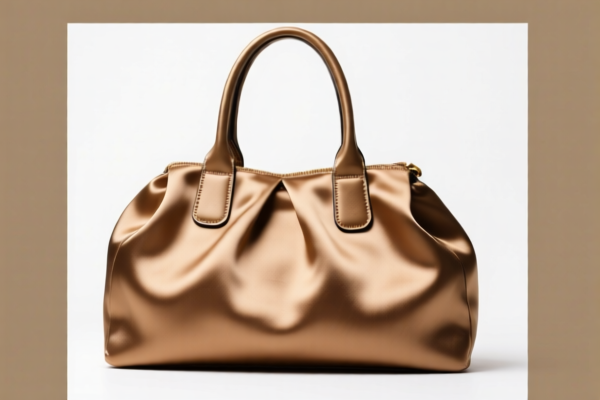
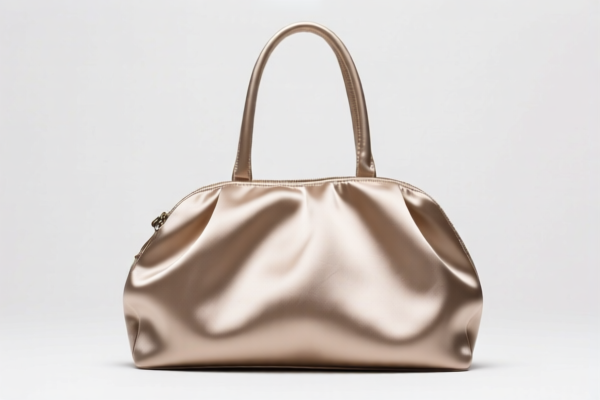
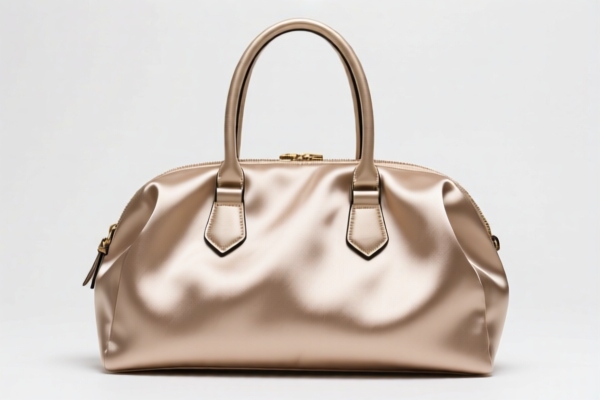
silk fabric handbag lightweight
CN → US| HS Code | Tariff Rate | Origin | Destination | Doc |
|---|---|---|---|---|
| 4202224010 | 42.4% | CN | US | Official Doc |
| 4202227000 | 42.0% | CN | US | Official Doc |
Product Images

AI Analysis
👜 Silk Fabric Handbag (Lightweight)
🌐 HS Code Reference & Customs Clearance Guide | 2026 Latest Tariff Analysis | Professional Compliance Strategy
📌 Part 1: Product Definition & Classification: Do You Truly Understand "Silk Handbags"?
A lightweight silk fabric handbag is a fashion accessory primarily used for carrying personal items. In international trade, its classification hinges on two critical factors:
1. Material Composition: It must contain 85% or more by weight of silk or silk waste.
2. Outer Surface: The outer surface is made of textile materials (specifically silk).
3. Form Factor: It is a handbag, whether or not with a shoulder strap, including those without handles.
⚠️ Key Distinction Points:
- If the bag is 100% silk or >85% silk → It falls under specific silk subheadings.
- If the bag is <85% silk (e.g., mixed with polyester or cotton) → It may fall under "Other" textile handbags (e.g., 4202.22.70.00), but not the specific silk codes below.
- If the outer surface is plastics (e.g., PVC-coated silk) → It falls under 4202.21, not 4202.22.
📦 Part 2: HS Code Classification Details (2026 Official Tariff Cross-Reference)
| HS Code | Product Description | Applicable Scenario | Silk Content Requirement |
|---|---|---|---|
4202.22.40.10 |
Handbags with outer surface of textile materials: Wholly or in part of braid | Silk handbags made from braided silk materials | ✅ ≥85% Silk |
4202.22.70.00 |
Handbags with outer surface of textile materials: Other | Standard woven silk handbags (non-braided) | ✅ ≥85% Silk |
🔍 Crucial Reminder:
- Both codes only apply if the handbag contains 85% or more by weight of silk or silk waste.
- If the silk content is less than 85%, it cannot use these codes. It would likely fall under4202.22.70.00(Other) or other general textile handbag codes, depending on specific material blends.
- "Lightweight" does not change the HS code; classification is based on material and construction.
💰 Part 3: 2026 Latest Tariff Rate Details (Including Additional Taxes)
✅ Applicable Country: United States (US)
✅ Origin: China (CN)
✅ Effective Date: 2025-11-10 onwards (including subsequent imports)
🎯 1. 4202.22.40.10 — Silk Handbags (Braided)
| Item | Content |
|---|---|
| Base Tariff Rate | 0.0% (ad valorem) |
| Section 301 Additional Tariff | 0.0% |
| Total Tariff Rate | 0.0% |
| Tax Calculation | CIF Value × 0% = $0 |
| De Minimis Eligibility | ✅ Yes (Eligible under $800 de minimis if applicable) |
| Legal Basis Path | HTSUS:4202.22.40.10 → No Section 301 listing for this specific silk handbag code |
📌 Explanation:
- Handbags containing ≥85% silk are classified under specific subheadings that are exempt from the standard 25% Section 301 tariffs applied to many other textile and apparel products.
- No additional taxes are applied to this specific silk handbag code.
- This is a zero-tariff opportunity for high-value silk goods.
🎯 2. 4202.22.70.00 — Silk Handbags (Other/Non-Braided)
| Item | Content |
|---|---|
| Base Tariff Rate | 0.0% (ad valorem) |
| Section 301 Additional Tariff | 0.0% |
| Total Tariff Rate | 0.0% |
| Tax Calculation | CIF Value × 0% = $0 |
| De Minimis Eligibility | ✅ Yes (Eligible under $800 de minimis if applicable) |
| Legal Basis Path | HTSUS:4202.22.70.00 → No Section 301 listing for this specific silk handbag code |
📌 Note:
- Same tax treatment as the braided version.
- Whether the silk is woven, printed, or plain, as long as it is ≥85% silk and textile outer surface, it enjoys 0% total tariff.
- This makes silk handbags highly competitive in the US market compared to synthetic or lower-silk-content bags.
🛠️ Part 4: Customs Clearance Practical Advice (Real-World Pitfall Avoidance)
✅ 1. Document Checklist (None Can Be Omitted)
| Document | Required | Description |
|---|---|---|
| ✅ Product Specifications | ✔️ | Must clearly state silk content ≥85% by weight. |
| ✅ Composition Label | ✔️ | Inner label showing "100% Silk" or "85% Silk, 15% Lining". |
| ✅ Product Photos | ✔️ | Clear images of the outer surface, showing texture (braided vs. woven). |
| ✅ Commercial Invoice | ✔️ | Must describe as "Silk Handbag, 100% Silk, Model XYZ". Avoid vague terms like "Fashion Bag". |
| ✅ Packing List | ✔️ | Quantity, weight, and dimensions. |
| ✅ Origin Certificate | ✔️ | If claiming any preferential treatment (though 0% applies generally, origin must be clear). |
✅ 2. Declaration Tips (Key Mnemonics)
🔥 "Silk Over 85%, Textile Surface, Zero Tariff, Happy Customs!"
| Scenario | Correct Declaration | Wrong Practice |
|---|---|---|
| Handbag is 100% silk, woven | 4202.22.70.00 |
Declare as "Plastic Handbag" → Incorrect, may face penalties |
| Handbag is 50% silk, 50% polyester | 4202.22.70.00 (Other) or 4202.22.40 (if braided but <85% silk, check specific rules) |
Claim "Silk Handbag" to get 0% → Audit Risk |
| Handbag has silk lining but polyester outer | Not 4202.22.xxxx |
Declare outer material as silk → Misclassification |
| Braided Silk Handbag | 4202.22.40.10 |
Declare as general textile bag → Misses specific silk code |
✅ 3. Special Case Handling
| Scenario | Handling Advice |
|---|---|
| Mixed Material (e.g., Silk + Leather Trim) | If outer surface is silk, use silk codes. Leather trims do not change the outer material classification. |
| Silk-Printed Cotton | If cotton is >15%, silk content is <85% → Not eligible for these specific silk codes. Use general textile handbag codes (which may have different tariffs). |
| De Minimis Shipment (<$800) | ✅ Eligible. No duties, no taxes, fast clearance. Ideal for small-scale importers or direct-to-consumer sales. |
| High-Value Bulk Import (>4202.22.xxxx) | Still 0% tariff, but ensure accurate silk content documentation to avoid audits. |
🌍 Part 5: Global Market Comparison (2026 Latest)
| Country/Region | Recommended HS Code | Tariff | Certification Requirements | Notes |
|---|---|---|---|---|
| 🇺🇸 USA | 4202.22.40.10 / 4202.22.70.00 |
0% | None | Zero tariff for ≥85% silk handbags |
| 🇨🇳 China | 4202.22.40.10 / 4202.22.70.00 |
0% (Import) | None | Zero tariff for imported silk bags |
| 🇪🇺 EU | 4202.22.40 / 4202.22.70 |
0% | CE (if applicable for safety) | Generally 0% for silk bags under certain conditions |
| 🇬🇧 UK | 4202.22.40 / 4202.22.70 |
0% | UKCA (if applicable) | Post-Brexit, similar to EU for silk |
| 🇯🇵 Japan | 4202.22.40 / 4202.22.70 |
0% | None | Zero tariff for silk handbags |
📌 Conclusion:
- Silk handbags (≥85% silk) enjoy 0% tariff in major markets, including the US, China, EU, and Japan.
- This is a key advantage for silk product exporters.
- Compliance is critical: Ensure silk content is verified to avoid misclassification penalties.
📌 Part 6: Common Errors & Pitfalls (Lessons Learned)
❌ Error 1: Declaring a 50% silk, 50% polyester bag as "Silk Handbag" to get 0% tariff
👉 Consequence: Audit, back taxes, penalties. Silk content must be ≥85%.
❌ Error 2: Using plastic-coated silk (outer surface is plastic)
👉 Consequence: Misclassified under 4202.21 (Plastic), which may have different tariffs (check 301 applicability). Not 0% necessarily.
❌ Error 3: Ignoring lining material
👉 Consequence: Lining does not affect classification, but if the outer surface is not silk, the code is wrong.
❌ Error 4: Vague Invoice Description ("Handbag")
👉 Consequence: Customs may reclassify, causing delays. Use precise terms: "Silk Handbag, 100% Silk, Woven."
✅ Correct Practice:
"Handbag, Outer Surface: 100% Silk (Woven), Lining: Polyester, Model XYZ, Silk Content >85% by Weight"
🎯 Part 7: Conclusion: Professional Declaration, Risk-Free Clearance, Profit Maximization!
🎯 Remember These Key Points:
🔹 "Silk Over 85%, Textile Outer, 0% Tariff, Zero Hassle!"
🔹 "Check Composition Label: If <85% Silk, Code Changes, Tariff May Apply!"
🔹 "De Minimis Friendly: Fast Clearance for Small Shipments!"
📌 Pro Tip:
- For large-scale imports, ensure third-party lab tests verify silk content (≥85%) to prevent audits.
- Pre-ruling: Consider applying for an Advance Ruling from US Customs if unsure about specific designs (e.g., mixed materials).
📣 Immediate Action:
📞 Contact a licensed customs broker + Provide product specs + Verify silk content
🚀 Let your silk handbags clear smoothly, save costs, and boost profits!
✨ Professional clearance starts with accurate classification!
💼 Your every cent of cost deserves precise calculation!
Customer Reviews
About HS Code Classification
The Harmonized System (HS) is an internationally standardized nomenclature developed by the World Customs Organization (WCO) to classify traded products. Over 200 countries use the HS system as the basis for customs tariffs, trade statistics, and import/export regulations.
Each HS code follows a hierarchical structure:
- Chapter (2 digits) — Broad category of goods (e.g., Chapter 84: Machinery and Mechanical Appliances)
- Heading (4 digits) — More specific grouping within the chapter
- Subheading (6 digits) — Internationally standardized breakdown, used by all WCO member countries
- National subdivisions (8-10 digits) — Country-specific extensions for further classification, such as US HTSUS 10-digit codes
Correct HS code classification is essential for smooth customs clearance, accurate duty payment, and compliance with trade regulations. Misclassification can lead to customs delays, overpayment of duties, or penalties.
When importing from CN to US, the applicable tariff rates may include:
- Most-Favored-Nation (MFN) rate — The standard duty rate applied to WTO members
- General rate — Applied to countries without trade agreements
- Trade remedy duties — Additional tariffs such as Section 301 (anti-dumping), Section 232 (national security), or countervailing duties
The information provided on this page is for reference purposes only. For official classification, please consult with your local customs authority or a licensed customs broker.