silk fabric handbags durable
CN → US| HS Code | Tariff Rate | Origin | Destination | Doc |
|---|---|---|---|---|
| 4202227000 | 42.0% | CN | US | Official Doc |
| 5007906090 | 38.9% | CN | US | Official Doc |
| 4202224010 | 42.4% | CN | US | Official Doc |
Product Images
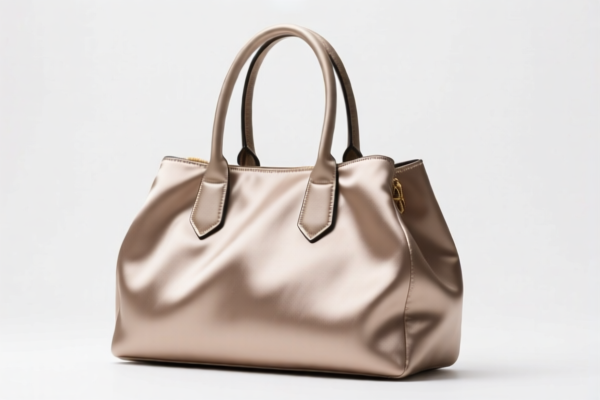
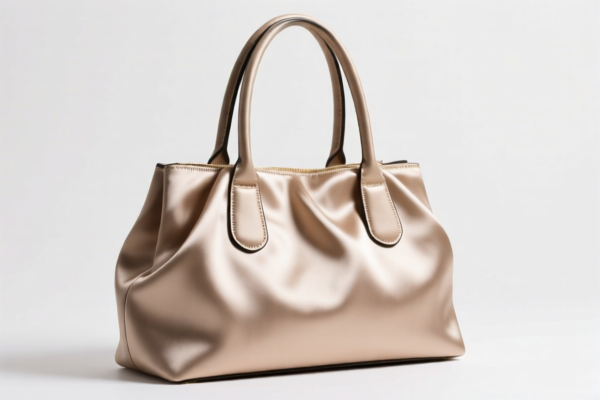
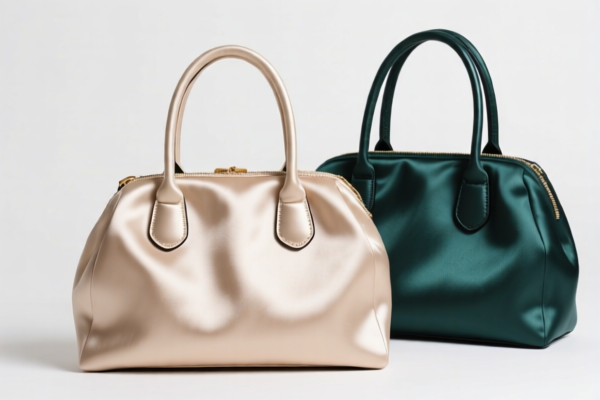
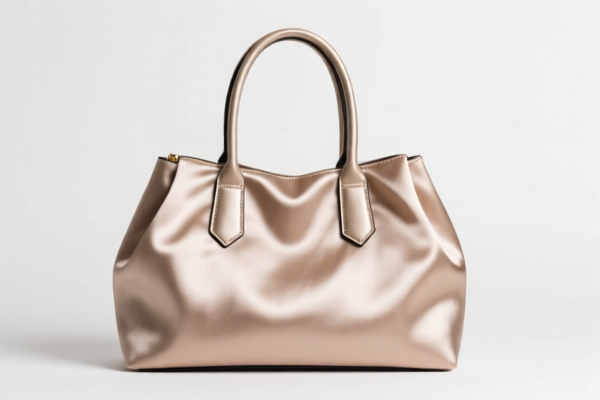
AI Analysis
👜 Silk Fabric Handbags: Durability, HS Code Classification & Customs Clearance Guide
🌐 HS Code Reference & Customs Clearance Guide | 2026 Latest Tariff Analysis | Professional通关 Strategy
📌 一、Product Definition & Classification: Do You Really Understand "Silk Handbags"?
Silk fabric handbags are luxury accessories defined by two key characteristics: 1. Material: Silk (or silk blend) as the primary outer surface material. 2. Form: Finished handbags, including tote bags, shoulder bags, and clutches.
In international trade, silk handbags are categorized based on their structural complexity and primary material definition. Misclassification can lead to significant tariff penalties or customs delays.
⚠️ Key Distinction Points:
- If the bag is primarily made of silk textiles and falls under general handbag categories →归入 4202.22.70.00 or 4202.22.40.10
- If the bag is considered a finished silk textile product without specific handbag structural features →归入 5007.90.60.90
- Critical Note: The presence of lining, handles, zippers, or hardware does not change the primary material classification unless the outer surface is not silk.
📦 二、HS Code Classification Details (2026 Latest Tariff Authority Mapping)
| HS Code | Product Description | Application Scenario | Primary Material | Outer Surface |
|---|---|---|---|---|
4202.22.70.00 |
Silk Casual Handbags, Material: Silk, Form: Handbag | General silk handbags, luxury fashion accessories | Silk | Silk |
5007.90.60.90 |
Silk Fabric Bags, Material: Silk, Form: Finished Bag | Silk textile products treated as bags, less structured | Silk | Silk |
4202.22.40.10 |
Silk Casual Handbags, Outer Surface: Textile Material, Form: Tote Bag | Silk bags with textile linings or reinforcements, tote style | Silk/Textile | Silk |
🔍 Important Reminder:
-4202Series: Specifically for "Trunks, suitcases, vanity cases, traveling bags, duffel bags, briefcases, school satchels, handbags, shopping bags, wallets, purses, map cases, cigarette cases, spectacles cases, binocular cases, camera cases, musical instrument cases, gun cases, holsters and similar containers."
-5007Series: Covers "Silk or silk waste fabrics." If the item is classified as a "fabric bag" rather than a structured "handbag," it may fall here.
- Do Not Confuse: If the bag is made of other materials (e.g., leather, PVC) with silk accents, it may NOT qualify for these silk-specific codes.
💰 三、2026 Latest Tariff Rate Details (Including Additional Taxes & Policy Surcharges)
✅ Applicable Country: United States (US)
✅ Origin: China (CN)
✅ Effective Date: From November 10, 2025 (including subsequent imports)
🎯 1. 4202.22.70.00 —— Silk Casual Handbags (Silk Material)
| Item | Details |
|---|---|
| Base Tariff Rate | 7.0% |
| USITC Additional Tariff | +25.0% |
| Section 122 Tariff | +10.0% |
| Total Tariff Rate | 42.0% |
| Tax Calculation | CIF Value × 42.0% |
| De Minimis Eligibility | ❌ Not Eligible (deny_de_minimis) |
| Legal Basis Path | Base:4202.22.70.00 → Section301:25% → Section122:10% |
📌 Explanation:
- "Base Tariff 7.0%": Standard MFN rate for silk handbags.
- "USITC Additional Tariff 25%": Section 301 tariffs on Chinese goods.
- "Section 122 Tariff 10%": Additional surcharge under Section 122 of the Trade Expansion Act.
- Total 42%: A very high tariff rate. Pre-planning is essential!
🎯 2. 5007.90.60.90 —— Silk Fabric Bags (Silk Material)
| Item | Details |
|---|---|
| Base Tariff Rate | 3.9% |
| USITC Additional Tariff | +25.0% |
| Section 122 Tariff | +10.0% |
| Total Tariff Rate | 38.9% |
| Tax Calculation | CIF Value × 38.9% |
| De Minimis Eligibility | ❌ Not Eligible (deny_de_minimis) |
| Legal Basis Path | Base:5007.90.60.90 → Section301:25% → Section122:10% |
📌 Note:
- Slightly lower total tariff than4202.22.70.00due to a lower base rate.
- Classification as a "fabric bag" rather than a structured "handbag" can result in a marginally lower base tax.
- Both codes are subject to the same additional tariffs.
🎯 3. 4202.22.40.10 —— Silk Casual Handbags (Outer Surface: Textile)
| Item | Details |
|---|---|
| Base Tariff Rate | 7.4% |
| USITC Additional Tariff | +25.0% |
| Section 122 Tariff | +10.0% |
| Total Tariff Rate | 42.4% |
| Tax Calculation | CIF Value × 42.4% |
| De Minimis Eligibility | ❌ Not Eligible (deny_de_minimis) |
| Legal Basis Path | Base:4202.22.40.10 → Section301:25% → Section122:10% |
📌 Note:
- Highest total tariff among the three options.
- Applies when the outer surface is classified as "textile material" (which includes silk) and the form is a "tote bag."
- Ensure accurate description to avoid overpayment.
🛠️ 四、Customs Clearance Practical Advice (Battle-Proven Pitfall Avoidance Guide)
✅ 1. Preparation Checklist (All Documents Required)
| Document | Required | Notes |
|---|---|---|
| ✅ Product Specification Sheet | ✔️ | Include dimensions, silk type (e.g., mulberry silk), lining material |
| ✅ Product Photos (Including Labels) | ✔️ | Clear shots of the bag, handles, zippers, and interior |
| ✅ Commercial Invoice | ✔️ | Clearly state "Silk Handbag" or "Silk Fabric Bag" |
| ✅ Packing List | ✔️ | Detail quantities, weights, and packaging type |
| ✅ Certificate of Origin (CO) | ✔️ | If not China-origin, may qualify for preferential rates |
| ✅ Third-Party Test Report | ✔️ | Fiber content analysis to confirm "Silk" percentage |
| ✅ Brand Authorization Letter | ✔️ | If branded, to avoid IP issues |
✅ 2. Declaration Tips (Key Mantras)
🔥 "Material Accurate, Form Clear, Code Precise, Tariff Predictable!"
| Scenario | Correct Declaration | Incorrect Practice |
|---|---|---|
| Structured silk handbag | 4202.22.70.00 |
Misdeclare as 5007.90.60.90 → Potential penalty |
| Unstructured silk pouch/bag | 5007.90.60.90 |
Misdeclare as 4202 → Overpay or delay |
| Tote bag with silk outer | 4202.22.40.10 |
Misdeclare as 4202.22.70.00 → Slight tariff difference |
| Silk-lined leather bag | Not Applicable | Misdeclare as silk → Rejection/Fine |
✅ 3. Special Handling Scenarios
| Scenario | Handling Advice |
|---|---|
| OEM Custom Silk Bags | Provide design sketches + material composition report to clarify "Silk" content |
| Mixed Material Bags | If silk is <50%, it may not qualify as "Silk Handbag"; re-evaluate HS Code |
| Gift Sets (Bag + Silk Scarf) | Declare separately; scarves may have different codes/tariffs |
| High-Value Luxury Bags | Provide proof of value (invoice + payment record) to avoid undervaluation flags |
🌍 五、Global Main Market Customs Clearance Comparison (2026 Latest)
| Country/Region | Recommended HS Code | Tariff | Certification Requirements | Notes |
|---|---|---|---|---|
| 🇺🇸 United States | 4202.22.70.00 |
42.0% (China Origin) | None specific | High additional tariffs apply |
| 🇨🇳 China | 4202.22.70.00 |
7.0% | None | No additional surcharges |
| 🇪🇺 European Union | 4202.22.70.00 |
6.0% | CE (if applicable) | Lower base tariff, no Section 301 |
| 🇬🇧 United Kingdom | 4202.22.70.00 |
6.0% | UKCA | Post-Brexit alignment with EU |
| 🇦🇺 Australia | 4202.22.70.00 |
5.0% | None | Free Trade Agreement benefits possible |
📌 Conclusion:
- The US imposes the highest effective tariff due to Section 301 and Section 122 surcharges.
- China, EU, UK, and Australia have significantly lower base tariffs.
- Strategic Suggestion: For US-bound goods, consider supply chain adjustments or value engineering to mitigate the 42%+ burden.
📌 六、Common Errors & Pitfall Avoidance Guide (Blood-Soaked Lessons)
❌ Error 1: Misclassifying silk bags as "textile fabrics" (5007) when they are structured handbags (4202)
👉 Consequence: Customs may reclassify, leading to higher tariffs or delays.
❌ Error 2: Failing to specify "Silk" in the description
👉 Consequence: Customs may assign a default higher tariff rate for "other handbags."
❌ Error 3: Not providing fiber content analysis
👉 Consequence: Dispute over material percentage; may be classified as "synthetic" instead of "silk."
❌ Error 4: Ignoring Section 122 and Section 301 tariffs
👉 Consequence: Unexpected high costs, budget overruns.
✅ Correct Practice:
"Silk Handbag, Mulberry Silk, 100% Silk Outer, Lining: Polyester, Dimensions: 30x25x10cm, Model XYZ"
🎯 七、Conclusion: Precise Classification Saves Money!
🎯 Remember the Mantra:
🔹 "Silk Bags: 4202 or 5007, Check Structure First!"
🔹 "US Tariffs: 42%+, Plan Early!"
🔹 "Document Everything: Photos, Specs, Invoices!"
📌 Pro Tip:
If your silk handbags are originated from Vietnam, Thailand, or Malaysia, you may qualify for lower or zero tariffs under trade agreements.
Consider Advance Ruling (Pre-classification) with US Customs to confirm the correct HS Code and avoid unexpected liabilities.
📣 Take Action Now:
📞 Contact a Professional Customs Broker + Provide Product Photos + Apply for HS Code Advance Ruling
🚀 Let Your Silk Handbags Clear Customs Smoothly, Maximize Profit, and Scale Globally!
✨ Professional Customs Clearance Starts with Precise Classification!
💼 Every Penny of Cost, Worth Precision Calculation!
Customer Reviews
About HS Code Classification
The Harmonized System (HS) is an internationally standardized nomenclature developed by the World Customs Organization (WCO) to classify traded products. Over 200 countries use the HS system as the basis for customs tariffs, trade statistics, and import/export regulations.
Each HS code follows a hierarchical structure:
- Chapter (2 digits) — Broad category of goods (e.g., Chapter 84: Machinery and Mechanical Appliances)
- Heading (4 digits) — More specific grouping within the chapter
- Subheading (6 digits) — Internationally standardized breakdown, used by all WCO member countries
- National subdivisions (8-10 digits) — Country-specific extensions for further classification, such as US HTSUS 10-digit codes
Correct HS code classification is essential for smooth customs clearance, accurate duty payment, and compliance with trade regulations. Misclassification can lead to customs delays, overpayment of duties, or penalties.
When importing from CN to US, the applicable tariff rates may include:
- Most-Favored-Nation (MFN) rate — The standard duty rate applied to WTO members
- General rate — Applied to countries without trade agreements
- Trade remedy duties — Additional tariffs such as Section 301 (anti-dumping), Section 232 (national security), or countervailing duties
The information provided on this page is for reference purposes only. For official classification, please consult with your local customs authority or a licensed customs broker.