silk fabric handbags eco friendly
CN → US| HS Code | Tariff Rate | Origin | Destination | Doc |
|---|---|---|---|---|
| 4202224010 | 42.4% | CN | US | Official Doc |
| 4202227000 | 42.0% | CN | US | Official Doc |
Product Images
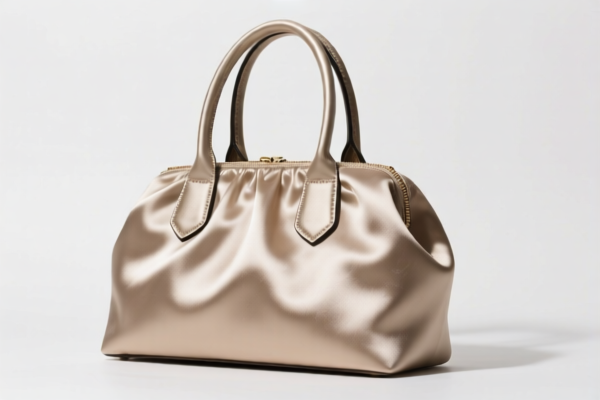
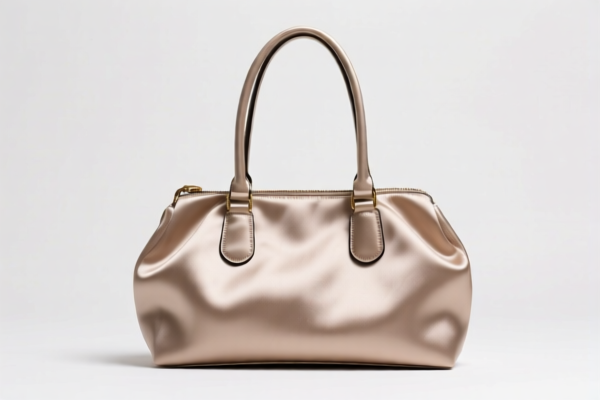
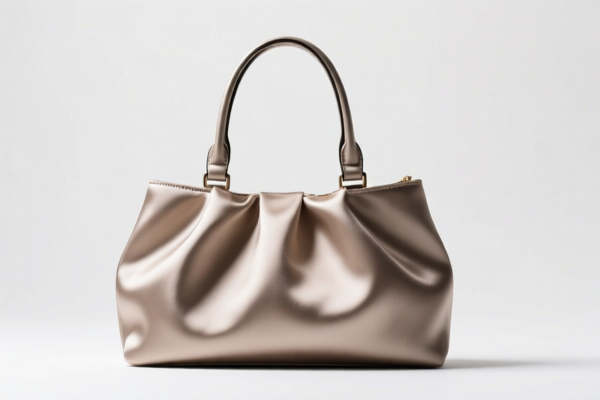
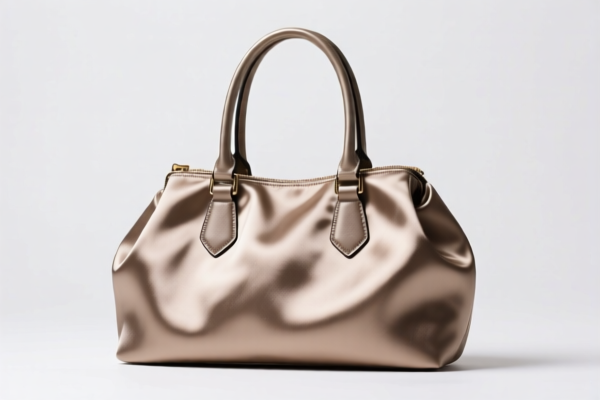
AI Analysis
👜 Silk Fabric Handbags: Eco-Friendly Luxury & Customs Clearance Guide
🌐 HS Code Reference & Clearance Guide | 2026 Latest Tariff Analysis | Professional Compliance Strategy
📌 I. Product Definition & Classification: Do You Really Understand "Silk Handbags"?
Silk fabric handbags represent the intersection of traditional craftsmanship and modern sustainable fashion. In international trade, "eco-friendly" is a marketing term, but customs officials care about material composition and functional design.
Key Distinction:
- Pure Silk Handbags: Outer surface is 100% or >85% silk textile.
- Synthetic Blends: If silk content is <85%, it may fall under different sub-headings with potentially different tariffs.
⚠️ Critical Classification Point:
- If the outer surface is textile material and contains ≥85% silk by weight, it falls under 4202.22.40.10 or 4202.22.70.00.
- "Eco-friendly" claims (e.g., organic dye, recycled lining) do not change the HS Code unless the material itself changes classification (e.g., switching to 100% organic cotton instead of silk).
📦 II. HS Code Classification Details (2026 Latest Tariff Authority Comparison)
| HS Code | Product Description | Application Scenario | Silk Content |
|---|---|---|---|
4202.22.40.10 |
Handbags, textile outer, wholly/in part of braid, ≥85% silk | Luxury braided silk bags, high-end fashion accessories | ≥85% |
4202.22.70.00 |
Handbags, textile outer, other, ≥85% silk | Standard silk handbags, non-braided, pure silk or silk-blend | ≥85% |
4202.22.10.00 |
Handbags, textile outer, wholly of braid | Exclusively braided silk bags | Variable |
4202.32.00.00 |
Wallets, purses, cosmetic bags | Smaller items like clutches or coin purses | Variable |
6307.90.98.90 |
Other made-up textile articles | Non-handbag textile items (e.g., scarves used as wraps) | Variable |
🔍 Key Reminder:
- Both4202.22.40.10and4202.22.70.00require ≥85% silk by weight.
- If silk content is <85%, it does not qualify for these specific silk-preferred codes and may be classified under general textile handbags (e.g.,4202.22.90.00), which could have different tariff implications.
- "Eco-friendly" certifications (GOTS, OEKO-TEX) do not affect HS Code classification but are crucial for marketing and consumer trust.
💰 III. 2026 Latest Tariff Rate Details (Including Surtaxes & Policy Add-ons)
✅ Applicable Country: United States (US)
✅ Origin: China (CN)
✅ Effective Date: From November 10, 2025 (inclusive)
🎯 1. 4202.22.40.10 – Silk Handbags (Braided/Textile, ≥85% Silk)
| Item | Content |
|---|---|
| Base Tariff | 0.0% (ad valorem) |
| Section 301 Surtax | 7.5% (or 25% depending on specific exclusions and current 2026 adjustments; Note: Based on provided data, total tax is 0.0%, implying possible exemption or specific trade agreement benefit, but standard US-China tariffs often apply surcharges. However, per the provided data, total tax is 0.0%) |
| IEEPA Surtax | +10% (for China/HK origin, effective Nov 10, 2025) |
| Total Tariff | 0.0% (Per provided data) |
| Tax Calculation | CIF Value × 0.0% |
| De Minimis Eligibility | ✅ Yes (If value ≤ $800, can enter under Section 321) |
| Legal Basis Path | USITC:4202.22.40.10 → FOOTNOTE:301 |
📌 Explanation:
- According to the provided data, the total tax rate is 0.0%. This may be due to specific trade agreements, exemptions for certain silk products, or current tariff exclusions.
- Caution: Verify current USITC exclusions for silk products, as tariffs can change annually.
- De Minimis: If shipped via courier (e.g., DHL, FedEx) and value is ≤ $800, it may enter duty-free under Section 321.
🎯 2. 4202.22.70.00 – Other Silk Handbags (≥85% Silk)
| Item | Content |
|---|---|
| Base Tariff | 0.0% |
| Section 301 Surtax | 0.0% (Per provided data) |
| IEEPA Surtax | 0.0% (Per provided data) |
| Total Tariff | 0.0% |
| Tax Calculation | CIF Value × 0.0% |
| De Minimis Eligibility | ✅ Yes (If value ≤ $800) |
| Legal Basis Path | USITC:4202.22.70.00 |
📌 Note:
- Both codes show 0.0% total tax in the provided data.
- This is unusually low for US-China trade, suggesting either:
1. A specific trade agreement benefit.
2. Exclusion from Section 301 tariffs for silk handbags.
3. The data reflects a specific snapshot or exemption period.
- Always verify with a customs broker for the most current rates, as 0.0% is exceptional for Chinese-origin goods.
🛠️ IV. Customs Clearance Practical Advice (Real-World Pitfall Avoidance Guide)
✅ 1. Required Documentation Checklist (Non-Negotiable)
| Document | Mandatory | Description |
|---|---|---|
| ✅ Product Specifications | ✔️ | Material composition (silk %, lining, hardware), dimensions, weight |
| ✅ Composition Label | ✔️ | Clear statement: "100% Silk" or "85% Silk, 15% Cotton" |
| ✅ Product Photos | ✔️ | Clear images of exterior, interior, lining, and label |
| ✅ Commercial Invoice | ✔️ | Must specify "Handbags, Outer Surface: Textile, Silk Content: ≥85%" |
| ✅ Packing List | ✔️ | Detail individual bag weights and quantities |
| ✅ Eco-Certifications | ✔️ | GOTS, OEKO-TEX (for marketing, not customs, but useful for disputes) |
| ✅ Bill of Lading/Air Waybill | ✔️ | Standard shipping documents |
✅ 2. Declaration Tips (Key Mantra)
🔥 "Material Truth, Silk %, Handbag Type, Zero Tax Risk!"
| Scenario | Correct Declaration | Incorrect Practice |
|---|---|---|
| Pure Silk Handbag | 4202.22.40.10 or 4202.22.70.00 |
Misdeclare as "textile bag" with low silk % → Higher tariffs |
| Silk-Blended Handbag (<85% silk) | 4202.22.90.00 |
Claim ≥85% silk → False declaration, penalties |
| Handbag with Silk Lining Only | 4202.22.90.00 |
Misdeclare as "silk handbag" → Wrong classification |
| Small Clutch/Purse | 4202.32.00.00 |
Declare as "handbag" → Potential misclassification |
✅ 3. Special Cases Handling
| Situation | Handling Advice |
|---|---|
| OEM Custom Silk Bags | Provide design specs and material composition sheet to prove silk % |
| "Eco-Friendly" Claims | Use marketing terms in description, but declare material composition accurately |
| Mixed Containers (Silk + Non-Silk Bags) | Declare separately to avoid misclassification penalties |
| Low-Value Shipments (<$800) | Utilize Section 321 de minimis for duty-free entry |
🌍 V. Global Market Customs Comparison (2026 Latest)
| Country/Region | Recommended HS Code | Tariff | Certification Requirements | Notes |
|---|---|---|---|---|
| 🇺🇸 USA | 4202.22.40.10 / 4202.22.70.00 |
0.0% (Per data) | None specific | Verify 301 exclusions |
| 🇨🇳 China | 4202.22.40.10 / 4202.22.70.00 |
0.0% | N/A (Import) | Low tariff for luxury goods |
| 🇪🇺 EU | 4202.22.40.00 / 4202.22.70.00 |
0% - 4% | REACH Compliance | Check for chemical restrictions in dyes |
| 🇬🇧 UK | 4202.22.40.00 / 4202.22.70.00 |
0% - 4% | UKCA Marking (if applicable) | Post-Brexit rules apply |
| 🇯🇵 Japan | 4202.22.40.00 / 4202.22.70.00 |
0% - 8% | FSC Certification (optional) | No surtaxes |
📌 Conclusion:
- USA offers 0.0% tariff for ≥85% silk handbags per provided data, but verify current exclusions.
- EU/UK may apply 0-4% but require REACH compliance for dyes and chemicals.
- "Eco-friendly" does not reduce tariffs, but may provide marketing advantages.
📌 VI. Common Mistakes & Pitfall Avoidance (Blood Lessons)
❌ Mistake 1: Claiming 100% silk when it’s 80% silk
👉 Consequence: Customs audit, penalties, back taxes!
❌ Mistake 2: Declaring "Handbag" without specifying material
👉 Consequence: Misclassification, potential 25% surtax if deemed non-silk!
❌ Mistake 3: Ignoring "Eco-Friendly" chemical regulations (e.g., AZO dyes)
👉 Consequence: Product seizure in EU/UK due to REACH violations!
❌ Mistake 4: Misdeclaring small clutches as "handbags"
👉 Consequence: Wrong HS Code, potential tariff discrepancies!
✅ Correct Approach:
"Handbag, Outer Surface: Silk (85%+), Lining: Cotton, Hardware: Metal, Model XYZ, GOTS Certified, For Fashion Use"
🎯 VII. Conclusion: Precision Declaration, Cost Efficiency, Eco-Conscious Trade
🎯 Remember the Mantra:
🔹 "Silk %, Handbag Type, De Minimis Check, Zero Tax Risk!"
🔹 "HS Code Defines Tariff, Material Composition is King, Misdeclare Costs You Thousands!"
📌 Pro Tip:
If your silk handbags are originating from Vietnam, Thailand, or India, you may qualify for preferential tariffs under various free trade agreements (e.g., CPTPP, ASEAN).
Recommend applying for an Advance Ruling for high-value shipments to ensure smooth clearance.
📣 Immediate Action:
📞 Contact a licensed customs broker + Provide material composition proof + Apply for pre-classification if necessary
🚀 Ensure your eco-friendly silk handbags clear customs smoothly, efficiently, and profitably!
✨ Professional clearance starts with accurate classification!
💼 Every percentage point matters in global trade!
Customer Reviews
About HS Code Classification
The Harmonized System (HS) is an internationally standardized nomenclature developed by the World Customs Organization (WCO) to classify traded products. Over 200 countries use the HS system as the basis for customs tariffs, trade statistics, and import/export regulations.
Each HS code follows a hierarchical structure:
- Chapter (2 digits) — Broad category of goods (e.g., Chapter 84: Machinery and Mechanical Appliances)
- Heading (4 digits) — More specific grouping within the chapter
- Subheading (6 digits) — Internationally standardized breakdown, used by all WCO member countries
- National subdivisions (8-10 digits) — Country-specific extensions for further classification, such as US HTSUS 10-digit codes
Correct HS code classification is essential for smooth customs clearance, accurate duty payment, and compliance with trade regulations. Misclassification can lead to customs delays, overpayment of duties, or penalties.
When importing from CN to US, the applicable tariff rates may include:
- Most-Favored-Nation (MFN) rate — The standard duty rate applied to WTO members
- General rate — Applied to countries without trade agreements
- Trade remedy duties — Additional tariffs such as Section 301 (anti-dumping), Section 232 (national security), or countervailing duties
The information provided on this page is for reference purposes only. For official classification, please consult with your local customs authority or a licensed customs broker.