silk fabric handbags embroidered
CN → US| HS Code | Tariff Rate | Origin | Destination | Doc |
|---|---|---|---|---|
| 4202224010 | 42.4% | CN | US | Official Doc |
| 4202227000 | 42.0% | CN | US | Official Doc |
| 4202224010 | 42.4% | CN | US | Official Doc |
| 4202227000 | 42.0% | CN | US | Official Doc |
| 4202227000 | 42.0% | CN | US | Official Doc |
Product Images
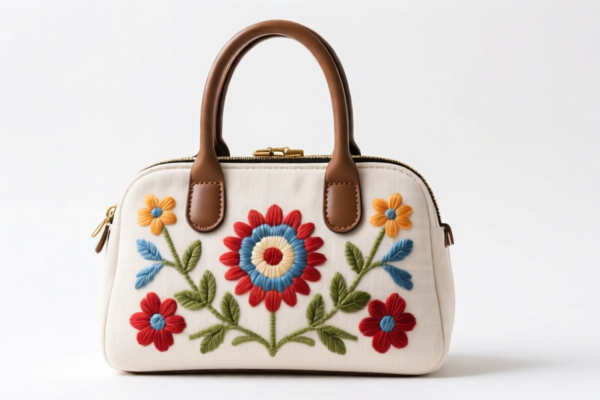
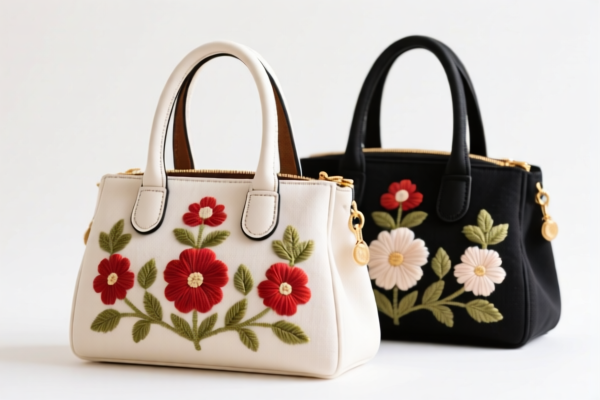
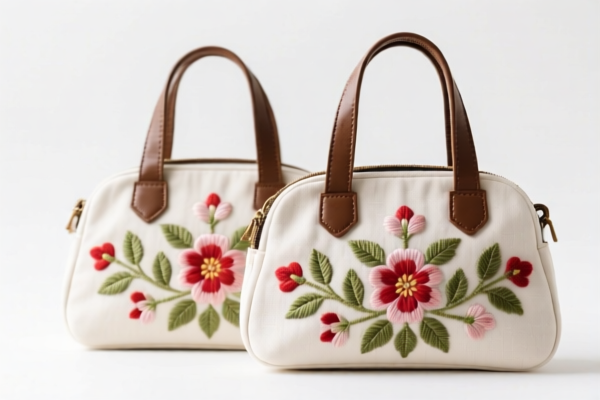
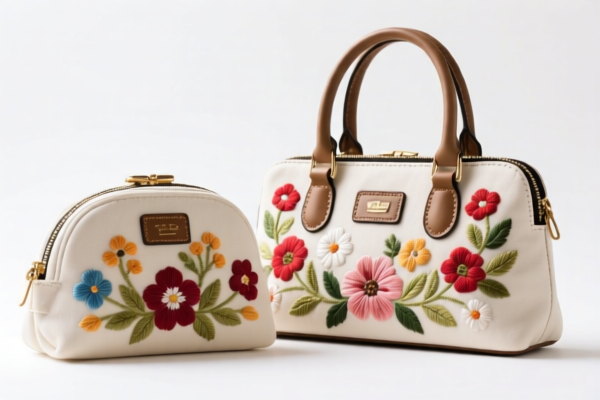
AI Analysis
👜 Silk Fabric Handbags: Embroidered & Beaded (Classified by Material & Surface Composition)
🌐 HS Code Reference & Clearance Guide | 2026 Latest Tariff Analysis | Professional Entry Strategy for US Imports
📌 Part 1: Product Definition & Classification – Do You Truly Understand "Silk Handbags"?
Silk fabric handbags, particularly those featuring embroidery or beading/sequins, are premium accessories in international trade. Their classification depends strictly on two factors:
1. Surface Material: Whether the outer surface is textile (silk) or other materials.
2. Silk Content: Specifically, whether the silk content is 85% or more (triggering a lower base rate) or less than 85% (triggering a higher base rate).
⚠️ Key Distinction Point:
- If the bag’s outer surface is textile containing silk (e.g., embroidered silk, beaded silk), it falls under 4202.22.
- The silk content percentage determines the specific sub-heading:
- ≥85% Silk: Lower base tariff (7.0%).
- <85% Silk (e.g., silk blends, lace with silk lining): Higher base tariff (7.4%).
- Cross-body bags or sling bags that maintain the "handbag" shape and silk material are also classified under 4202.22.
📦 Part 2: HS Code Classification Details (2026 Latest Tariff Authority Comparison)
| HS Code | Product Description | Applicable Scenario | Silk Content Requirement |
|---|---|---|---|
4202.22.40.10 |
Handbags with beaded silk fabric; outer surface is textile material containing silk | Silk fabric handbags with beading/sequins, lace handbags with silk content | <85% (Blends/Lace) |
4202.22.70.00 |
Handbags with plain/embroidered silk fabric; meets textile surface requirements | Silk fabric handbags with embroidery, plain silk handbags | ≥85% Silk |
4202.22.70.00 |
Silk cross-body bags (Sling bags) | Bags in handbag form but carried cross-body; material contains silk | ≥85% Silk |
🔍 Important Reminder:
- "Lace" handbags containing silk are often classified under4202.22.40.10if the silk composition is not ≥85%, leading to a higher base rate.
- "Beading" (珠饰) specifically triggers the4202.22.40.10code in the provided data, regardless of exact silk % if the surface is deemed textile with lower silk concentration.
- "Embroidered" handbags with ≥85% silk fall under4202.22.70.00.
- Cross-body bags (斜挎包) are explicitly included in4202.22.70.00if they meet the handbag morphology and silk criteria.
💰 Part 3: 2026 Latest Tariff Rate Details (Including Additional Taxes & Policy Surcharges)
✅ Applicable Country: United States (US)
✅ Country of Origin: China (CN)
✅ Effective Time: As per current 2025/2026 trade policies
🎯 1. 4202.22.40.10 —— Silk Fabric Handbags (Beaded/Lace/Blend)
| Item | Detail |
|---|---|
| Base Tariff | 7.4% (Ad valorem) |
| Section 301 Additional Tariff | +25.0% |
| Section 122 Tariff (IEEPA) | +10.0% |
| Total Tariff Rate | 42.4% |
| Tax Calculation | CIF Value × 42.4% |
| De Minimis Exemption Eligible? | ❌ No (Deny De Minimis) |
| Legal Basis Path | Section 301 → Section 122 (IEEPA) → USITC:4202.22.40.10 |
📌 Explanation:
- 7.4% Base: Higher base rate due to silk content <85% or specific textile composition (lace/beaded blend).
- 25% Section 301: Standard US tariff on Chinese goods under Trade Act of 1974 Section 301.
- 10% Section 122: Additional tariff under IEEPA (International Emergency Economic Powers Act) for specific Chinese imports.
- Total 42.4%: High cost entry; must be calculated into landed cost.
🎯 2. 4202.22.70.00 —— Silk Fabric Handbags (Plain/Embroidered ≥85% Silk / Cross-body)
| Item | Detail |
|---|---|
| Base Tariff | 7.0% (Ad valorem) |
| Section 301 Additional Tariff | +25.0% |
| Section 122 Tariff (IEEPA) | +10.0% |
| Total Tariff Rate | 42.0% |
| Tax Calculation | CIF Value × 42.0% |
| De Minimis Exemption Eligible? | ❌ No (Deny De Minimis) |
| Legal Basis Path | Section 301 → Section 122 (IEEPA) → USITC:4202.22.70.00 |
📌 Explanation:
- 7.0% Base: Lower base rate due to ≥85% silk content, qualifying for a preferential textile sub-heading.
- 25% Section 301: Same as above.
- 10% Section 122: Same as above.
- Total 42.0%: Slightly lower than the beaded/blend category, but still high.
- Applies to: Embroidered silk bags (≥85% silk) and Silk Cross-body Bags.
🛠️ Part 4: Clearance Practical Advice (Battle-Tested Pitfall Avoidance Guide)
✅ 1. Required Documentation Checklist (Non-Negotiable)
| Document | Required | Explanation |
|---|---|---|
| ✅ Product Specification Sheet | ✔️ | Must detail: Fabric composition (e.g., 85% Silk, 15% Polyester), Beading material, Embroidery type |
| ✅ Detailed Photos (Front/Back/Interior) | ✔️ | Clear view of outer surface material and embroidery/beading |
| ✅ Composition Label Photo | ✔️ | Shows "Made in China" and fiber content (critical for ≥85% claim) |
| ✅ Commercial Invoice | ✔️ | Must state: "Silk Handbags, Embroidered/Beaded," HS Code 4202.22.70.00 or 4202.22.40.10 |
| ✅ Packing List | ✔️ | Item quantity, weight, and dimensions |
✅ 2. Declaration Strategy (Key Mantra)
🔥 “Silk >85% is 7.0%, Blend/Lace/Beading is 7.4%; Add 35% on Top, Total 42%+!”
| Scenario | Correct Declaration | Wrong Practice |
|---|---|---|
| Embroidered Silk Bag (≥85% Silk) | 4202.22.70.00 |
Misdeclare as "Fashion Accessory" → Audit risk |
| Beaded Silk Bag (<85% Silk or Lace) | 4202.22.40.10 |
Claiming 7.0% base when it’s 7.4% → Back Tax + Penalties |
| Silk Cross-body Bag | 4202.22.70.00 |
Declare as "Backpack" → Wrong HTS, potential delay |
| Mixed Materials (Silk + Leather) | Check Outer Surface | If textile (silk) is outer surface, use 4202.22; if leather is outer, use 4202.21 (Different rate!) |
✅ 3. Special Cases & Handling
| Scenario | Handling Advice |
|---|---|
| "Lace" Handbags | Often classified under 4202.22.40.10 (7.4% base) even if silk-rich, due to structural textile classification. Verify with CBP. |
| OEM Private Label | Provide design patterns and material test reports to prove silk content ≥85% if claiming 4202.22.70.00. |
| Small Quantity Samples | No De Minimis Exemption! Even under $800, these goods are subject to full 42% tariff. |
| Transshipment (e.g., via Vietnam) | High risk of Anti-Circumvention Investigation. US Customs scrutinizes silk goods from Southeast Asia. |
🌍 Part 5: Global Market Clearance Comparison (2026 Latest)
| Country/Region | Recommended HS Code | Tariff (China Origin) | Certification | Notes |
|---|---|---|---|---|
| 🇺🇸 USA | 4202.22.70.00 / 4202.22.40.10 |
42.0% / 42.4% | None | High tariff burden. No de minimis. |
| 🇨🇳 China | 4202.22.70.00 |
5% - 10% | None | Domestic market lower rates. |
| 🇪🇺 EU | 4202.22.70 |
4.0% - 6.0% | REACH (if dyes) | No Section 301/122 equivalent. |
| 🇬🇧 UK | 4202.22.70 |
4.0% - 6.0% | UKCA (if applicable) | Post-Brexit rules apply. |
| 🇯🇵 Japan | 4202.22.70 |
5.3% - 6.0% | None | RCEP may benefit if rules of origin met. |
📌 Conclusion:
- USA is the most expensive market due to Section 301 (25%) + Section 122 (10%).
- EU, UK, and Japan have significantly lower base tariffs (~5-6%) and no punitive additional tariffs.
- Consider market diversification if US margins are compressed by 42% duty.
📌 Part 6: Common Errors & Pitfall Guide (Lessons Learned)
❌ Error 1: Declaring Beaded Silk Bags as 4202.22.70.00 (7.0% base)
👉 Consequence: Customs rejects, audits composition, charges 7.4% base + 35% surcharges = 42.4%, plus penalties.
❌ Error 2: Claiming De Minimis ($800 exemption) for small silk bags
👉 Consequence: Shipment seized or held. Section 301 goods are excluded from de minimis.
❌ Error 3: Confusing Cross-body Bags with Backpacks
👉 Consequence: Misclassification as 4202.92 (Other articles) → Different duty rate → Delay.
✅ Correct Declaration Example:
"Women's Silk Handbag, Embroidered, 85% Silk/15% Polyester, Outer Surface Textile, Model XYZ, Made in China"
HS Code:4202.22.70.00
🎯 Part 7: Conclusion – Precise Classification Saves Money!
🎯 Remember the Mantra:
🔹 "Silk ≥85% is 7.0%, Blend/Lace is 7.4%."
🔹 "Add 35% Fixed, Total 42%, No De Minimis."
🔹 "Embroidery vs Beading changes Code, Check Composition First!"
📌 Pro Tip:
- For high-value silk handbags, consider Advance Ruling (Pre-classification) from CBP to lock in the HS Code and avoid post-import audits.
- If exporting to the US, ensure your commercial invoice explicitly states "Section 301 & Section 122 Applicable" to avoid unexpected holds.
📣 Immediate Action:
📞 Verify Silk Content % → Choose Correct HS Code (
4202.22.70.00vs4202.22.40.10) → Calculate 42% Duty → Ship Confidently!
✨ Professional Clearance Starts with Accurate Classification!
💼 Every Dollar Saved in Duty is Pure Profit!
Customer Reviews
About HS Code Classification
The Harmonized System (HS) is an internationally standardized nomenclature developed by the World Customs Organization (WCO) to classify traded products. Over 200 countries use the HS system as the basis for customs tariffs, trade statistics, and import/export regulations.
Each HS code follows a hierarchical structure:
- Chapter (2 digits) — Broad category of goods (e.g., Chapter 84: Machinery and Mechanical Appliances)
- Heading (4 digits) — More specific grouping within the chapter
- Subheading (6 digits) — Internationally standardized breakdown, used by all WCO member countries
- National subdivisions (8-10 digits) — Country-specific extensions for further classification, such as US HTSUS 10-digit codes
Correct HS code classification is essential for smooth customs clearance, accurate duty payment, and compliance with trade regulations. Misclassification can lead to customs delays, overpayment of duties, or penalties.
When importing from CN to US, the applicable tariff rates may include:
- Most-Favored-Nation (MFN) rate — The standard duty rate applied to WTO members
- General rate — Applied to countries without trade agreements
- Trade remedy duties — Additional tariffs such as Section 301 (anti-dumping), Section 232 (national security), or countervailing duties
The information provided on this page is for reference purposes only. For official classification, please consult with your local customs authority or a licensed customs broker.