silk fabric handbags lace
CN → US| HS Code | Tariff Rate | Origin | Destination | Doc |
|---|---|---|---|---|
| 4202227000 | 42.0% | CN | US | Official Doc |
| 4202224010 | 42.4% | CN | US | Official Doc |
| 4202224010 | 42.4% | CN | US | Official Doc |
| 4202227000 | 42.0% | CN | US | Official Doc |
| 4202224010 | 42.4% | CN | US | Official Doc |
| 4202227000 | 42.0% | CN | US | Official Doc |
Product Images
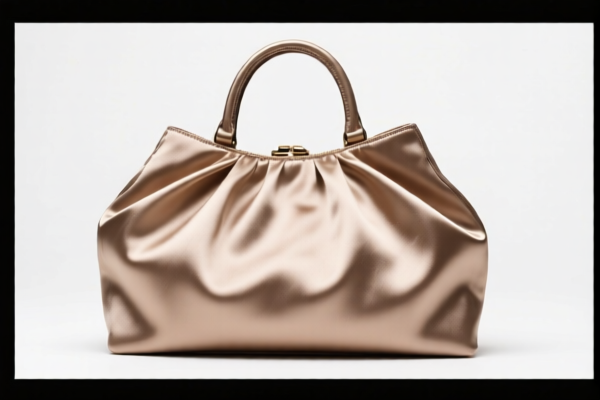
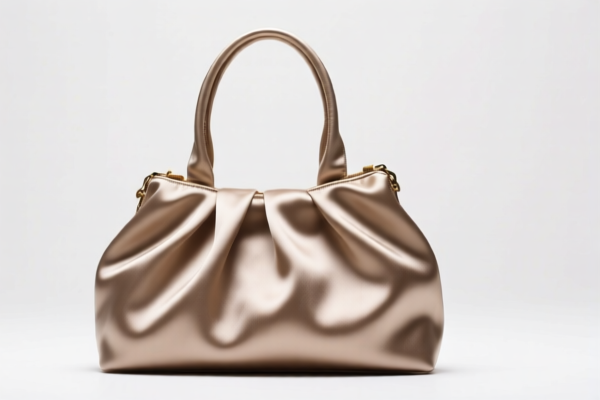
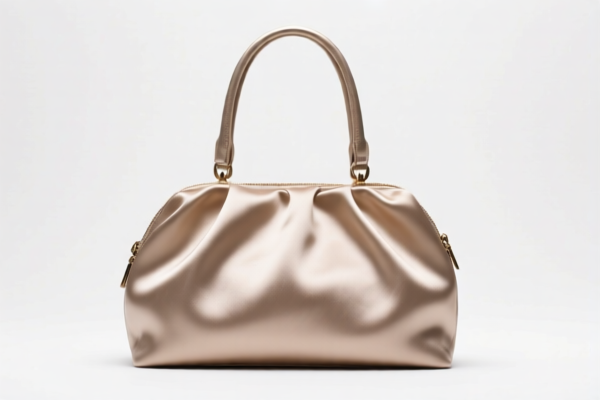
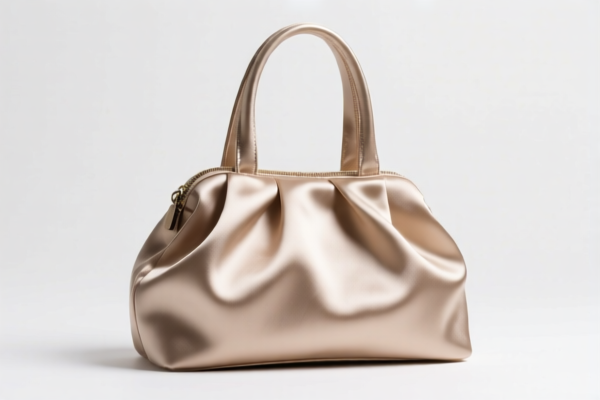
AI Analysis
👜 Silk Lace Handbags: HS Code Classification & US Customs Clearance Guide (2026)
🌐 HS Code Reference & Customs Strategy | 2026 Latest Tariff Analysis | Professional Clearance Protocol
📌 I. Product Definition & Classification: Do You Really Understand "Silk Lace Handbags"?
Silk lace handbags are premium fashion accessories characterized by the use of silk fabric as the primary material, often featuring lace detailing, embroidery, or beading. In international trade, the classification hinges on two critical factors:
1. Outer Surface Material: Is it textiles (silk) or non-textiles (leather, plastic)?
2. Specific Composition: Does it contain silk? Is the outer surface exclusively textile?
⚠️ Key Distinction:
- If the outer surface is textile (including silk with lace/beading details) → Classify under Chapter 42 (Articles of Leather; Saddle Harness) specifically 4202.22 (Handbags with outer surface of textile materials).
- If the outer surface were leather, it would go to 4202.21.
- Crucial Nuance: The presence of lace or beading does not automatically change the base chapter, but it may affect the subheading within 4202.22 depending on specific customs interpretations of "silk" vs. "other textile materials."
📦 II. HS Code Classification Matrix (2026 Latest Tariff Authority)
Based on the provided data, there are two primary HS codes for silk lace/beaded handbags, differentiated by slight variations in base tariff rates (7.0% vs. 7.4%), likely due to specific sub-classifications of silk content or manufacturing standards.
| HS Code | Product Description | Key Material Features | Total Tax Rate |
|---|---|---|---|
4202.22.70.00 |
Silk Fabric Handbag (Lace) | Outer surface: Textile (Silk). Lace detailing. Base Tariff: 7.0% | 42.0% |
4202.22.40.10 |
Silk Fabric Handbag (Lace) | Outer surface: Textile (Silk + Lace). Specific silk feature. Base Tariff: 7.4% | 42.4% |
4202.22.40.10 |
Silk Beaded Handbag | Outer surface: Textile (Silk). Beaded embellishment. Base Tariff: 7.4% | 42.4% |
4202.22.70.00 |
Silk Beaded Handbag | Outer surface: Textile (Contains Silk). Specific material requirement met. Base Tariff: 7.0% | 42.0% |
4202.22.40.10 |
Silk Crossbody Bag | Shape: Handbag/Shoulder bag. Material: Silk characteristics. Base Tariff: 7.4% | 42.4% |
4202.22.70.00 |
Silk Crossbody Bag | Shape: Handbag. Material: Textile with core Silk feature. Base Tariff: 7.0% | 42.0% |
🔍 Critical Note:
- Why Two Codes? The difference between4202.22.40.10(7.4%) and4202.22.70.00(7.0%) often relates to how customs agents interpret the "Silk" definition. Some jurisdictions may require a higher percentage of raw silk or specific weave types for the 7.0% rate, while others accept blended or lace-heavy silk structures under 7.4%.
- Crossbody vs. Handbag: Both shapes fall under 4202.22 (Handbags with outer surface of textile materials). The shape (crossbody vs. top-handle) does not change the HS code, but the material composition does.
💰 III. 2026 US Tariff Rate Breakdown (Detailed Policy Analysis)
✅ Applicable Country: United States (US)
✅ Country of Origin: China (CN)
✅ Effective Date: November 10, 2025 onwards
🎯 1. 4202.22.40.10 & 4202.22.70.00 — Silk/Lace/Beaded Handbags
| Item | Detail |
|---|---|
| Base Import Duty | 7.0% - 7.4% (Ad Valorem) (Depends on specific silk classification: 7.0% for ...70.00, 7.4% for ...40.10) |
| Section 301 Tariff (USITC) | +25.0% (Footnote 9903.88.01) |
| IEEPA Tariff (China-specific) | +10.0% (For products from China/HK, effective Nov 10, 2025) |
| Total Effective Tax Rate | 42.0% - 42.4% |
| De Minimis Exemption | ❌ NOT APPLICABLE (Deny de minimis for Section 301/IEEPA affected goods) |
| Legal Authority Path | IEEPA:9903.01.25 → USITC:4202.22.40.10/70.00 → FOOTNOTE:9903.88.01 |
📌 Explanation:
- The 25% Section 301 tariff applies to nearly all Chinese-origin textile and apparel goods, including handbags.
- The 10% IEEPA tariff is an additional layer targeting specific Chinese goods.
- Total Tax = Base (7-7.4%) + 301 (25%) + IEEPA (10%) = 42-42.4%.
- No De Minimis: Packages under $800 (Section 321) are NOT exempt from these additional tariffs if they originate from China and fall under Section 301/IEEPA lists. This is a major cost driver for small shipments.
🛠️ IV. Customs Clearance Practical Advice (Battle-Tested Strategies)
✅ 1. Documentation Checklist (Non-Negotiable)
| Document | Required? | Why? |
|---|---|---|
| Commercial Invoice | ✅ Yes | Must clearly state: "Handbag, Outer Surface: Silk Textile, Origin: China" |
| Product Photographs | ✅ Yes | Show lace details, beading, and material texture. Proof of "Silk" is critical to avoid misclassification as "Synthetic" (which may have different base rates). |
| Material Composition Statement | ✅ Yes | Specify % of Silk vs. Other fibers. E.g., "100% Silk Lace" or "Silk blend with Polyester lining". |
| Packing List | ✅ Yes | Detail item count, weight, and dimensions. |
| Country of Origin Certificate | ✅ Yes | To prove CN origin (triggers 301/IEEPA) or verify if any duty-free options apply (e.g., if produced in Vietnam, different rules apply). |
✅ 2. Declaration Tips (Key Mnemonics)
🔥 "Silk First, Lace Second, Section 301 is King!"
| Scenario | Correct Declaration | Risk if Wrong |
|---|---|---|
| Silk Lace Handbag | HS: 4202.22.70.00 or 4202.22.40.10 Desc: "Silk fabric handbag with lace detailing" |
Misclassified as "Synthetic" → Potential underpayment of base duty + penalties |
| Crossbody Bag | Same HS as handbag | If declared as "Travelling Goods" (9506) → Incorrect chapter, high penalty |
| Sample Shipment | Mark "Sample" but still declare value | De Minimis DOES NOT APPLY for China-origin Section 301 items. Pay the full 42% tax even if value is < $800. |
| Beaded Handbag | Specify "Beaded" in description | Beads are part of the product, not separate accessories. Do not split line items. |
✅ 3. Special Considerations for Silk & Lace
| Issue | Solution |
|---|---|
| Silk Verification | Customs may require a fiber test report to confirm "Silk" content. Synthetic lace mislabeled as silk can lead to fraud penalties. |
| Lace vs. Embroidery | Lace is a fabric type. Embroidery is a finishing technique. Ensure the base fabric is silk. If the base is polyester with lace overlay, it may still be 4202.22 but potentially different subheading. |
| Origin Labeling | Must say "Made in China" on the product and packaging. Failure to label correctly can result in seizure. |
🌍 V. Global Market Comparison (2026)
| Market | Recommended HS Code | Base Duty | Additional Tariffs (China) | Total Estimated Rate | Notes |
|---|---|---|---|---|---|
| 🇺🇸 USA | 4202.22.40.10 / 70.00 |
7.0-7.4% | +25% (301) +10% (IEEPA) | 42-42.4% | High Barrier. No de minimis. |
| 🇨🇳 China (Import) | 4202.22.70.00 |
~10% | None | ~10% | Lower duty, but VAT 13% applies. |
| 🇪🇺 EU | 4202.22.00 |
12% | None (Most Favored Nation) | 12% + 21% VAT | No Section 301. Easier clearance. |
| 🇬🇧 UK | 4202.22.00 |
12% | None | 12% + 20% VAT | Post-Brexit rules apply. |
| 🇯🇵 Japan | 4202.22.00 |
10% | None | 10% + 10% Consump. Tax | RCEP may apply if sourced from member countries. |
📌 Conclusion:
- USA is the most expensive market for silk lace handbags from China due to the 42%+ total tax burden.
- EU/UK/Japan offer significantly lower barriers (10-12% base duty), making them more profitable for direct exports.
- Strategy: If selling to the US, consider Duty Drawback programs if re-exporting, or explore supply chain diversification (e.g., produce in Vietnam/India) to avoid Section 301 tariffs.
📌 VI. Common Errors & Pitfalls (Lessons Learned)
❌ Error 1: Claiming De Minimis ($800 exemption) for China-origin silk bags.
👉 Result: Seizure or Forced Payment. Section 301 and IEEPA tariffs override Section 321 exemptions.
👉 Fix: Always pay the full tariff, even for samples.
❌ Error 2: Misclassifying silk lace as "Synthetic" to get a lower base rate.
👉 Result: Audit Risk. Customs may require lab tests. If found false, fines + back taxes.
👉 Fix: Be transparent. Use "Silk" in description if >50% silk or if marketed as silk.
❌ Error 3: Splitting "Handbag + Beads" into two line items.
👉 Result: Complexity & Delay. Beads are integral to the bag.
👉 Fix: Declare as one unit: "Silk Handbag with Beaded Embellishment."
🎯 VII. Final Strategy: Optimize for Profit
🎯 Key Takeaway:
🔹 Total Tax ~42% in the US is steep. Factor this into your pricing.
🔹 HS Code Choice:4202.22.70.00(7.0% base) vs.4202.22.40.10(7.4% base) saves only $0.40 per $100. Focus on legal compliance over penny-pinching on base rate.
🔹 Documentation is King: Clear photos and material specs prevent customs delays.
📌 Pro Tip:
If you are not sourcing from China (e.g., from Italy or France), you AVOID the 25% + 10% tariffs. Total tax drops to ~12% in the US (if MFN applies) or 0% in EU.
Consider Near-Shoring or Alternative Sourcing for US-bound luxury silk goods.
📣 Action Plan:
- Verify Silk Content with supplier.
- Choose HS Code (
...70.00if possible for lower base).- Budget 42% for US duties.
- Do NOT use de minimis for China-origin goods.
- File Entry with full disclosure.
✨ Precise Classification, Maximum Profit!
💼 Don’t let 42% taxes erase your margin. Plan Ahead.
Customer Reviews
About HS Code Classification
The Harmonized System (HS) is an internationally standardized nomenclature developed by the World Customs Organization (WCO) to classify traded products. Over 200 countries use the HS system as the basis for customs tariffs, trade statistics, and import/export regulations.
Each HS code follows a hierarchical structure:
- Chapter (2 digits) — Broad category of goods (e.g., Chapter 84: Machinery and Mechanical Appliances)
- Heading (4 digits) — More specific grouping within the chapter
- Subheading (6 digits) — Internationally standardized breakdown, used by all WCO member countries
- National subdivisions (8-10 digits) — Country-specific extensions for further classification, such as US HTSUS 10-digit codes
Correct HS code classification is essential for smooth customs clearance, accurate duty payment, and compliance with trade regulations. Misclassification can lead to customs delays, overpayment of duties, or penalties.
When importing from CN to US, the applicable tariff rates may include:
- Most-Favored-Nation (MFN) rate — The standard duty rate applied to WTO members
- General rate — Applied to countries without trade agreements
- Trade remedy duties — Additional tariffs such as Section 301 (anti-dumping), Section 232 (national security), or countervailing duties
The information provided on this page is for reference purposes only. For official classification, please consult with your local customs authority or a licensed customs broker.