silk fabric handbags woven
CN → US| HS Code | Tariff Rate | Origin | Destination | Doc |
|---|---|---|---|---|
| 4202227000 | 42.0% | CN | US | Official Doc |
| 4202228980 | 52.6% | CN | US | Official Doc |
| 4202224020 | 42.4% | CN | US | Official Doc |
| 4602112100 | 41.2% | CN | US | Official Doc |
| 4602192920 | 40.3% | CN | US | Official Doc |
Product Images
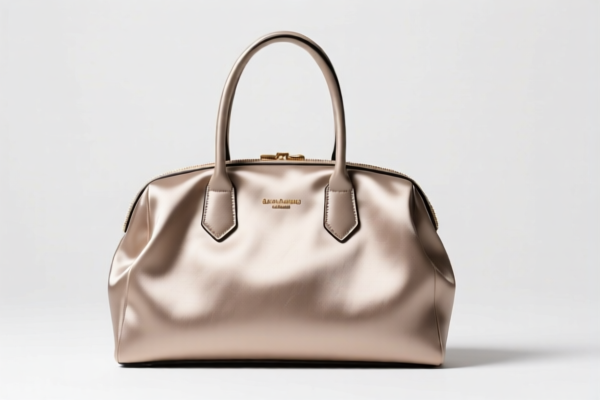
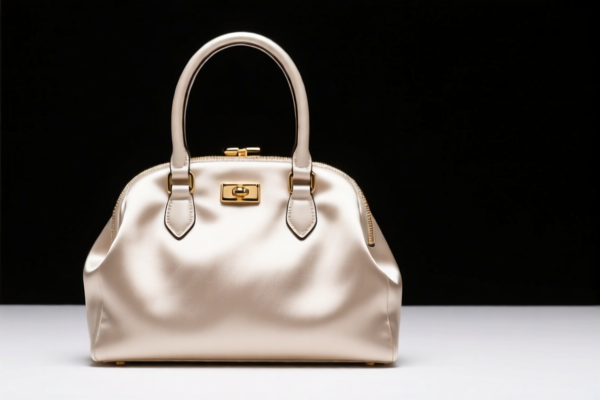
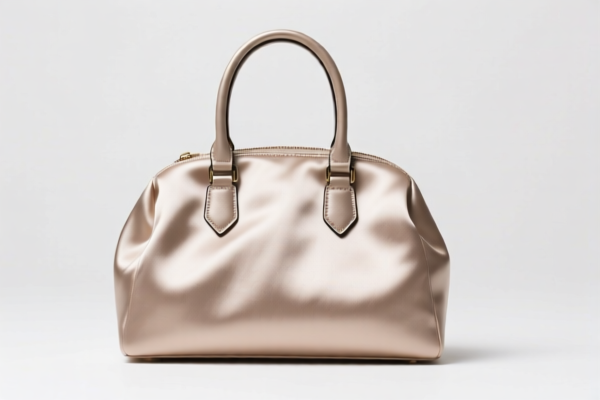
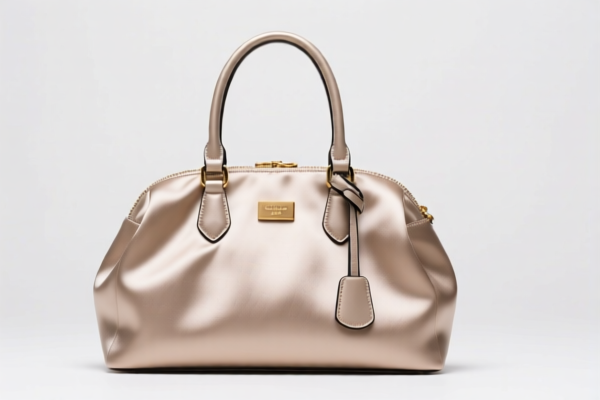
AI Analysis
👜 Handbags: Silk & Woven Materials (Textile vs. Vegetable Plaiting)
🌐 HS Code Reference & Customs Clearance Guide | 2026 Latest Tariff Analysis | Professional Customs Strategy
📌 I. Product Definition & Classification: What Exactly Are "Silk Fabric Handbags Woven"?
The term "Silk fabric handbags woven" is ambiguous and poses a significant risk for misclassification. It mixes two distinct material categories: 1. Silk Fabric (Textile): Woven, knitted, or felted silk textiles. 2. Woven (Plaiting/Braiding): Typically refers to materials like straw, rattan, bamboo, or other vegetable plaiting materials.
In international trade, you cannot have a bag that is simultaneously "Silk Fabric" AND "Vegetable Plaiting." The customs authority will classify based on the primary constituent material and the construction method.
⚠️ Key Distinction Point:
- If the bag’s outer surface is made of silk textile (woven fabric), it belongs to Chapter 42 (Articles of Leather; similar materials), specifically heading 4202 (Trunks, suitcases, vanity cases, etc.).
- If the bag is made of woven vegetable materials (e.g., bamboo, rattan, straw) with perhaps silk lining, it belongs to Chapter 46 (Plaiting materials; basketware and other articles), specifically heading 4602.
- "Woven Silk" in textiles simply means the silk yarns are woven together. This does not automatically trigger Chapter 46 unless the structural integrity comes from plaited vegetable fibers.
📦 II. HS Code Classification Details (Based on Provided Data)
| HS Code | Product Description | Key Criteria | Tax Rate |
|---|---|---|---|
4202.22.70.00 |
Silk Embellished Handbag | Core material is silk (≥85% silk requirement). Matches "silk fabric" description. | 42.0% |
4202.22.89.80 |
Silk Embellished Handbag | Outer surface is silk textile, classified under "Textile materials" for handbags. | 52.6% |
4202.22.40.20 |
Woven Handbag | Inferred material is woven textile (non-silk or mixed). Matches "woven material" description. | 42.4% |
4602.11.21.00 |
Woven Handbag | Form is handbag; material inferred as bamboo, rattan, or other vegetable plaiting. | 41.2% |
4602.19.29.20 |
Woven Handbag | Form is handbag; material is vegetable plaiting/woven. Matches "plant material woven article" characteristics. | 40.3% |
🔍 Critical Warning:
- "Silk Fabric" → Go to Chapter 42 (4202.22.xxxx).
- "Woven" (if implying vegetable/plaited) → Go to Chapter 46 (4602.xxxx).
- Do not mix terms: A "Silk Woven Handbag" is likely4202.22.70.00or4202.22.89.80, not4602. If you declare a silk bag as4602, customs will reject it for incorrect material classification.
💰 III. 2026 Latest Tariff Rate Breakdown (Including Surcharges & Policy Add-ons)
✅ Applicable Country: USA (US)
✅ Country of Origin: China (CN)
✅ Effective Date: From November 10, 2025 (and subsequent imports)
🎯 1. 4202.22.70.00 —— Silk Embellished Handbag (Core: Silk ≥85%)
| Item | Detail |
|---|---|
| Basic Tariff | 7.0% |
| Section 301 Surcharge | +25.0% |
| Section 122 Tariff | +10.0% |
| Total Tariff | 42.0% |
| Calculation Method | CIF Value × 42.0% |
| De Minimis Exemption | ❌ Not Eligible (deny_de_minimis) |
| Legal Basis Path | USITC:4202.22.70.00 → SECTION_301:25% → SECTION_122:10% |
📌 Explanation:
- This is the optimal classification for high-silk content bags if accurate.
- Total 42% is high but lower than the alternative silk classification (4202.22.89.80at 52.6%).
- Must prove: The bag’s outer surface is ≥85% silk.
🎯 2. 4202.22.89.80 —— Silk Embellished Handbag (Textile Category)
| Item | Detail |
|---|---|
| Basic Tariff | 17.6% |
| Section 301 Surcharge | +25.0% |
| Section 122 Tariff | +10.0% |
| Total Tariff | 52.6% |
| Calculation Method | CIF Value × 52.6% |
| De Minimis Exemption | ❌ Not Eligible |
| Legal Basis Path | USITC:4202.22.89.80 → SECTION_301:25% → SECTION_122:10% |
📌 Explanation:
- This code applies when the bag is classified broadly under "Textile Materials" without the specific ≥85% silk threshold.
- Higher tariff (52.6%) due to a higher basic duty (17.6% vs 7.0%).
- Use only if the silk content is <85% or if the product structure does not meet the specific criteria for4202.22.70.00.
🎯 3. 4202.22.40.20 —— Woven Handbag (Textile Woven)
| Item | Detail |
|---|---|
| Basic Tariff | 7.4% |
| Section 301 Surcharge | +25.0% |
| Section 122 Tariff | +10.0% |
| Total Tariff | 42.4% |
| Calculation Method | CIF Value × 42.4% |
| De Minimis Exemption | ❌ Not Eligible |
| Legal Basis Path | USITC:4202.22.40.20 → SECTION_301:25% → SECTION_122:10% |
📌 Explanation:
- Applies if the "woven" refers to textile weaving (e.g., cotton, polyester, or mixed fabric) and not vegetable plaiting.
- Slightly higher than pure silk (4202.22.70.00) due to basic duty difference.
🎯 4. 4602.11.21.00 —— Woven Handbag (Vegetable Plaiting: Bamboo/Rattan)
| Item | Detail |
|---|---|
| Basic Tariff | 6.2% |
| Section 301 Surcharge | +25.0% |
| Section 122 Tariff | +10.0% |
| Total Tariff | 41.2% |
| Calculation Method | CIF Value × 41.2% |
| De Minimis Exemption | ❌ Not Eligible |
| Legal Basis Path | USITC:4602.11.21.00 → SECTION_301:25% → SECTION_122:10% |
📌 Explanation:
- Lowest basic tariff (6.2%) among the options.
- Only applicable if the bag is structurally made of bamboo, rattan, straw, etc.
- If your bag is Silk, DO NOT USE THIS CODE. Misclassification leads to penalties.
🎯 5. 4602.19.29.20 —— Woven Handbag (Other Vegetable Plaiting)
| Item | Detail |
|---|---|
| Basic Tariff | 5.3% |
| Section 301 Surcharge | +25.0% |
| > Section 122 Tariff | +10.0% |
| Total Tariff | 40.3% |
| Calculation Method | CIF Value × 40.3% |
| De Minimis Exemption | ❌ Not Eligible |
| Legal Basis Path | USITC:4602.19.29.20 → SECTION_301:25% → SECTION_122:10% |
📌 Explanation:
- Lowest total tariff (40.3%).
- Applies to other plant-based woven materials (e.g., paper strip, sisal) not specifically bamboo/rattan.
- Again, only for vegetable/plaited materials.
🛠️ IV. Customs Clearance Practical Advice (Battle-Tested Pitfall Guide)
✅ 1. Documentation Checklist (Non-Negotiable)
| Document | Required | Notes |
|---|---|---|
| ✅ Product Specification Sheet | ✔️ | Must detail material composition % (e.g., "85% Silk, 15% Polyester"). |
| ✅ Material Breakdown | ✔️ | Specify if "woven" refers to textile weave or vegetable plaiting. |
| ✅ Photos (Clear & Detailed) | ✔️ | Show outer surface texture. Is it fabric? Or rigid stalks? |
| ✅ Commercial Invoice | ✔️ | Clearly state "Handbag, Silk, Woven Fabric" or "Handbag, Bamboo, Plaited". |
| ✅ Packing List | ✔️ | List contents accurately. |
✅ 2. Declaration Strategy (Key Mnemonic)
🔥 "Silk is Textile (Ch42), Plant is Plait (Ch46). Get the code right, save 12%!"
| Scenario | Correct HS Code | Wrong Code | Consequence |
|---|---|---|---|
| Bag is 85%+ Silk, woven fabric | 4202.22.70.00 (42.0%) |
4202.22.89.80 (52.6%) |
Overpay 10.6% |
| Bag is <85% Silk or mixed textile | 4202.22.89.80 (52.6%) |
4202.22.70.00 |
Misclassification Risk |
| Bag is Bamboo/Rattan woven | 4602.11.21.00 (41.2%) |
4202.xxxx |
Seizure/Penalty for Material Error |
| Bag is Silk but declared as Bamboo | 4602.xxxx |
4202.22.70.00 |
Fraud Allegation, Back Duties + Fine |
✅ 3. Special Cases
| Situation | Handling Advice |
|---|---|
| "Silk Woven" Ambiguity | If the bag is made of silk yarns woven into a fabric structure, it is Chapter 42. Do not use Chapter 46. |
| Silk Lining + Vegetable Exterior | Classified under Chapter 46 (outer surface material prevails). Use 4602.11.21.00 or 4602.19.29.20. |
| Mixed Materials | If >50% by value/weight is silk, use 4202.22.70.00. If mixed textile, use 4202.22.40.20. |
| Sample vs. Bulk | Ensure samples match bulk material composition. Customs may test fiber content. |
🌍 V. Global Market Comparison (2026)
| Country/Region | Recommended HS Code | Tariff (China Origin) | Notes |
|---|---|---|---|
| 🇺🇸 USA | 4202.22.70.00 (if Silk) |
42.0% | Includes 301 + 122 tariffs. High cost. |
| 🇺🇸 USA | 4602.11.21.00 (if Plant) |
41.2% | Slightly lower than silk. |
| 🇪🇺 EU | 4202.22.00 (General) |
Varies | No Section 122/301 equivalent, but standard tariffs apply. |
| 🇨🇳 China | 4202.22.70.00 |
~5-10% | Lower duties for import into China. |
📌 Conclusion:
- USA imposes heavy surcharges on Chinese textile/plaited handbags.
- Material classification is critical: Silk (Ch42) vs. Plant (Ch46) changes the basic duty significantly.
- Optimal Strategy: If possible, verify if the product qualifies for4602(if plant-based) for a ~2% tariff saving over silk. If it is genuinely silk,4202.22.70.00is the best option.
📌 VI. Common Mistakes & Pitfalls (Lessons Learned)
❌ Mistake 1: Declaring a Silk Bag as 4602.11.21.00 (Bamboo)
👉 Result: Customs lab tests reveal silk. Penalty + Back Duties + Interest.
❌ Mistake 2: Using 4202.22.89.80 for a bag that is 85%+ Silk
👉 Result: Overpaying 10.6% in tariffs unnecessarily.
❌ Mistake 3: Ignoring the "Section 122" tariff
👉 Result: Underestimating costs by 10%. Total cost is not just 301+Basic.
❌ Mistake 4: Saying "Woven Silk" and letting customs guess
👉 Result: High risk of audit. Always specify: "Silk Fabric, Woven Weave" (Ch42) or "Bamboo, Plaited" (Ch46).
✅ Correct Declaration Example:
"Women's Handbag, Outer Surface: 90% Silk Fabric (Woven), Lining: Polyester. HS Code: 4202.22.70.00."
🎯 VII. Conclusion: Precision Saves Millions
🎯 Remember:
🔹 "Silk is Ch42, Plant is Ch46. Confuse them, and you lose big!"
🔹 "85% Silk triggers the 7% base rate. Below that, it's 17.6%."
🔹 "Section 301 (25%) + Section 122 (10%) is mandatory for China origin."
📌 Pro Tip:
- Request a Pre-Ruling (Advance Ruling) from CBP if you have mixed materials.
- Ensure your Bill of Materials (BOM) matches the declared HS Code exactly.
📣 Immediate Action:
📞 Consult a licensed customs broker.
📄 Provide material composition certificates.
🚀 Clear customs smoothly, avoid delays, protect your margin!
✨ Professional Customs Clearance Starts with Accurate Classification!
💼 Every percentage point counts in today’s high-tariff environment!
Customer Reviews
About HS Code Classification
The Harmonized System (HS) is an internationally standardized nomenclature developed by the World Customs Organization (WCO) to classify traded products. Over 200 countries use the HS system as the basis for customs tariffs, trade statistics, and import/export regulations.
Each HS code follows a hierarchical structure:
- Chapter (2 digits) — Broad category of goods (e.g., Chapter 84: Machinery and Mechanical Appliances)
- Heading (4 digits) — More specific grouping within the chapter
- Subheading (6 digits) — Internationally standardized breakdown, used by all WCO member countries
- National subdivisions (8-10 digits) — Country-specific extensions for further classification, such as US HTSUS 10-digit codes
Correct HS code classification is essential for smooth customs clearance, accurate duty payment, and compliance with trade regulations. Misclassification can lead to customs delays, overpayment of duties, or penalties.
When importing from CN to US, the applicable tariff rates may include:
- Most-Favored-Nation (MFN) rate — The standard duty rate applied to WTO members
- General rate — Applied to countries without trade agreements
- Trade remedy duties — Additional tariffs such as Section 301 (anti-dumping), Section 232 (national security), or countervailing duties
The information provided on this page is for reference purposes only. For official classification, please consult with your local customs authority or a licensed customs broker.