silk handbag beaded
CN → US| HS Code | Tariff Rate | Origin | Destination | Doc |
|---|---|---|---|---|
| 4202227000 | 42.0% | CN | US | Official Doc |
| 4202224010 | 42.4% | CN | US | Official Doc |
| 4202227000 | 42.0% | CN | US | Official Doc |
| 4202224010 | 42.4% | CN | US | Official Doc |
| 4202227000 | 42.0% | CN | US | Official Doc |
Product Images
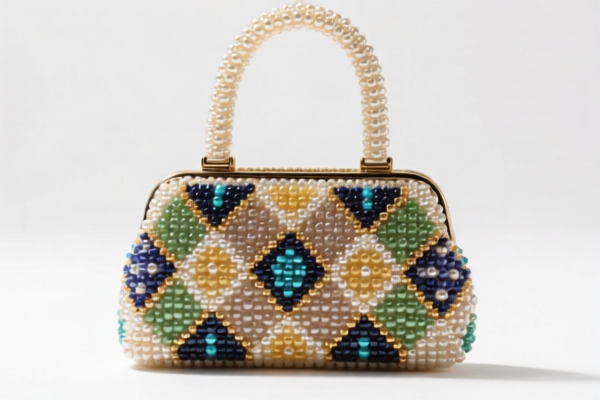
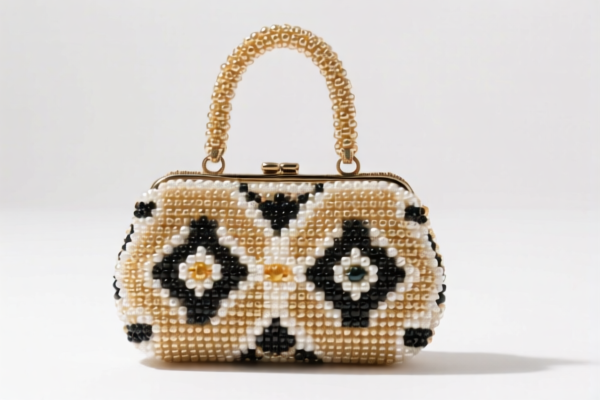
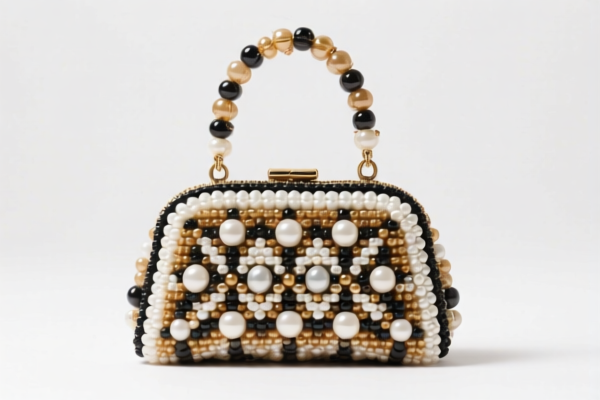
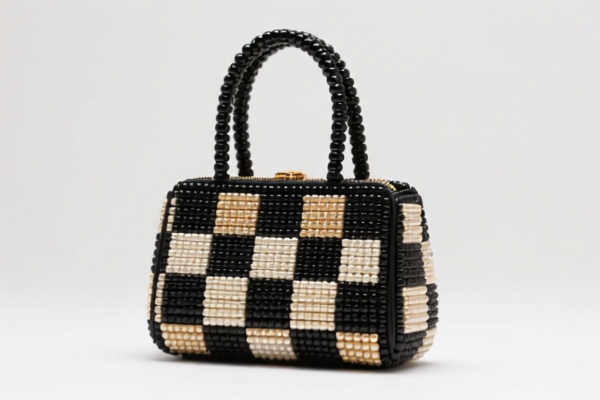
AI Analysis
👜 Silk Handbag - Beaded (丝绸面料珠饰手提包)
🌐 HS Code Reference & Customs Clearance Guide | 2026 Latest Tariff Analysis | Professional Entry Strategy
📌 I. Product Definition & Classification: What is a "Silk Beaded Handbag"?
A silk beaded handbag is a high-end accessory characterized by two primary features: 1. Material: The outer surface is made of textile materials, specifically silk. 2. Form/Function: It is structured as a handbag (carried by hand or over the shoulder), typically used for personal items.
In international trade, the classification depends heavily on whether the item is classified broadly as a general silk handbag or specifically as a beaded accessory under sub-headings for "beaded" items if specified in local tariff schedules. However, based on the provided data for US Customs (HS Codes 4202.xx), the distinction lies in the specific sub-heading for silk handbags.
⚠️ Key Classification Point: - If the bag is a general silk handbag (even with minor embellishments not qualifying as "beaded" in a specific structural sense), it often falls under general silk handbag codes. - If explicitly identified as "Beaded" and the tariff schedule has a specific sub-code for beaded textile handbags, it may fall under that specific sub-code. - Crucially, for the provided data, both "Beaded" and "Non-Beaded (or Lace)" silk handbags are mapped to two main HS Codes:
4202.22.70.00and4202.22.40.10. The difference is in the Base Tariff Rate (7.0% vs 7.4%).
📦 II. HS Code Classification Details (Based on Provided Data)
| HS Code | Product Description | Key Features | Base Tariff | Additional Duties | Total Tax Rate |
|---|---|---|---|---|---|
| 4202.22.70.00 | Silk Handbag / Crossbody Bag (Including Silk with Lace) |
- Outer surface: Textile (Silk) - Form: Handbag/Crossbody - Note: Includes standard silk bags and silk bags with lace details. |
7.0% | 25% (Sec 301) + 10% (Sec 122) | 42.0% |
| 4202.22.40.10 | Silk Beaded Handbag / Crossbody Bag | - Outer surface: Textile (Silk) - Specific Feature: Beaded - Note: Explicitly categorized for beaded silk items. |
7.4% | 25% (Sec 301) + 10% (Sec 122) | 42.4% |
🔍 Critical Distinction: - 4202.22.40.10 is specifically noted for "Beaded" (珠饰) silk bags. It carries a slightly higher base tariff (7.4% vs 7.0%). - 4202.22.70.00 covers general silk handbags, crossbody bags, and silk bags with lace (蕾丝). It has a lower base tariff (7.0%). - Both codes are subject to the same additional duties: Section 301 (25%) and Section 122 (10%).
💰 III. 2026 Tariff Rate Breakdown (Detailed Duty Analysis)
✅ Applicable Country: United States (US)
✅ Origin: China (CN)
✅ Effective Date: Current (Includes Section 301 and 122 tariffs)
🎯 1. HS Code 4202.22.40.10 — Silk Beaded Handbag
| Item | Content |
|---|---|
| Base Tariff (MFN) | 7.4% |
| Section 301 Tariff (USITC) | +25.0% (Add-on duty for Chinese goods) |
| Section 122 Tariff (USTR) | +10.0% (Specific add-on duty) |
| Total Tax Rate | 42.4% |
| Duty Calculation | CIF Value × 42.4% |
| De Minimis Exemption | ❌ Not Eligible (Section 301 goods are excluded from de minimis) |
| Legal Basis Path | HTS:4202.22.40.10 → USITC:Footnote 2 (Sec 301) → USTR:Section 122 |
📌 Explanation: - 7.4% Base: This is the standard Most Favored Nation (MFN) rate for this specific sub-heading for beaded silk handbags. - 25% Section 301: Applied to all textile handbags from China under the Section 301 trade war tariffs. - 10% Section 122: A specific additional tariff imposed on certain Chinese imports. - Total 42.4%: This is a very high effective tax rate. Cost planning must account for this.
🎯 2. HS Code 4202.22.70.00 — Silk Handbag (Non-Beaded / Lace)
| Item | Content |
|---|---|
| Base Tariff (MFN) | 7.0% |
| Section 301 Tariff (USITC) | +25.0% |
| Section 122 Tariff (USTR) | +10.0% |
| Total Tax Rate | 42.0% |
| Duty Calculation | CIF Value × 42.0% |
| De Minimis Exemption | ❌ Not Eligible |
| Legal Basis Path | HTS:4202.22.70.00 → USITC:Footnote 2 (Sec 301) → USTR:Section 122 |
📌 Explanation: - 7.0% Base: Slightly lower base rate for general silk handbags or those with lace details. - Same Additional Duties: The 35% (25% + 10%) add-on is identical. - Total 42.0%: Marginal savings (0.4%) compared to the beaded version, but still extremely high.
🛠️ IV. Customs Clearance Practical Advice
✅ 1. Documentation Checklist (Mandatory)
| Document | Required? | Notes |
|---|---|---|
| Commercial Invoice | ✔️ | Must clearly state: "Silk Handbag, Beaded" or "Silk Handbag, Lace". |
| Packing List | ✔️ | Details package weight, dimensions, and item count. |
| Product Photos | ✔️ | Crucial: Must show the beads (for 4202.22.40.10) or lace (for 4202.22.70.00). |
| Material Composition | ✔️ | Declare "100% Silk" or percentage. Outer surface must be textile. |
| Duties & Fees Agreement | ✔️ | For Section 301/122 compliance. |
| IEEPA Declaration | ✔️ | Confirm origin is China to apply correct add-ons. |
✅ 2. Classification Strategy & Tips
🔥 "Beads Define the Code, Silk Dictates the Chapter, Add-ons Dictate the Cost!"
| Scenario | Recommended HS Code | Reason |
|---|---|---|
| Bag has visible decorative beads | 4202.22.40.10 |
Explicitly covers "Beaded" silk handbags. Higher base rate (7.4%). |
| Bag has lace trim or no beads | 4202.22.70.00 |
Covers general silk handbags, including lace variants. Lower base rate (7.0%). |
| Bag is crossbody (shoulder bag) | 4202.22.70.00 |
Crossbody bags are generally classified under the same sub-heading as handbags in this context. |
| Bag is made of Silk + Synthetic Blend | Check Textile Composition | If silk is not the outer surface material, it may not fall under 4202.22. |
📌 Important Note: - Do not misclassify beaded bags as general silk bags to save 0.4%. Customs may inspect and reclassify, leading to penalties. - Crossbody bags (斜挎包) are treated similarly to handbags in this HS code structure. Ensure the description matches the physical form.
✅ 3. Cost Optimization & Risk Mitigation
| Strategy | Action |
|---|---|
| Minimize Base Tariff | If possible, design handbags with lace or other non-beaded embellishments to use 4202.22.70.00 (42.0% vs 42.4%). |
| Avoid De Minimis | Shipments under $800 from China will NOT benefit from de minimis due to Section 301/122 tariffs. Plan for full duty payment. |
| Accurate Description | Use precise terms: "Silk Beaded Evening Clutch" vs "Silk Crossbody Bag". Ambiguity leads to delays. |
| Pre-Ruling | Consider applying for a Binding Ruling from CBP if you have large volumes or unique designs (e.g., beads vs. embroidery). |
🌍 V. Global Market Comparison (2026)
| Country/Region | HS Code | Base Rate | Additional Duties (China) | Total Effective Rate | Notes |
|---|---|---|---|---|---|
| 🇺🇸 USA | 4202.22.40.10 | 7.4% | +35% (301 + 122) | 42.4% | High barrier to entry. |
| 🇺🇸 USA | 4202.22.70.00 | 7.0% | +35% (301 + 122) | 42.0% | Slightly better for non-beaded. |
| 🇪🇺 EU | 4202.22.xx | ~6.0% | None | ~6.0% | No Section 301/122 equivalent. Favorable. |
| 🇬🇧 UK | 4202.22.xx | ~6.0% | None | ~6.0% | Post-Brexit tariffs similar to EU. |
| 🇨🇳 China | 4202.22.xx | ~10% | None | ~10% | Import duty for domestic market. |
📌 Conclusion: - The US market is the most challenging due to the 35% additional tariffs. - For other markets (EU, UK, China), the total tax is significantly lower. - Strategy: If targeting the US, consider cost-price negotiations to absorb the 42% duty, or explore transshipment/assembly in third countries (if rules of origin allow).
📌 VI. Common Mistakes & Pitfalls (Learn from Others)
❌ Mistake 1: Classifying beaded bags as 4202.22.70.00 to save 0.4%.
👉 Consequence: Customs audit → Repayment of duties + Potential penalties.
❌ Mistake 2: Assuming "De Minimis" ($800) applies. 👉 Consequence: Package seized at customs, duties + storage fees applied. Section 301/122 goods are excluded.
❌ Mistake 3: Vague Description: "Silk Bag." 👉 Consequence: CBP may assign a worst-case HS code or delay clearance for inspection.
❌ Mistake 4: Ignoring "Section 122" tariffs. 👉 Consequence: Underpayment of duties by 10%. Always include Sec 122 in calculations.
✅ Correct Approach:
Product: "Women's Silk Handbag, Beaded, Black, Model XYZ" HS Code:
4202.22.40.10Duty: 42.4% Declaration: Explicitly state "Beaded" and "Silk Outer Surface."
🎯 VII. Conclusion: Professional Classification, Cost Efficiency!
🎯 Remember the Key Takeaway:
🔹 "Beaded = 42.4%, Non-Beaded/Lace = 42.0%."
🔹 "Section 301 + 122 = 35% Add-on. No De Minimis for China!"
🔹 "Describe Accurately: Silk + Beads/Lace + Handbag Form."
📌 Pro Tip:
If your product value is high, consider Advance Rulings from CBP to ensure correct classification. For US imports, the 42% tax rate is a significant cost driver. Explore duty drawback programs if re-exporting, or free trade agreement sourcing (if applicable) to mitigate costs.
📣 Action Required:
📞 Contact a Licensed Customs Broker
📄 Provide High-Resolution Photos of the beading/lace
📊 Calculate Landed Cost including 42%+ duties
🚀 Ensure Smooth US Customs Clearance!
✨ Precision in Classification, Profit in Trade!
💼 Your Handbag's Journey Starts with the Right HS Code!
Customer Reviews
About HS Code Classification
The Harmonized System (HS) is an internationally standardized nomenclature developed by the World Customs Organization (WCO) to classify traded products. Over 200 countries use the HS system as the basis for customs tariffs, trade statistics, and import/export regulations.
Each HS code follows a hierarchical structure:
- Chapter (2 digits) — Broad category of goods (e.g., Chapter 84: Machinery and Mechanical Appliances)
- Heading (4 digits) — More specific grouping within the chapter
- Subheading (6 digits) — Internationally standardized breakdown, used by all WCO member countries
- National subdivisions (8-10 digits) — Country-specific extensions for further classification, such as US HTSUS 10-digit codes
Correct HS code classification is essential for smooth customs clearance, accurate duty payment, and compliance with trade regulations. Misclassification can lead to customs delays, overpayment of duties, or penalties.
When importing from CN to US, the applicable tariff rates may include:
- Most-Favored-Nation (MFN) rate — The standard duty rate applied to WTO members
- General rate — Applied to countries without trade agreements
- Trade remedy duties — Additional tariffs such as Section 301 (anti-dumping), Section 232 (national security), or countervailing duties
The information provided on this page is for reference purposes only. For official classification, please consult with your local customs authority or a licensed customs broker.