silk handbag embroidered
CN → US| HS Code | Tariff Rate | Origin | Destination | Doc |
|---|---|---|---|---|
| 4202227000 | 42.0% | CN | US | Official Doc |
| 4202228980 | 52.6% | CN | US | Official Doc |
| 4202224010 | 42.4% | CN | US | Official Doc |
| 4202227000 | 42.0% | CN | US | Official Doc |
| 4202224010 | 42.4% | CN | US | Official Doc |
Product Images
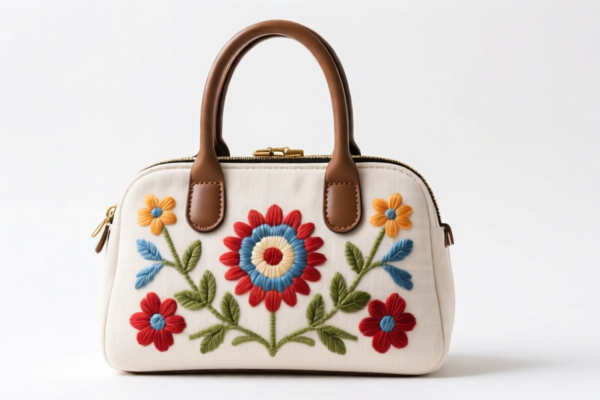
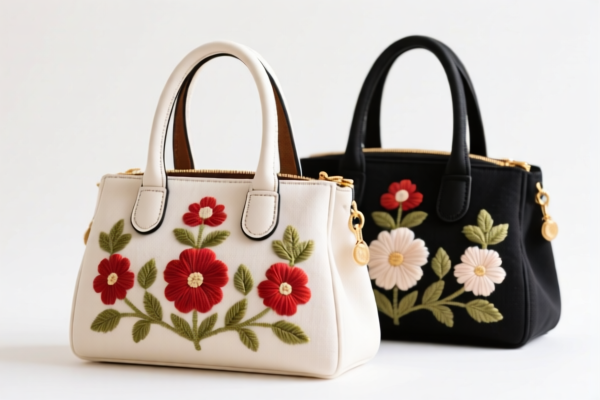
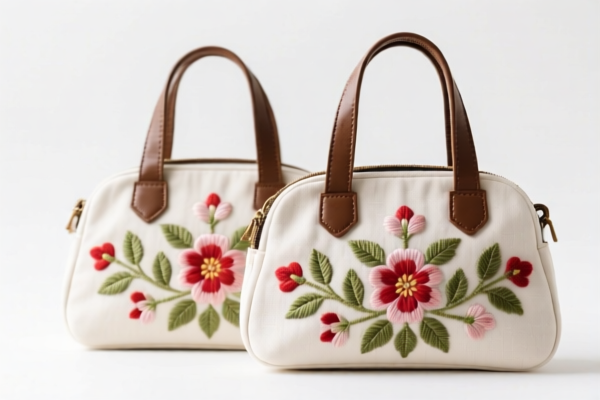
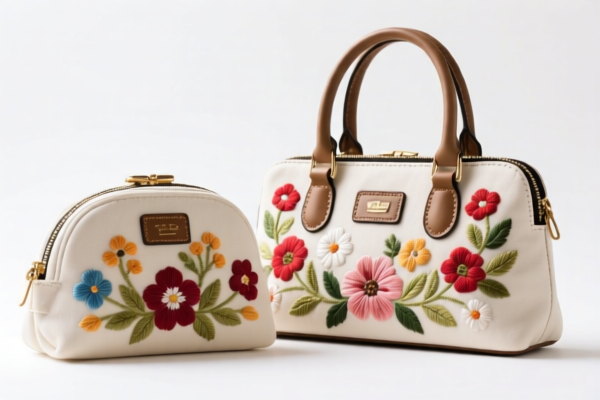
AI Analysis
👜 Silk Handbag Embroidered / Silk Shoulder Bag
🌐 HS Code Reference & Clearance Guide | 2026 Latest Tariff Analysis | Professional Customs Strategy
📌 I. Product Definition & Classification: Do You Truly Understand "Silk Embroidered Bags"?
Silk handbags, particularly those featuring embroidery or beadwork, are classified under Chapter 42 (Articles of leather; saddlery and harness; travel goods, handbags...). The critical distinction in customs classification lies in the outer surface material and the structural form.
1. Handbags vs. Shoulder Bags:
- Handbags (手提包): Typically defined by their shape and handling style.
- Shoulder Bags (斜挎包): Defined by strap configuration and carrying method.
2. Material Composition:
- Silk Content: Must meet specific thresholds (e.g., ≥85% silk) to qualify for specific silk-based subheadings.
- Outer Surface: The primary determinant for HS Code assignment is the material of the outer surface. If the outer surface is silk, it generally falls under textile-based handbag codes unless specific structural exemptions apply.
⚠️ Key Distinction:
- If the bag is primarily silk (≥85%) and classified as a "Handbag" by shape → 4202.22.70.00
- If the bag is silky/textile but categorized specifically as a "Shoulder Bag" or has different structural definitions → 4202.22.40.10
- If the bag is silk but misclassified due to embroidery/beadwork complexity, potentially falling under general textile handbags → 4202.22.89.80
📦 II. HS Code Classification Details (2026 Latest Tariff Authority Comparison)
| HS Code | Product Description | Applicable Scenario | Silk/Textile Criterion |
|---|---|---|---|
4202.22.70.00 |
Silk Embroidered Handbag, Silk Material (≥85% Silk) | High-end silk handbags, pure silk material | ✅ ≥85% Silk |
4202.22.89.80 |
Silk Embroidered Handbag, Outer Surface is Silk, Textile Material | General textile silk handbags, broader category | ✅ Silk Outer Surface |
4202.22.40.10 |
Silk Shoulder Bag or Silk Embroidered Handbag, Silk Fabric | Silk shoulder bags, textile outer surface | ✅ Silk Fabric Outer Surface |
4202.22.70.00 |
Silk Shoulder Bag, Form Consistent with Handbag Category | Silk bags shaped as handbags despite strap design | ✅ Silk Material |
4202.22.40.10 |
Silk Fabric Embroidered Handbag, Silk Fabric Material | Silk fabric handbags, textile outer surface with silk | ✅ Silk Fabric |
🔍 Key Reminder:
- Embroidery/Beading: Does not change the base HS Code unless it completely covers the outer surface and changes the fundamental character, but typically, the base material (Silk) dictates the code in Chapter 42. - Structure: If a "shoulder bag" has the physical form of a "handbag," it may still be classified under4202.22.70.00depending on customs interpretation of "handbag" shape.
💰 III. 2026 Latest Tariff Rate Detail (Including Surtaxes, Policy Surcharges)
✅ Applicable Country: United States (US)
✅ Origin: China (CN)
✅ Effective Time: Current US-China Trade Policies (Section 301, 1221)
🎯 1. 4202.22.70.00 —— Silk Embroidered Handbag (High Silk Content)
| Item | Detail |
|---|---|
| Base Tariff | 7.0% |
| Section 301 Surcharge | 25.0% |
| Section 1221 Surcharge | 10.0% |
| Total Tariff Rate | 42.0% |
| Tax Calculation | CIF Value × 42.0% |
| De Minimis Exemption | ❌ Not Eligible (High tariff threshold) |
| Legal Basis Path | USITC:4202.22.70.00 → Sec301:25% → Sec1221:10% |
📌 Explanation:
- This code applies to bags where the silk content is significant (≥85%), qualifying for a lower base tariff (7.0%) but still subject to substantial US surcharges. - Total 42% is a critical cost factor.
🎯 2. 4202.22.89.80 —— Silk Embroidered Handbag (General Textile Silk)
| Item | Detail |
|---|---|
| Base Tariff | 17.6% |
| Section 301 Surcharge | 25.0% |
| Section 1221 Surcharge | 10.0% |
| Total Tariff Rate | 52.6% |
| Tax Calculation | CIF Value × 52.6% |
| De Minimis Exemption | ❌ Not Eligible |
| Legal Basis Path | USITC:4202.22.89.80 → Sec301:25% → Sec1221:10% |
📌 Note:
- This code has a higher base tariff (17.6%) because it is classified under a broader textile category, possibly due to specific manufacturing definitions or lower silk purity threshold in classification logic. - Total 52.6% is significantly higher than4202.22.70.00. Avoid this code if possible by ensuring proper silk content declaration.
🎯 3. 4202.22.40.10 —— Silk Shoulder Bag / Silk Fabric Handbag
| Item | Detail |
|---|---|
| Base Tariff | 7.4% |
| Section 301 Surcharge | 25.0% |
| Section 1221 Surcharge | 10.0% |
| Total Tariff Rate | 42.4% |
| Tax Calculation | CIF Value × 42.4% |
| De Minimis Exemption | ❌ Not Eligible |
| Legal Basis Path | USITC:4202.22.40.10 → Sec301:25% → Sec1221:10% |
📌 Note:
- This code applies to shoulder bags or handbags made of silk fabric (not necessarily ≥85% pure silk). - Total 42.4% is slightly higher than4202.22.70.00due to a marginally higher base tariff (7.4% vs 7.0%). - Use this for bags clearly defined as shoulder bags or where silk content is <85%.
🛠️ IV. Customs Clearance Practical Advice (Battle-Tested Pitfall Avoidance)
✅ 1. Required Documentation Checklist (Non-Negotiable)
| Document | Required | Description |
|---|---|---|
| ✅ Product Specification Sheet | ✔️ | Must specify Silk Content %, outer material, lining, and hardware |
| ✅ Detailed Photos (Front/Back/Inside) | ✔️ | Must show embroidery/beadwork but also clearly display the silk texture |
| ✅ Commercial Invoice | ✔️ | Must state "Silk Handbag" or "Silk Shoulder Bag" accurately |
| ✅ Packing List | ✔️ | Details quantity, weight, and packaging |
| ✅ Silk Content Declaration | ✔️ | Critical: Must confirm if silk content is ≥85% for 4202.22.70.00 |
| ✅ Origin Certificate (CO) | ✔️ | Required for US origin verification |
✅ 2. Declaration Tips (Key Mantra)
🔥 "Shape Defines Bag, Silk Defines Rate!"
| Scenario | Correct Declaration | Wrong Practice |
|---|---|---|
| Bag looks like a handbag, ≥85% Silk | 4202.22.70.00 (42.0%) |
Declared as shoulder bag → 4202.22.40.10 (42.4%) |
| Bag is a shoulder bag, silk fabric | 4202.22.40.10 (42.4%) |
Declared as handbag → Risk of reclassification |
| Bag is silk, but embroidery hides structure | 4202.22.89.80 (52.6%) |
Avoid! → High tariff due to broad classification |
| Bag is <85% Silk | 4202.22.89.80 or 4202.22.40.10 |
Declared as ≥85% Silk → Fraud risk, penalties |
📌 Crucial Point:
- Embroidery/Beading does not justify using4202.22.89.80if the bag is clearly a handbag with high silk content. Use4202.22.70.00to save 10.6% in taxes! - Shape Matters: If it has a long strap and is worn on the shoulder, customs may classify it as a shoulder bag (4202.22.40.10), even if it looks like a handbag. Be consistent in your description.
✅ 3. Special Cases Handling
| Scenario | Handling Advice |
|---|---|
| Mixed Materials | If outer surface is silk but lining is leather, still classify under silk if silk is dominant outer surface |
| Embroidery Coverage | If embroidery covers >50% of outer surface, provide photos and material analysis to prove base material is still silk |
| Sample vs. Bulk | Ensure bulk production matches sample in silk content and shape |
| Gift vs. Commercial | Same tariff rules apply; no exemption for gifts unless below de minimis threshold (which is not applicable here due to high tariff) |
🌍 V. Global Market Clearance Comparison (2026 Latest)
| Country/Region | Recommended HS Code | Tariff | Certification Required | Notes |
|---|---|---|---|---|
| 🇺🇸 USA | 4202.22.70.00 |
42.0% | None specific for silk | High tariff due to Sec301 & Sec1221 |
| 🇨🇳 China | 4202.22.70.00 |
Low | CCC (if applicable) | No surcharges |
| 🇪🇺 EU | 4202.22.70.00 |
4.0% | CE (if applicable) | No surcharges |
| 🇦🇺 Australia | 4202.22.70.00 |
5.0% | None specific | No surcharges |
| 🇯🇵 Japan | 4202.22.70.00 |
4.0% | PSE (if applicable) | No surcharges |
📌 Conclusion:
- USA is the most expensive market for silk handbags due to 42.0%-52.6% total tariffs. - Consider supply chain diversification (e.g., production in Vietnam, Cambodia) if targeting US market to avoid surcharges. - EU, Japan, Australia have significantly lower tariffs (~4-5%).
📌 VI. Common Errors & Pitfall Guide (Lessons Learned)
❌ Error 1: Declaring a shoulder bag as a handbag to get 4202.22.70.00
👉 Consequence: Customs may reclassify it to 4202.22.40.10 → Minor tariff difference, but risk of delays.
❌ Error 2: Not declaring silk content accurately
👉 Consequence: If actual silk content is <85%, using 4202.22.70.00 is fraud → Penalties, seizures.
❌ Error 3: Using 4202.22.89.80 for clear silk handbags
👉 Consequence: Overpaying 10.6% in tariffs ($10,600 extra per $100k shipment).
❌ Error 4: Ignoring Section 1221 Surcharge
👉 Consequence: Underestimating total cost by 10% → Profit margin erosion.
✅ Correct Approach:
"Silk Handbag, Embroidered, 100% Silk Outer Surface, Model XYZ, Made in China"
🎯 VII. Conclusion: Precise Classification, Cost Savings, Smooth Clearance!
🎯 Remember the Mantra:
🔹 "Silk ≥85% → 4202.22.70.00 (42.0%)"
🔹 "Shoulder Bag → 4202.22.40.10 (42.4%)"
🔹 "General Textile Silk → 4202.22.89.80 (52.6%)"
🔹 "Embroidery Doesn’t Change Silk Rate, Shape Does!"
📌 Pro Tip:
- Apply for Advance Ruling from US Customs if unsure about shape classification (Handbag vs. Shoulder Bag).
- Verify Silk Content with third-party lab tests for bulk shipments.
- Consider Third-Country Manufacturing (e.g., Vietnam) for US-bound silk bags to mitigate 25% Section 301 and 10% Section 1221 surcharges.
📣 Immediate Action:
📞 Consult a licensed customs broker + Provide product photos + Verify silk content
🚀 Clear your silk handbags efficiently, avoid tariff traps, and maximize profits!
✨ Professional Clearance Starts with Accurate Classification!
💼 Every percent of tax saved is pure profit!
Customer Reviews
About HS Code Classification
The Harmonized System (HS) is an internationally standardized nomenclature developed by the World Customs Organization (WCO) to classify traded products. Over 200 countries use the HS system as the basis for customs tariffs, trade statistics, and import/export regulations.
Each HS code follows a hierarchical structure:
- Chapter (2 digits) — Broad category of goods (e.g., Chapter 84: Machinery and Mechanical Appliances)
- Heading (4 digits) — More specific grouping within the chapter
- Subheading (6 digits) — Internationally standardized breakdown, used by all WCO member countries
- National subdivisions (8-10 digits) — Country-specific extensions for further classification, such as US HTSUS 10-digit codes
Correct HS code classification is essential for smooth customs clearance, accurate duty payment, and compliance with trade regulations. Misclassification can lead to customs delays, overpayment of duties, or penalties.
When importing from CN to US, the applicable tariff rates may include:
- Most-Favored-Nation (MFN) rate — The standard duty rate applied to WTO members
- General rate — Applied to countries without trade agreements
- Trade remedy duties — Additional tariffs such as Section 301 (anti-dumping), Section 232 (national security), or countervailing duties
The information provided on this page is for reference purposes only. For official classification, please consult with your local customs authority or a licensed customs broker.