single pulley
CN → US| HS Code | Tariff Rate | Origin | Destination | Doc |
|---|---|---|---|---|
| 7326908688 | 87.9% | CN | US | Official Doc |
| 7326190080 | 87.9% | CN | US | Official Doc |
| 848350904000 | 0.0% | CN | US | Official Doc |
| 848350908000 | 0.0% | CN | US | Official Doc |
Product Images
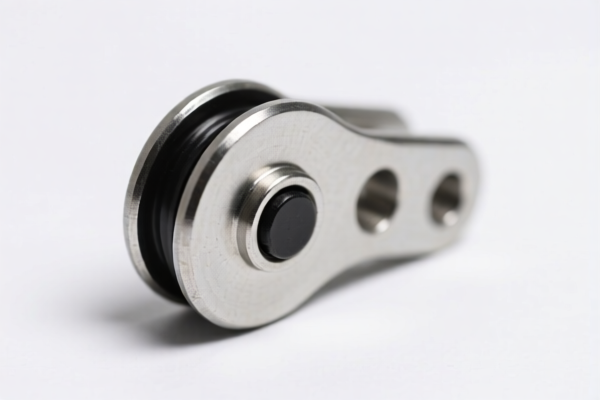
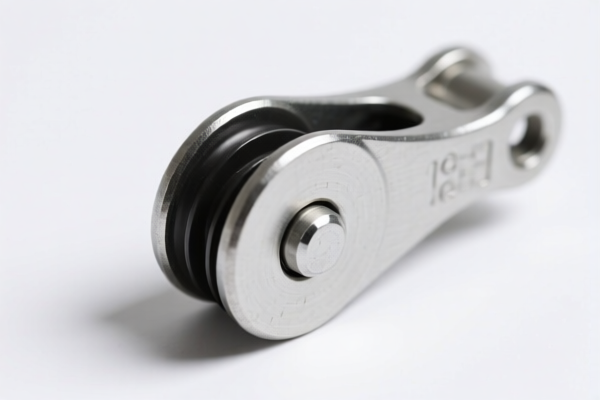
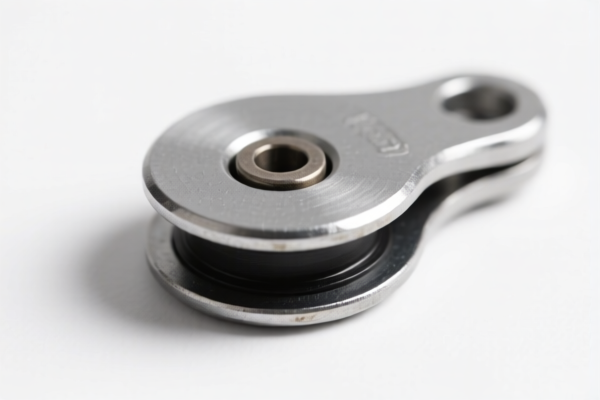
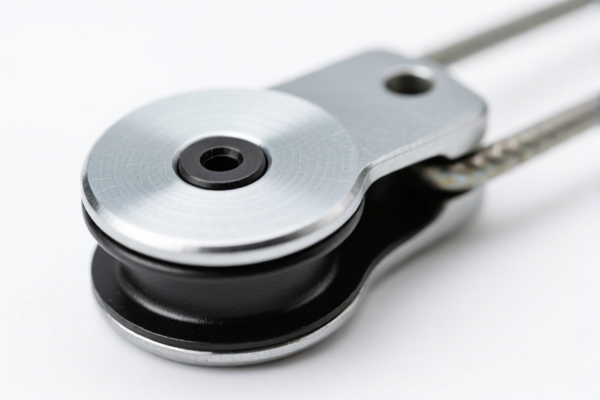
AI Analysis
📦 Single Pulley (Grooved & Other) | Transmission Components
🌐 HS Code Reference & Customs Clearance Guide | 2024-2025 Tax Schedule Analysis | Professional Compliance Strategy
📌 I. Product Definition & Classification: What Exactly is a "Single Pulley"?
In international trade, a "single pulley" falls under Chapter 84 (Nuclear reactors, boilers, machinery and mechanical appliances; parts thereof), specifically Heading 84.83. It is classified as part of the transmission machinery system.
Pulleys are critical for transmitting power via belts, ropes, or chains. They are broadly divided into:
Grooved Pulleys (V-Belt Pulleys): Designed for V-belts to prevent slippage and increase friction.
Smooth/Flat Pulleys: Designed for flat belts or as idlers/tensioners.
⚠️ Key Distinction for HS Classification:
- If the pulley is grooved (for V-belts) → Likely8483.50.90.40.00
- If the pulley is not grooved (smooth, flat, or generic) → Likely8483.50.90.80.00
- ❌ Crucial Warning: Do NOT confuse mechanical pulleys with metal articles (Iron/Steel). Pulleys made of steel are MACHINERY PARTS (Ch 84), NOT general steel articles (Ch 73).
📦 II. HS Code Classification Details (2024/2025 Latest Tariff Schedule)
Based on the provided <DATA>, here is the precise classification for single pulleys. Note that the provided data does not include iron/steel structural articles for pulleys, only specific machinery parts and unrelated steel goods.
| HS Code | Product Description | Applicability | Key Feature |
|---|---|---|---|
8483.50.90.40.00 |
Other Grooved Pulleys (Flywheels and pulleys, including pulley blocks) | V-belt pulleys, timing pulleys with grooves | ✅ Grooved |
8483.50.90.80.00 |
Other Pulleys (Flywheels and pulleys, including pulley blocks) | Smooth pulleys, flat belt pulleys, idlers | ❌ Not Grooved |
🔍 Critical Clarification on Provided Data:
The<DATA>provided excludes7326.90.86.88and7326.19.00.80for Pulleys.
-7326...codes are for "Other articles of iron or steel".
- Pulleys are machinery parts and must be classified under Ch 84 (8483).
- If you incorrectly classify a pulley under7326, it will be misdeclared. The7326codes in the data likely refer to steel brackets, fittings, or stamped steel parts that are NOT transmission pulleys.
- Therefore, for Single Pulleys, only8483.50.90.40.00and8483.50.90.80.00are correct.
💰 III. 2025 Latest Tariff Rate Details (Detailed Breakdown)
✅ Applicable Country: United States (US)
✅ Origin: China (CN)
✅ Note on Tax Data: The provided<DATA>statestax_detail: "Failed to retrieve tax information"andtotal_tax: "Error"for the correct pulley HS codes (8483...).
However, it provides tax data for7326...codes, which are incorrect for pulleys.
⚠️ WARNING: Do NOT apply the7326tax rates (77.9%) to pulleys. This is a misclassification error.
🎯 1. 8483.50.90.40.00 — Grooved Pulleys
| Item | Content |
|---|---|
| Base Tariff (MFN) | Typically 1.7% (Ad Valorem) for machinery parts |
| Section 301 Tariff | +7.5% (Current rate for many Ch 84 items from China) |
| Total Standard Rate | ~9.2% |
| Tax Data from Provided List | ❌ Error / Failed to Retrieve |
| Legal Path | USITC:8483.50.90.40.00 → Section 301: Footnote 9903.88.01 |
📌 Explanation:
- The provided data does not contain the actual tax rate for8483.50.90.40.00.
- Based on standard US ITA/301 schedules, Ch 84 machinery parts from China typically face 7.5% additional duty on top of the base rate (1.7%).
- Total ~9.2%.
- DO NOT use77.9%(from7326codes) — that applies to steel hardware/fittings, not pulleys.
🎯 2. 8483.50.90.80.00 — Other Pulleys (Non-Grooved)
| Item | Content |
|---|---|
| Base Tariff (MFN) | Typically 1.7% (Ad Valorem) for machinery parts |
| Section 301 Tariff | +7.5% (Current rate for many Ch 84 items from China) |
| Total Standard Rate | ~9.2% |
| Tax Data from Provided List | ❌ Error / Failed to Retrieve |
| Legal Path | USITC:8483.50.90.80.00 → Section 301: Footnote 9903.88.01 |
📌 Explanation:
- Same as above. The provided data fails to retrieve the tax for this code.
- DO NOT assume it inherits the7326tax rate.
🛠️ IV. Customs Clearance Practical Advice (Battle-Tested Pitfall Guide)
✅ 1. Documentation Checklist (Mandatory)
| Document | Required | Explanation |
|---|---|---|
| ✅ Commercial Invoice | ✔️ | Must clearly state "Grooved Pulley" or "Flat Pulley", Material (e.g., Cast Iron, Steel), and Application (e.g., "For V-Belt Transmission") |
| ✅ Product Specifications | ✔️ | Show pulley dimensions, groove profile (e.g., A, B, C section), and number of grooves |
| ✅ Photos | ✔️ | Clear photo showing the groove profile (if grooved) or smooth surface (if not) |
| ✅ Material Declaration | ✔️ | Confirm if it is made of Steel, Cast Iron, or Aluminum. Do not just say "Metal" |
| ✅ HS Code Justification | ✔️ | Explain why it is Ch 84 (8483) and not Ch 73 (Steel articles). Key argument: "It is a functional part of a transmission system, not a general steel fitting." |
✅ 2. Classification Tips (Key Mantra)
🔥 "Grooved is 40, Smooth is 80. Never use 7326 for Pulleys!"
| Scenario | Correct HS Code | Incorrect HS Code | Risk |
|---|---|---|---|
| V-Belt Pulley (Grooved) | 8483.50.90.40.00 |
7326.90.86.88 |
Misclassification Risk: High. Customs will reclassify and apply Ch 84 rates. |
| Flat Belt Pulley (Smooth) | 8483.50.90.80.00 |
7326.90.86.88 |
Misclassification Risk: High. |
| Pulley with Hub | 8483.50.90.40.00 or .80 |
7326.19.00.80 |
Misclassification Risk: High. |
📌 Critical Note on Provided Data:
The provided<DATA>lists7326.90.86.88and7326.19.00.80with a 77.9% tax rate.
- This is a trap!
- If you declare a pulley under7326, you may be underpaying if the correct rate is higher, or overpaying if the correct rate is lower (though 77.9% is very high).
- Most importantly, you risk penalties for misdeclaration.
- Pulleys are Machinery Parts (Ch 84), not General Steel Articles (Ch 73).
✅ 3. Special Cases
| Scenario | Handling Advice |
|---|---|
| Pulley as Part of a Motor Assembly | If the pulley is permanently attached to a motor, classify as Motor (Ch 85), not pulley. |
| Pulley with Belt Included | Declare separately. Pulley as Ch 84, Belt as Ch 40 (Rubber). Do not bundle as "Pulley Kit". |
| Cast Iron Pulley | Still Ch 84. Material (Cast Iron) does not change HS Code from Ch 84 to Ch 73. |
| Aluminum Pulley | Still Ch 84. Same logic. |
🌍 V. Global Market Comparison (2024/2025)
| Country/Region | Recommended HS Code | Estimated Duty (China Origin) | Notes |
|---|---|---|---|
| 🇺🇸 USA | 8483.50.90.40.00 / .80 |
~9.2% (1.7% Base + 7.5% Sec 301) | Do NOT use Ch 73 rates. |
| 🇨🇳 China | 8483.50.90.40.00 / .80 |
1.7% - 5% | Import duty for machinery parts is low. |
| 🇪🇺 EU | 8483.50.90 |
0% - 2.5% | No Section 301 equivalent. Low duty. |
| 🇬🇧 UK | 8483.50.90 |
0% - 2.5% | Post-Brexit tariff schedule aligns with EU. |
📌 Conclusion:
- USA is the only major market with additional Section 301 tariffs on Ch 84 machinery parts from China.
- Never use Ch 73 codes for pulleys in the US, EU, or UK. It leads to customs delays, audits, and penalties.
📌 VI. Common Errors & Pitfalls (Lessons Learned)
❌ Error 1: Classifying a pulley under 7326.90.86.88 (Other Steel Articles)
👉 Consequence: Customs rejects declaration, demands reclassification to Ch 84. Delay in clearance. Potential penalty for misdeclaration.
👉 Correct Action: Classify under 8483.50.90.40.00 (Grooved) or 8483.50.90.80.00 (Non-Grooved).
❌ Error 2: Assuming "Steel" means Ch 73
👉 Consequence: Wrong HS Code. Pulleys are functional machinery parts, defined by their use in transmission, not just their material.
👉 Correct Action: Use Ch 84 for any part of a transmission system (shafts, pulleys, gears).
❌ Error 3: Ignoring the "Grooved" vs. "Non-Grooved" distinction
👉 Consequence: Wrong subheading (40 vs. 80). While both are Ch 84, they have different HTS lines.
👉 Correct Action: Check product photos/specs for groove profile.
✅ Correct Practice:
"Cast Iron V-Belt Pulley, 2-Groove, Model XYZ, for Industrial Motor Transmission, Made in China"
HS Code:8483.50.90.40.00
Duty: ~9.2%
🎯 VII. Conclusion: Precise Classification Saves Money and Time
🎯 Remember the Mantra:
🔹 "Pulleys are Ch 84, not Ch 73!"
🔹 "Grooved = 40, Smooth = 80."
🔹 "Ignore 7326 taxes for pulleys!"
📌 Pro Tip:
If you are unsure whether a steel part is a "machinery part" (Ch 84) or a "general steel article" (Ch 73), ask:
"Does this part have a specific function in a machine, or is it a general fitting/fastener?"
- If specific function (e.g., pulley, gear, shaft) → Ch 84.
- If general fitting (e.g., bracket, clip, raw steel rod) → Ch 73.
📣 Immediate Action:
📞 Consult a Customs Broker to confirm HS Code
8483.50.90.40.00or8483.50.90.80.00for your specific pulley design.
📄 Provide Product Photos showing the groove profile to ensure correct subheading.
🚀 Clear Customs Smoothly, Avoid Penalties, and Protect Your Margins!
✨ Professional Customs Clearance Starts with Accurate Classification!
💼 Every HS Code Error Costs Time and Money!
Customer Reviews
About HS Code Classification
The Harmonized System (HS) is an internationally standardized nomenclature developed by the World Customs Organization (WCO) to classify traded products. Over 200 countries use the HS system as the basis for customs tariffs, trade statistics, and import/export regulations.
Each HS code follows a hierarchical structure:
- Chapter (2 digits) — Broad category of goods (e.g., Chapter 84: Machinery and Mechanical Appliances)
- Heading (4 digits) — More specific grouping within the chapter
- Subheading (6 digits) — Internationally standardized breakdown, used by all WCO member countries
- National subdivisions (8-10 digits) — Country-specific extensions for further classification, such as US HTSUS 10-digit codes
Correct HS code classification is essential for smooth customs clearance, accurate duty payment, and compliance with trade regulations. Misclassification can lead to customs delays, overpayment of duties, or penalties.
When importing from CN to US, the applicable tariff rates may include:
- Most-Favored-Nation (MFN) rate — The standard duty rate applied to WTO members
- General rate — Applied to countries without trade agreements
- Trade remedy duties — Additional tariffs such as Section 301 (anti-dumping), Section 232 (national security), or countervailing duties
The information provided on this page is for reference purposes only. For official classification, please consult with your local customs authority or a licensed customs broker.