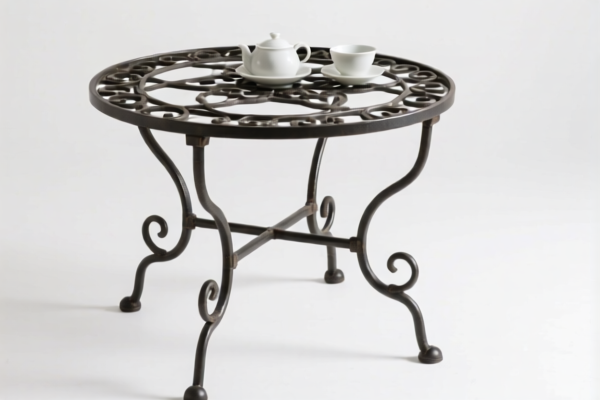
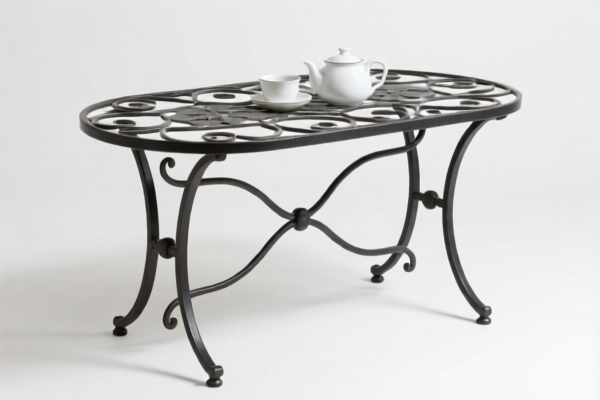
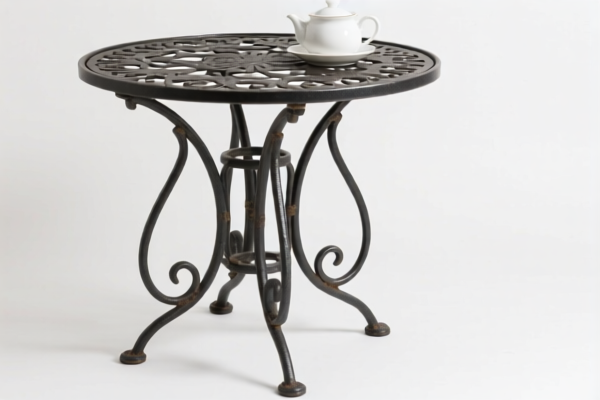
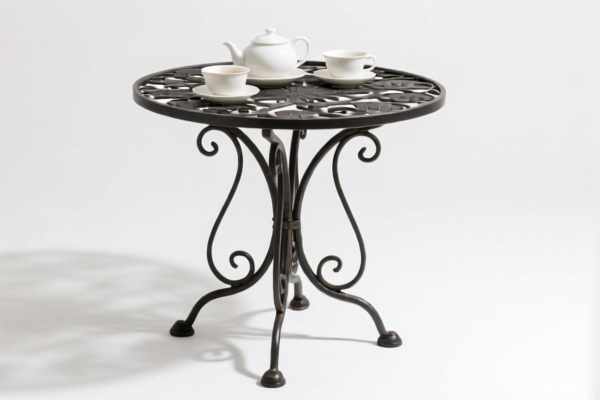
small coffee table
CN → US| HS Code | Tariff Rate | Origin | Destination | Doc |
|---|---|---|---|---|
| 9403608040 | 35.0% | CN | US | Official Doc |
| 9403708015 | 35.0% | CN | US | Official Doc |
Product Images
AI Analysis
🛋️ Small Coffee Table (Other Wooden Furniture / Other Dining Tables)
🌐 HS Code Reference & Customs Clearance Guide | 2026 Latest Tariff Analysis | Professional Entry Strategy
📌 I. Product Definition & Classification: Do You Really Understand "Small Coffee Tables"?
In international trade, furniture is classified not by its size (small/large) but by its material and functional use. A "Small Coffee Table" often faces a critical classification crossroads: is it considered wooden furniture or does it fall under a different category?
According to the provided data context, this item is classified under two specific scenarios based on material composition:
1. Wooden Construction: If the table is made of wood (including solid wood, engineered wood, etc.), it falls under Headings 9403. Specifically, it is often categorized as "Other Dining Tables" or "Other Wooden Furniture" depending on its exact dimensions and intended use in the consumer's mind (e.g., if used primarily for dining/living hybrid spaces, it may be grouped with dining tables).
2. Plastic Construction: If the table is made of plastics, it falls under Heading 9403.70. This category specifically covers "Furniture of Plastics."
⚠️ Critical Distinction Point:
- If the main structure is Wood → Look at 9403.60 series.
- If the main structure is Plastic → Look at 9403.70 series.
- Note: "Small" is not a defining HS code criterion. Material and function are.
📦 II. HS Code Classification Details (Based on Provided Data)
| HS Code | Product Description | Material | Specific Category |
|---|---|---|---|
9403.60.80.40 |
Other furniture and parts thereof: Other wooden furniture: Other Dining tables | Wood | Wooden Furniture (Grouped as "Other Dining Tables") |
9403.70.80.15 |
Other furniture and parts thereof: Furniture of plastics: Other Other household | Plastic | Plastic Furniture (Household use) |
🔍 Key Insight:
-9403.60.80.40: Even if it's a "coffee table," customs may classify wooden tables that don't have a primary "bed/chair/office" function into the residual "Other Dining Tables" or "Other Wooden Furniture" bucket.
-9403.70.80.15: Plastic furniture is explicitly separated. If your coffee table has a plastic top and legs, this is the correct code.
💰 III. 2026 Latest Tariff Rate Details (Detailed Breakdown)
✅ Applicable Market: United States (US)
✅ Origin: China (CN)
✅ Status: High Tariff Zone
Both HS Codes in the provided data carry the same tariff structure due to US trade policies.
🎯 1. 9403.60.80.40 —— Wooden Small Coffee Table (Classified as Other Dining Tables)
| Item | Content |
|---|---|
| Base Tariff | 0.0% (ad valorem) |
| Additional Tariff (Section 301) | +25.0% |
| Total Tariff Rate | 25.0% |
| Tax Calculation | CIF Value × 25% |
| De Minimis Exemption | ❌ Not Eligible (Section 301 goods are generally excluded from de minimis exemptions under current enforcement trends for Chinese origin) |
| Legal Basis | USITC:9403.60.80.40 → FOOTNOTE:301 |
📌 Explanation:
- The 0% base rate is standard for most furniture imports.
- The +25% additional tariff is imposed under Section 301 of the Trade Act of 1974 against China.
- Total Cost Impact: You must pay 25% of the declared value in duties alone. This is a significant cost driver for wooden furniture.
🎯 2. 9403.70.80.15 —— Plastic Small Coffee Table (Household)
| Item | Content |
|---|---|
| Base Tariff | 0.0% (ad valorem) |
| Additional Tariff (Section 301) | +25.0% |
| Total Tariff Rate | 25.0% |
| Tax Calculation | CIF Value × 25% |
| De Minimis Exemption | ❌ Not Eligible |
| Legal Basis | USITC:9403.70.80.15 → FOOTNOTE:301 |
📌 Note:
- Plastic furniture is also heavily targeted by Section 301 tariffs.
- There is no tariff difference between wooden and plastic coffee tables in this specific dataset; both face a 25% total levy.
- Strategic Tip: If cost is the only factor, material choice between wood and plastic (within this HS range) doesn't change the duty rate. However, consider other factors like durability and shipping volume (plastic may be lighter).
🛠️ IV. Customs Clearance Practical Advice (Real-World Pitfall Avoidance)
✅ 1. Required Documentation Checklist
| Document | Mandatory | Description |
|---|---|---|
| ✅ Product Photos | ✔️ | Clear images showing material (wood grain vs. plastic texture), joints, and overall shape. |
| ✅ Commercial Invoice | ✔️ | Must explicitly state: "Small Coffee Table," Material (Wood/Plastic), and Country of Origin (China). |
| ✅ Packing List | ✔️ | Details net/gross weight, dimensions, and quantity. |
| ✅ Material Declaration | ✔️ | Statement confirming the primary material (e.g., "100% MDF with Veneer" or "100% Polypropylene"). |
| ✅ Assembly Instructions | ✔️ | Helps customs determine if it's "knocked-down" or "assembled," which can sometimes affect classification or packaging rules. |
✅ 2. Classification Tips (Key Mantra)
🔥 “Material First, Function Second, Name Precise, Tariff Clear!”
| Scenario | Correct Classification | Wrong Practice |
|---|---|---|
| Wooden Frame + Plastic Top | Depends on Essential Character: If wood is structural, likely 9403.60; if plastic dominates, 9403.70. |
Guessing without analysis → Risk of reclassification. |
| "Coffee Table" Named as "Dining Table" | Acceptable if functionally ambiguous, but ensure material matches. | Calling a plastic table "Wooden Dining Table" → Fraudulent misclassification. |
| Mixed Material (Wood + Metal Legs) | Metal parts are usually incidental. Classify by Wood. | Trying to split shipment into "Table" and "Legs" → Disallowed. |
📌 Warning:
- Do not split the shipment into "Table Top" and "Legs" to avoid tariffs. Customs requires principal function/material classification.
- Ensure the invoice description matches the HS code. If you declare9403.60.80.40, you must prove it is wooden.
✅ 3. Special Considerations
| Situation | Recommendation |
|---|---|
| Solid Wood vs. Engineered Wood | Both fall under 9403.60. No tariff difference in this dataset, but solid wood may require Fumigation Certificates (ISPM 15) for international shipping. Plastic does not. |
| Value Threshold | Since there is no de minimis exemption for these items from China, even low-value small coffee tables are subject to the 25% tariff. |
| Anti-Dumping | Check for specific anti-dumping duties on wooden furniture from China. While not in the provided data, some wooden furniture categories face AD/CVD. Verify with a broker. |
🌍 V. Global Market Comparison (2026 Context)
| Market | Recommended HS Code | Estimated Duty (China Origin) | Notes |
|---|---|---|---|
| 🇺🇸 USA | 9403.60.80.40 or 9403.70.80.15 |
25.0% (Total) | High tariffs under Section 301. |
| 🇨🇳 China | 9403.60 / 9403.70 |
0% - 5% | Low import duty, but this data is for export to the US. |
| 🇪🇺 EU | 9403.60 / 9403.70 |
0% - 4% | Generally lower tariffs; no Section 301 equivalent. |
| 🇬🇧 UK | 9403.60 / 9403.70 |
0% - 4% | Post-Brexit rules apply; generally favorable for furniture. |
📌 Conclusion:
The US market is the most expensive for Chinese-made furniture due to the 25% Section 301 tariff.
- If your product is Plastic, consider the weight/volume savings in shipping, but duty remains 25%.
- If your product is Wood, ensure proper fumigation if applicable, as wood handling is more regulated than plastic.
📌 VI. Common Errors & Pitfalls (Blood & Tears Lessons)
❌ Error 1: Declaring a Plastic Table as Wooden to avoid "Plastic" scrutiny
👉 Consequence: Customs inspection reveals plastic → 25% Tariff still applies + Potential fines for misdeclaration.
❌ Error 2: Splitting the coffee table into "Top" and "Legs"
👉 Consequence: Customs rejects split shipment → Delay, Storage Fees, and Forced Re-classification.
❌ Error 3: Ignoring the "Section 301" label
👉 Consequence: Assuming 0% base rate means 0% total → Unexpected Bill at Customs.
✅ Correct Practice:
“Small Coffee Table, Model XYZ, Material: [Specify Wood or Plastic], Country of Origin: China, HS Code: [Correct Code], Subject to 25% Section 301 Tariff.”
🎯 VII. Conclusion: Smart Classification, Cost Control
🎯 Remember the Mantra:
🔹 “Wood or Plastic? Check the HS. 25% Tax is the price. Don’t split, don’t lie, keep the supply chain wise.”
🔹 “HS Code determines the cost. A 25% duty can wipe out profit margins if unchecked!”
📌 Pro Tip:
Since both wooden and plastic small coffee tables from China face a 25% total tariff in the US, focus on value-added features (design, branding, bundled accessories) to justify higher retail prices and absorb the tariff cost. Alternatively, explore tariff engineering (if applicable) or sourcing from non-China origins if volume is high.
📣 Immediate Action:
📞 Verify the exact material composition with your manufacturer.
📄 Ensure your Invoice and Packing List match the HS Code description.
💰 Calculate the Landed Cost including the 25% duty before setting your retail price.
✨ Professional Clearance Starts with Accurate Classification!
💼 Every percentage point of duty impacts your bottom line!
Customer Reviews
About HS Code Classification
The Harmonized System (HS) is an internationally standardized nomenclature developed by the World Customs Organization (WCO) to classify traded products. Over 200 countries use the HS system as the basis for customs tariffs, trade statistics, and import/export regulations.
Each HS code follows a hierarchical structure:
- Chapter (2 digits) — Broad category of goods (e.g., Chapter 84: Machinery and Mechanical Appliances)
- Heading (4 digits) — More specific grouping within the chapter
- Subheading (6 digits) — Internationally standardized breakdown, used by all WCO member countries
- National subdivisions (8-10 digits) — Country-specific extensions for further classification, such as US HTSUS 10-digit codes
Correct HS code classification is essential for smooth customs clearance, accurate duty payment, and compliance with trade regulations. Misclassification can lead to customs delays, overpayment of duties, or penalties.
When importing from CN to US, the applicable tariff rates may include:
- Most-Favored-Nation (MFN) rate — The standard duty rate applied to WTO members
- General rate — Applied to countries without trade agreements
- Trade remedy duties — Additional tariffs such as Section 301 (anti-dumping), Section 232 (national security), or countervailing duties
The information provided on this page is for reference purposes only. For official classification, please consult with your local customs authority or a licensed customs broker.