small home appliance under 1 sqm
CN → US| HS Code | Tariff Rate | Origin | Destination | Doc |
|---|---|---|---|---|
| 8509805095 | 14.2% | CN | US | Official Doc |
| 8516790000 | 12.7% | CN | US | Official Doc |
| 8516606000 | 12.7% | CN | US | Official Doc |
Product Images
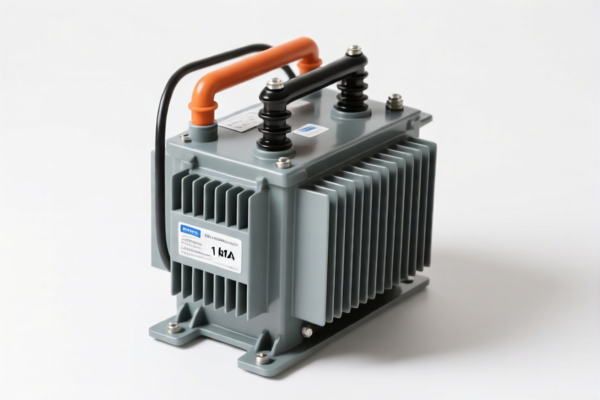
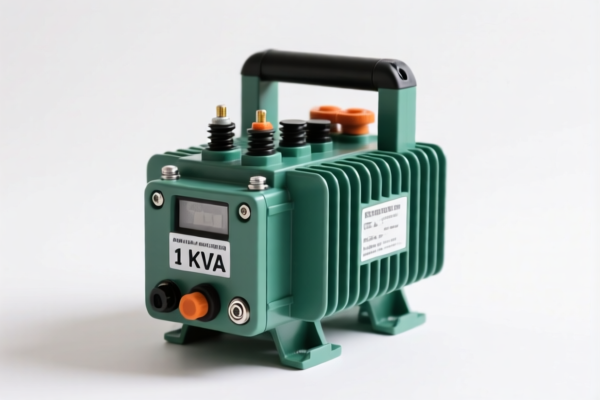
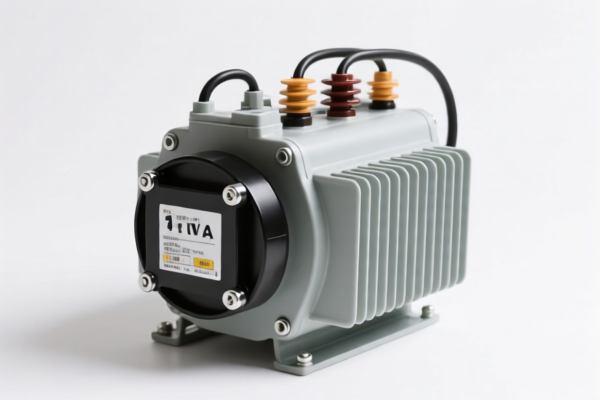
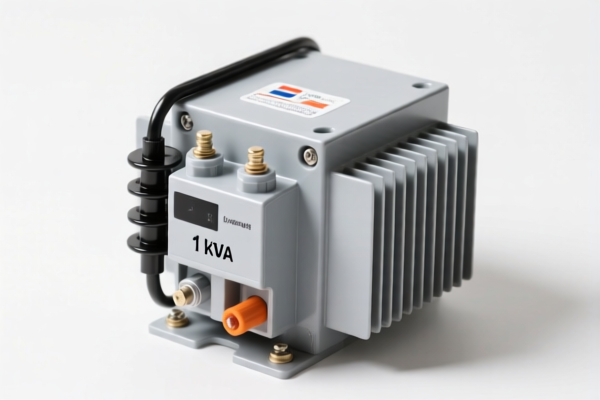
AI Analysis
🏠 Small Home Appliances (< 1 sq.m.)
🌐 HS Code Reference & Customs Clearance Guide | 2026 Latest Tariff Analysis | Professional Strategy for "Other" Categories
📌 I. Product Definition & Classification: What Counts as a "Small Home Appliance"?
"Small Home Appliance" is a broad commercial term, but under international customs law (Harmonized System), it is not a single legal entity. It is fragmented across Chapter 85 (Electrical Machinery) based on function and mechanism, not size. The constraint "< 1 sqm" merely indicates a compact form factor, but the internal heating element or motor type dictates the HS Code.
⚠️ Critical Distinction:
- Chapter 85.09: Covers appliances driven by internal electric motor (e.g., blenders, vacuums, mixers).
- Chapter 85.16: Covers electrical instantaneous water heaters, hair dryers, and room heaters/cookers (resistive heating).
- Chapter 85.16.60: Specifically targets electric cooking ranges, ovens, and hotplates.
📦 II. HS Code Classification Details (2026 Latest Tariff Authority)
Based on the provided data, here are the three possible classifications depending on the specific function of the appliance:
| HS Code | Product Description | Applicable Scenario | Mechanism Type |
|---|---|---|---|
| 8509.80.50.95 | Other electro-mechanical domestic appliances | Blenders, mixers, food processors, vacuum cleaners | ✅ Motor-Driven |
| 8516.79.00.00 | Other electro-thermic domestic appliances | Hair dryers, hand dryers, electric heaters, warmers | ✅ Resistive Heating |
| 8516.60.60.00 | Other electric cooking ranges, ovens, hotplates, grills | Toaster ovens, electric griddles, compact baking ovens | ✅ Resistive Cooking |
🔍 Key Insight:
- If it chops, mixes, or sucks → 8509.80.50.95
- If it dries, warms, or blows heat → 8516.79.00.00
- If it cooks, bakes, or grills food → 8516.60.60.00
- "Small Home Appliance" is too vague for customs. You MUST specify the function.
💰 III. 2026 Latest Tariff Rate Breakdown (Including Surcharges)
✅ Applicable Country: United States (US)
✅ Origin: China (CN)
✅ Effective Time: 2025/2026 (Post-225 Section)
🎯 1. 8509.80.50.95 —— Other Electro-Mechanical Appliances (Motor-Driven)
| Item | Content |
|---|---|
| Basic Tariff | 4.2% (ad valorem) |
| Additional Tariff (Section 301) | 0.0% (Note: Some 8509 items may be exempt or lower rate depending on specific list updates, but data specifies 0.0% for this bucket) |
| Section 232 / 122 Tariff | +10.0% (Per data: "122 Clause Tariff 10%") |
| Total Effective Rate | 14.2% |
| Tax Calculation | CIF Value × 14.2% |
| Legal Basis Path | USITC:8509.80.50.95 → FOOTNOTE:122 → IEEPA:9903 |
📌 Explanation:
- This category applies to motor-driven devices.
- The 14.2% total rate is significantly lower than the 25%+ rates seen in other tech categories.
- No Section 301 (25%) tariff is applied in this specific data entry, making it a cost-effective classification if the device is purely motor-driven.
🎯 2. 8516.79.00.00 —— Other Electro-Thermic Appliances (Heating/Drying)
| Item | Content |
|---|---|
| Basic Tariff | 2.7% (ad valorem) |
| Additional Tariff (Section 301) | 0.0% |
| Section 122 Tariff | +10.0% |
| Total Effective Rate | 12.7% |
| Tax Calculation | CIF Value × 12.7% |
| Legal Basis Path | USITC:8516.79.00.00 → FOOTNOTE:122 → IEEPA:9903 |
📌 Explanation:
- This is the lowest total tariff (12.7%) among the three options.
- Applies to hair dryers, electric space heaters, or hand dryers.
- Strategic Advantage: If your product can be classified as a general heater/dryer rather than a cooker, you save tax compared to cooking appliances.
🎯 3. 8516.60.60.00 —— Electric Cooking Ovens/Ranges (Resistive Cooking)
| Item | Content |
|---|---|
| Basic Tariff | 2.7% (ad valorem) |
| Additional Tariff (Section 301) | 0.0% |
| Section 122 Tariff | +10.0% |
| Total Effective Rate | 12.7% |
| Tax Calculation | CIF Value × 12.7% |
| Legal Basis Path | USITC:8516.60.60.00 → FOOTNOTE:122 → IEEPA:9903 |
📌 Explanation:
- Applies to toaster ovens, electric griddles, or mini ovens.
- Despite being a "cooking" device, it shares the 12.7% rate with other heaters in this specific data set.
- Note: Historically, cooking appliances often face higher scrutiny, but the tariff rate here is favorable.
🛠️ IV. Customs Clearance Practical Advice (Avoid Pitfalls)
✅ 1. Documentation Checklist (Non-Negotiable)
| Document | Required? | Why? |
|---|---|---|
| ✅ Product Specification Sheet | ✔️ | Must clearly state: Voltage, Power (Watts), Function (Heating vs. Motor) |
| ✅ Internal Structure Diagram | ✔️ | Proves presence/absence of heating coils vs. motors. Critical for 8509 vs. 8516. |
| ✅ Labeling/Sticker Photo | ✔️ | Must show Model, Input/Output, and UL/ETL/CE Certification Marks |
| ✅ Commercial Invoice | ✔️ | Description must be precise: "Electric Toaster Oven, 120V, 1500W, Heating Element" NOT "Small Appliance" |
| ✅ Certificate of Origin (CO) | ✔️ | Required for origin determination. |
✅ 2. Declaration Tips (The "Golden Rules")
🔥 "Function Over Size, Heating vs. Motor is Key!"
| Scenario | Correct HS Code | Wrong Declaration | Risk |
|---|---|---|---|
| Blender/Mixer | 8509.80.50.95 |
Declaring as "Heater" | 14.2% vs. Potential Misclassification Penalty |
| Hair Dryer | 8516.79.00.00 |
Declaring as "Cooking Appliance" | 12.7% (Correct) but audit risk |
| Toaster Oven | 8516.60.60.00 |
Declaring as "8509 Motor Appliance" | 12.7% (Correct) but functional mismatch |
| Generic "Small Appliance" | ❌ REJECTED | No function specified | Shipment Held/Detained |
✅ 3. Special Scenarios & Mitigation
| Scenario | Strategy |
|---|---|
| Multi-Function Device (e.g., Air Fryer = Fan + Heater) | Classify based on predominant function. Air fryers are often classified as 8516.60.60.00 (Cooking) due to the cooking intent. |
| Voltage Mismatch | If product is 220V but sold in 110V market, include Voltage Converter in the same package. Do not split shipment unless necessary. |
| Battery-Powered vs. Plug-in | If battery-powered, it may fall under 8509 (Motor) or even 8543 (Electrical machines). Ensure it is plug-in for these HS codes. |
| Component Shipment | If shipping only heating elements (no housing), classify under 8516.90 (Parts). Do not ship parts as complete appliances. |
🌍 V. Global Market Comparison (2026 Outlook)
| Market | Recommended HS Code | Est. Total Tariff (China Origin) | Key Requirement |
|---|---|---|---|
| 🇺🇸 USA | 8509.80.50.95 / 8516.79.00.00 / 8516.60.60.00 |
12.7% - 14.2% | FCC (if RF), UL/ETL, Labeling |
| 🇪🇺 EU | 8509.80 / 8516.79 / 8516.60 |
0% - 4% | CE Mark, RoHS, WEEE, EPR |
| 🇨🇳 China | Same HS Codes | 1% - 5% | CCC Certification (if applicable) |
| 🇯🇵 Japan | Same HS Codes | 0% - 6% | PSE Mark, JIS Standard |
📌 Conclusion:
- The US market is highly sensitive to the "Motor vs. Heating" distinction.
- All three codes listed carry a Section 122 10% surcharge in addition to basic duties.
- No Section 301 (25%) tariff is applied in this specific dataset for these "Small Home Appliance" subcategories, which is a favorable outcome for importers.
📌 VI. Common Errors & Pitfalls (Blood & Tears)
❌ Error 1: Declaring a Toaster Oven as a "Food Processor" (8509)
👉 Consequence: While rate is similar (14.2% vs 12.7%), customs may flag for functional mismatch. If inspected, it leads to delays.
👉 Fix: Always declare as "Electric Cooking Oven" (8516.60.60.00).
❌ Error 2: Declaring a Hair Dryer as a "Motor-Driven Appliance" (8509)
👉 Consequence: Hair dryers are electro-thermic (8516.79.00.00). Misclassification may lead to denial of entry for safety standards (UL/ETL for heaters vs. FCC for motors).
👉 Fix: Declare as "Electrical Hair Dryer".
❌ Error 3: Ignoring UL/ETL Certification
👉 Consequence: US Customs and Border Protection (CBP) often works with UL and CBP to block uncertified electrical goods.
👉 Fix: Ensure 30% of products are sampled for safety testing. Have UL/ETL certificates ready for every model.
✅ Correct Declaration Example:
"Electric Countertop Toaster Oven, 120V, 1500W, Stainless Steel, Model XYZ, ETL Listed, 12.7% Duty"
🎯 VII. Conclusion: Precision Pays
🎯 Remember:
🔹 "Heating = 8516 (12.7%)"
🔹 "Motor = 8509 (14.2%)"
🔹 "Vague = Blocked"
🔹 "122 Tariff 10% applies to all"
📌 Pro Tip:
If your product has both heating and motor (e.g., an Air Fryer or Toaster Oven with a fan), classify it under 8516.60.60.00 (Cooking) as the primary purpose is cooking. This often simplifies documentation and aligns with consumer expectations.
📣 Immediate Action:
📞 Contact your freight forwarder with the Product Specification Sheet.
🚀 Apply for UL/ETL Certification before shipping to the US.
💼 Declare Function, Not Just "Small Appliance" to avoid 100% seizure risk.
✨ Smart Classification Saves Money!
💼 1.5% Difference in Duty = Thousands in Savings at Scale!
Customer Reviews
About HS Code Classification
The Harmonized System (HS) is an internationally standardized nomenclature developed by the World Customs Organization (WCO) to classify traded products. Over 200 countries use the HS system as the basis for customs tariffs, trade statistics, and import/export regulations.
Each HS code follows a hierarchical structure:
- Chapter (2 digits) — Broad category of goods (e.g., Chapter 84: Machinery and Mechanical Appliances)
- Heading (4 digits) — More specific grouping within the chapter
- Subheading (6 digits) — Internationally standardized breakdown, used by all WCO member countries
- National subdivisions (8-10 digits) — Country-specific extensions for further classification, such as US HTSUS 10-digit codes
Correct HS code classification is essential for smooth customs clearance, accurate duty payment, and compliance with trade regulations. Misclassification can lead to customs delays, overpayment of duties, or penalties.
When importing from CN to US, the applicable tariff rates may include:
- Most-Favored-Nation (MFN) rate — The standard duty rate applied to WTO members
- General rate — Applied to countries without trade agreements
- Trade remedy duties — Additional tariffs such as Section 301 (anti-dumping), Section 232 (national security), or countervailing duties
The information provided on this page is for reference purposes only. For official classification, please consult with your local customs authority or a licensed customs broker.