smart bird feeder
CN → US| HS Code | Tariff Rate | Origin | Destination | Doc |
|---|---|---|---|---|
| 7326908688 | 87.9% | CN | US | Official Doc |
| 7326190080 | 87.9% | CN | US | Official Doc |
| 8509805095 | 14.2% | CN | US | Official Doc |
| 8479896500 | 20.3% | CN | US | Official Doc |
| 8509805080 | 14.2% | CN | US | Official Doc |
Product Images
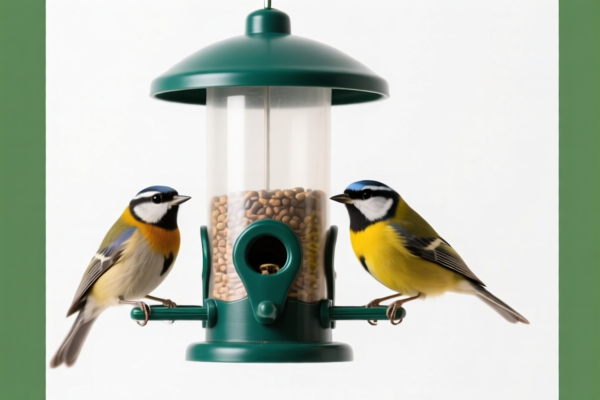
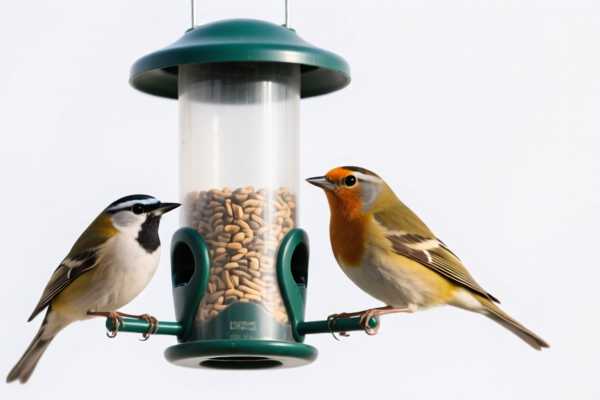

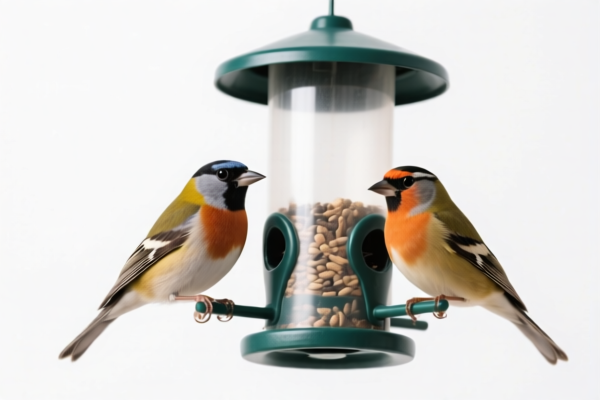
AI Analysis
🐦 Smart Bird Feeder: The Ultimate Classification & Customs Clearance Guide
🌐 HS Code Reference & Customs Clearance Strategy | 2026 Updated Tariff Analysis | Professional Level Strategy
📌 One, Product Definition and Classification: What exactly is a "Smart Bird Feeder"?
A Smart Bird Feeder is a hybrid electronic device combining traditional animal husbandry tools with IoT (Internet of Things) technology. In international trade, its classification is complex because it straddles the line between household appliances, mechanical equipment, and metal/plastic products.
Key components typically include: 1. Hardware: Hopper (plastic/metal), perches, base. 2. Electronics: Camera module, AI recognition chip, Wi-Fi/Bluetooth module, storage, battery/power supply. 3. Function: Automated seed dispensing, live streaming, cloud data storage, user app control.
⚠️ Critical Distinction Point: - If it is primarily a mechanical feeder with added electronics for monitoring → It may fall under Chapter 73 (Iron/Steel) or Chapter 85 (Electrical Machines). - If it has auto-dispensing mechanisms driven by motors → It leans towards 8479 (Machinery) or 8509 (Household Appliances). - If it is purely a metal/plastic container with no moving parts or significant electronics beyond simple sensors → It might be classified as a general metal/plastic product (7326/7326).
📦 Two, HS Code Classification Details (Based on Provided Data)
Below are the five most likely HS Codes for a "Smart Bird Feeder," ranked by functional likelihood and tariff impact.
| HS Code | Summary Description | Key Characteristics |
|---|---|---|
| 8509.80.50.95 | Household Appliance with Self-Contained Motor | Best fit if the feeder has an automatic dispensing motor and is marketed as a home appliance. Low tax burden. |
| 8509.80.50.80 | Electromechanical Household Utensil | Similar to above, general category for household electrical devices. Low tax burden. |
| 8479.89.65.00 | Independent Functioning Machinery | If the device has complex mechanical dispensing logic and is viewed as "industrial" or specialized machinery rather than a simple household gadget. Moderate tax burden. |
| 7326.90.86.88 | Other Articles of Iron/Steel | Applies if the device is primarily a metal structure with minimal electronic components (e.g., just a camera mount, no motor). High tax burden. |
| 7326.19.00.80 | Other Finished Products (Metal/Plastic) | General fallback for mixed-material consumer goods (metal/plastic) lacking specific electrical classification. High tax burden. |
🔍 Focus Reminder: - The "Smart" aspect (IoT/Camera) pushes it towards Chapter 85 (Electrical). - The "Feeder" aspect (Dispensing) pushes it towards Chapter 84 (Machinery) or 8509 (Household Appliances). - Avoid Chapter 73 unless it is a purely mechanical, non-motorized, metal-heavy object, as the tariff penalty is severe.
💰 Three, 2026 Tariff Rate Detailed Breakdown (US Market Context)
✅ Applicable Country: United States (US)
✅ Origin: China (CN)
✅ Effective Date: Tariffs apply to imports from China.
🎯 1. 8509.80.50.95 & 8509.80.50.80 — The Low-Tax Champions
These codes are the most cost-effective if your product qualifies as a "household appliance" with a self-contained motor (e.g., an auto-dispensing mechanism).
| Item | Content |
|---|---|
| Base Duty | 4.2% (Ad Valorem) |
| Section 301 Tariff | 0.0% (No additional 301 tariff for these specific subheadings in this dataset) |
| Section 122 Tariff | 10% (Targeting Steel, Aluminum, Copper products - Note: Check if plastic components exempt you) |
| Total Tax Rate | 14.2% |
| Tax Calculation | CIF Value × 14.2% |
| De Minimis Eligibility | ❌ No (Section 301/IEEPA rules usually block de minimis for high-tariff or regulated items, though 14.2% is lower, compliance is strict) |
| Legal Basis Path | USITC:8509.80.50.95 → SECTION_301:8509.80.50.95 → SECTION_122:10% |
📌 Explanation: - Why only 14.2%?: Because
8509items are often exempt from the harsher 25% Section 301 tariffs applied to many other electronics, provided they meet the "household appliance" definition. - Section 122 (10%): This applies to products containing significant amounts of steel, aluminum, or copper. If your feeder is mostly plastic, argue for exemption. If it has a heavy steel base, this 10% applies. - Strategic Advantage: This is ~73% cheaper than the metal-based classifications.
🎯 2. 8479.89.65.00 — The "Machinery" Option
If your smart feeder has complex mechanical dispensing mechanisms that are not considered "standard household appliances," it may fall here.
| Item | Content |
|---|---|
| Base Duty | 2.8% (Ad Valorem) |
| Section 301 Tariff | 7.5% (Partial Section 301 inclusion) |
| Section 122 Tariff | 10% (For steel/aluminum components) |
| Total Tax Rate | 20.3% |
| Tax Calculation | CIF Value × 20.3% |
| Legal Basis Path | USITC:8479.89.65.00 → SECTION_301:8479.89.65.00 → SECTION_122:10% |
📌 Explanation: - While the base duty is low (2.8%), the 7.5% Section 301 tariff kicks in. - This is more expensive than the
8509route (20.3% vs 14.2%). - Use this only if the product is clearly a "machine" and not a "home appliance."
🎯 3. 7326.90.86.88 & 7326.19.00.80 — The High-Tax Traps
These codes classify the item as a generic metal/plastic product. This is common for misclassified smart devices that look like simple containers.
| Item | Content |
|---|---|
| Base Duty | 2.9% |
| Section 301 Tariff | 25.0% (Full Section 301 tariff applies) |
| Section 122 Tariff | 10% (For steel/aluminum) |
| Total Tax Rate | 87.9% |
| Tax Calculation | CIF Value × 87.9% |
| Legal Basis Path | USITC:7326.90.86.88 → SECTION_301:7326.90.86.88 → SECTION_122:10% |
📌 Warning: - DO NOT use this code unless your "smart" feeder is essentially a metal birdhouse with a glued-on camera and no internal motor or complex electronics. - Consequence: A $100 feeder becomes $87.9 in tax. This is cost-prohibitive for most consumer goods. - Risk: If you declare it as
7326but customs inspects it and finds a motor/Wi-Fi chip, they will reclassify it to8509, but you may still face penalties for incorrect declaration. However, if you want to save money, you must ensure the product strictly meets the8509or8479criteria.
🛠️ Four, Customs Clearance Practical Advice (Avoid Pitfalls)
✅ 1. Documentation Checklist (Must-Have)
| Document | Required | Purpose |
|---|---|---|
| Product Specifications | ✔️ | Must explicitly state: "Motorized Dispensing," "Wi-Fi Enabled," "Battery Type." |
| Circuit Diagrams | ✔️ | Proves the presence of electronic components (supports 85xx classification over 73xx). |
| Product Photos | ✔️ | Show the interior mechanism (motor/gearbox) to prove it's a machine/appliance. |
| Commercial Invoice | ✔️ | Description must be precise: "Smart Bird Feeder with Auto-Dispensing Motor and Camera." |
| FCC ID | ✔️ | Mandatory for any wireless device in the US. No FCC ID = Seizure. |
| UL/ETL Certification | ✔️ | Recommended for battery-powered devices to prove safety. |
✅ 2. Declaration Strategy (Key Mantra)
🔥 "Electronics First, Motor Second, Metal Last! Avoid 7326!"
| Scenario | Correct Declaration | Why? |
|---|---|---|
| Has Motor + App + Camera | 8509.80.50.95 (14.2%) |
It's a Household Appliance. Lowest risk, lowest tax. |
| Complex Mechanical Dispenser | 8479.89.65.00 (20.3%) |
It's a Machine. Safe, but slightly higher tax. |
| Just a Metal Hopper + Camera (No Motor) | 7326.90.86.88 (87.9%) |
Avoid! Unless you are prepared to pay 87.9% tax. |
| Mixed Material (Plastic Body + Steel Base) | 8509.80.50.95 |
Argue that the essential character is the electronic function, not the metal base. |
✅ 3. Special Case Handling
| Situation | Recommendation |
|---|---|
| Battery Power | If lithium-ion, ensure UN38.3 certification. Declare as "Power Bank" type if applicable, but 8509 still holds. |
| OEM Customization | Provide design files showing the motor integration. Customs officers may not recognize "Bird Feeder" as an appliance without proof of mechanism. |
| Kit vs. Assembled | Ship fully assembled. If shipped in parts, ensure the electronic kit and mechanical kit are declared together under one HS Code to avoid拆分 (splitting) penalties. |
🌍 Five, Global Market Comparison (2026 Update)
| Country/Region | Recommended HS Code | Est. Tariff (China Origin) | Key Certifications | Notes |
|---|---|---|---|---|
| 🇺🇸 USA | 8509.80.50.95 |
14.2% | FCC, UL, Prop 65 | Best Option. Avoid 7326 (87.9%). |
| 🇨🇳 China | 8543.70.90.90 |
0-5% | CCC (if applicable) | Low tariff for imported smart devices. |
| 🇪🇺 EU | 8543.70.90.90 |
0-4% | CE, RoHS, WEEE | GDPR compliance for data storage is critical. |
| 🇬🇧 UK | 8543.70.90.90 |
0-4% | UKCA, GDPR | Post-Brexit rules align closely with EU. |
| 🇯🇵 Japan | 8543.70.90.90 |
0-5% | PSE, GITEC | Strict safety standards for batteries. |
📌 Conclusion: - The USA is the most tariff-sensitive market for "Smart" devices due to Section 301 and Section 122. - EU/UK/Japan are much more favorable, often with 0-4% tariffs, focusing on safety and data privacy rather than high tariffs. - For US Entry: You MUST classify under
8509or8479to survive. Do not attempt to classify as7326unless you are intentionally paying 87.9% tax.
📌 Six, Common Errors & Pitfalls (Blood and Tears Lessons)
❌ Error 1: Declaring a "Smart Bird Feeder" as "Plastic Bird Feeder" (3926 or 7326).
👉 Result: Customs inspects, finds a motor/Wi-Fi, reclassifies to 8509 (OK) or 7326 (if they deny electronics), and imposes penalties for misdeclaration.
✅ Fix: Clearly state "Motorized" and "Electronics" in description.
❌ Error 2: Ignoring Section 122 (10%) on Steel/Aluminum.
👉 Result: If your feeder has a heavy steel base, you owe 10% extra.
✅ Fix: If the base is small/plastic, argue "minimal steel content" to try to waive Section 122, though 10% is hard to avoid if steel is present.
❌ Error 3: Missing FCC ID for Wi-Fi/Camera.
👉 Result: Seizure at US Customs. The device cannot legally enter without FCC certification for its wireless components.
✅ Fix: Ensure FCC ID is on the product and invoice.
🎯 Seven, Conclusion: Professional Declaration, Cost Optimization!
🎯 Remember the Mantra:
🔹 "Motor + App = 8509 (14.2%). Just Metal = 7326 (87.9%). Choose Wisely!"
🔹 "If it has a brain (chip) and hands (motor), it's an appliance, not a pipe!"
📌 Pro Tip:
If your Smart Bird Feeder is manufactured in Vietnam or Mexico, you may qualify for IEEPA Exemptions or lower tariffs.
For US imports, consider applying for an Advance Ruling (CBP Ruling) to lock in the 8509.80.50.95 classification before shipping. This provides legal certainty and avoids surprise bills.
📣 Immediate Action:
📞 Consult a Customs Broker + Provide Circuit Diagrams + Get FCC Certification
🚀 Ensure your "Smart" features are documented to support the 14.2% rate.
💰 Don't let an 87.9% tax rate eat your profit!
✨ Smart Classification, Smart Profits!
💼 Your product is high-tech; your customs declaration should be too!
Customer Reviews
About HS Code Classification
The Harmonized System (HS) is an internationally standardized nomenclature developed by the World Customs Organization (WCO) to classify traded products. Over 200 countries use the HS system as the basis for customs tariffs, trade statistics, and import/export regulations.
Each HS code follows a hierarchical structure:
- Chapter (2 digits) — Broad category of goods (e.g., Chapter 84: Machinery and Mechanical Appliances)
- Heading (4 digits) — More specific grouping within the chapter
- Subheading (6 digits) — Internationally standardized breakdown, used by all WCO member countries
- National subdivisions (8-10 digits) — Country-specific extensions for further classification, such as US HTSUS 10-digit codes
Correct HS code classification is essential for smooth customs clearance, accurate duty payment, and compliance with trade regulations. Misclassification can lead to customs delays, overpayment of duties, or penalties.
When importing from CN to US, the applicable tariff rates may include:
- Most-Favored-Nation (MFN) rate — The standard duty rate applied to WTO members
- General rate — Applied to countries without trade agreements
- Trade remedy duties — Additional tariffs such as Section 301 (anti-dumping), Section 232 (national security), or countervailing duties
The information provided on this page is for reference purposes only. For official classification, please consult with your local customs authority or a licensed customs broker.