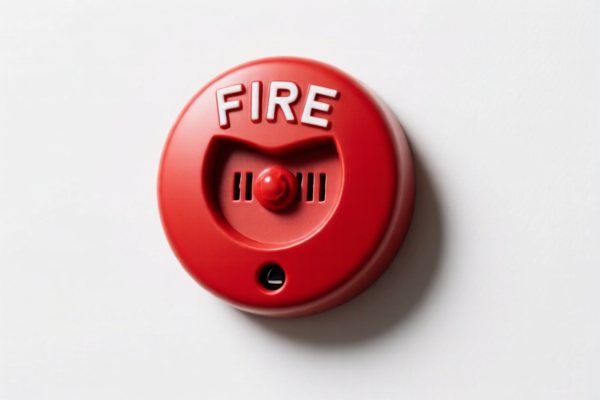
smoke detector
CN → US| HS Code | Tariff Rate | Origin | Destination | Doc |
|---|---|---|---|---|
| 8543706000 | 35.0% | CN | US | Official Doc |
| 8531100025 | 36.3% | CN | US | Official Doc |
| 8543709860 | 37.6% | CN | US | Official Doc |
Product Images


AI Analysis
🚨 Smoke Detectors: Complete HS Code Guide & 2026 Customs Clearance Strategy
🌐 HS Code Classification & Tax Breakdown | 2026 Trade Regime Analysis | Expert Entry Protocol
📌 I. Product Definition & Classification Logic: What is a "Smoke Detector"?
Smoke detectors are critical life-safety devices designed to detect smoke or combustion gases, triggering visual (flashing light) or audible (siren) alarms. In international trade (specifically for US imports), they are categorized based on functionality, power source, and electrical configuration.
There is a critical divergence in classification depending on whether the device is viewed as a "Signal Apparatus" or a "Specialized Measuring/Detection Instrument":
- Category A (8531.10.00.25): Defined strictly as an Electro-acoustic or Visual Signal Apparatus. This applies if the device's primary classification logic treats it as a "device that signals" rather than a "measuring instrument."
- Category B (8543.70.60.00): Treated as a Detection Instrument designed to connect to a network or other instruments.
- Category C (8543.70.98.60): Treated as a General Mechanical/Electrical Apparatus with independent functions but no specific sub-category listing (the "Catch-all" for detectors).
⚠️ Critical Distinction:
- If the smoke detector is a standalone unit with a battery or mains power, acting primarily as an alarm, it often leans towards 8531.
- If the unit is part of a larger fire suppression system, connects to a central monitoring network, or is an industrial sensor, it may be classified under 8543 (Other Machines & Apparatus).
- Material Check: None of the HS Codes below conflict with plastic, metal, or electronic material compositions.
📦 II. HS Code Classification Details (2026 Latest Tariff Regime)
| HS Code | Product Description | Classification Logic | Tax Rate (Total) |
|---|---|---|---|
8531.10.00.25 |
Other Smoke Detectors (Electro-acoustic/Visual Signal) | Matches "Signal Apparatus" (8531). Not battery-specific or theft-alarm specific. Fits "Other" logic. | 36.3% |
8543.70.60.00 |
Detection Instruments (Designed for Network/Instrument Connection) | Matches "Other Machines/Devices" for specific connection purposes. No material conflict. | 35.0% |
8543.70.98.60 |
Other Independent Detection Devices (Catch-all) | Independent function detector not listed elsewhere. Fits "Other Machines/Devices" catch-all. | 37.6% |
🔍 Key Logic for US Customs:
- 8531.10.00.25: Best for standalone residential/commercial smoke alarms that function as "Signal Apparatus."
- 8543.70.60.00 / 8543.70.98.60: Best for industrial-grade detectors, networked fire systems, or specialized sensors that integrate into a larger monitoring network.
💰 III. 2026 US Tariff Rate Breakdown (Detailed Tax Clauses)
✅ Target Market: United States (US)
✅ Origin: China (CN)
✅ Regime: 2025/2026 Trade Act Provisions (Section 301 + IEEPA)
🎯 1. 8531.10.00.25 – Other Signal Apparatus (Smoke Detectors)
| Item | Details |
|---|---|
| Base Duty Rate | 1.3% (Standard MFN) |
| Section 301 Add-on | +25.0% (Section 301 "China Specific" Tariff) |
| IEEPA Add-on | +10.0% (Section 122 Clause - China Specific) |
| 🔴 Total Tax Rate | 36.3% |
| Tax Calculation | CIF Value × 36.3% |
| De Minimis Exemption | ❌ NO (Section 321 is denied for these tariffs) |
| Legal Path | 301:8531.10.00.25 + IEEPA:122 |
📌 Interpretation:
- Base (1.3%): The standard Most Favored Nation (MFN) duty for electrical signaling devices.
- Section 301 (+25%): The primary penalty tariff for Chinese electrical signaling equipment.
- Section 122 (+10%): Additional "Section 122" tariff applied specifically to Chinese electronics under the IEEPA framework.
- Result: You are paying nearly 4x the base duty. De Minimis (Section 321) shipping exemptions DO NOT apply.
🎯 2. 8543.70.60.00 – Other Machines & Apparatus (Networked Detection)
| Item | Details |
|---|---|
| Base Duty Rate | 0.0% (Duty-Free base) |
| Section 301 Add-on | +25.0% (Section 301) |
| IEEPA Add-on | +10.0% (Section 122 Clause) |
| 🔴 Total Tax Rate | 35.0% |
| Tax Calculation | CIF Value × 35.0% |
| De Minimis Exemption | ❌ NO |
| Legal Path | 301:8543.70.60.00 + IEEPA:122 |
📌 Interpretation:
- Base (0.0%): Unlike the signal apparatus, this code has a 0% base duty.
- Total (35.0%): Despite the 0% base, the 35% combined surcharge is still massive. The savings over8531are minimal (1.3% difference).
- Logic: This code is used for detectors specifically designed to connect to networks or other instruments.
🎯 3. 8543.70.98.60 – Other Independent Detection Devices
| Item | Details |
|---|---|
| Base Duty Rate | 2.6% |
| Section 301 Add-on | +25.0% |
| IEEPA Add-on | +10.0% |
| 🔴 Total Tax Rate | 37.6% |
| Tax Calculation | CIF Value × 37.6% |
| De Minimis Exemption | ❌ NO |
| Legal Path | 301:8543.70.98.60 + IEEPA:122 |
📌 Interpretation:
- This is the "Catch-all" for smoke detectors that don't fit the specific "Signal" or "Network" definitions perfectly but are independent machines.
- Highest Rate: At 37.6%, this is the most expensive classification. Avoid this code unless no other specific classification applies.
🛠️ IV. Customs Clearance Strategy & Practical Advice
✅ 1. Required Documentation (Non-Negotiable)
| Document | Requirement | Why It Matters |
|---|---|---|
| ✅ Technical Datasheet | ✔️ Must | Must explicitly state "Smoke Detector" or "Fire Alarm Sensor" and voltage/frequency. |
| ✅ Circuit Diagram | ✔️ Must | Customs officers verify if it's a "Signal Apparatus" (8531) or "Measurement Instrument" (8543) based on circuit complexity. |
| ✅ Product Photos | ✔️ Must | Clear images of the label, power input, and alarm sounder/strobe. |
| ✅ FCC Certification | ✔️ Critical | FCC Part 15/90 is mandatory. No FCC ID = No Entry. |
| ✅ UL/Intertek Report | ✔️ Recommended | Proof of fire safety standards (UL 217/713). |
| ✅ Commercial Invoice | ✔️ Must | Must describe: "Smoke Detector, Model X, [HS Code]". |
| ✅ Country of Origin | ✔️ Must | "Made in China" triggers the Section 301/IEEPA taxes. |
✅ 2. Classification Strategy (The "Golden Rules")
🔥 Rule #1: Don't Guess, Verify Function!
- If the detector is a standalone alarm for home use → Target8531.10.00.25(36.3%).
- If the detector is a solar sensor or part of a BMS (Building Management System) → Target8543.70.60.00(35.0%).
- Avoid8543.70.98.60if possible; it has the highest rate (37.6%) and is a "last resort" classification.
| Scenario | Recommended HS Code | Risk Level |
|---|---|---|
| Residential Smoke Alarm | 8531.10.00.25 |
⚠️ Medium (Standard) |
| Industrial Networked Sensor | 8543.70.60.00 |
✅ Low (Best Rate) |
| Old/Battery-only Model | 8531.10.00.25 |
⚠️ High (Must avoid "Battery" sub-categories if they exist) |
| Misclassified as "Other" | 8543.70.98.60 |
🔴 Critical (Highest Tax) |
📌 Crucial Tip:
- Battery Type: If your smoke detector is battery-powered only, ensure it does not fall under "Dust/Particulate" or "Theft" specific codes that might have different rates. The provided8531.10.00.25specifically notes "Not battery-powered or theft alarm specific" in the logic, which might imply AC/Mains powered or Hybrid models fit best here. If strictly battery, confirm if a different sub-code exists, otherwise8531is still the safest bet for "Signal Apparatus."
✅ 3. Special Handling & Pitfalls
| Situation | Action Plan |
|---|---|
| "Section 122" Confusion | The "122 Clause" (10%) is often missed. Ensure your broker lists IEEPA:122 on the entry. |
| De Minimis (Section 321) | DO NOT try to ship < $800 parcels under Section 321. These codes are explicitly excluded from de minimis relief. |
| FCC ID Mismatch | If the FCC ID on the device does not match the application, Customs will seize the goods. |
| Material Composition | While no material conflict exists, ensure the plastic housing is not classified as "Fireproof material" (different chapter) if it has special coating. |
🌍 V. Global Market Comparison (2026 Context)
| Region | Recommended HS Code | Estimated Duty (China Origin) | Key Requirement |
|---|---|---|---|
| 🇺🇸 USA | 8531.10.00.25 / 8543.70.60.00 |
35.0% – 37.6% | FCC ID + UL Report |
| 🇨🇳 China | 8531.10.00.25 |
~2.6% | CCC Mark |
| 🇪🇺 EU | 8531.10.00 |
0% – 2% | CE + EN 54 Certification |
| 🇨🇦 Canada | 8531.10.00 |
5% – 7% | IC Certification |
📌 Conclusion:
The US market is the most expensive due to the 35%+ combined tariff (Base + Section 301 + Section 122).
- Strategy: If possible, assemble in Vietnam, Mexico, or Thailand to potentially avoid Section 301/122 penalties (subject to rules of origin).
- Costing: You must build ~36% into your landed cost calculation immediately.
📌 VI. Common Errors & "Blood and Tears" Lessons
❌ Mistake 1: Relying on "De Minimis" for Smoke Detectors
👉 Consequence: Customs will reject the entry immediately. All shipments must be formal entries with full duties paid.
❌ Mistake 2: Using Generic Description "Fire Alarm"
👉 Consequence: If you don't specify "Smoke Detector" and "Signal Apparatus," Customs may classify it as "Other Instruments" (higher rate) or "Security Equipment" (different rules).
❌ Mistake 3: Ignoring FCC ID
👉 Consequence: Even with correct HS Code, no FCC ID = Seizure.
✅ Correct Approach:
"Smoke Detector, Model X, AC/DC Powered, Radio Frequency (if wireless), FCC ID: [XXXXXXXX], UL 217 Certified, HS Code: 8531.10.00.25"
🎯 VII. Final Verdict: The 2026 Smoke Detector Roadmap
🎯 Key Takeaways:
🔹 Rate Reality: Expect 35% to 37.6% total tax. There is no "cheap" entry point for Chinese smoke detectors into the US.
🔹 Best Code:8543.70.60.00(35.0%) is the lowest of the three, but only if your device is networked or instrument-based.
🔹 Avoid:8543.70.98.60(37.6%) unless necessary.
🔹 Compliance: FCC and UL are non-negotiable.
🚀 Action Plan:
1. Verify Function: Is it a signal device (8531) or an instrument (8543)?
2. Calculate Cost: Apply 35% tax to your CIF price.
3. Prepare Docs: FCC ID, UL Report, Circuit Diagram.
4. Select Broker: Use a broker experienced in Section 301 and IEEPA filings.
📌 Pro Tip:
If you can source components for assembly in Mexico (USMCA) or Vietnam, you may qualify for 0% Section 301/122 tariffs.
🚨 Warning: "Transshipment" (shipping China goods via Vietnam to avoid tariffs) is strictly monitored by CBP. Ensure Substantial Transformation occurs in the new country.
📣 Ready to Ship?
📞 Contact your Customs Broker + Provide FCC ID + UL Report + Circuit Diagram.
🚀 Clear the Hurdles, Save the Margin, Ship with Confidence!
✨ Precision in Classification = Profit in Your Pocket!
💼 Don't let 36% of your profit vanish at the border!
Customer Reviews
About HS Code Classification
The Harmonized System (HS) is an internationally standardized nomenclature developed by the World Customs Organization (WCO) to classify traded products. Over 200 countries use the HS system as the basis for customs tariffs, trade statistics, and import/export regulations.
Each HS code follows a hierarchical structure:
- Chapter (2 digits) — Broad category of goods (e.g., Chapter 84: Machinery and Mechanical Appliances)
- Heading (4 digits) — More specific grouping within the chapter
- Subheading (6 digits) — Internationally standardized breakdown, used by all WCO member countries
- National subdivisions (8-10 digits) — Country-specific extensions for further classification, such as US HTSUS 10-digit codes
Correct HS code classification is essential for smooth customs clearance, accurate duty payment, and compliance with trade regulations. Misclassification can lead to customs delays, overpayment of duties, or penalties.
When importing from CN to US, the applicable tariff rates may include:
- Most-Favored-Nation (MFN) rate — The standard duty rate applied to WTO members
- General rate — Applied to countries without trade agreements
- Trade remedy duties — Additional tariffs such as Section 301 (anti-dumping), Section 232 (national security), or countervailing duties
The information provided on this page is for reference purposes only. For official classification, please consult with your local customs authority or a licensed customs broker.