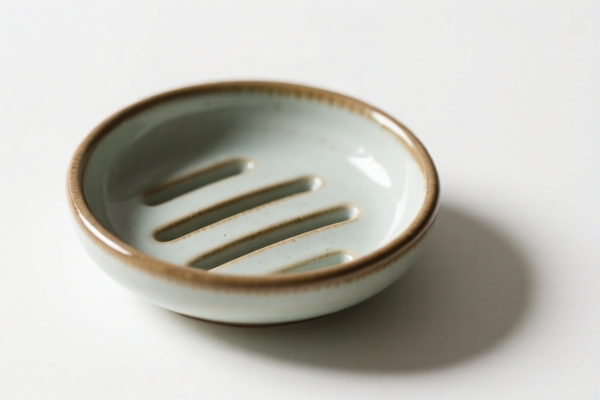
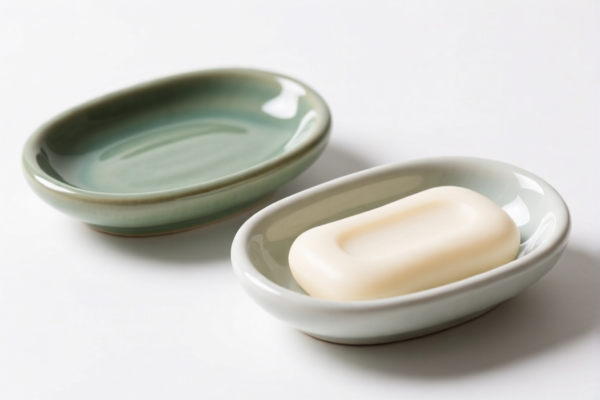
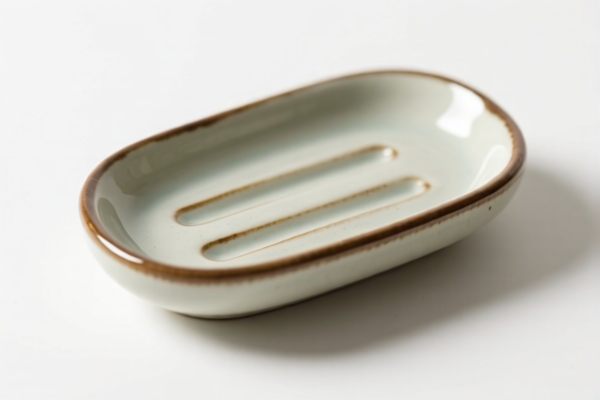
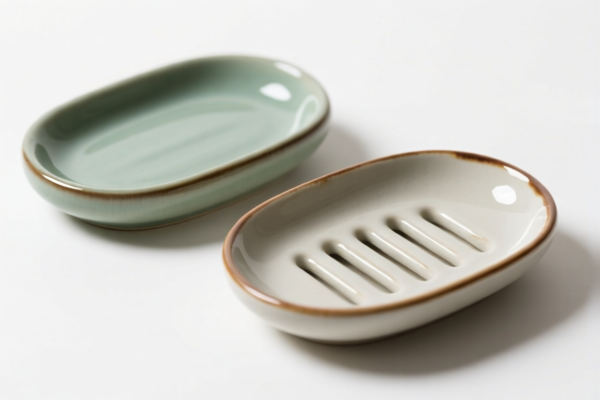
soap dish
CN → US| HS Code | Tariff Rate | Origin | Destination | Doc |
|---|---|---|---|---|
| 6914108000 | 44.0% | CN | US | Official Doc |
| 3924104000 | 13.4% | CN | US | Official Doc |
| 3924905650 | 20.9% | CN | US | Official Doc |
| 3926305000 | 22.8% | CN | US | Official Doc |
| 3926909989 | 22.8% | CN | US | Official Doc |
Product Images
AI Analysis
🧼 Soap Dish (Resin/Ceramic) – HS Code Classification & Customs Clearance Guide 2026
🌐 HS Code Reference & Customs Strategy | 2026 Latest Tariff Analysis | Professional Clearance Strategy
📌 I. Product Definition & Classification: Do You Really Know What a "Soap Dish" Is?
A soap dish is a small container or holder used in bathrooms to keep soap dry and prevent mushiness. In international trade, the classification depends entirely on the material and functional intent. For the specific product data provided (Resin Soap Dish), the classification varies significantly based on whether it is viewed as a ceramic substitute, a general plastic sanitary item, or a general plastic accessory.
⚠️ Key Distinction Points:
- If classified as Ceramic-like: It falls under Chapter 69, attracting the highest duties due to "Section 301" and "122 Clause" add-ons.
- If classified as Plastic Sanitary Ware: It falls under Chapter 39 (Specific Headings for Toiletries), attracting lower base duties.
- If classified as General Plastic Article: It falls under Chapter 39 (Other Articles), attracting moderate duties with specific USITC add-ons.
📦 II. HS Code Classification Details (2026 Latest Tariff Authoritative Comparison)
Based on the provided dataset for Resin Soap Dishes, here are the 5 possible HS Code classifications, ranging from highest to lowest tax burden:
| HS Code | Product Description | Classification Logic | Total Tax Rate | Tax Breakdown (China Origin) |
|---|---|---|---|---|
6914.10.80.00 |
Other Ceramic Articles | Misclassification risk: Treated as ceramic due to hard resin appearance or customs ambiguity. | 44.0% | Base: 9.0% + Section 301: 25.0% + 122 Clause: 10% |
3924.90.56.50 |
Other Plastic Sanitary/Ceramic Articles | Sub-category of plastic sanitary ware not specifically listed elsewhere. | 20.9% | Base: 3.4% + Section 301: 7.5% + 122 Clause: 10% |
3926.90.99.89 |
Other Plastic Articles (General) | General plastic article, no specific sanitary designation applied. | 22.8% | Base: 5.3% + Section 301: 7.5% + 122 Clause: 10% |
3926.30.50.00 |
Other Plastic Articles (General) | Similar to above, but under a different sub-heading for plastic articles. | 22.8% | Base: 5.3% + Section 301: 7.5% + 122 Clause: 10% |
3924.10.40.00 |
Plastic Sanitary or Toilet Articles | Optimal Classification: Specific heading for plastic toiletries. | 13.4% | Base: 3.4% + Section 301: 0.0% + 122 Clause: 10% |
🔍 Focus Reminder:
-3924.10.40.00is the lowest cost option because it avoids the 7.5% or 25% Section 301 add-on, paying only the 122 Clause tax.
-6914.10.80.00is the highest cost option due to the combination of higher base duty and the maximum 25% Section 301 tariff.
- The "122 Clause" (10%) applies to ALL these items (assuming US origin rules for this specific trade context), so the strategy is to minimize the other taxes.
💰 III. 2026 Latest Tariff Rate Explanation (Including Additional Taxes & Policy Add-ons)
✅ Applicable Country: United States (US)
✅ Origin: China (CN)
✅ Validity: Current trade war tariffs + 122 Clause provisions
🎯 1. 6914.10.80.00 — Other Ceramic Articles (High Risk)
| Item | Content |
|---|---|
| Base Rate | 9.0% |
| Section 301 Duty | +25.0% (Aggressive punitive tariff) |
| 122 Clause Duty | +10.0% (Specific trade measure) |
| Total Tax Rate | 44.0% |
| Tax Calculation | CIF Value × 44% |
| De Minimis Exemption | ❌ Not Applicable (High value/duties usually exempt from de minimis) |
| Legal Path | USITC:6914.10.80.00 → Section 301 → 122 Clause |
📌 Explanation:
- Why so high? Customs may mistakenly classify "hard resin" as "ceramic" if documentation is unclear.
- Warning: If you aim for this code, be prepared for a 44% tariff hit. Avoid this unless absolutely necessary.
🎯 2. 3924.10.40.00 — Plastic Sanitary/Toilet Articles (Recommended)
| Item | Content |
|---|---|
| Base Rate | 3.4% |
| Section 301 Duty | 0.0% (Exempt or low tier) |
| 122 Clause Duty | +10.0% |
| Total Tax Rate | 13.4% |
| Tax Calculation | CIF Value × 13.4% |
| De Minimis Exemption | ❌ Not Applicable |
| Legal Path | USITC:3924.10.40.00 → 122 Clause |
📌 Explanation:
- This is the most cost-effective classification.
- The "Plastic Sanitary" heading (3924) often benefits from lower Section 301 rates compared to general plastics or ceramics.
- Key Advantage: You save ~30.6% in tariffs compared to the ceramic classification.
🎯 3. 3924.90.56.50 — Other Plastic Sanitary Articles
| Item | Content |
|---|---|
| Base Rate | 3.4% |
| Section 301 Duty | +7.5% |
| 122 Clause Duty | +10.0% |
| Total Tax Rate | 20.9% |
| Tax Calculation | CIF Value × 20.9% |
| Legal Path | USITC:3924.90.56.50 → Section 301 → 122 Clause |
📌 Explanation:
- A middle-ground option. If your soap dish doesn't fit the specific "3924.10" sub-heading, it falls here.
- Still cheaper than general plastics because the base duty is low (3.4%), but the 7.5% Section 301 adds up.
🎯 4 & 5. 3926.30.50.00 & 3926.90.99.89 — General Plastic Articles
| Item | Content |
|---|---|
| Base Rate | 5.3% |
| Section 301 Duty | +7.5% |
| 122 Clause Duty | +10.0% |
| Total Tax Rate | 22.8% |
| Tax Calculation | CIF Value × 22.8% |
| Legal Path | USITC:3926... → Section 301 → 122 Clause |
📌 Explanation:
- These are "catch-all" categories for plastic items that don't fit specific sanitary headings.
- They are more expensive than3924.10.40.00due to higher base duties and the same Section 301 add-on.
- Avoid if you can justify the "Sanitary" classification (3924).
🛠️ IV. Customs Clearance Practical Advice (Combat Pitfall Guide)
✅ 1. Preparation Checklist (Non-negotiable)
| Document | Required | Explanation |
|---|---|---|
| ✅ Product Photos | ✔️ | Clear shots of the soap dish, showing material texture (resin vs. ceramic look). |
| ✅ Material Composition Statement | ✔️ | Explicitly state: "100% Resin (Plastic Polymer)," NOT "Ceramic-style." |
| ✅ Functional Description | ✔️ | "Plastic holder for bathroom soap, hygienic use." |
| ✅ Commercial Invoice | ✔️ | Must list "Plastic Soap Dish" or "Resin Bathroom Accessory," NOT "Ceramic Dish." |
| ✅ HS Code Pre-ruling (Optional) | ✔️ | Strongly recommended to lock in 3924.10.40.00. |
✅ 2. Declaration Strategy (Key Mantra)
🔥 "Declare Material, Not Appearance! Plastic Sanitary Wins!"
| Scenario | Correct Declaration | Wrong Declaration | Consequence |
|---|---|---|---|
| Resin Soap Dish | 3924.10.40.00 (Plastic Sanitary) |
"Ceramic Soap Dish" | Tax jumps from 13.4% to 44.0%! |
| Resin Soap Dish | 3924.10.40.00 |
"General Plastic Toy" | Tax increases to 22.8%; risk of audit. |
| Resin Soap Dish | 3924.10.40.00 |
"Ceramic" | 44% Tax + Potential Fraud Penalty. |
📌 Critical Tip:
- Do not use the word "Ceramic" in your description, even if the resin looks like ceramic.
- Use keywords: "Resin," "Plastic," "Sanitary," "Bathroom Accessory."
- If Customs questions, provide a material safety data sheet (MSDS) or lab test confirming it is Polymer/Resin, not Silicate/Ceramic.
✅ 3. Special Handling Cases
| Situation | Advice |
|---|---|
| Mixed Shipment | If shipped with ceramic tiles, separate declarations are required. Do not mix 6914 and 3924 in one line item without clear splitting. |
| Gift Sets | If the soap dish is part of a "Bathroom Gift Set," the entire set may be classified by the principal article. If soap dish is primary, use 3924.10.40.00. |
| Packaging | Ensure marketing materials do not claim "Porcelain" or "Stoneware" if it is plastic. This can lead to misclassification penalties. |
🌍 V. Global Market Comparison (2026 Latest)
| Country/Region | Recommended HS Code | Est. Total Tax (China) | Certification | Notes |
|---|---|---|---|---|
| 🇺🇸 USA | 3924.10.40.00 |
13.4% | FCC/CA Proposition 65 (if applicable) | 122 Clause (+10%) applies to all. Avoid Ceramic code. |
| 🇨🇳 China | 3924.10.40.00 |
5% | CCC (if applicable) | No additional trade war tariffs for domestic import. |
| 🇪🇺 EU | 3924.10.40.00 |
0% - 3% | REACH, LFGB (Food Contact if applicable) | No Section 301 or 122 Clause. |
| 🇬🇧 UK | 3924.10.40.00 |
0% - 3% | UKCA, REUK | Post-Brexit rules apply. |
| 🇯🇵 Japan | 3924.10.40.00 |
0% | JIS Standards | Low base duty. |
📌 Conclusion:
- The US market is the most complex due to the layered tariffs (Base + 301 + 122 Clause).
- Strategic Goal: Lock in3924.10.40.00to achieve the 13.4% rate.
- Risk Alert: Any ambiguity leading to6914classification increases costs by 30.6 percentage points.
📌 VI. Common Errors & Pitfall Guide (Blood & Tears Lessons)
❌ Mistake 1: Calling it "Ceramic Soap Dish" because it looks like ceramic.
👉 Result: Customs assigns 6914.10.80.00 → 44% Tax instead of 13.4%.
💡 Fix: Always state material as "Resin" or "Plastic Polymer."
❌ Mistake 2: Using "General Plastic Article" (3926) when "Sanitary" (3924) applies.
👉 Result: Higher duty (22.8% vs 13.4%).
💡 Fix: Justify why it is for "Sanitary/Hygienic use" (bathroom context).
❌ Mistake 3: Ignoring the 122 Clause.
👉 Result: Underpayment of 10% on ALL items.
💡 Fix: The 122 Clause is non-negotiable for these goods in this trade context. Budget for it in all scenarios.
❌ Mistake 4: Splitting the shipment to hide value.
👉 Result: Seizure, fines, and blacklisting.
💡 Fix: Accurate valuation and honest classification are key.
✅ Correct Declaration Example:
"Plastic Resin Soap Dish, Bathroom Accessory, Hygienic Use, Model #123, 100% Polymer Material, Not Ceramic."
🎯 VII. Conclusion: Precise Classification, Cost Savings!
🎯 Remember the Mantra:
🔹 "Resin is Plastic, Not Ceramic!"
🔹 "Sanitary Heading (3924) Beats General (3926)!"
🔹 "13.4% is the Goal, 44% is the Trap!"
📌 Pro Tip:
If your resin soap dish is highly decorative and lacks clear "sanitary" function (e.g., a large decorative bowl), Customs might push it to 3926. To counter this:
1. Include bathroom context in marketing.
2. Provide usage instructions showing it holds soap/water.
3. Consider applying for an Advance Ruling (Pre-ruling) from US Customs to lock in 3924.10.40.00 before shipping.
📣 Immediate Action:
📞 Consult a licensed Customs Broker
📄 Prepare Material Certifications (Resin vs. Ceramic)
🚀 Secure the 13.4% Rate and Avoid the 44% Trap!
✨ Professional Clearance Starts with Accurate Classification!
💼 Every Percent Saved is Pure Profit!
Customer Reviews
About HS Code Classification
The Harmonized System (HS) is an internationally standardized nomenclature developed by the World Customs Organization (WCO) to classify traded products. Over 200 countries use the HS system as the basis for customs tariffs, trade statistics, and import/export regulations.
Each HS code follows a hierarchical structure:
- Chapter (2 digits) — Broad category of goods (e.g., Chapter 84: Machinery and Mechanical Appliances)
- Heading (4 digits) — More specific grouping within the chapter
- Subheading (6 digits) — Internationally standardized breakdown, used by all WCO member countries
- National subdivisions (8-10 digits) — Country-specific extensions for further classification, such as US HTSUS 10-digit codes
Correct HS code classification is essential for smooth customs clearance, accurate duty payment, and compliance with trade regulations. Misclassification can lead to customs delays, overpayment of duties, or penalties.
When importing from CN to US, the applicable tariff rates may include:
- Most-Favored-Nation (MFN) rate — The standard duty rate applied to WTO members
- General rate — Applied to countries without trade agreements
- Trade remedy duties — Additional tariffs such as Section 301 (anti-dumping), Section 232 (national security), or countervailing duties
The information provided on this page is for reference purposes only. For official classification, please consult with your local customs authority or a licensed customs broker.