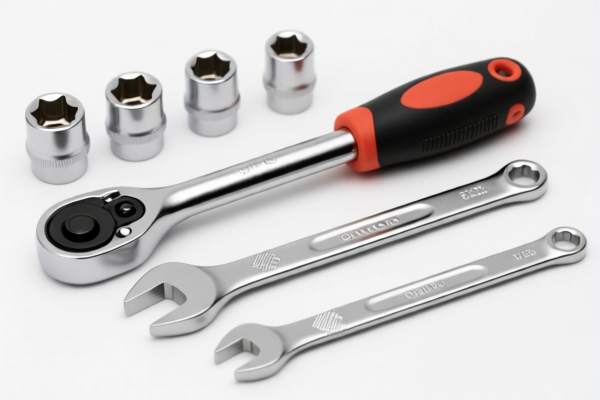
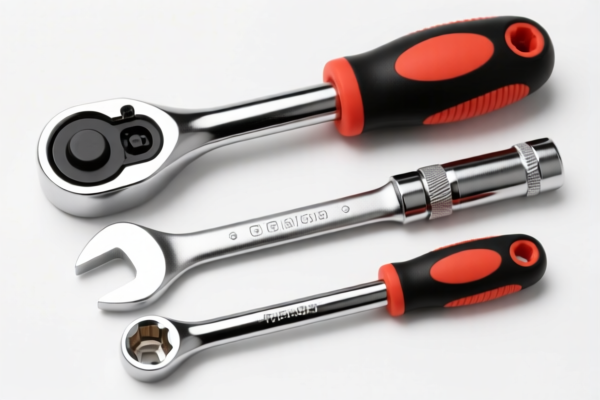
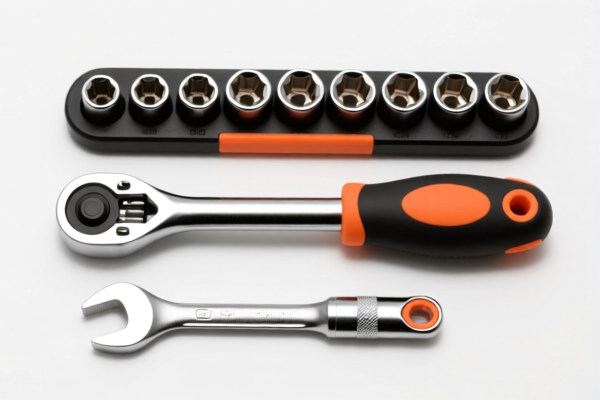
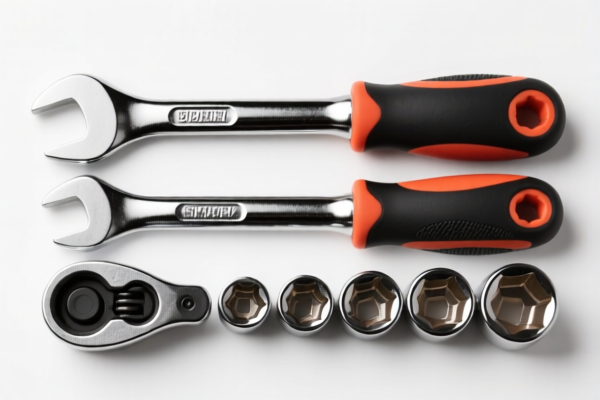
socket wrench kit
CN → US| HS Code | Tariff Rate | Origin | Destination | Doc |
|---|---|---|---|---|
| 8204110030 | 44.0% | CN | US | Official Doc |
| 8205513060 | 38.7% | CN | US | Official Doc |
| 8205906000 | 0.0% | CN | US | Official Doc |
| 8204200000 | 44.0% | CN | US | Official Doc |
| 8205593080 | 35.0% | CN | US | Official Doc |
Product Images
AI Analysis
🔧 Socket Wrench Kit: The Ultimate Guide to US Customs Classification & Tariff Strategy (2026)
🌐 HS Code Reference & Clearance Guide | 2026 Latest Tariff Rules | Professional-Level Customs Strategy
📌 I. Product Definition & Classification: Do You Really Know What a "Socket Wrench Kit" Is?
A Socket Wrench Kit is not just a single tool; it is a composite good consisting of a ratchet handle, various sockets (different sizes), extensions, adapters, and sometimes a carrying case. In international trade, the classification depends heavily on the primary character of the set and its material composition.
Under US Customs rules, these kits generally fall into two main categories: 1. Specific Mechanism-Based Classification: Tools defined by their action (ratcheting/socketing). → Heading 8204 2. General Hand Tool Classification: Tools defined as sets or miscellaneous if they don't fit specific functional definitions. → Heading 8205
⚠️ Key Distinction:
- If the kit is predominantly characterized by the ratcheting mechanism and consists of sockets/handles → 8204.11.00.30 or 8204.20.00.00.
- If the kit is a mixed set where no single component defines the whole, or if classified as "other manual tools" → 8205.51.30.60 or 8205.90.60.00.
- If it contains only wrenches (open-end/box-end) without sockets/ratchets → 8205.59.30.80.
📦 II. HS Code Classification Details (2026 Official Tariff对照)
| HS Code | Product Description | Key Characteristics | Material Inference |
|---|---|---|---|
8204.11.00.30 |
Socket Sets (Banshou Taotong Zu) | Ratcheting wrenches and parts; consistent use, no material conflict. | Metal (Steel/Iron) |
8205.51.30.60 |
Other Manual Tools | Socket sets classified as "other"; material inferred as Iron/Steel. | Iron/Steel |
8205.90.60.00 |
Manual Tool Sets | Composite sets by multiple sub-items; material is metal. | Metal |
8204.20.00.00 |
Socket Wrenches & Parts | Sockets and parts; usage and form match; no material conflict. | Metal (Steel) |
8205.59.30.80 |
Wrenches (Other) | Classified as "other hand tools"; usage matches, material inferred as metal. | Metal |
🔍 Critical Analysis:
- 8204.11.00.30 is often the most precise classification for standard socket sets because it specifically targets "ratcheting wrenches and sockets."
- 8204.20.00.00 is similar but may apply to slightly different configurations within the same heading.
- 8205 categories are "fallback" options. They are used if the kit is considered a general "set" that doesn't fit the strict definition of 8204, or if customs officers interpret the "primary character" differently.
- Note: All these items are subject to significant additional tariffs due to their origin (China).
💰 III. 2026 Latest Tariff Rate Breakdown (Including Surtaxes & Policy Add-ons)
✅ Applicable Country: United States (US)
✅ Country of Origin: China (CN)
✅ Effective Date: Current rates apply for imports entering after 2025.
🎯 1. 8204.11.00.30 & 8204.20.00.00 – The "Specific Tool" Route
| Item | Content |
|---|---|
| Base Duty Rate | 9.0% (Ad Valorem) |
| Section 301 Surcharge | +25.0% (Added Tariff) |
| Section 122 Tariff | +10.0% (Specific China-related levy) |
| Total Effective Tax | 44.0% |
| Tax Calculation | CIF Value × 44% |
| De Minimis Exemption? | ❌ No (High tax rate disqualifies from de minimis benefits under current rules) |
| Legal Basis Path | HTSUS 8204.11.00.30 → 301 List 3/4 → Section 122 Authority |
📌 Explanation:
- The 9% is the standard Most Favored Nation (MFN) duty.
- The 25% is the classic Section 301 tariff on Chinese hand tools.
- The 10% is an additional levy specifically targeted at Chinese imports (Section 122).
- Total: 44%. This is a very high cost. Importers must factor this into their pricing strategy.
🎯 2. 8205.51.30.60 – The "General Manual Tool" Route
| Item | Content |
|---|---|
| Base Duty Rate | 3.7% (Ad Valorem) |
| Section 301 Surcharge | +25.0% |
| Section 122 Tariff | +10.0% |
| Total Effective Tax | 38.7% |
| Tax Calculation | CIF Value × 38.7% |
| De Minimis Exemption? | ❌ No |
| Legal Basis Path | HTSUS 8205.51.30.60 → 301 List → Section 122 Authority |
📌 Explanation:
- The base rate is lower (3.7%) than 8204 (9.0%).
- However, the 301 and 122 surcharges remain the same (+35%).
- Total: 38.7%. This is 5.3% cheaper than the 8204 classification.
- Risk: Misclassification. If US Customs determines the tool is primarily a ratcheting socket set (8204), they may reassess it at 44%, leading to back-taxes and penalties.
🎯 3. 8205.90.60.00 – The "Composite Set" Route
| Item | Content |
|---|---|
| Base Duty Rate | Varies (Rate applicable to the article in the set subject to tax) |
| Section 301 Surcharge | +25.0% |
| Section 122 Tariff | +10.0% |
| Total Effective Tax | ~35.0% (if base rate is 0%) OR Higher |
| Tax Calculation | Complex: Based on the dominant component |
| De Minimis Exemption? | ❌ No |
| Legal Basis Path | GRI 3(b) for Sets → HTSUS 8205.90.60.00 |
📌 Explanation:
- This classification uses the "Principal Character" rule. If the set is 50% sockets, 50% pliers, etc., the duty rate is applied to the component that gives the set its essential character.
- The tax detail says: "The rate of duty applicable to that article in the set subject t + 35.0%".
- If the dominant part has a 0% base rate, total is 35%. If it has a 9% base rate, total is 44%.
- Complexity: High. Requires detailed component breakdown. High audit risk.
🎯 4. 8205.59.30.80 – The "Wrench Only" Route
| Item | Content |
|---|---|
| Base Duty Rate | 0.0% |
| Section 301 Surcharge | +25.0% |
| Section 122 Tariff | +10.0% |
| Total Effective Tax | 35.0% |
| Tax Calculation | CIF Value × 35% |
| De Minimis Exemption? | ❌ No |
| Legal Basis Path | HTSUS 8205.59.30.80 |
📌 Explanation:
- Only applicable if the kit contains NO sockets/ratchets.
- If your kit is a "Wrench Set" (e.g., combination wrenches only), this is the best rate: 35%.
- Warning: If you include any socket or ratchet, you likely cannot use this code. Misclassification leads to severe penalties.
🛠️ IV. Customs Clearance Practical Advice (Real-World Pitfall Guide)
✅ 1. Preparation Checklist (Must-Have)
| Document | Mandatory? | Description |
|---|---|---|
| ✅ Product Photos | ✔️ | Clear images of the kit, including all tools and the case. |
| ✅ Commercial Invoice | ✔️ | Must clearly describe items: "Socket Set, Steel, 1/4" & 1/2" Drive". |
| ✅ Detailed Packing List | ✔️ | List each item individually (e.g., "1 Ratchet Handle, 10 Sockets"). |
| ✅ Material Declaration | ✔️ | Confirm material is Steel/Iron. Non-metal parts must be specified. |
| ✅ Country of Origin Cert. | ✔️ | Essential for proving China origin (to calculate correct 301/122 tariffs). |
| ❌ De Minimis Claim | ❌ | Do not claim $800 de minimis exemption. These items are high-tariff and high-risk for audit. |
✅ 2. Classification Strategy (Key Mantra)
🔥 “Match the Tool, Match the Tax: 8204 is Precise, 8205 is Flexible but Risky!”
| Scenario | Recommended HS Code | Total Tax | Risk Level |
|---|---|---|---|
| Standard Socket Set (Ratchet + Sockets) | 8204.11.00.30 |
44.0% | ✅ Low (Most accurate) |
| Mixed Tool Set (Sockets + Pliers + Screwdrivers) | 8205.90.60.00 |
35-44% | ⚠️ Medium (Requires GRI 3(b) analysis) |
| Wrench Only Kit (No sockets/ratchets) | 8205.59.30.80 |
35.0% | ✅ Low (If no sockets) |
| Generic "Hand Tool Set" | 8205.51.30.60 |
38.7% | ⚠️ Medium (Fallback option) |
📌 Strategic Advice:
- If your product is purely sockets/ratchets, stick to 8204.11.00.30 (44%). It’s defensible.
- If you can exclude sockets and sell a "Wrench Set" instead, use 8205.59.30.80 (35%). Save 9% per shipment!
- Avoid 8205.90.60.00 unless you have a strong legal argument for "principal character." It invites Customs scrutiny.
✅ 3. Special Situations
| Situation | Handling Suggestion |
|---|---|
| Kit Includes Case | The case is incidental. Do not classify the whole kit as "Luggage" (4202). It remains a tool set. |
| OEM Branding | Brand name does not affect HS Code. Focus on function and composition. |
| Kit with Electric Tools | If it contains even one electric drill, the whole kit may be classified under 8508 (Electric Tools), changing the tariff entirely. |
| High-Value Precision Kits | Consider applying for a Binding Ruling (Pre-classification) from CBP. Costs ~$2,000–$5,000 but provides legal certainty. |
🌍 V. Global Market Comparison (2026 Update)
| Country/Region | Recommended HS Code | Base Duty | Additional Tariffs (China) | Total Estimated Cost |
|---|---|---|---|---|
| 🇺🇸 USA | 8204.11.00.30 |
9.0% | +35.0% (301 + 122) | 44.0% |
| 🇨🇳 China (Import) | 8204.11.00.30 |
9.0% | 0% | 9.0% |
| 🇪🇺 EU | 8204.11.00.00 |
4.7% | 0% (unless specific sanctions) | ~4.7% |
| 🇬🇧 UK | 8204.11.00.00 |
4.7% | 0% | ~4.7% |
| 🇨🇦 Canada | 8204.11.00.00 |
0% | 0% (CETA/USMCA not applicable for CN) | 0-7.5% (Check specific FTAs) |
📌 Key Insight:
- The USA is the most expensive market for Chinese-made socket wrench kits due to Section 301 and Section 122.
- EU and UK have lower base duties and no similar surcharges for China (currently).
- Strategy: If targeting the US, consider supply chain diversification (e.g., source from Vietnam or Mexico) to avoid the 35% surcharge.
📌 VI. Common Mistakes & Pitfalls (Learn from Others' Pain)
❌ Mistake 1: Classifying a Socket Set as 8205.59.30.80 (Wrenches)
👉 Result: Customs flags it because sockets are present. Back taxes + Penalties (44% vs 35%).
❌ Mistake 2: Claiming De Minimis ($800 exemption) for a $500 kit
👉 Result: Denied. High-tariff items are excluded. Shipment held or seized.
❌ Mistake 3: Ignoring the "Case" as a separate item
👉 Result: Misleading invoice. Customs may split the value, leading to incorrect duty calculation.
❌ Mistake 4: Using "Hand Tools" as a generic description
👉 Result: Lack of specificity leads to audit delays. Use precise terms: "Ratcheting Socket Set, Metric/Imperial, Steel".
✅ Correct Approach:
"Socket Wrench Kit, 1/4-inch and 1/2-inch drive, including ratchet handle, 20 sockets, extensions, and adapter, housed in plastic case. Made of Chrome Vanadium Steel. HS Code: 8204.11.00.30."
🎯 VII. Conclusion: Precision Pays Off!
🎯 Remember the Golden Rules:
🔹 "Specific Beats General: 8204 is the Gold Standard for Sockets."
🔹 "No Sockets? Think 8205.59 for 35%. With Sockets? Expect 44% in the US."
🔹 "De Minimis is Dead for These Items: Plan for Full Duties!"
📌 Pro Tip:
If you import high volumes, consult a customs broker to apply for a Binding Ruling with US Customs and Border Protection (CBP). It’s a one-time fee that protects you from future audits and ensures you pay the correct 44% (or potentially less if reclassified) without risk.
📣 Act Now:
📞 Contact a Licensed Customs Broker
📦 Provide Detailed Product Specs & Photos
📜 Apply for Pre-Classification if Volume is High🚀 Clear Customs Smoothly, Control Costs, and Grow Your Business!
✨ Professional Clearance Starts with Accurate Classification!
💼 Every Percent Saved is Pure Profit!
Customer Reviews
About HS Code Classification
The Harmonized System (HS) is an internationally standardized nomenclature developed by the World Customs Organization (WCO) to classify traded products. Over 200 countries use the HS system as the basis for customs tariffs, trade statistics, and import/export regulations.
Each HS code follows a hierarchical structure:
- Chapter (2 digits) — Broad category of goods (e.g., Chapter 84: Machinery and Mechanical Appliances)
- Heading (4 digits) — More specific grouping within the chapter
- Subheading (6 digits) — Internationally standardized breakdown, used by all WCO member countries
- National subdivisions (8-10 digits) — Country-specific extensions for further classification, such as US HTSUS 10-digit codes
Correct HS code classification is essential for smooth customs clearance, accurate duty payment, and compliance with trade regulations. Misclassification can lead to customs delays, overpayment of duties, or penalties.
When importing from CN to US, the applicable tariff rates may include:
- Most-Favored-Nation (MFN) rate — The standard duty rate applied to WTO members
- General rate — Applied to countries without trade agreements
- Trade remedy duties — Additional tariffs such as Section 301 (anti-dumping), Section 232 (national security), or countervailing duties
The information provided on this page is for reference purposes only. For official classification, please consult with your local customs authority or a licensed customs broker.