soft clay set
CN → US| HS Code | Tariff Rate | Origin | Destination | Doc |
|---|---|---|---|---|
| 8207907585 | 38.7% | CN | US | Official Doc |
| 8205517500 | 38.7% | CN | US | Official Doc |
| 8205595560 | 40.3% | CN | US | Official Doc |
Product Images
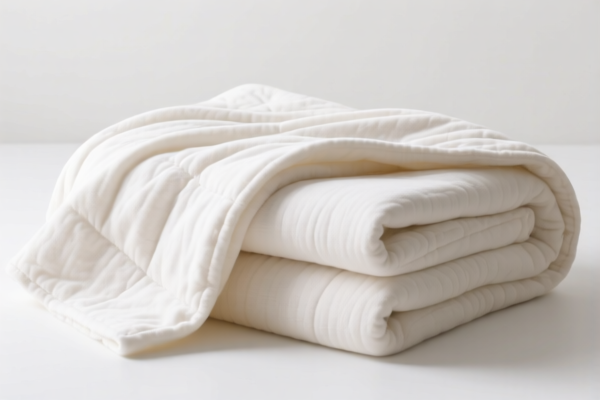
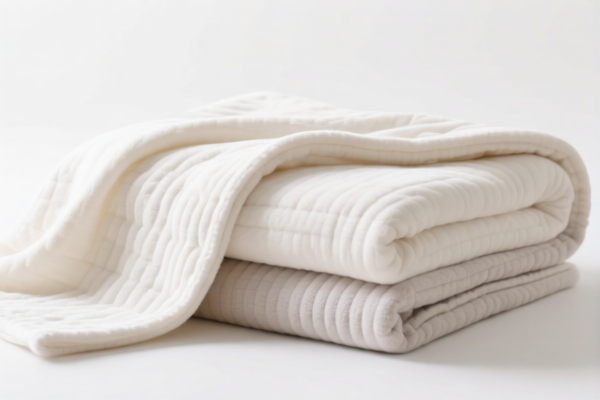
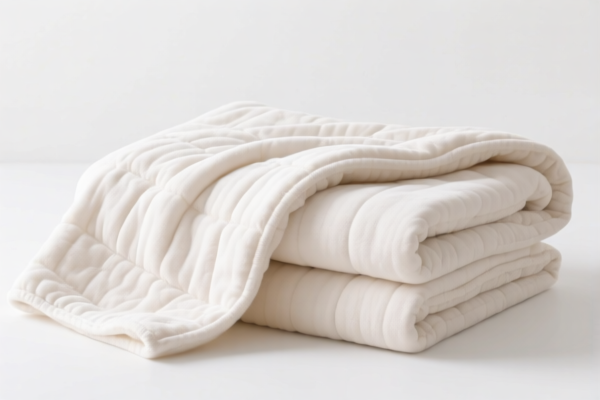
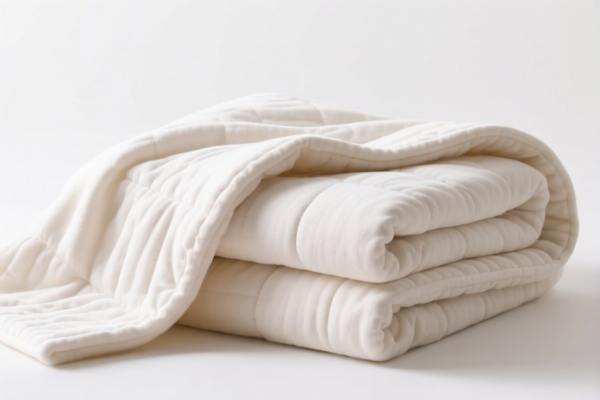
AI Analysis
🎨 Soft Clay Set (Crafting & Modeling Tools)
🌐 HS Code Reference & Customs Clearance Guide | 2026 Latest Tariff Analysis | Professional Clearance Strategy
📌 I. Product Definition & Classification: Do You Really Understand "Soft Clay Tools"?
Soft clay sets are essential hand tools for manual art creation, pottery, and DIY crafts. In international trade, they are typically classified under Chapter 82: Tools, Implements, Cutlery, Spoons and Forks, of Base Metal. Specifically, they fall under Heading 8205 (Hand Tools) or Heading 8207 (Interchangeable Tools), depending on their specific material composition and design.
The classification hinges on whether the tools are primarily metal cutting/shaping tools or plastic/soft material accessories. Most soft clay tools (sculpting wires, wooden sticks, plastic molders) are categorized as "other hand tools" or "other interchangeable tools."
⚠️ Key Distinction:
- If the set is dominated by metal cutters, scrapers, or wire loops →归类 to 8205 (Hand Tools).
- If the set is dominated by plastic molds or general artistic implements →归类 to 8207 (Interchangeable Tools).
- Mixed Sets: Usually classified under the component that gives the set its essential character (often the metal tools or the "other" category).
📦 II. HS Code Classification Details (2026 Latest Tariff Authoritative Comparison)
| HS Code | Product Description | Application Scenario | Total Tax Rate | Tax Breakdown |
|---|---|---|---|---|
8207.90.75.85 |
Other interchangeable tools and parts, other | Plastic/artistic modeling tools, soft clay cutters that don't fit specific metal tool categories | 38.7% | Base: 3.7% Section 301: 25.0% Section 122: 10% |
8205.51.75.00 |
Other hand tools, of steel, other | Metal-based sculpting tools, wire loops, steel molders used in soft clay crafting | 38.7% | Base: 3.7% Section 301: 25.0% Section 122: 10% |
8205.59.55.60 |
Other hand tools, other, other | Mixed material sets or non-steel hand tools for manual work, including plastic/wooden clay tools | 40.3% | Base: 5.3% Section 301: 25.0% Section 122: 10% |
🔍 Critical Note:
- All three codes are subject to high additional tariffs due to US trade policies.
- The distinction between8205and8207is often subtle.8205.51is for steel hand tools.8205.59is for other materials.8207is for interchangeable tools (like drill bits or specific artistic tips).
- Most standard soft clay sets (often containing plastic and metal) are frequently cleared under8205.51.75.00or8207.90.75.85if they contain steel components or are considered "other" artistic tools.
💰 III. 2026 Latest Tariff Rate Details (Including Additional Taxes)
✅ Applicable Country: United States (US)
✅ Origin: China (CN)
✅ Effective Date: Ongoing (Section 301 & Section 122 Taxes Apply)
🎯 1. 8207.90.75.85 —— Other Interchangeable Tools (Plastic/Artistic Focus)
| Item | Content |
|---|---|
| Base Rate | 3.7% (ad valorem) |
| USITC Additional Tax (Section 301) | +25.0% |
| Section 122 Tax | +10.0% |
| Total Tax Rate | 38.7% |
| Tax Calculation | CIF Value × 38.7% |
| De Minimis Eligibility | ❌ No (High tariffs prevent de minimis exemption) |
| Legal Basis | USITC:8207.90.75.85 → FOOTNOTE:301 → IEEPA:9903 |
📌 Explanation:
- This code is often used for plastic-based soft clay tools or mixed sets where the "interchangeable" nature is key.
- The 10% Section 122 tax applies to certain consumer goods, adding to the cost.
- Total burden: 38.7%. This is a significant cost factor.
🎯 2. 8205.51.75.00 —— Other Hand Tools, of Steel (Metal Focus)
| Item | Content |
|---|---|
| Base Rate | 3.7% (ad valorem) |
| USITC Additional Tax (Section 301) | +25.0% |
| Section 122 Tax | +10.0% |
| Total Tax Rate | 38.7% |
| Tax Calculation | CIF Value × 38.7% |
| De Minimis Eligibility | ❌ No |
| Legal Basis | USITC:8205.51.75.00 → FOOTNOTE:301 → IEEPA:9903 |
📌 Explanation:
- Used if the soft clay set is primarily metal tools (e.g., stainless steel scrapers, wire cutters).
- Same total rate as 8207.90.75.85 (38.7%).
- Must ensure the product is truly "of steel" to avoid misclassification penalties.
🎯 3. 8205.59.55.60 —— Other Hand Tools, Other (Non-Steel/Mixed)
| Item | Content |
|---|---|
| Base Rate | 5.3% (ad valorem) |
| USITC Additional Tax (Section 301) | +25.0% |
| Section 122 Tax | +10.0% |
| Total Tax Rate | 40.3% |
| Tax Calculation | CIF Value × 40.3% |
| De Minimis Eligibility | ❌ No |
| Legal Basis | USITC:8205.59.55.60 → FOOTNOTE:301 → IEEPA:9903 |
📌 Explanation:
- This is the "catch-all" for hand tools not made of steel (e.g., plastic, wood, or mixed material sets).
- Highest total rate: 40.3% due to the higher base rate (5.3%).
- Use this if the set contains no significant steel components or is classified as "other hand tools."
🛠️ IV. Customs Clearance Practical Advice (Pitfall Avoidance Guide)
✅ 1. Required Documentation Checklist (Mandatory)
| Document | Required | Description |
|---|---|---|
| ✅ Product Description | ✔️ | Clear, detailed: "Soft Clay Modeling Tools, Plastic and Metal, for Hand Craft Use" |
| ✅ Material Composition | ✔️ | Specify % of steel, plastic, wood. Crucial for distinguishing between 8205.51 and 8205.59 |
| ✅ Product Photos | ✔️ | Show all tools, packaging, and any metal parts clearly |
| ✅ Commercial Invoice | ✔️ | Must match HS Code description exactly |
| ✅ Packing List | ✔️ | Itemize each tool if possible |
| ✅ Certification | ✔️ | CE, RoHS, CPSIA (if for children) – Critical for safety compliance |
✅ 2. Declaration Tips (Key Mantras)
🔥 "Material Matters, Steel vs. Non-Steel, Base Rate Differs!"
| Scenario | Correct Declaration | Wrong Practice |
|---|---|---|
| Set with Steel Tools | 8205.51.75.00 |
Declaring as "Plastic Toys" → High Penalty |
| Set with Plastic/Mixed Tools | 8207.90.75.85 or 8205.59.55.60 |
Declaring as "Steel Tools" → Misclassification |
| Children's Craft Kit | Add CPSIA Compliance | Ignore safety certs → Detention/Return |
| High-Value Set | Pre-classify with Ruling | Guess HS Code → 40.3% or Higher |
⚠️ Warning:
- Do not declare as "Toys" (HS 9503). Soft clay tools are tools, not toys. Misclassification leads to higher tariffs and safety inspection delays.
- Do not split a single set into multiple HS Codes for different items. Declare as one set with the HS Code of the principal item.
✅ 3. Special Circumstances Handling
| Situation | Handling Advice |
|---|---|
| Set for Children | Mandatory CPSIA certification. Provide test reports for lead/phthalates. |
| Mixed Materials | If >50% by value is metal, use 8205.51. If plastic/artistic, use 8207 or 8205.59. |
| OEM/Custom Sets | Provide design specs to prove it's a "tool" not a "toy." |
| Small Packages (De Minimis) | ❌ Not Eligible. Section 301 and 122 taxes apply regardless of value. |
🌍 V. Global Market Comparison (2026 Latest)
| Country/Region | Recommended HS Code | Tariff | Certification | Notes |
|---|---|---|---|---|
| 🇺🇸 USA | 8205.51.75.00 / 8207.90.75.85 |
38.7% | CPSIA, CE, RoHS | High tariffs due to Section 301 & 122 |
| 🇨🇳 China | 8205.51.75.00 |
5-10% | CCC (if applicable) | Lower base rates |
| 🇪🇺 EU | 8205.51.75.00 |
0-4% | CE, REACH | No Section 301 taxes |
| 🇬🇧 UK | 8205.51.75.00 |
0-4% | UKCA | Post-Brexit standards apply |
| 🇯🇵 Japan | 8205.51.75.00 |
0-5% | PSE (if electrical) | Generally low tariffs |
📌 Conclusion:
- USA is the most expensive market for soft clay tools due to 38.7% total tax.
- EU/UK/Japan offer much lower tariffs (0-5%), making them more competitive.
- Strategy: Consider price adjustments or supplier diversification for US-bound goods.
📌 VI. Common Mistakes & Pitfall Guide (Lessons Learned)
❌ Mistake 1: Declaring Soft Clay Tools as "Toys" (HS 9503)
👉 Consequence: Customs may reclassify to Chapter 82, imposing 38.7% tax + fines for misdeclaration.
❌ Mistake 2: Ignoring Material Composition
👉 Consequence: Declaring a steel-tool-heavy set as "plastic" → 8205.59 vs 8205.51 → Base rate difference (5.3% vs 3.7%).
❌ Mistake 3: Omitting Safety Certifications
👉 Consequence: Detention at US border for CPSIA/CE non-compliance. Return or destruction.
❌ Mistake 4: Assuming De Minimis Exemption
👉 Consequence: Packages under $800 are NOT exempt from Section 301/122 taxes for these HS codes. Unexpected bills.
✅ Correct Practice:
"Soft Clay Modeling Tool Set, Plastic and Stainless Steel, Art Craft Use, Model XYZ, CPSIA & CE Certified"
🎯 VII. Conclusion: Precise Classification, Lower Costs, Smoother Clearance!
🎯 Remember the Mantra:
🔹 "Tools, Not Toys, HS 82 is Key!"
🔹 "Steel or Plastic, Choose Right, Base Rate Matters!"
🔹 "US Tariffs High, 38.7% is the Price, Plan Ahead!"
📌 Pro Tip:
- For US imports, calculate the total landed cost including 38.7% tax.
- Consider pre-classification rulings if your set is complex.
- Safety certifications (CPSIA/CE) are non-negotiable for craft tools.
📣 Immediate Action:
📞 Consult a Customs Broker + Provide Material Specs + Verify Safety Certs
🚀 Ensure Smooth Customs Clearance, Avoid Costly Delays!
✨ Professional Clearance Starts with Accurate Classification!
💼 Every Percent of Tax Saves You Profit!
Customer Reviews
About HS Code Classification
The Harmonized System (HS) is an internationally standardized nomenclature developed by the World Customs Organization (WCO) to classify traded products. Over 200 countries use the HS system as the basis for customs tariffs, trade statistics, and import/export regulations.
Each HS code follows a hierarchical structure:
- Chapter (2 digits) — Broad category of goods (e.g., Chapter 84: Machinery and Mechanical Appliances)
- Heading (4 digits) — More specific grouping within the chapter
- Subheading (6 digits) — Internationally standardized breakdown, used by all WCO member countries
- National subdivisions (8-10 digits) — Country-specific extensions for further classification, such as US HTSUS 10-digit codes
Correct HS code classification is essential for smooth customs clearance, accurate duty payment, and compliance with trade regulations. Misclassification can lead to customs delays, overpayment of duties, or penalties.
When importing from CN to US, the applicable tariff rates may include:
- Most-Favored-Nation (MFN) rate — The standard duty rate applied to WTO members
- General rate — Applied to countries without trade agreements
- Trade remedy duties — Additional tariffs such as Section 301 (anti-dumping), Section 232 (national security), or countervailing duties
The information provided on this page is for reference purposes only. For official classification, please consult with your local customs authority or a licensed customs broker.