softwood shingles
CN → USProduct Images
AI Analysis
🪵 Softwood Shingles (Wood Roofing & Siding)
🌐 HS Code Reference & Customs Clearance Guide | 2026 Latest Tariff Analysis | Professional Clearance Strategy
📌 Part 1: Product Definition & Classification: Do You Really Understand "Softwood Shingles"?
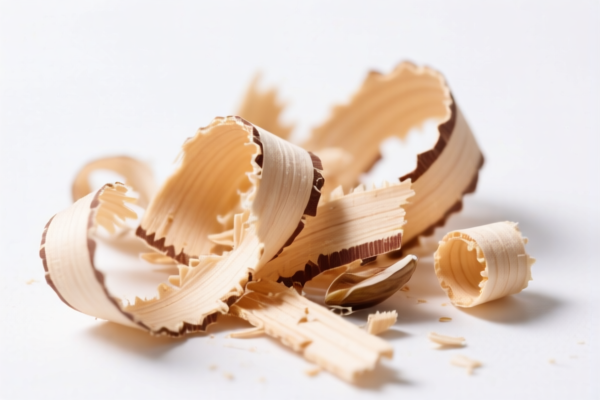
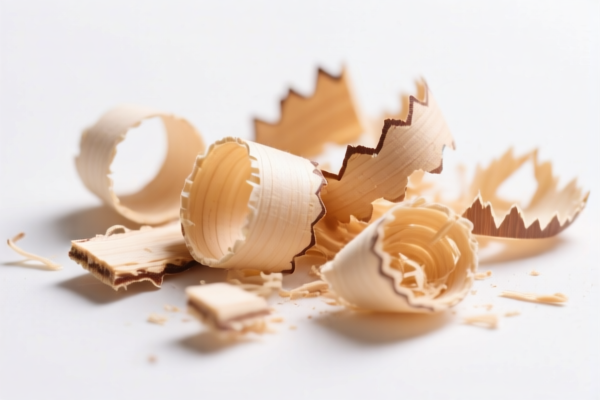
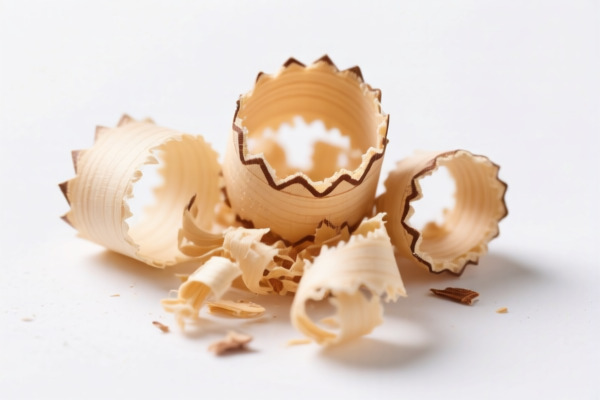
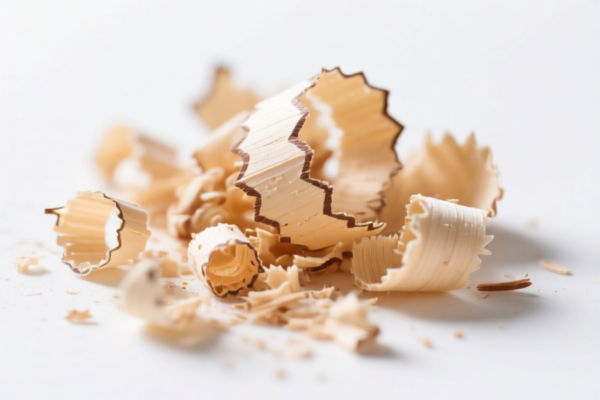
Softwood shingles are thin, tapered pieces of wood (typically cedar, pine, or spruce) used for roofing and siding. In international trade, they are classified based on their level of processing and wood species.
The critical distinction lies between: 1. Roughly Shaped Shingles: Simply cut to shape, may be unplaned or roughly planed. 2. Planed/Shaved Shingles: Smoothed on one or both sides, often treated with preservatives.
⚠️ Key Classification Point:
- If the shingles are roughly shaped (not planed on both sides) → Likely 4409 (Continuously shaped).
- If they are planed, sanded, or finger-jointed → Likely 4407 (Sawn wood) or 4421 (Other wood articles).
- Softwood vs. Hardwood: Must be specified. "Softwood" typically excludes tropical hardwoods.
📦 Part 2: HS Code Classification Details (2026 Latest Tariff Authority Comparison)
| HS Code | Product Description | Application Scenario | Processing Level | Softwood? |
|---|---|---|---|---|
4409.10.10.00 |
Continuously shaped (tongued, grooved, etc.) softwood, planed, sanded, finger-jointed, etc. | Premium cedar shingles, smooth-faced, pre-finished | Planed/Sanded | ✅ Yes |
4409.10.40.00 |
Softwood shingles and shakes, whether or not smoothed on one or both sides | Standard roof shingles, rustic look, single-sided planed | Roughly Planed | ✅ Yes |
4409.10.90.00 |
Other continuously shaped softwood wood (excluding shingles) | Molding, trim, flooring from softwood | Continuous Shaping | ✅ Yes |
4407.10.00.00 |
Wood sawn or chipped lengthwise, sliced or peeled, veneer sheets, etc. (Softwood, thickness > 6mm) | Thick softwood planks, not shaped into shingles | Sawing/Planing | ✅ Yes |
4421.91.00.00 |
Other wood articles (e.g., wooden toys, frames) | Non-construction wood items | Various | ✅ Yes |
🔍 Important Reminder:
- Shingles specifically intended for roofing/siding are generally classified under 4409 if they are continuously shaped (tapered).
- Shakes (split wood) vs. Shingles (sawn wood) may have different subheadings depending on national interpretation, but 4409.10.40.00 is the most common for softwood shingles in the US/China/EU.
- If the shingles are preservative-treated, they still fall under 4409, but must be declared as such for customs compliance.
💰 Part 3: 2026 Latest Tariff Rate Details (Including Additional Taxes, Policy Add-ons)
✅ Applicable Country: United States (US)
✅ Origin: China (CN)
✅ Effective Date: November 10, 2025 onwards (including subsequent imports)
🎯 1. 4409.10.40.00 —— Softwood Shingles (Whether or not Smoothed)
| Item | Content |
|---|---|
| Base Tariff Rate | 5.5% (ad valorem) |
| USITC Additional Tariff (Section 301) | +25% (Footnote 9903.88.01) |
| IEEPA Additional Tariff | +10% (For China/HK products, from Nov 10, 2025) |
| Total Tariff Rate | 40.5% |
| Tax Calculation | CIF Value × 40.5% |
| De Minimis Eligibility | ❌ Not Eligible (deny_de_minimis) |
| Legal Basis Path | IEEPA:9903.01.25 → IEEPA:9903.01.24 → USITC:4409.10.40.00 → FOOTNOTE:9903.88.01 |
📌 Explanation:
- "USITC Additional Tariff 25%" comes from Section 301 of the US Trade Act;
- "IEEPA 10%" is the additional tariff on Chinese products under the International Emergency Economic Powers Act;
- Total 40.5%, which is a high tariff rate, must be predicted in advance!
🎯 2. 4409.10.10.00 —— Continuously Shaped Softwood (Planed/Sanded)
| Item | Content |
|---|---|
| Base Tariff Rate | 5.5% |
| USITC Additional Tariff | +25% |
| IEEPA Additional Tariff | +10% |
| Total Tariff Rate | 40.5% |
| Tax Calculation | CIF × 40.5% |
| De Minimis Eligibility | ❌ Not Eligible |
| Legal Basis Path | IEEPA:9901.25 → IEEPA:9903.01.24 → USITC:4409.10.10.00 → FOOTNOTE:9903.88.01 |
📌 Note:
- Same as above, belongs to "shaped wood" category, tariff rate is identical;
- Whether it's cedar shingles, pine shingles, or spruce shingles, as long as it's softwood, this tariff applies.
🛠️ Part 4: Customs Clearance Practical Advice (Combat Pitfall Avoidance Guide)
✅ 1. Preparation Checklist (All Required)
| Material | Required | Explanation |
|---|---|---|
| ✅ Product Specification Sheet | ✔️ | Include dimensions, thickness, wood species (e.g., Western Red Cedar), treatment type |
| ✅ Photos of Packaging & Product | ✔️ | Show label, batch number, wood grain |
| ✅ Treatment Certificate | ✔️ | If preservative-treated, provide MSDS and treatment report |
| ✅ Commercial Invoice | ✔️ | Clearly state "Softwood Shingles for Roofing" |
| ✅ Packing List | ✔️ | Show weight per carton, total cartons, pallet size |
| ✅ Fumigation Certificate | ✔️ | Required for all wood products entering US/EU to prevent pests |
✅ 2. Declaration Tips (Key Mantra)
🔥 “Species Specified, Treatment Declared, Planed vs. Rough Matters!”
| Situation | Correct Declaration Method | Wrong Practice |
|---|---|---|
| Standard Cedar Shingles (Planed one side) | 4409.10.40.00 |
Misreported as "Wood Planks" → Higher risk |
| Rough-cut Shakes (Split wood) | 4409.10.40.00 (if continuously shaped) or 4407 |
Misreported as "Lumber" → Penalty |
| Treated Shingles | 4409.10.40.00 + Declare "Treated with Preservative" |
Undeclared → Seizure |
| Non-Softwood (e.g., Tropical Hardwood) | 4409.91.00.00 |
Misreported as "Softwood" → Duty Evasion |
✅ 3. Special Situation Handling
| Situation | Handling Advice |
|---|---|
| Preservative-Treated Shingles | Must provide MSDS and Fumigation Certificate. If untreated, declare as such to avoid unnecessary inspection. |
| Cedar vs. Pine | Specify the exact species. Western Red Cedar may have different market perception, but HS code is same for softwood. |
| Shingles vs. Shakes | Shakes are split, shingles are sawn. Both may fall under 4409, but description must be accurate. |
| OEM/White Label | Provide customer order + design drawings to avoid "non-standard" classification. |
🌍 Part 5: Global Main Market Clearance Comparison (2026 Latest)
| Country/Region | Recommended HS Code | Tariff | Certification Requirements | Notes |
|---|---|---|---|---|
| 🇺🇸 United States | 4409.10.40.00 |
40.5% (China origin) | Fumigation + EPA (if treated) | High tariff due to Section 301 & IEEPA |
| 🇨🇳 China | 4409.10.40.00 |
0-5% | No extra tariff | Low import tariff, but check domestic consumption tax |
| 🇪🇺 European Union | 4409.10.10 or 4409.10.40 |
0-8% | FSC/PEFC (if claimed), Fumigation | IEEPA does not apply; lower tariff |
| 🇬🇧 United Kingdom | 4409.10.40 |
0-8% | FSC/PEFC | Post-Brexit rules apply |
| 🇯🇵 Japan | 4409.10.40 |
5-8% | ISPM 15 (Fumigation) | Strict wood pest control |
📌 Conclusion:
- The US has the highest tariff burden for softwood shingles from China due to additional taxes;
- EU, UK, Japan, and Australia have much lower or zero tariffs, making them more cost-effective markets for Chinese exporters;
- Fumigation is mandatory for all wood products globally to prevent invasive species.
📌 Part 6: Common Errors & Pitfall Avoidance Guide (Blood Tears Lessons)
❌ Error 1: Not specifying the wood species (e.g., just saying "Wood Shingles")
👉 Consequence: Customs may classify under highest tariff rate or reject declaration → Delay + Fine
❌ Error 2: Undealing preservative treatment
👉 Consequence: If treated with hazardous chemicals, may be blocked by EPA or environmental agencies → Seizure
❌ Error 3: Confusing "Shingles" with "Plywood" or "Lumber"
👉 Consequence: Wrong HS Code → Audit + Back Taxes
❌ Error 4: No Fumigation Certificate
👉 Consequence: Goods rejected at port, must be re-exported or destroyed → Total Loss
✅ Correct Practice:
"Western Red Cedar Shingles, Smooth One Side, Untreated, 18 inch x 5 inch x 3/8 inch, Fumigated, HS Code 4409.10.40.00"
🎯 Part 7: Conclusion: Professional Declaration, Save Time, Reduce Costs!
🎯 Remember the Mantra:
🔹 “Species Specified, Treatment Declared, Fumigated, and Documented!”
🔹 “HS Code Determines Duty, Tariff Differs by Country, Declaration Accuracy Saves Thousands!”
📌 Tip:
If your shingles are originated from Vietnam, Thailand, or Malaysia, you may apply for preferential tariff rates under various FTAs (Free Trade Agreements), reducing the tariff significantly;
Recommend applying for Advance Ruling to avoid clearance risks.
📣 Take Action Now:
📞 Contact Professional Customs Broker + Provide Product Photos + Apply for HS Code Advance Ruling
🚀 Let your shingles clear customs smoothly, export efficiently, and maximize profits!
✨ Professional Clearance Starts with Accurate Classification!
💼 Every Penny of Your Cost Deserves Precise Calculation!
Customer Reviews
About HS Code Classification
The Harmonized System (HS) is an internationally standardized nomenclature developed by the World Customs Organization (WCO) to classify traded products. Over 200 countries use the HS system as the basis for customs tariffs, trade statistics, and import/export regulations.
Each HS code follows a hierarchical structure:
- Chapter (2 digits) — Broad category of goods (e.g., Chapter 84: Machinery and Mechanical Appliances)
- Heading (4 digits) — More specific grouping within the chapter
- Subheading (6 digits) — Internationally standardized breakdown, used by all WCO member countries
- National subdivisions (8-10 digits) — Country-specific extensions for further classification, such as US HTSUS 10-digit codes
Correct HS code classification is essential for smooth customs clearance, accurate duty payment, and compliance with trade regulations. Misclassification can lead to customs delays, overpayment of duties, or penalties.
When importing from CN to US, the applicable tariff rates may include:
- Most-Favored-Nation (MFN) rate — The standard duty rate applied to WTO members
- General rate — Applied to countries without trade agreements
- Trade remedy duties — Additional tariffs such as Section 301 (anti-dumping), Section 232 (national security), or countervailing duties
The information provided on this page is for reference purposes only. For official classification, please consult with your local customs authority or a licensed customs broker.