solar silicon wafer doped
CN → US| HS Code | Tariff Rate | Origin | Destination | Doc |
|---|---|---|---|---|
| 3818000020 | 60.0% | CN | US | Official Doc |
| 3818000095 | 60.0% | CN | US | Official Doc |
| 2849202000 | 10.5% | CN | US | Official Doc |
| 2849201000 | 10.0% | CN | US | Official Doc |
| 3818000020 | 60.0% | CN | US | Official Doc |
Product Images
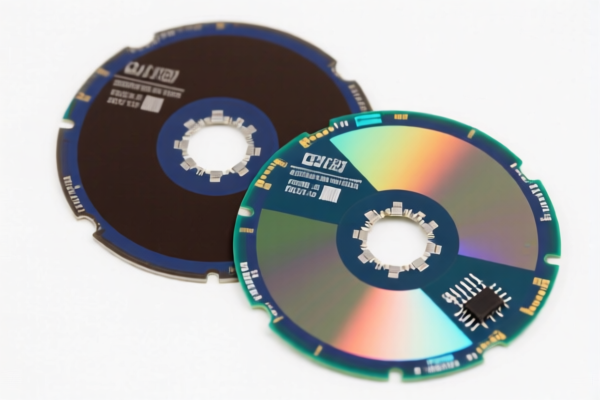
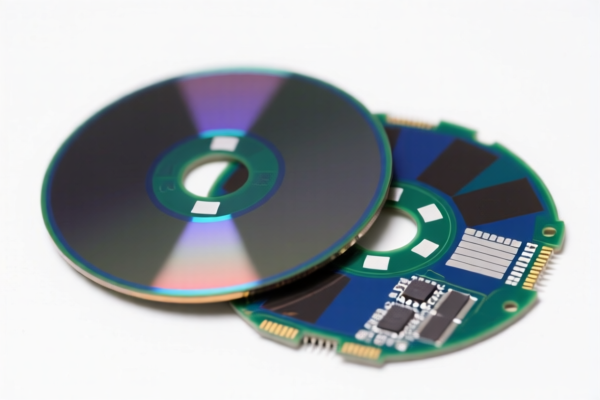
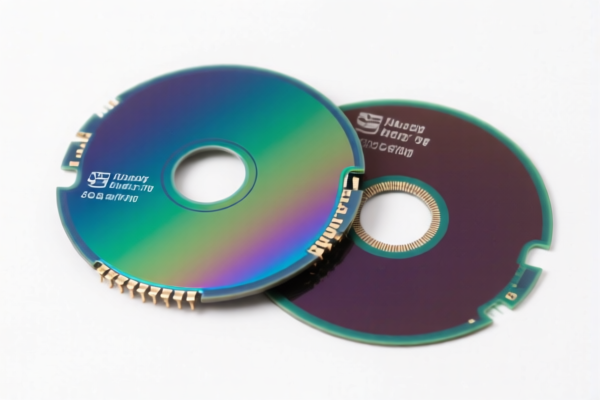
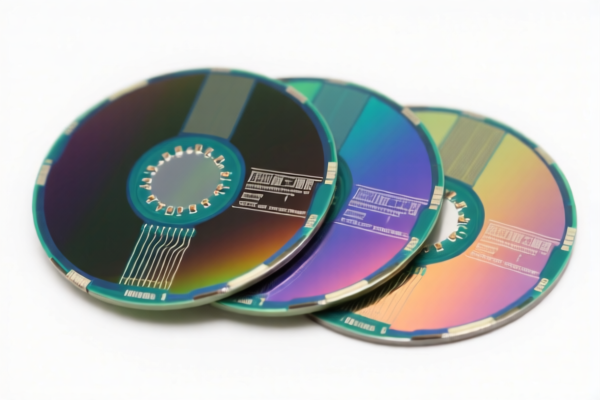
AI Analysis
🌞 Solar Silicon Wafer: Doped (掺杂硅光伏材料/晶圆)
🌐 HS Code Reference & Customs Clearance Guide | 2024/2025 Latest Tariff Analysis | Strategic Clearance Strategy
📌 I. Product Definition: What is "Doped Solar Silicon"?
In the international solar supply chain, Doped Silicon is not just raw material; it is the functional "engine" of photovoltaic cells. The classification depends entirely on the physical state and material purity:
-
Granular/Powdered Form (Material State):
Silicon Carbide (SiC) or Polysilicon particles used as doping agents or raw inputs.
→ HS Code Range: 2849.20 (Silicides) or 3818.00 (Chemical Elements/Doped Powders). -
Wafer/Sheet Form (Component State):
Polycrystalline or Monocrystalline silicon slices, doped with Boron or Phosphorus, ready for cell production.
→ HS Code Range: 3818.00 (Doped Silicon Wafers).
⚠️ Critical Distinction for US Customs (CBP):
- If it is Granular/Powder (SiC-based or raw Silicon powder): It is often classified under 2849.20 (Silicides) or generic chemical powders.
- If it is Wafer/Slice (Polycrystalline/Monocrystalline): It is strictly classified under 3818.00.00 (Chemical elements doped for semiconductor use).
- Why it matters: The Section 301 (122 Clause) and IEEPA tariffs apply differently, with wafers facing significantly higher punitive tariffs than raw material powders.
📦 II. HS Code Classification Matrix (Based on Provided Data)
| HS Code | Product Description | Physical State | Tax Rate (Total) | Key Characteristics |
|---|---|---|---|---|
2849.20.20.00 |
Doped Silicon PV Material (SiC Match) | Granular, Ground, Crushed, Refined | 10.5% | Matches Silicon Carbide properties; processed form. |
2849.20.10.00 |
Doped Silicon PV Material (Unrefined SiC) | Unrefined Material | 10.0% | Unrefined Silicon Carbide attributes; raw input. |
3818.00.00.20 |
Doped Silicon PV Material / Wafer | Polysilicon Material | 60.0% | Doped characteristic + Polysilicon material type. |
3818.00.00.20 |
Doped Silicon Wafer | Wafer/Sheet Form | 60.0% | Doped characteristic + Polysilicon Wafer form. |
3818.00.00.95 |
Other Doped Materials | Generic/Other | 60.0% | "Catch-all" for other doped elements/compounds. |
🔍 Important Note:
- 2849.20 items are treated as Silicides (chemical compounds).
- 3818.00 items are treated as Doped Chemical Elements (semiconductor materials).
- Both categories face Section 301 / IEEPA Additional Tariffs, but the base and surcharge structures differ significantly.
💰 III. Tariff Rate Breakdown (US Import)
✅ Target Market: United States (US)
✅ Origin: China (CN)
✅ Regulatory Framework: Section 301 Tariffs + IEEPA (122 Clause) Penalties
🎯 1. 2849.20.20.00 & 2849.20.10.00 – Doped Silicon (SiC/Powder Form)
| Item | Details |
|---|---|
| Base MFN Duty | 0.0% – 0.5% (Ad Valorem) |
| Section 301 / 122 Clause Tariff | 10.0% (Specific surcharge for these subheads) |
| IEEPA / Additional Penalty | 0.0% (Not subject to the 50% penalty applied to wafers) |
| Total Effective Tariff | 10.0% – 10.5% |
| Calculation Basis | CIF Value × Total Rate |
| De Minimis Exemption? | ❌ NO (Strictly prohibited for Section 301 goods) |
| Legal Basis | USITC:2849.20.xx.xx + Section 301 Footnote 122 |
📌 Explanation:
- These codes fall under Silicides or Unrefined Chemicals.
- The 10-10.5% rate includes a specific 122 Clause penalty, which is significantly lower than the penalties applied to finished wafers.
- Advantage: Much lower tax burden compared to wafers. Suitable for importing raw granular inputs.
🎯 2. 3818.00.00.20 – Doped Silicon Wafers / Polysilicon Material
| Item | Details |
|---|---|
| Base MFN Duty | 0.0% |
| Section 301 / 122 Clause Tariff | 50.0% (High penalty for semiconductor materials) |
| IEEPA / Additional Penalty | 10.0% (Applied to specific high-tech components) |
| Total Effective Tariff | 60.0% |
| Calculation Basis | CIF Value × 60% |
| De Minimis Exemption? | ❌ NO (Deny De Minimis) |
| Legal Basis | USITC:3818.00.00.20 + Section 301 + IEEPA |
📌 Explanation:
- This is the most penalized category in the dataset.
- "Doped Silicon Wafer" is classified as a semiconductor material.
- The 50% surcharge is part of the broader trade restrictions on Chinese semiconductor inputs.
- Risk: Extremely high cost. Importers must ensure accurate declaration to avoid reclassification penalties.
🎯 3. 3818.00.00.95 – Other Doped Materials (Fallback)
| Item | Details |
|---|---|
| Base MFN Duty | 0.0% |
| Section 301 / 122 Clause Tariff | 50.0% |
| IEEPA / Additional Penalty | 10.0% |
| Total Effective Tariff | 60.0% |
| Calculation Basis | CIF Value × 60% |
| De Minimis Exemption? | ❌ NO |
| Legal Basis | USITC:3818.00.00.95 + Section 301 |
📌 Explanation:
- This is a generic fallback for any doped material not explicitly listed as SiC or Wafer.
- It inherits the highest tariff burden (60%).
- Strategy: Avoid using this code unless no other specific description fits. Try to classify under2849.20if the material is granular/powdered to save 50%.
🛠️ IV. Customs Clearance Practical Advice (Battle-Tested)
✅ 1. Documentation Checklist (Mandatory)
| Document | Requirement | Purpose |
|---|---|---|
| Technical Data Sheet (TDS) | ✔️ Required | Must specify: Doping element (Boron/Phosphorus), resistivity, crystal structure, physical form (powder/wafer). |
| Material Safety Data Sheet (MSDS) | ✔️ Required | For customs and safety compliance. |
| Commercial Invoice | ✔️ Critical | Must clearly state "Doped Silicon [Form: Powder/Wafer]" and HS Code. Vague terms like "Silicon Material" will trigger audits. |
| Certificate of Origin (CO) | ✔️ Required | To confirm origin (China) and apply correct Section 301 rates. |
| Bill of Lading / Packing List | ✔️ Required | Must match invoice exactly. |
| Import License (if applicable) | ⚠️ Check | Some advanced semiconductor materials may require BIS (Bureau of Industry and Security) review. |
✅ 2. Declaration Strategy (Key Tips)
🔥 "Form Dictates Rate: Powder is Cheap, Wafer is Expensive!"
| Scenario | Correct HS Code | Risk if Misclassified |
|---|---|---|
| Granular/Crushed Silicon Carbide | 2849.20.20.00 or 2849.20.10.00 |
If declared as Wafer → 60% Tax. If declared as General Chemical → Audit. |
| Doped Polysilicon Wafers | 3818.00.00.20 |
If declared as Raw Silicon → Underpayment Penalty. |
| Unknown Doped Compound | 3818.00.00.95 |
Try to prove it is a Silicide (2849.20) to save 50% if it is not a wafer. |
| Mixed Shipment (Powder + Wafer) | Split Declaration | Do not mix! Declare separately. Mixed shipment risks being audited for the entire value. |
✅ 3. Special Scenarios
| Scenario | Handling Advice |
|---|---|
| OEM Custom Wafers | Provide detailed drawings showing doping profile. Customs may request lab tests to confirm doping. |
| Sample Shipment | Even small samples are subject to 60% tax if they are wafers. No de minimis exemption. |
| Return of Defective Goods | If returning defective wafers to China, ensure Returned Goods Rebate paperwork is filed before re-importing to avoid double taxation. |
| Transshipment via 3rd Country | High Risk! US CBP aggressively tracks Chinese origin. Transshipment does not eliminate Section 301 tariffs if substantial transformation did not occur. |
🌍 V. Global Market Comparison (2024/2025)
| Region | Recommended HS Code | Estimated Tariff (China Origin) | Key Requirement |
|---|---|---|---|
| 🇺🇸 USA | 2849.20 or 3818.00 |
10.5% (Powder) / 60% (Wafer) | Strict Section 301 enforcement. No de minimis. |
| 🇪🇺 EU | 3818.00 |
0% (Standard MFN) | CE Marking, REACH Compliance. No Section 301. |
| 🇨🇳 China | 3818.00 |
0% (Import) | CCC Certification (if applicable). |
| 🇻🇳 Vietnam | 3818.00 |
0-5% (if local content) | Requires proof of origin change. |
📌 Conclusion:
- USA is the most expensive market due to Section 301 and IEEPA.
- EU and China have significantly lower tariffs but require strict environmental/safety compliance (REACH, CCC).
- Strategy: If targeting the US, consider sourcing from non-China origins (e.g., Vietnam, Malaysia, Thailand) to avoid the 60% penalty.
📌 VI. Common Mistakes & Pitfalls (Learn from Others' Failures)
❌ Mistake 1: Declaring "Doped Silicon Wafer" as "Silicon Metal"
👉 Result: Misclassification. Customs will reclassify to 3818.00 and assess 60% tax + penalties.
❌ Mistake 2: Using "De Minimis" for small wafer samples
👉 Result: Seized Goods! Section 301 goods are not eligible for de minimis entry ($800 exemption).
❌ Mistake 3: Vague Description: "Silicon Material for Solar"
👉 Result: Customs request for information (RFI). Delays shipment by 2-4 weeks. Be specific: "Doped Monocrystalline Silicon Wafer, Boron-doped, 150mm."
❌ Mistake 4: Mixing Powder and Wafer in One Bill of Lading
👉 Result: Audit risk. If one item is wrong, the entire shipment may be held. Split shipments are safer.
🎯 VII. Final Conclusion: Precision is Profit!
🎯 Key Takeaways:
🔹 "Powder = 10%, Wafer = 60%. Know your form!"
🔹 "No De Minimis for Solar Silicon from China."
🔹 "Technical Specs Are Your Shield." (TDS, MSDS, Doping Details)
📌 Pro Tip:
If you are importing Doped Silicon Wafers, consider:
1. Advance Ruling: File a binding ruling with CBP before shipment to lock in the HS Code.
2. Supply Chain Diversification: Source wafers from Taiwan, South Korea, or Southeast Asia to avoid Section 301 tariffs.
3. Consult a Broker: Solar materials are high-risk for customs. Always use a licensed customs broker with experience in energy products.
📣 Immediate Action:
📞 Contact a Customs Broker Today
📄 Prepare Detailed Technical Data Sheets
🚀 Optimize Your Supply Chain to Avoid 60% Tariffs
✨ Accurate Classification Saves Money. Incorrect Classification Stops Your Business.
💼 Every Dollar Saved in Tariffs is Pure Profit.
Customer Reviews
About HS Code Classification
The Harmonized System (HS) is an internationally standardized nomenclature developed by the World Customs Organization (WCO) to classify traded products. Over 200 countries use the HS system as the basis for customs tariffs, trade statistics, and import/export regulations.
Each HS code follows a hierarchical structure:
- Chapter (2 digits) — Broad category of goods (e.g., Chapter 84: Machinery and Mechanical Appliances)
- Heading (4 digits) — More specific grouping within the chapter
- Subheading (6 digits) — Internationally standardized breakdown, used by all WCO member countries
- National subdivisions (8-10 digits) — Country-specific extensions for further classification, such as US HTSUS 10-digit codes
Correct HS code classification is essential for smooth customs clearance, accurate duty payment, and compliance with trade regulations. Misclassification can lead to customs delays, overpayment of duties, or penalties.
When importing from CN to US, the applicable tariff rates may include:
- Most-Favored-Nation (MFN) rate — The standard duty rate applied to WTO members
- General rate — Applied to countries without trade agreements
- Trade remedy duties — Additional tariffs such as Section 301 (anti-dumping), Section 232 (national security), or countervailing duties
The information provided on this page is for reference purposes only. For official classification, please consult with your local customs authority or a licensed customs broker.