solder paste
CN → USProduct Images
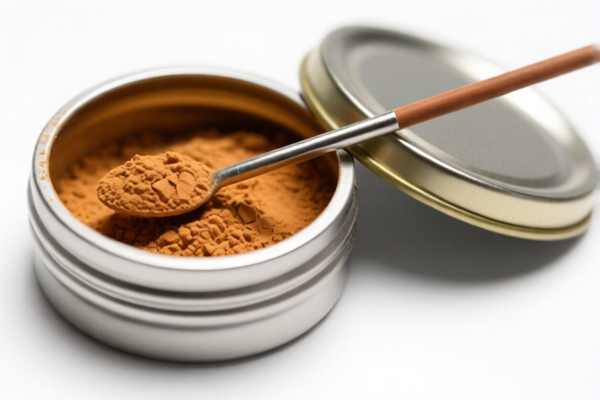
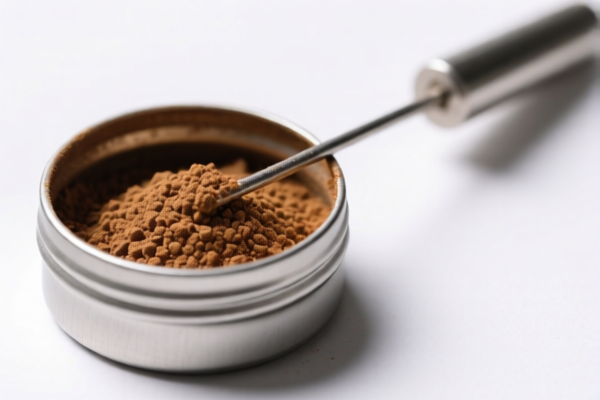
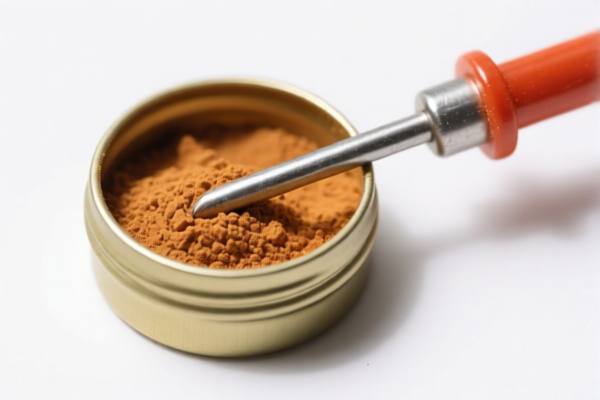
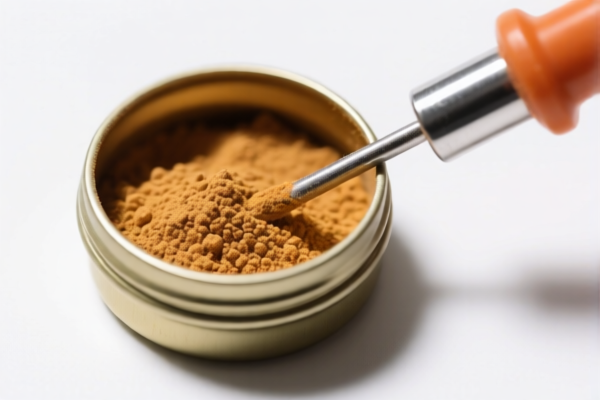
AI Analysis
🧪 Solder Paste: The Heart of Modern Electronics Assembly
🌐 HS Code Reference & Customs Clearance Guide | 2026 Latest Tariff Analysis | Professional Level Clearance Strategy
📌 I. Product Definition & Classification: Do You Really Understand "Solder Paste"?
Solder paste is a semi-solid mixture composed of solder powder, flux, and other additives, primarily used in Surface Mount Technology (SMT) for assembling electronic components onto Printed Circuit Boards (PCBs). In international trade, its classification depends heavily on its chemical composition and intended use.
Key Distinction:
- Chemical Nature: Primarily a mixture of metal alloy powder (tin, lead, silver, copper, etc.) and flux.
- Primary Use: As a conductive and bonding medium in electronics manufacturing.
- HS Code Conflict: It often sits at the intersection of Chapter 85 (Electrical Machinery/Equipment) and Chapter 78/79/84 (Metals/Non-Ferrous Metals) or Chapter 38 (Miscellaneous Chemical Products).
⚠️ Critical Classification Point:
- If primarily used for electrical conduction and is a mixture of metals → Often classified under Chapter 78 (Lead) or Chapter 79 (Zinc) or Chapter 84/85 as a component of electrical equipment. - However, most customs authorities (including US, EU, China) classify solder paste based on its flux content and metal alloy ratio. - US Customs (CBP) typically classifies solder paste under HS 8543.90.99 (Electrical machinery/functional units) or 7806.00.00 (Lead and articles thereof) depending on the specific alloy and flux composition. Recent trends favor 8543.90.99 for no-clean, electronic-grade pastes.
📦 II. HS Code Classification Details (2026 Latest Tariff Authority Comparison)
| HS Code | Product Description | Applicable Scenario | Containing Lead? |
|---|---|---|---|
8543.90.99.00 |
Electrical machinery, apparatus and electrical equipment, having individual functions, not specified or included elsewhere in this chapter | Lead-free solder paste (Sn-Ag-Cu), no-clean, ROSH compliant | ❌ No |
7806.00.00.00 |
Lead and articles thereof, not elsewhere specified or included | Lead-based solder paste (Sn-Pb), older technology, industrial use | ✅ Yes |
3824.99.99.00 |
Prepared binders for foundry moulds or cores; chemical products and preparations of the chemical or allied industries, not elsewhere specified or included | Flux-heavy pastes with low metal content, specialty pastes | ❌/✅ |
8479.90.90.00 |
Parts of machines and mechanical appliances having individual functions, not specified or included | Sometimes argued for automated dispensing cartridges, but rarely accepted for paste itself | ❌ |
🔍 Key Reminder:
- Lead-free (RoHS): Almost always falls under 8543.90.99.00.
- Lead-based: Falls under 7806.00.00.00 due to lead content.
- Flux Component: If the paste is mostly flux with minimal metal, it may be classified under 3824.99.99.00.
- Do NOT classify as "Chemical Product" (3824) if it’s primarily a metal alloy preparation for conduction.
💰 III. 2026 Latest Tariff Rate Breakdown (Including Surtax, Policy Surcharges)
✅ Applicable Country: United States (US)
✅ Origin: China (CN)
✅ Effective Date: From November 10, 2025 (including subsequent imports)
🎯 1. 8543.90.99.00 —— Lead-Free Solder Paste (RoHS Compliant)
| Item | Content |
|---|---|
| Base Tax Rate | 2.5% (ad valorem) |
| USITC Surtax | +25% (from USITC Footnote 9903.88.01, Section 301) |
| IEEPA Surtax | +10% (for China/Hong Kong products, from Nov 10, 2025) |
| Total Rate | 37.5% |
| Tax Calculation | CIF Value × 37.5% |
| De Minimis Exemption Eligibility | ❌ Not Eligible (deny_de_minimis) |
| Legal Basis Path | IEEPA:9903.01.25 → IEEPA:9903.01.24 → USITC:8543.90.99.00 → FOOTNOTE:9903.88.01 |
📌 Explanation:
- "USITC surtax 25%" comes from Section 301 of the US Trade Act;
- "IEEPA 10%" is the surtax imposed on China/HK products under the International Emergency Economic Powers Act;
- Total 37.5%, which is a high tariff, must be anticipated in advance!
🎯 2. 7806.00.00.00 —— Lead-Based Solder Paste
| Item | Content |
|---|---|
| Base Tax Rate | 0% (ad valorem) |
| USITC Surtax | +25% (from USITC Footnote 9903.88.01) |
| IEEPA Surtax | +10% (for China/Hong Kong products, from Nov 10, 2025) |
| Total Rate | 35% |
| Tax Calculation | CIF Value × 35% |
| De Minimis Exemption Eligibility | ❌ Not Eligible (deny_de_minimis) |
| Legal Basis Path | IEEPA:9901.25 → IEEPA:9903.01.24 → USITC:7806.00.00.00 → FOOTNOTE:9903.88.01 |
📌 Note:
- Lead-based pastes are less common due to RoHS restrictions, but still imported for specialized industrial/military use.
- Tariff is slightly lower than lead-free (35% vs 37.5%) due to lower base rate, but high surtaxes still apply.
🛠️ IV. Customs Clearance Practical Advice (Combat Pitfall Avoidance Guide)
✅ 1. Preparation Checklist (No Omissions Allowed)
| Material | Must Provide | Explanation |
|---|---|---|
| ✅ Product Specification Sheet | ✔️ | Include alloy composition (e.g., Sn96.5Ag3.0Cu0.5), flux type (no-clean, water-soluble), particle size (Type 4, Type 5) |
| ✅ MSDS (Material Safety Data Sheet) | ✔️ | Mandatory for chemical products; indicates flammability, toxicity, and handling instructions |
| ✅ COA (Certificate of Analysis) | ✔️ | Proves metal content and purity |
| ✅ RoHS/REACH Compliance Certificate | ✔️ | Critical for lead-free pastes; avoids customs detention for non-compliance |
| ✅ Commercial Invoice | ✔️ | Clearly state "Solder Paste for Electronics Assembly, HS 8543.90.99.00" |
| ✅ Packing List | ✔️ | Specify net weight, gross weight, and number of containers |
| ✅ UN Certification (if applicable) | ✔️ | Solder paste may be classified as hazardous goods for transport; ensure proper UN packaging |
✅ 2. Declaration Tips (Key Mnemonic)
🔥 “Metal Content Dictates HS, RoHS Leads to 8543, Lead Triggers 7806, Never Split, Always Declare!”
| Situation | Correct Declaration | Incorrect Practice |
|---|---|---|
| Lead-free paste (Sn-Ag-Cu) | 8543.90.99.00 |
Misclassified as "Chemical" → 37.5% instead of 2.5% base |
| Lead-based paste (Sn-Pb) | 7806.00.00.00 |
Misclassified as "Electrical" → Penalty for wrong HS |
| Paste in automatic dispensing cartridges | 8543.90.99.00 |
Attempting to classify as "Machine Part" → Rejection |
| Flux only (no metal) | 3824.99.99.00 |
Misclassified as "Solder Paste" → Delayed clearance |
✅ 3. Special Case Handling
| Situation | Handling Advice |
|---|---|
| OEM Custom Solder Paste | Provide client order + technical specs; avoid generic "solder paste" declaration |
| RoHS Non-Compliant Paste | Do not declare as 8543.90.99.00; may face rejection or return |
| Paste with High Lead Content | Declare under 7806.00.00.00; provide lead content percentage |
| Paste for Military/Space Use | May require special licenses; declare as "Special Purpose Electronic Material" |
🌍 V. Global Major Market Clearance Comparison (2026 Latest)
| Country/Region | Recommended HS Code | Tariff | Certification Requirements | Remarks |
|---|---|---|---|---|
| 🇺🇸 USA | 8543.90.99.00 |
37.5% (China origin) | RoHS + REACH | High surtaxes apply |
| 🇨🇳 China | 8543.90.99.00 |
5% | RoHS + REACH | No surtaxes |
| 🇪🇺 EU | 8543.90.99.00 |
0% (if RoHS compliant) | CE + RoHS + REACH | No surtaxes |
| 🇬🇧 UK | 8543.90.99.00 |
0% (if RoHS compliant) | UKCA + RoHS | Post-Brexit rules apply |
| 🇯🇵 Japan | 8543.90.99.00 |
0% | JIS + RoHS | No surtaxes |
📌 Conclusion:
- USA is the only market imposing high surtaxes on solder paste;
- China-origin solder paste in the US faces a 37.5% total tariff, making it crucial to evaluate supply chain adjustments.
📌 VI. Common Mistakes & Pitfall Avoidance Guide (Blood & Tears Lessons)
❌ Mistake 1: Classifying lead-free solder paste as "Chemical Product" (3824)
👉 Consequence: Base rate 37.5% vs 2.5% → Huge tax difference!
❌ Mistake 2: Not providing MSDS
👉 Consequence: Customs detention for hazardous material uncertainty → Delay + Storage Fees
❌ Mistake 3: Declaring "Solder Paste" without specifying lead content
👉 Consequence: Customs may misclassify as 7806.00.00.00 → Penalty for wrong HS
❌ Mistake 4: Using "Solder" or "Metal Alloy" as declaration name for paste
👉 Consequence: If it contains flux, it’s not pure metal → Rejection
✅ Correct Practice:
"Lead-Free Solder Paste, Sn96.5Ag3.0Cu0.5, No-Clean Flux, Type 4 Powder, RoHS Compliant, for SMT Assembly, HS 8543.90.99.00"
🎯 VII. Conclusion: Professional Declaration, Save Time & Money!
🎯 Remember the Mnemonic:
🔹 "Lead-Free to 8543, Lead to 7806, MSDS is Key, Never Split, Always Compliant!"
🔹 "HS Code Determines Life or Death, Tax Rate Differs by 35%, Declaration Error Costs Thousands!"
📌 Tips:
- If your solder paste originates from Vietnam, Mexico, Thailand, Malaysia, you may apply for IEEPA exemption, reducing the rate to 0%~5%;
- Suggest applying for an Advance Ruling to avoid clearance risks.
📣 Immediate Action:
📞 Contact a professional customs broker + Provide product specs + Apply for HS Code Advance Ruling
🚀 Let your solder paste, clear customs smoothly, export efficiently, double profits!
✨ Professional Customs Clearance Starts with Accurate Classification!
💼 Every cent of your cost deserves precise calculation!
Customer Reviews
About HS Code Classification
The Harmonized System (HS) is an internationally standardized nomenclature developed by the World Customs Organization (WCO) to classify traded products. Over 200 countries use the HS system as the basis for customs tariffs, trade statistics, and import/export regulations.
Each HS code follows a hierarchical structure:
- Chapter (2 digits) — Broad category of goods (e.g., Chapter 84: Machinery and Mechanical Appliances)
- Heading (4 digits) — More specific grouping within the chapter
- Subheading (6 digits) — Internationally standardized breakdown, used by all WCO member countries
- National subdivisions (8-10 digits) — Country-specific extensions for further classification, such as US HTSUS 10-digit codes
Correct HS code classification is essential for smooth customs clearance, accurate duty payment, and compliance with trade regulations. Misclassification can lead to customs delays, overpayment of duties, or penalties.
When importing from CN to US, the applicable tariff rates may include:
- Most-Favored-Nation (MFN) rate — The standard duty rate applied to WTO members
- General rate — Applied to countries without trade agreements
- Trade remedy duties — Additional tariffs such as Section 301 (anti-dumping), Section 232 (national security), or countervailing duties
The information provided on this page is for reference purposes only. For official classification, please consult with your local customs authority or a licensed customs broker.