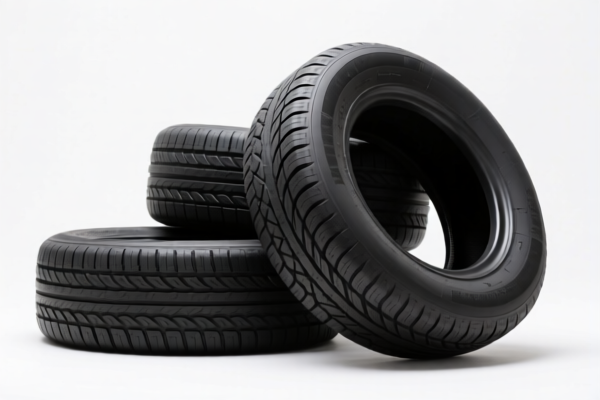
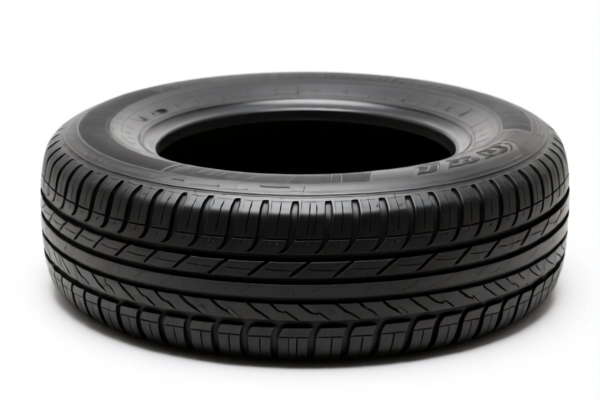
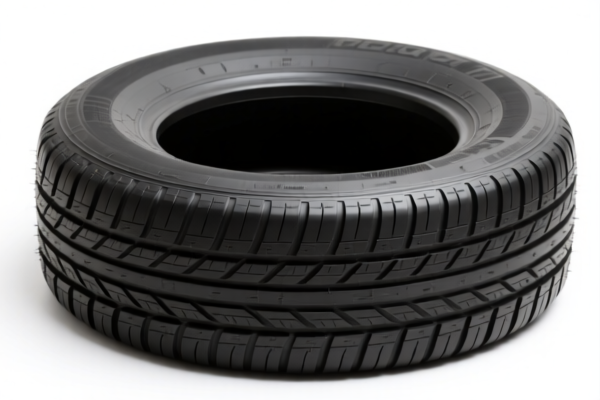
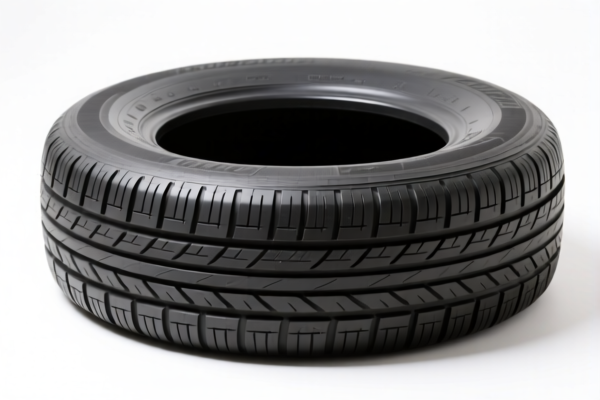
solid rubber tire high precision
CN → US| HS Code | Tariff Rate | Origin | Destination | Doc |
|---|---|---|---|---|
| 4016993000 | 35.0% | CN | US | Official Doc |
| 4011901050 | 35.0% | CN | US | Official Doc |
| 4012901000 | 35.0% | CN | US | Official Doc |
| 4012909000 | 37.7% | CN | US | Official Doc |
| 4016996010 | 37.5% | CN | US | Official Doc |
Product Images
AI Analysis
🚜 Solid Rubber Tires: High Precision Industrial Grade
🌐 HS Code Reference & Customs Clearance Guide | 2026 Latest Tariff Analysis | Professional Clearance Strategy
📌 I. Product Definition: What is a "High Precision Solid Rubber Tire"?
Solid rubber tires are non-pneumatic, non-inflatable tires made primarily from vulcanized rubber. They are commonly used in industrial vehicles, such as forklifts, pallet jacks, airport baggage carts, and internal logistics equipment, where puncture resistance and load-bearing stability are critical.
In international trade, "high precision" typically implies: * Strict dimensional tolerances (diameter, width, thickness); * Uniform density and hardness for balanced rotation; * Specific tread patterns for optimized traction on indoor/outdoor surfaces.
⚠️ Key Classification Logic:
- If the tire is made of vulcanized rubber and is not pneumatic → It falls under Chapter 40 (Rubber and Articles Thereof).
- If it is a complete tire ready for installation → It is classified as a tire (Heading 4011 or 4012).
- If it is a raw rubber part or custom mold not meeting standard tire specifications → It may be classified as a part/accessory (Heading 4016).
📦 II. HS Code Classification Details (2026 Latest Tariff Authority Mapping)
| HS Code | Product Description | Applicable Scenario | Tax Logic & Rationale |
|---|---|---|---|
4016.99.30.00 |
Solid rubber tires, natural rubber material, shock-absorbing/cushioning logic | Industrial forklifts, vibration-dampening vehicles | Classification Logic: Classified under "Other articles of vulcanized rubber other than hard rubber" (4016). The "shock-absorbing/cushioning" function aligns with non-tire rubber articles. |
4011.90.10.50 |
Rubber material solid tires, fits logic of parts/components under other categories | Replacement tires for specific industrial machinery | Classification Logic: Although 4011 is for "Tires of rubber," this code is used when the product fits the definition of a component/part rather than a standalone automotive tire. Often applies to non-vehicle industrial equipment. |
4012.90.10.00 |
Solid rubber tires, material and shape fully match classification | Standard industrial solid tires, clear morphology | Classification Logic: 4012 covers "Used tires, tires of rubber, solid or cushion tires, tire treads, and tire gum." This code is for new solid/cushion tires that clearly match the physical description of a tire. |
4012.90.90.00 |
Solid rubber tires, material and shape fully conform to classification explanation | General solid tires, no specific sub-heading match | Classification Logic: The "catch-all" for rubber tires in 4012 when they don't fit more specific sub-headings. Includes both new and used, but here applies to new solid tires. |
4016.99.60.10 |
Solid rubber tires, conforms to vulcanized rubber articles and parts priority matching principle | Custom rubber parts, industrial wheels, non-standard tires | Classification Logic: Falls under "Other articles of vulcanized rubber." The "priority matching principle" suggests that if the item is deemed more of a rubber article/part than a standard tire, it goes to 4016. |
🔍 Key Distinction:
- 4011/4012: Directly classified as Tires (if they meet the definition of a tire for vehicles/equipment).
- 4016: Classified as Other Rubber Articles (if the item is considered a part, cushion, or non-standard rubber component).
- "High Precision" does not change the HS code; it affects the quality specifications but not the tariff heading, unless it qualifies as a "precision instrument part" (unlikely for tires).
💰 III. 2026 Latest Tariff Rate Details (Including Surtaxes & Policy Add-ons)
✅ Applicable Country: United States (US)
✅ Country of Origin: China (CN)
✅ Effective Date: November 10, 2025 onwards
🎯 1. 4016.99.30.00 —— Other Rubber Articles (Shock-Absorbing/Solid Tire Logic)
| Item | Content |
|---|---|
| Base Tariff | 0% (ad valorem) |
| USITC Surtax (Section 301) | +25% (China-origin goods) |
| IEEPA Surcharge (122 Clause) | +10% (China/China-origin) |
| Total Tariff | 35.0% |
| Tax Calculation | CIF Value × 35% |
| De Minimis Eligibility | ❌ No (deny_de_minimis) |
| Legal Basis Path | IEEPA:122 → USITC:4016.99.30.00 → FOOTNOTE:301 |
📌 Explanation:
- This code is classified under Chapter 40, Section 4016 (Other articles).
- Base rate is 0%, but Section 301 (25%) and IEEPA 122 (10%) apply, totaling 35%.
- High-precision or specialized rubber parts are not exempt from these surtaxes.
🎯 2. 4011.90.10.50 —— Rubber Solid Tires (Parts/Components Logic)
| Item | Content |
|---|---|
| Base Tariff | 0% |
| USITC Surtax (Section 301) | +25% |
| IEEPA Surcharge (122 Clause) | +10% |
| Total Tariff | 35.0% |
| Tax Calculation | CIF Value × 35% |
| De Minimis Eligibility | ❌ No |
| Legal Basis Path | IEEPA:122 → USITC:4011.90.10.50 → FOOTNOTE:301 |
📌 Note:
- Even though it’s a "tire," if classified under 4011.90.10.50 due to parts logic, the tariff is the same as above.
- The key is the description: if it’s considered a "part of machinery" rather than a "vehicle tire," this code may apply.
🎯 3. 4012.90.10.00 —— Solid Rubber Tires (Direct Match)
| Item | Content |
|---|---|
| Base Tariff | 0% |
| USITC Surtax (Section 301) | +25% |
| IEEPA Surcharge (122 Clause) | +10% |
| Total Tariff | 35.0% |
| Tax Calculation | CIF Value × 35% |
| De Minimis Eligibility | ❌ No |
| Legal Basis Path | IEEPA:122 → USITC:4012.90.10.00 → FOOTNOTE:301 |
📌 Explanation:
- This is the most direct code for solid rubber tires.
- Base rate 0%, but 35% total due to surtaxes.
- Must clearly describe as "Solid Rubber Tire" in customs declaration.
🎯 4. 4012.90.90.00 —— Other Solid Rubber Tires
| Item | Content |
|---|---|
| Base Tariff | 2.7% |
| USITC Surtax (Section 301) | +25% |
| IEEPA Surcharge (122 Clause) | +10% |
| Total Tariff | 37.7% |
| Tax Calculation | CIF Value × 37.7% |
| De Minimis Eligibility | ❌ No |
| Legal Basis Path | IEEPA:122 → USITC:4012.90.90.00 → FOOTNOTE:301 |
📌 Warning:
- This code has a base tariff of 2.7%, making it more expensive than4012.90.10.00.
- Only use this if no more specific code applies. Always prefer4012.90.10.00for solid tires if possible.
🎯 5. 4016.99.60.10 —— Rubber Articles (Priority Parts Matching)
| Item | Content |
|---|---|
| Base Tariff | 2.5% |
| USITC Surtax (Section 301) | +25% |
| IEEPA Surcharge (122 Clause) | +10% |
| Total Tariff | 37.5% |
| Tax Calculation | CIF Value × 37.5% |
| De Minimis Eligibility | ❌ No |
| Legal Basis Path | IEEPA:122 → USITC:4016.99.60.10 → FOOTNOTE:301 |
📌 Note:
- Base rate is 2.5%, total 37.5%.
- This code is for rubber articles that are not strictly tires. Use only if the product is deemed a part or accessory rather than a tire.
🛠️ IV. Customs Clearance Practical Advice (Avoid Pitfalls)
✅ 1. Documentation Checklist (All Required)
| Document | Mandatory | Description |
|---|---|---|
| ✅ Product Specification Sheet | ✔️ | Dimensions, hardness (Shore A), load capacity, tread pattern |
| ✅ Material Composition Report | ✔️ | Confirm 100% vulcanized rubber, no steel wire (if applicable) |
| ✅ Product Photos (Labeled) | ✔️ | Show tread, sidewall, and any markings |
| ✅ Commercial Invoice | ✔️ | Clearly state: "Solid Rubber Tire for Industrial Forklift, Model XYZ" |
| ✅ Packing List | ✔️ | Include gross weight, net weight, number of units |
| ✅ Certificate of Origin (CO) | ✔️ | If applicable for other countries; for US, declare China origin |
| ✅ Declaration of Non-Pneumatic | ✔️ | Explicitly state "Non-inflatable, Solid Rubber" to avoid misclassification as pneumatic tires (8708) |
✅ 2. Declaration Tips (Key Principles)
🔥 "Be Specific, Avoid Ambiguity, Match Physical Form"
| Scenario | Correct Declaration | Incorrect Declaration |
|---|---|---|
| Solid tire for forklift | 4012.90.10.00 - "Solid Rubber Tire, Industrial, 200mm Diameter" |
"Rubber Wheel" or "Part of Forklift" |
| Solid tire with metal insert | 4012.90.10.00 - "Solid Rubber Tire with Steel Hub" |
"Metal Wheel" |
| Custom rubber pad (not a tire) | 4016.99.60.10 - "Vulcanized Rubber Cushion" |
"Tire" |
| Used solid tire | 4012.90.90.00 - "Used Solid Rubber Tire" |
"New Tire" |
📌 Critical Rule:
- Do not classify solid rubber tires under Chapter 87 (Vehicles) unless they are parts of a vehicle.
- Do not use "Tire" broadly; specify "Solid" and "Non-Pneumatic".
✅ 3. Special Situations
| Situation | Handling Advice |
|---|---|
| OEM Solid Tires | Provide customer PO and design specs to prove end-use |
| Tires with Metal Cores | Declare as "Rubber Tire with Steel Insert"; still Class 4012/4016 |
| High-Precision Tolerances | Submit measurement reports to justify quality; does not change HS code |
| Sample Shipments | Same tariff rates apply; no de minimis exemption |
🌍 V. Global Market Comparison (2026 Latest)
| Country/Region | Recommended HS Code | Tariff | Certification | Notes |
|---|---|---|---|---|
| 🇺🇸 USA | 4012.90.10.00 |
35% | None | High due to Section 301 + IEEPA |
| 🇨🇳 China | 4012.90.10.00 |
10% | None | Base rate 10%, no surtaxes |
| 🇪🇺 EU | 4012.90.10.00 |
0% | REACH | No surtaxes |
| 🇦🇺 Australia | 4012.90.10.00 |
5% | GSR | Low tariff |
| 🇯🇵 Japan | 4012.90.10.00 |
0% | JIS | No surtaxes |
📌 Conclusion:
- USA imposes 35% total tariff due to Section 301 (25%) and IEEPA (10%).
- Other markets have lower or zero tariffs.
- Cost optimization: Consider sourcing from non-China origins (e.g., Vietnam, Thailand) for US market to avoid surtaxes.
📌 VI. Common Mistakes & Pitfalls (Lessons Learned)
❌ Mistake 1: Declaring as "Rubber Wheel" or "Part"
👉 Consequence: Misclassification → Potential penalty or higher duty if reviewed.
❌ Mistake 2: Using 4012.90.90.00 when 4012.90.10.00 applies
👉 Consequence: Paying 2.7% base rate instead of 0% → Higher cost.
❌ Mistake 3: Not specifying "Solid" or "Non-Pneumatic"
👉 Consequence: Customs may classify as pneumatic tire (8708) → Different duty, compliance issues.
❌ Mistake 4: Assuming "High Precision" changes classification
👉 Consequence: No effect on HS code; only affects quality verification.
✅ Correct Approach:
"Solid Rubber Tire, 200x80mm, 1000kg Load, Industrial Forklift, Vulcanized Rubber, Non-Pneumatic"
🎯 VII. Conclusion: Precise Classification, Cost Control
🎯 Remember:
🔹 "Solid = 4012/4016, Pneumatic = 8708"
🔹 "China Origin to USA = 35% (25% + 10% + 0%)"
🔹 "Be Specific in Description to Avoid Audits"
📌 Pro Tip:
If your solid tires are produced in Vietnam, Thailand, or Malaysia, you may qualify for lower or zero IEEPA tariffs in the US.
Consider Advance Ruling from U.S. Customs and Border Protection (CBP) to confirm HS code and avoid disputes.
📣 Immediate Action:
📞 Consult a licensed customs broker
📄 Provide product specs, photos, and material reports
🚀 Ensure accurate HS code declaration to avoid delays and penalties
✨ Professional clearance starts with precise classification!
💼 Every cent saved on duty is profit earned!
Customer Reviews
About HS Code Classification
The Harmonized System (HS) is an internationally standardized nomenclature developed by the World Customs Organization (WCO) to classify traded products. Over 200 countries use the HS system as the basis for customs tariffs, trade statistics, and import/export regulations.
Each HS code follows a hierarchical structure:
- Chapter (2 digits) — Broad category of goods (e.g., Chapter 84: Machinery and Mechanical Appliances)
- Heading (4 digits) — More specific grouping within the chapter
- Subheading (6 digits) — Internationally standardized breakdown, used by all WCO member countries
- National subdivisions (8-10 digits) — Country-specific extensions for further classification, such as US HTSUS 10-digit codes
Correct HS code classification is essential for smooth customs clearance, accurate duty payment, and compliance with trade regulations. Misclassification can lead to customs delays, overpayment of duties, or penalties.
When importing from CN to US, the applicable tariff rates may include:
- Most-Favored-Nation (MFN) rate — The standard duty rate applied to WTO members
- General rate — Applied to countries without trade agreements
- Trade remedy duties — Additional tariffs such as Section 301 (anti-dumping), Section 232 (national security), or countervailing duties
The information provided on this page is for reference purposes only. For official classification, please consult with your local customs authority or a licensed customs broker.