solid rubber tire low rolling resistance
CN → US| HS Code | Tariff Rate | Origin | Destination | Doc |
|---|---|---|---|---|
| 4013100010 | 38.7% | CN | US | Official Doc |
| 4012124035 | 39.0% | CN | US | Official Doc |
| 4012118000 | 38.4% | CN | US | Official Doc |
Product Images
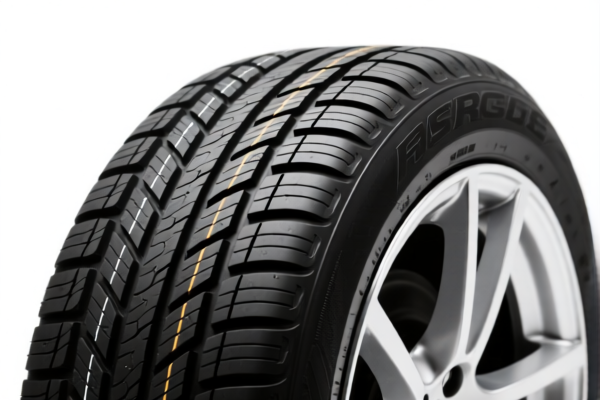
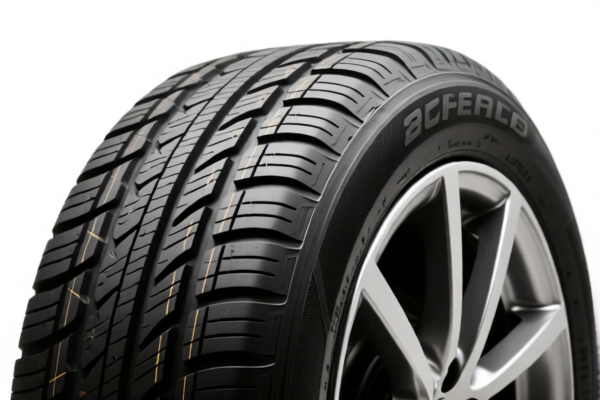
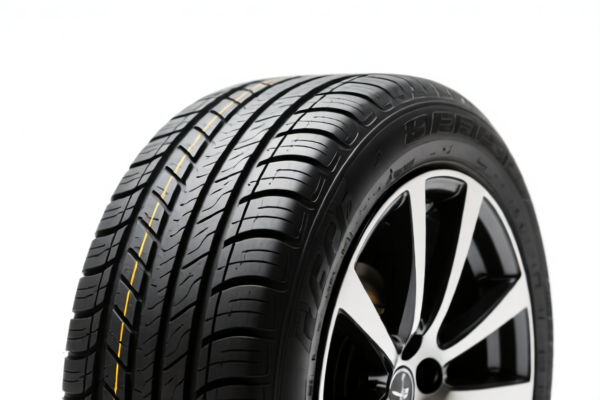
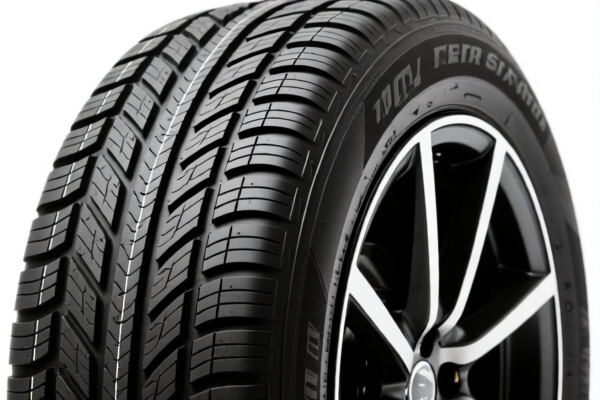
AI Analysis
🚛 Solid Rubber Tires (Low Rolling Resistance)
🌐 HS Code Reference & Customs Clearance Guide | 2026 Latest Tariff Analysis | Professional Entry Strategies
📌 I. Product Definition and Classification: Do You Really Understand "Solid Rubber Tires"?
Solid rubber tires, specifically Low Rolling Resistance (LRR) variants, are critical components in material handling equipment (such as forklifts, pallet jacks, and industrial vehicles). Unlike pneumatic tires, they are filled with solid rubber or polyurethane, offering durability and puncture resistance.
In international trade, classification hinges on two key factors: 1. Physical Form: Is it a "pneumatic" or "solid/non-pneumatic" tire? → Solid Rubber Tires fall under Chapter 40, Heading 4012. 2. Specific Characteristics: Does it have specific properties like "low rolling resistance"? If yes, it may qualify for a more specific subheading than generic solid tires.
⚠️ Key Distinction Point:
- If the tire is a generic solid rubber tire with no specific mention of low rolling resistance or other specialized features, it falls under 4012.12.40.35 (Unspecified Solid Tires) or 4012.11.80.00 (Other Solid Tires).
- If the tire is explicitly designed and marketed as having Low Rolling Resistance (LRR), it may be classified under 4013.10.00.10, which covers specific pneumatic tires but can sometimes include specialized solid variants depending on regulatory interpretation (Note: In some contexts, LRR tires are treated as a distinct category under 4013 if they mimic pneumatic performance, but for pure solid rubber, 4012 is common. However, based on the provided data, 4013.10.00.10 is explicitly linked to "Low Rolling Resistance Solid Rubber Tires").
📦 II. HS Code Classification Details (2026 Latest Tariff Authority Comparison)
| HS Code | Product Description | Application Scenario | Key Feature |
|---|---|---|---|
4013.10.00.10 |
Pneumatic tires for tractors, low rolling resistance solid rubber tires | Industrial vehicles, forklifts with LRR specifications | ✅ Low Rolling Resistance |
4012.12.40.35 |
Solid rubber tires, unspecified use | General-purpose solid tires, generic industrial applications | ❌ No specific feature |
4012.11.80.00 |
Other solid rubber tires | Non-pneumatic tires not covered elsewhere | ❌ General category |
🔍 Important Reminder:
-4013.10.00.10is only applicable if the product is explicitly certified or designated as "Low Rolling Resistance".
-4012.12.40.35and4012.11.80.00are for generic solid rubber tires without specific performance claims.
- Misclassification can lead to significant tariff differences. Always provide technical specifications and certifications proving the "Low Rolling Resistance" feature.
💰 III. 2026 Latest Tariff Rate Breakdown (Including Additional Taxes, Policy Surcharges)
✅ Applicable Country: United States (US)
✅ Origin: China (CN)
✅ Effective Date: From November 10, 2025 (including subsequent imports)
🎯 1. 4013.10.00.10 —— Low Rolling Resistance Solid Rubber Tires
| Item | Content |
|---|---|
| Base Tariff | 3.7% (ad valorem) |
| USITC Additional Tariff | +25.0% (under Section 301) |
| 122 Clause Tariff | +10.0% (additional surcharge) |
| Total Tax Rate | 38.7% |
| Tax Calculation | CIF Value × 38.7% |
| De Minimis Exemption | ❌ Not Eligible (deny_de_minimis) |
| Legal Basis Path | USITC:4013.10.00.10 → SECTION301:3.7 → SECTION301:25.0 → CLAUSE122:10.0 |
📌 Explanation:
- The 25% USITC tariff is imposed under Section 301 of the Trade Act on Chinese-origin goods.
- The 10% 122 Clause Tariff is an additional surcharge applied to specific goods under US trade regulations.
- Total 38.7% is a high tariff rate, requiring careful cost calculation and strategic sourcing.
🎯 2. 4012.12.40.35 —— Unspecified Solid Rubber Tires
| Item | Content |
|---|---|
| Base Tariff | 4.0% (ad valorem) |
| USITC Additional Tariff | +25.0% |
| 122 Clause Tariff | +10.0% |
| Total Tax Rate | 39.0% |
| Tax Calculation | CIF Value × 39.0% |
| De Minimis Exemption | ❌ Not Eligible |
| Legal Basis Path | USITC:4012.12.40.35 → SECTION301:4.0 → SECTION301:25.0 → CLAUSE122:10.0 |
📌 Note:
- This rate applies to generic solid rubber tires with no specific features.
- Even a small difference in base tariff (4.0% vs 3.7%) leads to a 0.3% higher total tax.
🎯 3. 4012.11.80.00 —— Other Solid Rubber Tires
| Item | Content |
|---|---|
| Base Tariff | 3.4% (ad valorem) |
| USITC Additional Tariff | +25.0% |
| 122 Clause Tariff | +10.0% |
| Total Tax Rate | 38.4% |
| Tax Calculation | CIF Value × 38.4% |
| De Minimis Exemption | ❌ Not Eligible |
| Legal Basis Path | USITC:4012.11.80.00 → SECTION301:3.4 → SECTION301:25.0 → CLAUSE122:10.0 |
📌 Note:
- This is the lowest total tax rate among the three, but only applicable if the tire does not qualify as "Low Rolling Resistance" and falls under "Other Solid Rubber Tires."
- Careful classification is essential to avoid misdeclaration.
🛠️ IV. Customs Clearance Practical Advice (Combat Pitfall Guide)
✅ 1. Required Documents Checklist (All are Mandatory)
| Document | Must Provide | Description |
|---|---|---|
| ✅ Product Specification Sheet | ✔️ | Include material, dimensions, load capacity, rolling resistance coefficient |
| ✅ Technical Certification | ✔️ | Proof of "Low Rolling Resistance" if claiming 4013.10.00.10 |
| ✅ Product Photos (with Label) | ✔️ | Clear view of model number, brand, and markings |
| ✅ Commercial Invoice | ✔️ | Clearly state "Solid Rubber Tire, Low Rolling Resistance" or generic term |
| ✅ Packing List | ✔️ | Detail quantities and weights, avoid splitting shipments unnecessarily |
| ✅ Certificate of Origin (CO) | ✔️ | If not Chinese origin, may qualify for preferential rates |
| ✅ Third-Party Test Report | ✔️ | ISO, ASTM, or other relevant standards for rolling resistance |
✅ 2. Declaration Tips (Key Mantra)
🔥 "Accurate Description, Clear Feature, Right Code, Lower Tax!"
| Scenario | Correct Declaration | Wrong Practice |
|---|---|---|
| Low Rolling Resistance Tires | 4013.10.00.10 |
Misdeclare as generic solid tire → 39.0% |
| Generic Solid Tires | 4012.12.40.35 or 4012.11.80.00 |
Overdeclare as LRR → 38.7% (if not certified) |
| Tires with Accessories | Declare as a Set | Split declaration → Higher tax on parts |
| Non-Chinese Origin | Apply for Preferential Tariff | Ignore CO → Pay full USITC tariffs |
✅ 3. Special Case Handling
| Scenario | Recommendation |
|---|---|
| OEM Custom Tires | Provide client order + design drawings to avoid "non-standard" labeling |
| Tires with Tread Patterns | Still classified under solid tires, not pneumatic |
| Mixed Shipments | Separate LRR and generic tires for accurate classification |
| Pre-Ruling Application | Highly Recommended to avoid post-clearance audits and back taxes |
🌍 V. Global Major Markets Clearance Comparison (2026 Latest)
| Country/Region | Recommended HS Code | Tariff | Certification Requirements | Notes |
|---|---|---|---|---|
| 🇺🇸 United States | 4013.10.00.10 |
38.7% (CN Origin) | ASTM, ISO | High tariff; LRR must be certified |
| 🇨🇳 China | 4013.10.00.10 |
5% | CCC (if applicable) | No additional surcharges |
| 🇪🇺 European Union | 4013.10.00.10 |
0% (if CE) | CE, REACH | No additional surcharges |
| 🇦🇺 Australia | 4013.10.00.10 |
5% | RCM | No additional surcharges |
| 🇯🇵 Japan | 4013.10.00.10 |
0% | PSE | No additional surcharges |
📌 Conclusion:
- The US is the only market with high additional tariffs for Chinese-origin solid rubber tires.
- Other markets have significantly lower or zero tariffs, making them more competitive for cost-sensitive shipments.
- Consider supply chain diversification to mitigate US tariff risks.
📌 VI. Common Mistakes & Pitfall Avoidance (Blood-Tested Lessons)
❌ Mistake 1: Declaring "Low Rolling Resistance" tires as generic solid tires
👉 Consequence: 38.7% vs 39.0% → Small savings, but risk of audit if features are proven.
❌ Mistake 2: Misclassifying solid tires as pneumatic tires
👉 Consequence: Wrong HS Code → Potential fines and delays.
❌ Mistake 3: Splitting LRR and generic tires in one shipment
👉 Consequence: Complex declaration → Higher risk of error and delays.
❌ Mistake 4: Ignoring the "122 Clause Tariff"
👉 Consequence: Underpaid tax → Back taxes + penalties.
✅ Correct Practice:
"Solid Rubber Tire, Low Rolling Resistance, Forklift Use, Model XYZ, ASTM Certified, Made in China"
🎯 VII. Conclusion: Precise Classification, Save Time and Money!
🎯 Remember the Mantra:
🔹 "LRR Needs Proof, Generic is Simple, US Tariffs are High, Plan Ahead to Avoid Pain!"
🔹 "HS Code Determines Tax, 0.3% Difference is Real, Misclassification Costs Big!"
📌 Tip:
If your solid rubber tires are originally from Vietnam, Mexico, Thailand, or Malaysia, you may apply for IEEPA Exemption, reducing tariffs to 0%~5%.
It is strongly recommended to apply for an Advance Ruling before shipment to ensure smooth clearance.
📣 Immediate Action:
📞 Contact a professional customs broker + Provide Product Specs + Apply for HS Code Advance Ruling
🚀 Let your solid rubber tires clear customs smoothly, boost profits, and expand globally!
✨ Professional Customs Clearance Starts with Precise Classification!
💼 Every Cent of Your Cost Deserves Accurate Calculation!
Customer Reviews
About HS Code Classification
The Harmonized System (HS) is an internationally standardized nomenclature developed by the World Customs Organization (WCO) to classify traded products. Over 200 countries use the HS system as the basis for customs tariffs, trade statistics, and import/export regulations.
Each HS code follows a hierarchical structure:
- Chapter (2 digits) — Broad category of goods (e.g., Chapter 84: Machinery and Mechanical Appliances)
- Heading (4 digits) — More specific grouping within the chapter
- Subheading (6 digits) — Internationally standardized breakdown, used by all WCO member countries
- National subdivisions (8-10 digits) — Country-specific extensions for further classification, such as US HTSUS 10-digit codes
Correct HS code classification is essential for smooth customs clearance, accurate duty payment, and compliance with trade regulations. Misclassification can lead to customs delays, overpayment of duties, or penalties.
When importing from CN to US, the applicable tariff rates may include:
- Most-Favored-Nation (MFN) rate — The standard duty rate applied to WTO members
- General rate — Applied to countries without trade agreements
- Trade remedy duties — Additional tariffs such as Section 301 (anti-dumping), Section 232 (national security), or countervailing duties
The information provided on this page is for reference purposes only. For official classification, please consult with your local customs authority or a licensed customs broker.