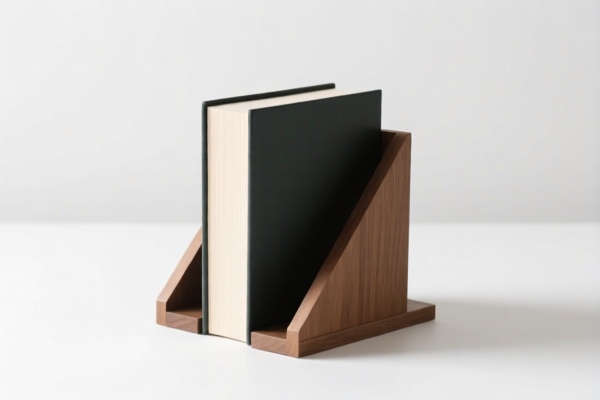
solid wood bookend
CN → US| HS Code | Tariff Rate | Origin | Destination | Doc |
|---|---|---|---|---|
| 4421919880 | 38.3% | CN | US | Official Doc |
| 4421999880 | 38.3% | CN | US | Official Doc |
| 9403608093 | 35.0% | CN | US | Official Doc |
| 9403910080 | 35.0% | CN | US | Official Doc |
| 8205598000 | 38.7% | CN | US | Official Doc |
Product Images



AI Analysis
📚 Solid Wood Bookends: HS Code Classification & 2026 US Customs Strategy
🌐 HS Code Reference & Clearance Guide | 2026 Latest Tariff Analysis | Professional Customs Strategy
📌 Part I: Product Definition & Classification — Do You Really Understand "Solid Wood Bookends"?
Solid wood bookends are decorative or functional stationary accessories used to support books, papers, or documents. In international trade, their classification is highly contested because they can fall under multiple chapters depending on their primary function, material composition, and design intent.
There are three main classification paths: 1. General Wood Articles (Chapter 44): If viewed simply as a carved or shaped wooden object with no specific mechanical function. 2. Wooden Furniture (Chapter 94): If considered a small piece of furniture or an accessory to furniture (e.g., shelf accessories). 3. Hand Tools (Chapter 82): If primarily viewed as a "tool" for pressing or fixing items in place (less common, but possible for heavy-duty industrial clamps).
⚠️ Key Distinction Point:
- If the item is purely decorative and just holds books up via gravity/friction → Likely Chapter 44 (Other Wood Articles) or Chapter 94 (Furniture).
- If it has mechanical parts (screws, hinges, clamps) to apply pressure → Likely Chapter 82 (Hand Tools).
- Note: Most standard decorative solid wood bookends do NOT fall under Chapter 82 unless they have distinct tool-like mechanics. However, the data provided includes this classification, so we must address it.
📦 Part II: HS Code Classification Details (2026 Latest Tariff Reference)
| HS Code | Product Description | Application Scenario | Material/Function |
|---|---|---|---|
4421.91.98.80 |
Other wooden articles, solid wood | General decorative bookends, non-specific wooden items | ✅ Solid Wood, Non-Specific Use |
4421.99.98.80 |
Other wooden articles, solid wood | Wooden stationery or small wood products | ✅ Solid Wood, Stationery/Small Item |
9403.60.80.93 |
Other wooden furniture | Bookends considered small wooden furniture pieces | ✅ Solid Wood, Furniture Accessory |
9403.91.00.80 |
Parts of furniture | Bookends considered furniture accessories/parts | ✅ Solid Wood, Furniture Part |
8205.59.80.00 |
Other hand tools | Bookends viewed as pressing/fixing tools | ✅ Wood, Mechanical Pressing Function |
🔍 Key Reminder:
- Most common:4421.99.98.80(Other wood articles) or9403.60.80.93(Wooden furniture).
- Risk Area:8205.59.80.00is rare for bookends unless they are industrial clamps. Misclassification here can lead to penalties.
- Furniture vs. Article: If the bookend is a standalone decorative piece,4421is safer. If it’s part of a shelving system,9403may apply.
💰 Part III: 2026 US Tariff Rate Breakdown (Including Surcharges & Policy Add-ons)
✅ Applicable Country: United States (US)
✅ Origin: China (CN)
✅ Effective Date: From November 10, 2025 (including subsequent imports)
🎯 1. 4421.91.98.80 & 4421.99.98.80 — Other Wood Articles
| Item | Content |
|---|---|
| Basic Tariff | 3.3% (ad valorem) |
| Section 301 Surcharge | +25.0% (USITC Footnote 9903.88.01) |
| IEEPA Surcharge | +10.0% (For China/HK products, effective Nov 10, 2025) |
| Total Rate | 38.3% |
| Tax Calculation | CIF Value × 38.3% |
| De Minimis Eligibility | ❌ No (deny_de_minimis) |
| Legal Basis Path | IEEPA:9903.01.25 → IEEPA:9903.01.24 → USITC:4421.99.98.80 → FOOTNOTE:9903.88.01 |
📌 Explanation:
- These HS codes fall under Chapter 44 (Wood and Articles of Wood).
- The 25% Section 301 tariff is standard for many wood products from China.
- The 10% IEEPA tariff is an additional layer for China-origin goods.
- Total 38.3% is a significant cost burden. Must be factored into pricing.
🎯 2. 9403.60.80.93 & 9403.91.00.80 — Wooden Furniture & Parts
| Item | Content |
|---|---|
| Basic Tariff | 0.0% (ad valorem) |
| Section 301 Surcharge | +25.0% (USITC Footnote 9903.88.01) |
| IEEPA Surcharge | +10.0% (For China/HK products, effective Nov 10, 2025) |
| Total Rate | 35.0% |
| Tax Calculation | CIF Value × 35.0% |
| De Minimis Eligibility | ❌ No (deny_de_minimis) |
| Legal Basis Path | IEEPA:9903.01.25 → IEEPA:9903.01.24 → USITC:9403.60.80.93 → FOOTNOTE:9903.88.01 |
📌 Note:
- By classifying as furniture (9403), you save 3.3% on the basic tariff compared to Chapter 44.
- However, you still face the 25% Section 301 and 10% IEEPA surcharges.
- Total 35.0% is slightly lower than 38.3%, making it a more tax-efficient option if justified.
🎯 3. 8205.59.80.00 — Other Hand Tools
| Item | Content |
|---|---|
| Basic Tariff | 3.7% (ad valorem) |
| Section 301 Surcharge | +25.0% (USITC Footnote 9903.88.01) |
| IEEPA Surcharge | +10.0% (For China/HK products, effective Nov 10, 2025) |
| Total Rate | 38.7% |
| Tax Calculation | CIF Value × 38.7% |
| De Minimis Eligibility | ❌ No (deny_de_minimis) |
| Legal Basis Path | IEEPA:9903.01.25 → IEEPA:9903.01.24 → USITC:8205.59.80.00 → FOOTNOTE:9903.88.01 |
📌 Warning:
- This is the highest tax rate (38.7%) among the options.
- Only use this if the bookend has distinct mechanical tool features (e.g., adjustable clamps, metal hinges, industrial design).
- For standard decorative wood bookends, this classification is high-risk and not recommended.
🛠️ Part IV: Customs Clearance Practical Advice (Actionable Pitfall Avoidance)
✅ 1. Preparation Checklist (Essential Documents)
| Document | Required? | Notes |
|---|---|---|
| ✅ Product Specs Sheet | ✔️ | Include dimensions, weight, material (e.g., "Solid Oak"), finish |
| ✅ Product Photos | ✔️ | Clear shots of front, back, sides, and any joints/hardware |
| ✅ Commercial Invoice | ✔️ | Clearly state "Solid Wood Bookend, Decorative, For Stationery" |
| ✅ Packing List | ✔️ | Detail quantity per carton |
| ✅ Origin Certificate (CO) | ✔️ | If not China-origin, may qualify for lower rates |
| ✅ Material Declaration | ✔️ | Confirm no prohibited species (e.g., endangered wood) |
✅ 2. Classification Strategy (Key Takeaways)
🔥 “Furniture is Cheaper, Tools are Risky, General is Safe”
| Scenario | Recommended HS Code | Total Tax | Reason |
|---|---|---|---|
| Standard Decorative Bookend | 9403.60.80.93 |
35.0% | Best balance; considered small furniture/accessory |
| Plain Wood Block/Shape | 4421.99.98.80 |
38.3% | Safe fallback if furniture classification is disputed |
| Industrial Pressing Clamp (Wood) | 8205.59.80.00 |
38.7% | Only if mechanical tool features are dominant |
📌 Pro Tip:
- Aim for9403.60.80.93to save 3.3% compared to4421.
- Ensure your invoice and product description support the "furniture" or "accessory" narrative, not just "wooden object."
✅ 3. Special Cases & Handling
| Situation | Recommendation |
|---|---|
| OEM Custom Design | Provide design drawings showing it’s a stationary accessory, not a tool |
| Mixed Material (Wood + Metal) | If metal parts are structural, classify under Chapter 82 or 94; if decorative, stick to 44/94 |
| Endangered Wood Species | CITES permit required; may be blocked regardless of HS code |
| High-Value Collectibles | Consider valuation methods; customs may scrutinize CIF value |
🌍 Part V: Global Market Comparison (2026 Latest)
| Country/Region | Recommended HS Code | Tariff (China Origin) | Certification | Notes |
|---|---|---|---|---|
| 🇺🇸 USA | 9403.60.80.93 |
35.0% | None specific | High taxes due to Section 301 & IEEPA |
| 🇨🇳 China | 4421.99.98.80 |
~5-10% | None | Lower taxes, no surcharges |
| 🇪🇺 EU | 4421.99.90 |
~0-5% | CE (if applicable) | No additional surcharges for wood |
| 🇬🇧 UK | 4421.99.90 |
~5% | UKCA | Post-Brexit rules apply |
| 🇯🇵 Japan | 4421.99.90 |
~5-10% | FSC (if eco-labeled) | Stable rates |
📌 Conclusion:
- USA is the most expensive market due to 35-38.7% total taxes.
- EU/UK/Asia have significantly lower barriers.
- Consider supply chain diversification if targeting the US market heavily.
📌 Part VI: Common Errors & Pitfalls (Lessons Learned)
❌ Error 1: Classifying decorative bookends as 8205.59.80.00 (Hand Tools)
👉 Consequence: Higher tax (38.7%) and customs delay due to misclassification.
❌ Error 2: Using vague descriptions like "Wooden Item" on Invoice
👉 Consequence: Customs may reclassify under highest tariff rate or demand additional documentation.
❌ Error 3: Ignoring IEEPA 10% Surcharge
👉 Consequence: Underpayment of duties, leading to penalties and back-taxes.
✅ Correct Approach:
“Solid Wood Decorative Bookend, Oak, Pair, for Stationery Organization, Model XYZ”
🎯 Part VII: Conclusion — Professional Classification Saves Money!
🎯 Remember These Key Points:
🔹 Aim for
9403.60.80.93to minimize tax to 35.0% instead of 38.3% or 38.7%.
🔹 Do NOT classify as Hand Tools unless it’s a mechanical clamp.
🔹 Total Tax = Basic + 25% Section 301 + 10% IEEPA.
🔹 Declare accurately: "Solid Wood Bookend" is clear; avoid ambiguity.
📌 Small Tip:
If your bookends are made in Vietnam, Mexico, or Thailand, you may qualify for IEEPA exemptions or lower tariffs.
Consider Advance Rulings from US Customs to lock in your HS code classification before shipping.
📣 Immediate Action:
📞 Consult a licensed customs broker.
📸 Provide high-res photos and specs.
🚀 Get your HS code pre-approved to avoid costly delays and penalties at the US border.
✨ Professional Customs Clearance Starts with Accurate Classification!
💼 Every percent saved is pure profit!
Customer Reviews
About HS Code Classification
The Harmonized System (HS) is an internationally standardized nomenclature developed by the World Customs Organization (WCO) to classify traded products. Over 200 countries use the HS system as the basis for customs tariffs, trade statistics, and import/export regulations.
Each HS code follows a hierarchical structure:
- Chapter (2 digits) — Broad category of goods (e.g., Chapter 84: Machinery and Mechanical Appliances)
- Heading (4 digits) — More specific grouping within the chapter
- Subheading (6 digits) — Internationally standardized breakdown, used by all WCO member countries
- National subdivisions (8-10 digits) — Country-specific extensions for further classification, such as US HTSUS 10-digit codes
Correct HS code classification is essential for smooth customs clearance, accurate duty payment, and compliance with trade regulations. Misclassification can lead to customs delays, overpayment of duties, or penalties.
When importing from CN to US, the applicable tariff rates may include:
- Most-Favored-Nation (MFN) rate — The standard duty rate applied to WTO members
- General rate — Applied to countries without trade agreements
- Trade remedy duties — Additional tariffs such as Section 301 (anti-dumping), Section 232 (national security), or countervailing duties
The information provided on this page is for reference purposes only. For official classification, please consult with your local customs authority or a licensed customs broker.