solid wood handle
CN → US| HS Code | Tariff Rate | Origin | Destination | Doc |
|---|---|---|---|---|
| 4417008010 | 40.1% | CN | US | Official Doc |
| 9403910080 | 35.0% | CN | US | Official Doc |
| 4417008090 | 40.1% | CN | US | Official Doc |
| 9403910005 | 35.0% | CN | US | Official Doc |
| 4418999195 | 38.2% | CN | US | Official Doc |
Product Images
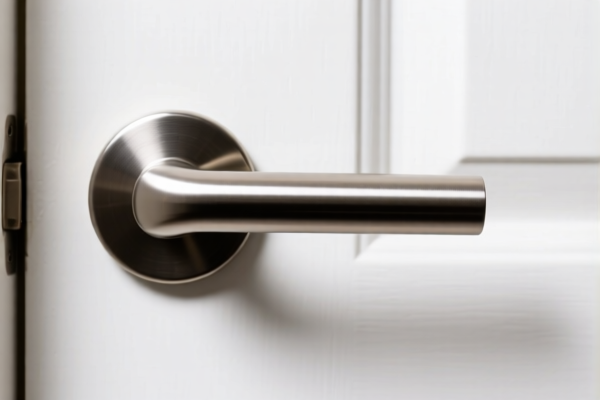
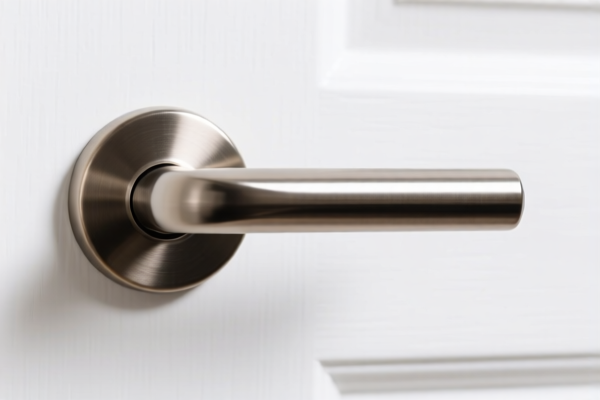
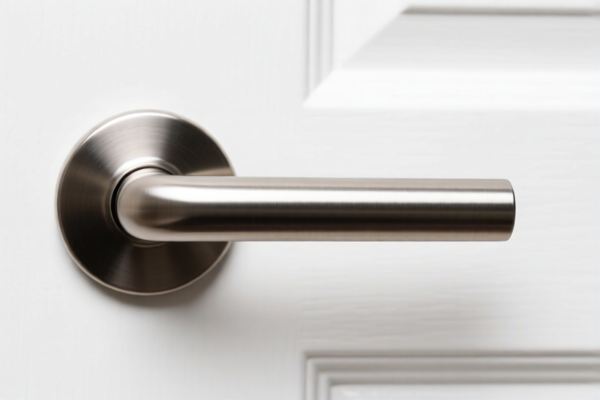
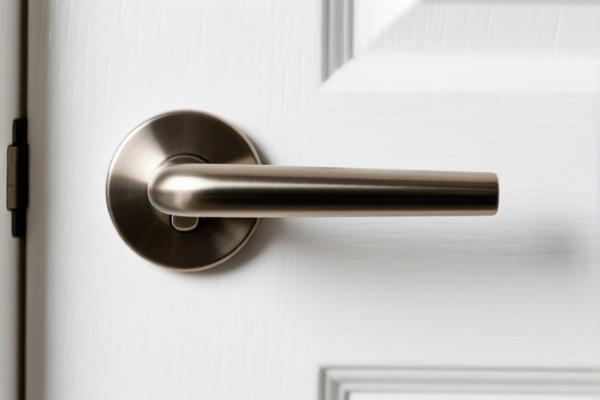
AI Analysis
🪵 Solid Wood Handle (实木把手)
🌐 HS Code Reference & Customs Clearance Guide | 2026 Latest Tariff Analysis | Professional Clearance Strategy
📌 Part I: Product Definition & Classification: Do You Really Understand "Solid Wood Handles"?
A Solid Wood Handle is a versatile component made entirely from natural wood, designed for gripping, pulling, or operating. In international trade, its classification hinges critically on its intended use and structural form. It is not a single HS code but falls into distinct categories based on whether it serves as a tool part, a furniture component, or a building material.
Key Classification Distinctions:
- Tool/Instrument Parts: If used on hammers, chisels, mops, or other hand tools → Classified under 4417.
- Furniture Parts: If used as drawer pulls, cabinet knobs, or chair handles → Classified under 9403.
- Building/Architectural Components: If used as structural grips for doors, windows, or architectural woodwork → Classified under 4418.
⚠️ Critical Note:
- Misclassifying a furniture handle as a tool part (or vice versa) can lead to significant duty discrepancies due to differing base tariffs.
- The term "Solid Wood" implies no veneer or composite core, but customs focus on primary function.
📦 Part II: HS Code Classification Details (2026 Latest Tariff Authority Comparison)
| HS Code | Product Description | Application Scenario | Key Identifier |
|---|---|---|---|
4417.00.80.10 |
Wooden articles; handles or tool handles | Tool components, hammer grips, mop handles | Tool-related |
9403.91.00.80 |
Parts of wooden furniture | Drawer pulls, cabinet knobs, chair handles | Furniture component |
4417.00.80.90 |
Wooden articles; parts of tools or implements | Generic tool parts, unspecified tool grips | Tool part (unspecified) |
9403.91.00.05 |
Parts of wooden furniture | Specific wooden furniture parts | Furniture part (specific) |
4418.99.91.95 |
Wooden builders' carpentry & joinery; other | Architectural grips, door handles, structural wood parts | Building/Architectural |
🔍 Key Insight:
- 9403 codes generally have 0% base tariff, while 4417 has 5.1% and 4418 has 3.2%.
- However, all categories are subject to the same 25% Section 301 Tariff and 10% IEEPA Tariff.
- The total tax burden varies only slightly due to the base rate difference.
💰 Part III: 2026 Latest Tariff Rate Breakdown (Including Surcharges & Policy Add-ons)
✅ Applicable Country: United States (US)
✅ Country of Origin: China (CN)
✅ Effective Date: From November 10, 2025 (for all subsequent imports)
🎯 1. Tool-Related Handles (4417.00.80.10 & 4417.00.80.90)
| Item | Detail |
|---|---|
| Base Tariff | 5.1% (ad valorem) |
| Section 301 Surcharge | +25.0% (USITC Footnote 9903.01.24) |
| IEEPA Surcharge | +10.0% (Against China/HK products, effective Nov 10, 2025) |
| Total Tax Rate | 40.1% |
| Tax Calculation | CIF Value × 40.1% |
| De Minimis Exemption | ❌ Not Eligible (deny_de_minimis) |
| Legal Path | USITC:4417.00.80.xx → FOOTNOTE:9903.01.24 → IEEPA:9903.01.25 |
📌 Explanation:
- The 25% Section 301 tariff applies to all wooden articles from China.
- The 10% IEEPA tariff is an additional penalty on Chinese goods.
- Total 40.1% is high compared to furniture parts, but slightly lower than non-tariff-free categories.
🎯 2. Furniture Parts (9403.91.00.80 & 9403.91.00.05)
| Item | Detail |
|---|---|
| Base Tariff | 0.0% (ad valorem) |
| Section 301 Surcharge | +25.0% (USITC Footnote 9903.01.24) |
| IEEPA Surcharge | +10.0% (Against China/HK products, effective Nov 10, 2025) |
| Total Tax Rate | 35.0% |
| Tax Calculation | CIF Value × 35.0% |
| De Minimis Exemption | ❌ Not Eligible (deny_de_minimis) |
| Legal Path | USITC:9403.91.00.xx → FOOTNOTE:9903.01.24 → IEEPA:9903.01.25 |
📌 Note:
- Zero base tariff makes this category the most cost-effective for wooden furniture handles.
- Even with 25% + 10% surcharges, the total (35%) is 5.1% lower than tool-related handles.
- Crucial: You must prove the item is strictly for furniture (e.g., drawers, cabinets). If used in tools, it will be reclassified to 4417.
🎯 3. Building/Architectural Components (4418.99.91.95)
| Item | Detail |
|---|---|
| Base Tariff | 3.2% (ad valorem) |
| Section 301 Surcharge | +25.0% (USITC Footnote 9903.01.24) |
| IEEPA Surcharge | +10.0% (Against China/HK products, effective Nov 10, 2025) |
| Total Tax Rate | 38.2% |
| Tax Calculation | CIF Value × 38.2% |
| De Minimis Exemption | ❌ Not Eligible (deny_de_minimis) |
| Legal Path | USITC:4418.99.91.xx → FOOTNOTE:9903.01.24 → IEEPA:9903.01.25 |
📌 Explanation:
- This category applies if the handle is part of doors, windows, or structural woodwork.
- Total rate (38.2%) is between tool parts (40.1%) and furniture parts (35.0%).
- Documentation must show construction use (e.g., attached to a door jamb).
🛠️ Part IV: Customs Clearance Practical Advice (Battle-Tested Pitfall Avoidance)
✅ 1. Required Documentation Checklist (Non-Negotiable)
| Document | Mandatory? | Description |
|---|---|---|
| ✅ Product Specification Sheet | ✔️ | Material: 100% Solid Wood; Dimensions; Weight; Finish |
| ✅ Intended Use Declaration | ✔️ | Explicitly state: "Handle for Wooden Furniture" or "Handle for Hammers" |
| ✅ Product Photos | ✔️ | Clear images showing the handle alone, and if possible, attached to the final product |
| ✅ Commercial Invoice | ✔️ | Description: "Solid Wood Handle for Furniture/Tools" (Be Specific!) |
| ✅ Packing List | ✔️ | Confirm packaging does not mix unrelated items |
| ✅ Certificate of Origin | ✔️ | Required for tariff verification |
✅ 2. Declaration Tips (Key Mantra)
🔥 “Function Defines Code: Furniture = 9403, Tools = 4417, Build = 4418!”
| Scenario | Correct HS Code | Wrong Declaration | Consequence |
|---|---|---|---|
| Drawer Pulls | 9403.91.00.80 / .05 |
"Wooden Handle" (Vague) | Risk of reclassification to 4417 (Higher Tax) |
| Hammer Grips | 4417.00.80.10 / .90 |
"Furniture Part" | Rejection or Penalty |
| Door Handles | 4418.99.91.95 |
"Tool Handle" | Misdeclaration |
| Mixed Shipment | Split by Use | One HS Code for All | High Audit Risk |
📌 Critical Rule:
- Never use generic terms like "Wooden Handle" in the commercial invoice.
- Use precise language:
- For furniture: "Solid Wood Cabinet Handle, For Wooden Furniture"
- For tools: "Solid Wood Tool Handle, For Hand Tools"
- For building: "Solid Wood Architectural Door Handle"
✅ 3. Special Scenarios & Handling
| Scenario | Handling Advice |
|---|---|
| OEM Custom Handles | Provide design drawings showing attachment points (e.g., screw holes for furniture vs. tang for tools). |
| Handles with Metal Hardware | If metal pins/screws are pre-installed, the primary character is still wood. Declare as wood article. |
| Part of a Set | If sold with furniture, declare as 9403. If sold with tools, declare as 4417. |
| Sample vs. Bulk | Samples follow the same tariff rules. No exemption for de minimis (below $800) if classified under these codes. |
🌍 Part V: Global Market Comparison (2026 Latest)
| Country/Region | Recommended HS Code | Estimated Total Tax | Certification Requirements | Notes |
|---|---|---|---|---|
| 🇺🇸 USA | 9403.91.00.05 / .80 |
35.0% | None for basic wood | Lowest tax among US options |
| 🇺🇸 USA | 4417.00.80.10 / .90 |
40.1% | None for basic wood | Higher tax for tool handles |
| 🇨🇳 China | 9403.91.00.05 / .80 |
0% - 5% | None | Import duty often 0-5% |
| 🇪🇺 EU | 9403.90 |
~3.5% | FSC/PEFC (Sustainability) | Carbon footprint documentation recommended |
| 🇦🇺 Australia | 9403.90 |
~5% | None | Standard MFN rates apply |
📌 Conclusion:
- The USA imposes heavy surcharges on all wooden articles from China, regardless of base tariff.
- Furniture parts (9403) are the most tax-efficient for export to the US (35% vs. 40.1% for tools).
- EU and Australia offer more competitive rates but may require sustainability certifications (FSC/PEFC).
📌 Part VI: Common Mistakes & Pitfall Avoidance (Lessons Learned)
❌ Mistake 1: Declaring all wooden handles under one HS code regardless of use.
👉 Consequence: Customs may reclassify based on inspection, leading to underpayment penalties or delayed clearance.
❌ Mistake 2: Omitting "Intended Use" in the invoice.
👉 Consequence: Customs default to the highest duty rate or request additional documents, causing delays.
❌ Mistake 3: Assuming "Wooden Handle" qualifies for de minimis ($800).
👉 Consequence: ❌ False. These HS codes are explicitly excluded from de minimis exemptions for Chinese goods. Every shipment is dutiable.
❌ Mistake 4: Confusing "Solid Wood" with "Wood Veneer".
👉 Consequence: If veneer is detected, classification may change, affecting duty rates and compliance.
✅ Correct Action:
"Solid Wood Cabinet Handle, Part No. 123, 100% Pine, For Wooden Drawers, Model XYZ"
🎯 Part VII: Conclusion: Precision in Classification, Savings in Cost!
🎯 Remember the Mantra:
🔹 "Furniture = 35%, Tools = 40.1%, Building = 38.2%. Always Prove Use!"
🔹 "No De Minimis for Wood from China. Every Dollar is Taxed!"
📌 Pro Tip:
- If your handles are exported to non-US markets (e.g., EU, Canada), tariffs are significantly lower (0-5%).
- For US-bound goods, consider pre-classification rulings if unsure about use.
- Always maintain photos and specs linking the handle to its final product (furniture vs. tool).
📣 Immediate Action:
📞 Consult a licensed customs broker + Provide product photos + Specify exact use on invoice
🚀 Ensure accurate classification to avoid 5.1% unnecessary tax differences and compliance risks!
✨ Professional Customs Clearance Starts with Precise Classification!
💼 Every cent of tax saved is a cent of profit earned!
Customer Reviews
About HS Code Classification
The Harmonized System (HS) is an internationally standardized nomenclature developed by the World Customs Organization (WCO) to classify traded products. Over 200 countries use the HS system as the basis for customs tariffs, trade statistics, and import/export regulations.
Each HS code follows a hierarchical structure:
- Chapter (2 digits) — Broad category of goods (e.g., Chapter 84: Machinery and Mechanical Appliances)
- Heading (4 digits) — More specific grouping within the chapter
- Subheading (6 digits) — Internationally standardized breakdown, used by all WCO member countries
- National subdivisions (8-10 digits) — Country-specific extensions for further classification, such as US HTSUS 10-digit codes
Correct HS code classification is essential for smooth customs clearance, accurate duty payment, and compliance with trade regulations. Misclassification can lead to customs delays, overpayment of duties, or penalties.
When importing from CN to US, the applicable tariff rates may include:
- Most-Favored-Nation (MFN) rate — The standard duty rate applied to WTO members
- General rate — Applied to countries without trade agreements
- Trade remedy duties — Additional tariffs such as Section 301 (anti-dumping), Section 232 (national security), or countervailing duties
The information provided on this page is for reference purposes only. For official classification, please consult with your local customs authority or a licensed customs broker.