solution polymerized styrene butadiene rubber sbr bundle
CN → US| HS Code | Tariff Rate | Origin | Destination | Doc |
|---|---|---|---|---|
| 4002190016 | 35.0% | CN | US | Official Doc |
| 4002190015 | 35.0% | CN | US | Official Doc |
Product Images
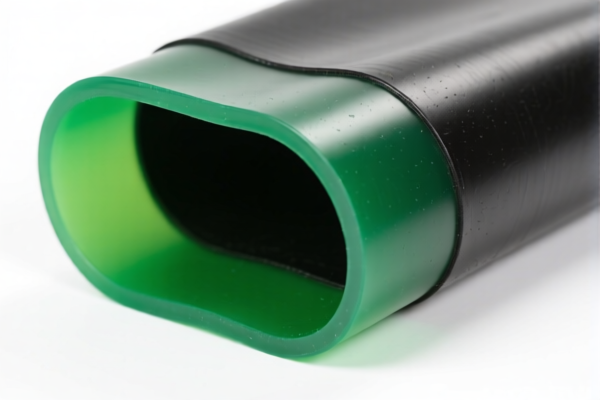
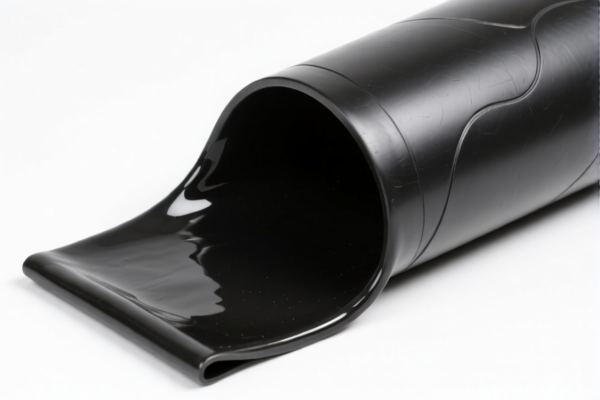
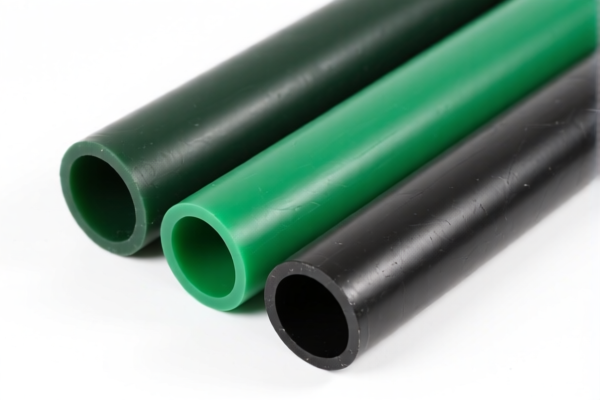
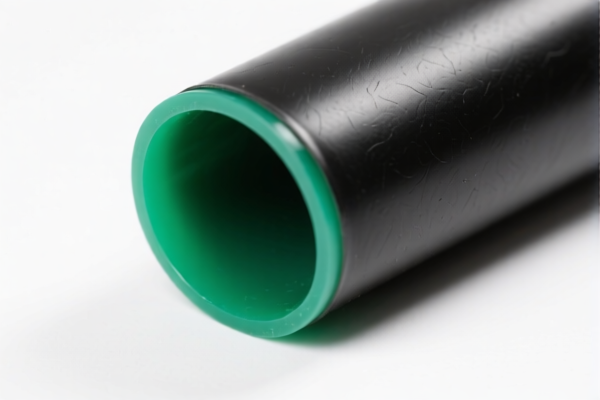
AI Analysis
🧪 Solution Polymerized Styrene-Butadiene Rubber (S-SBR) Bales
🌐 HS Code Reference & Customs Clearance Guide | 2026 Latest Tariff Analysis | Professional Entry Strategy
📌 Part 1: Product Definition & Classification: Do You Really Understand "S-SBR"?
Styrene-Butadiene Rubber (SBR) is the most widely used synthetic rubber in the world, essential for tire treads, conveyor belts, and footwear. However, not all SBR is created equal in customs classification. The key distinction lies in the polymerization process.
Solution Polymerized SBR (S-SBR):
Produced by dissolving monomers in a solvent and using a catalyst. It offers superior control over molecular structure, leading to better wear resistance, heat dissipation, and low rolling resistance (ideal for "green tires").
👉 Packaging Form: Typically supplied in bales (compressed blocks wrapped in plastic).
Emulsion Polymerized SBR (E-SBR):
Produced in water with an emulsifier. It is generally cheaper and used for general-purpose applications.
👉 Packaging Form: Also typically supplied in bales.
⚠️ Critical Distinction Point:
- If the product is S-SBR (Solution Polymerized) → Must use HS Code 4002.19.00.16
- If the product is E-SBR (Emulsion Polymerized) → Must use HS Code 4002.19.00.15
Misclassification here can lead to severe penalty due to the 25% tariff difference!
📦 Part 2: HS Code Classification Details (Based on Provided Data)
| HS Code | Product Description | Applicable Scenario | Polymerization Type |
|---|---|---|---|
4002.19.00.16 |
Styrene-butadiene rubber produced by solution polymerization (S-SBR) in bales | High-performance tires, automotive parts, premium footwear | ✅ Solution |
4002.19.00.15 |
Styrene-butadiene rubber produced by emulsion polymerization (E-SBR) in bales | General purpose rubber goods, industrial belts, lower-cost tires | ✅ Emulsion |
🔍 Key Note:
- Both codes fall under Heading 4002: Synthetic rubber and factice derived from oils, in primary forms or in plates, sheets or strip.
- Sub-heading 4002.19: Other (i.e., not latex, not cis-1,4-polyisoprene, etc.)
- The specific 8-digit codes distinguish between Solution vs. Emulsion processes.
💰 Part 3: 2026 Tariff Rate Breakdown (Detailed Analysis)
✅ Jurisdiction: United States (US)
✅ Origin: China (CN) (Implied by the 25% additional tariff context)
✅ Status: Current as per provided data
🎯 1. 4002.19.00.16 — S-SBR in Bales (Solution Polymerized)
| Item | Content |
|---|---|
| Base Tariff | 0.0% (ad valorem) |
| Additional Tariff (Section 301) | 0.0% |
| Total Effective Rate | 0.0% |
| Tax Detail | 基础关税: 0.0%, 加征关税: 0.0% |
| Legal Basis | HTSUS 4002.19.00.16 |
📌 Explanation:
- This product is currently exempt from the Section 301 additional tariffs.
- Total Duty: 0%. This is a highly favorable classification for importers.
🎯 2. 4002.19.00.15 — E-SBR in Bales (Emulsion Polymerized)
| Item | Content |
|---|---|
| Base Tariff | 0.0% (ad valorem) |
| Additional Tariff (Section 301) | 25.0% |
| Total Effective Rate | 25.0% |
| Tax Detail | 基础关税: 0.0%, 加征关税: 25.0% |
| Legal Basis | HTSUS 4002.19.00.15 + Section 301 Footnote |
📌 Explanation:
- While the base tariff is 0%, the Section 301 additional tariff of 25% applies to Emulsion SBR from China.
- Total Duty: 25%. This significantly increases landed cost.
📊 Comparative Tax Impact Table
| HS Code | Polymer Type | Base Tariff | Section 301 Add-on | Total Duty |
|---|---|---|---|---|
4002.19.00.16 |
Solution (S-SBR) | 0.0% | 0.0% | 0.0% |
4002.19.00.15 |
Emulsion (E-SBR) | 0.0% | 25.0% | 25.0% |
💡 Cost Implication:
For a $100,000 shipment:
- S-SBR (16): Duty = $0
- E-SBR (15): Duty = $25,000
The choice of HS code (based on actual production process) directly impacts $25,000 in duties!
🛠️ Part 4: Customs Clearance Practical Advice (Risk Avoidance Guide)
✅ 1. Mandatory Documentation
| Document | Required | Purpose |
|---|---|---|
| Technical Data Sheet (TDS) | ✔️ | Must explicitly state "Solution Polymerization" or "Emulsion Polymerization" |
| Certificate of Analysis (COA) | ✔️ | Confirm styrene content ≤50% (as per heading 4002.19) |
| Production Process Statement | ✔️ | Supplier must confirm the chemical synthesis method |
| Commercial Invoice | ✔️ | Clearly describe product as "S-SBR" or "E-SBR" |
| Bill of Lading | ✔️ | Ensure packaging is listed as "Bales" |
| US Customs Entry Summary | ✔️ | Accurate HS Code selection based on TDS |
⚠️ Critical: The invoice description MUST match the HS code.
- For4002.19.00.16: Describe as "Styrene-Butadiene Rubber (S-SBR), Solution Polymerized, in Bales"
- For4002.19.00.15: Describe as "Styrene-Butadiene Rubber (E-SBR), Emulsion Polymerized, in Bales"
✅ 2. Classification Strategy & Common Pitfalls
| Scenario | Correct Action | Incorrect Action | Consequence |
|---|---|---|---|
| Supplier says "SBR" | Demand technical proof of polymerization type | Assume E-SBR (cheaper to produce) | Risk of misclassification: 0% vs 25% |
| Mixed shipments (S-SBR + E-SBR) | Split declaration | Combine into one line item | Penalty for undervaluation/misclassification |
| Styrene content >50% | Re-classify under different subheading | Force fit into 4002.19 | Wrong HS code, potential fraud |
| Product is Latex | Use HS Code for SBR Latex (e.g., 4002.11/19.31) | Use "Bale" code | Wrong form of goods |
🔥 Golden Rule:
"Process Determines Code!"
- Solution Polymerization →4002.19.00.16→ 0% Duty
- Emulsion Polymerization →4002.19.00.15→ 25% Duty
Do not guess. Obtain the technical document.
✅ 3. Special Handling Tips
| Situation | Advice |
|---|---|
| OEM Custom SBR | Provide client-specific formulation + process notes to justify S-SBR |
| Blended Rubber | If mixed with natural rubber, re-evaluate under Chapter 40 headnote rules |
| Audit Risk | CBP frequently audits rubber imports. Keep supplier's process declaration for 5 years |
| Voluntary Exclusion | Check if E-SBR is on the Section 301 Exclusion List (rare for basic SBR, but verify) |
🌍 Part 5: Global Market Comparison (Contextual)
| Market | HS Code | Duty Rate | Notes |
|---|---|---|---|
| 🇺🇸 USA | 4002.19.00.16 |
0.0% | No additional tariffs on S-SBR |
| 🇺🇸 USA | 4002.19.00.15 |
25.0% | Section 301 applies |
| 🇨🇳 China | 4002.19 | ~5-10% | Varies by specific subheading |
| 🇪🇺 EU | 4002.19 | ~0-6.5% | Depends on origin & CEPA agreements |
| 🇯🇵 Japan | 4002.19 | ~0-5% | JEEPA/EPA may apply |
📌 Conclusion:
- The US market has a massive tariff disparity between S-SBR and E-SBR.
- Importers must verify the production process with their supplier.
- If you can source or formulate S-SBR, you save 25% on duties.
📌 Part 6: Common Errors & Pitfalls (Lessons Learned)
❌ Error 1: Assuming all SBR is the same
👉 Consequence: Paying 25% when 0% is applicable, or risking audit if misdeclared.
❌ Error 2: Using "SBR" in invoice without specifying polymerization type
👉 Consequence: Customs may reject entry or assign the higher duty rate (25%) by default.
❌ Error 3: Confusing "Bales" with "Granules" or "Liquid"
👉 Consequence: Different HS codes apply for primary forms other than bales/sheets/strip.
❌ Error 4: Not updating supplier contracts with technical specs
👉 Consequence: Supplier ships E-SBR, but invoice claims S-SBR → Fraud/Penalty.
✅ Correct Practice:
"S-SBR, Solution Polymerized, <50% Styrene, in Bales, TDS Attached"
HS Code:4002.19.00.16
🎯 Part 7: Conclusion: Precision Saves Money!
🎯 Remember This Mantra:
🔹 "Process is King! Solution = 0%, Emulsion = 25%!"
🔹 "Check the TDS! Don't Guess! Save $25k per $100k!"
🔹 "Bales Only! Form Matters! S-SBR Wins!"
📌 Pro Tip:
If your supplier claims "S-SBR" but charges the price of "E-SBR", verify. Low price might indicate emulsion product. If you declare S-SBR (16) but it's actually E-SBR (15), you face civil penalties for misdeclaration.
📣 Immediate Action Required:
📞 Contact Supplier: Request Certificate of Analysis and Process Description.
📄 Verify: Confirm "Solution Polymerization" for4002.19.00.16.
🚀 File Entry: Use correct HS Code to avoid 25% duty shock.
✨ Professional Customs Entry Starts with Accurate Classification!
💼 Your Profit Margin Depends on This 25% Difference!
Customer Reviews
About HS Code Classification
The Harmonized System (HS) is an internationally standardized nomenclature developed by the World Customs Organization (WCO) to classify traded products. Over 200 countries use the HS system as the basis for customs tariffs, trade statistics, and import/export regulations.
Each HS code follows a hierarchical structure:
- Chapter (2 digits) — Broad category of goods (e.g., Chapter 84: Machinery and Mechanical Appliances)
- Heading (4 digits) — More specific grouping within the chapter
- Subheading (6 digits) — Internationally standardized breakdown, used by all WCO member countries
- National subdivisions (8-10 digits) — Country-specific extensions for further classification, such as US HTSUS 10-digit codes
Correct HS code classification is essential for smooth customs clearance, accurate duty payment, and compliance with trade regulations. Misclassification can lead to customs delays, overpayment of duties, or penalties.
When importing from CN to US, the applicable tariff rates may include:
- Most-Favored-Nation (MFN) rate — The standard duty rate applied to WTO members
- General rate — Applied to countries without trade agreements
- Trade remedy duties — Additional tariffs such as Section 301 (anti-dumping), Section 232 (national security), or countervailing duties
The information provided on this page is for reference purposes only. For official classification, please consult with your local customs authority or a licensed customs broker.