sonic bowl
CN → USProduct Images
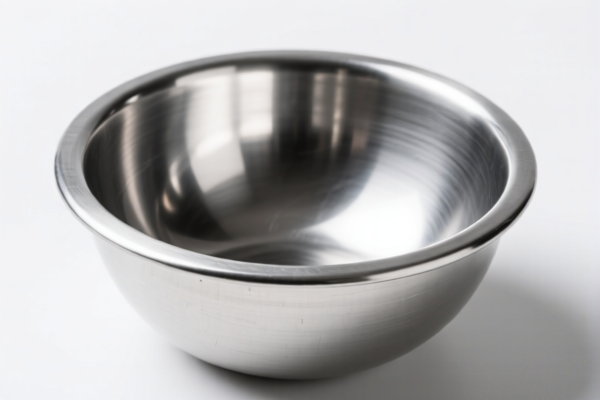
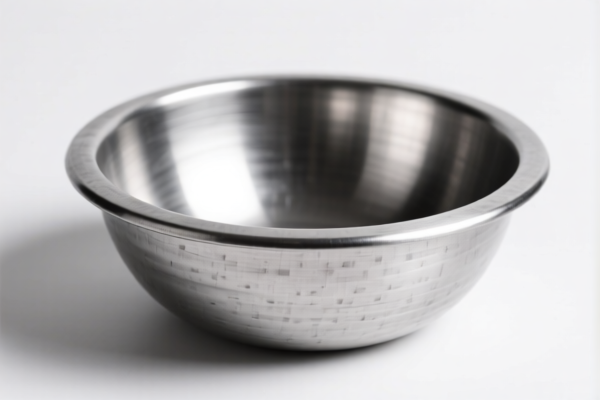
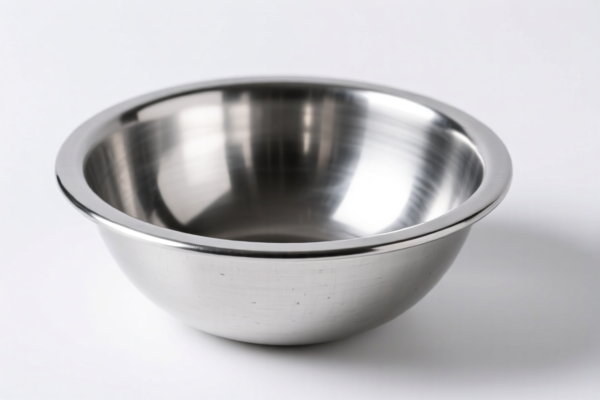
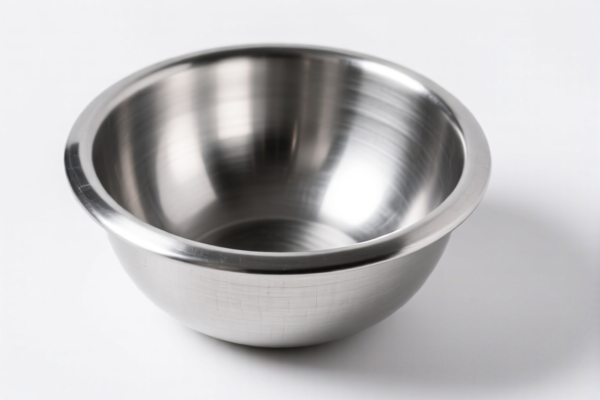
AI Analysis
🥣 Sonic Bowl (Sonicating Mixing/Dispensing Bowl)
🌐 HS Code Reference & Clearance Guide | 2026 Latest Tariff Analysis | Professional-Level Customs Strategy
📌 I. Product Definition & Classification: Do You Really Understand the “Sonic Bowl”?
A Sonic Bowl (also known as a sonication bath, ultrasonic mixing bowl, or acoustic mixing vessel) is a laboratory or industrial device that uses high-frequency sound waves (ultrasound) to mix, disperse, homogenize, or degas liquids. It is widely used in biotech, pharmaceuticals, nanotechnology, cosmetics, and chemical research.
In international trade, it is categorized based on its primary function and technical configuration:
Laboratory Ultrasonic Mixing Device:
- A self-contained unit with a transducer, power supply, and control panel, used for precise lab-scale mixing.
- Typically classified under 8543 (electrical machines and apparatus with individual functions) or 9027 (instruments and apparatus for physical/chemical analysis) if integrated with measurement capabilities.
Industrial Ultrasonic Processor/Equipment:
- Larger, high-power units used for industrial-scale emulsification, dispersion, or cell disruption.
- Often classified under 8438 (food/beverage processing machinery) if used in food/pharma, or 8543 if general-purpose.
⚠️ Key Distinction:
- If the device is a standalone ultrasonic mixer without integrated analytical instruments (e.g., spectrometers, chromatographs) → HS 8543.90.90.00 or 8543.70.80.00
- If it is part of a chemical analysis instrument (e.g., automated sample prep for chromatography) → HS 9027.80.00.00
- If it is a food processing mixer with ultrasonic features → HS 8438.90.00.00
📦 II. HS Code Classification Details (2026 Latest Tariff Authoritative Comparison)
| HS Code | Product Description | Application Scenario | Key Features |
|---|---|---|---|
8543.90.90.00 |
Electrical machines and apparatus with individual functions, not specified elsewhere | Standalone lab sonicator, ultrasonic cleaner/mixer, non-analytical | ✅ Ultrasonic transducer + control unit |
8543.70.80.00 |
Other electrical machines and apparatus with individual functions | Industrial ultrasonic homogenizer, large-scale mixer | ✅ High-power, industrial use |
9027.80.00.00 |
Instruments and apparatus for physical or chemical analysis (e.g., spectrometers, chromatographs) | Integrated sonication module within an analytical system | ✅ Part of analytical instrument |
8438.90.00.00 |
Machinery for the preparation of food or drink, not specified elsewhere | Food-grade ultrasonic mixer for emulsions, sauces, dairy | ✅ Food-contact materials, sanitary design |
9027.90.00.00 |
Parts and accessories for instruments and apparatus for physical/chemical analysis | Replacement transducers, probe tips, control boards | ✅ Spare parts for analytical instruments |
🔍 Important Reminder:
- Standalone sonic bowls (without analytical functions) must be classified under 8543, not 9027;
- If the device includes integrated sensors, displays, or software for data analysis, it may be reclassified under 9027;
- Food-grade sonic bowls must comply with FDA/USDA standards and be declared under 8438.
💰 III. 2026 Latest Tariff Rate Details (Including Additional Taxes & Policy Add-ons)
✅ Applicable Country: United States (US)
✅ Origin: China (CN)
✅ Effective Date: From November 10, 2025 (including subsequent imports)
🎯 1. 8543.90.90.00 —— Electrical Machines & Apparatus (Standalone Sonic Bowl)
| Item | Content |
|---|---|
| Base Rate | 0% (ad valorem) |
| USITC Additional Tax | +25% (from USITC Footnote 9903.88.01) |
| IEEPA Additional Tax | +10% (targeting China/HK products, from Nov 10, 2025) |
| Total Rate | 45% |
| Tax Calculation | CIF Value × 45% |
| De Minimis Eligibility | ❌ Not Eligible (deny_de_minimis) |
| Legal Basis Path | IEEPA:9903.01.25 → IEEPA:9903.01.24 → USITC:8543.90.90.00 → FOOTNOTE:9903.88.01 |
📌 Explanation:
- The 25% USITC tax is imposed under Section 301 of the U.S. Trade Act;
- The 10% IEEPA tax is an additional tariff under the International Emergency Economic Powers Act;
- Total 45%, representing extremely high tariff costs, requiring advance planning!
🎯 2. 8543.70.80.00 —— Industrial Ultrasonic Mixer
| Item | Content |
|---|---|
| Base Rate | 0% |
| USITC Additional Tax | +25% |
| IEEPA Additional Tax | +10% |
| Total Rate | 45% |
| Tax Calculation | CIF × 45% |
| De Minimis Eligibility | ❌ Not Eligible |
| Legal Basis Path | IEEPA:9901.25 → IEEPA:9903.01.24 → USITC:8543.70.80.00 → FOOTNOTE:9903.88.01 |
📌 Note:
- Same tax treatment as lab-grade sonic bowls;
- Industrial ultrasonic homogenizers, regardless of power output, fall under this category if standalone.
🎯 3. 9027.80.00.00 —— Analytical Instrument with Sonication Module
| Item | Content |
|---|---|
| Base Rate | 0% |
| USITC Additional Tax | +0% (Exempt) |
| IEEPA Additional Tax | +0% (Exempt) |
| Total Rate | 0% |
| Tax Calculation | N/A |
| De Minimis Eligibility | ✅ Eligible (if < $800) |
| Legal Basis Path | USITC:9027.80.00.00 (No footnote 9903.88.01 applies) |
📌 Advantage:
- If the sonic bowl is integral to an analytical instrument (e.g., automated sample prep for HPLC), it may qualify for 0% tariff;
- Requires proof of integration (e.g., technical manuals, system diagrams).
🎯 4. 8438.90.00.00 —— Food-Grade Ultrasonic Mixer
| Item | Content |
|---|---|
| Base Rate | 0% |
| USITC Additional Tax | +0% (Exempt) |
| IEEPA Additional Tax | +0% (Exempt) |
| Total Rate | 0% |
| Tax Calculation | N/A |
| De Minimis Eligibility | ✅ Eligible (if < $800) |
| Legal Basis Path | USITC:8438.90.00.00 (No footnote 9903.88.01 applies) |
📌 Advantage:
- Food-processing machinery is exempt from Section 301 and IEEPA tariffs;
- Must provide FDA compliance certificates and food-contact material declarations.
🛠️ IV. Clearance Practical Advice (Battlefield Pit-Avoidance Guide)
✅ 1. Required Documentation Checklist (None Missing)
| Document | Mandatory | Description |
|---|---|---|
| ✅ Product Specification Sheet | ✔️ | Includes power, frequency, volume, material, interface type |
| ✅ Circuit/Structure Diagram | ✔️ | To determine if it’s standalone or part of an analytical system |
| ✅ Product Photos (with Nameplate) | ✔️ | Clear display of model, brand, input/output parameters |
| ✅ Third-Party Test Reports | ✔️ | FDA, CE, RoHS, UL (if applicable) |
| ✅ Commercial Invoice | ✔️ | Clearly state “Ultrasonic Mixing Device” or “Sonicating Bowl” |
| ✅ Certificate of Origin (CO) | ✔️ | If not China-origin, apply for preferential rates |
| ✅ Packing List | ✔️ | Explain relationship between main unit and accessories |
✅ 2. Declaration Tips (Key Mantra)
🔥 “Standalone goes to 8543, Analytical goes to 9027, Food goes to 8438, Misdeclare pays 45%!”
| Scenario | Correct Declaration | Wrong Practice |
|---|---|---|
| Standalone lab sonic bowl | 8543.90.90.00 |
Misdeclare as “mixer” → 45% |
| Sonic bowl in analytical system | 9027.80.00.00 |
Misdeclare as standalone → 45% |
| Food-grade ultrasonic mixer | 8438.90.00.00 |
Misdeclare as industrial → 45% |
| Spare transducer/parts | 9027.90.00.00 |
Misdeclare as main unit → complex clearance |
✅ 3. Special Cases Handling
| Scenario | Handling Advice |
|---|---|
| OEM Custom Sonic Bowl | Provide customer order + design drawings to avoid “non-standard” classification |
| Sonic Bowl with Software/Data Analysis | Declare as 9027.80.00.00 if software is integral; otherwise 8543 |
| Sonic Bowl for Pharmaceutical R&D | If standalone, still 8543; if part of QC lab system, consider 9027 |
| Sonic Bowl for Military/Aerospace | May apply for “special use” declaration, but no tariff reduction; requires prior approval |
🌍 V. Global Major Market Clearance Comparison (2026 Latest)
| Country/Region | Recommended HS Code | Tariff | Certification Requirements | Notes |
|---|---|---|---|---|
| 🇺🇸 United States | 8543.90.90.00 |
45% (China-origin) | FDA + RoHS | 0% if analytical/food-grade |
| 🇨🇳 China | 8543.90.90.00 |
0% | CCC + RoHS | No additional tariffs |
| 🇪🇺 European Union | 8543.90.90.00 |
0% (if CE) | CE + ErP | No additional tariffs |
| 🇦🇺 Australia | 8543.90.90.00 |
0% | RCM | No additional tariffs |
| 🇯🇵 Japan | 8543.90.90.00 |
0% | PSE | No additional tariffs |
📌 Conclusion:
- The United States is the only major market imposing high additional tariffs on standalone sonic bowls;
- China-origin standalone sonic bowls face extremely high clearance costs in the US;
- Food-grade and analytical-integrated models enjoy 0% tariffs even in the US.
📌 VI. Common Errors & Pit-Avoidance Guide (Lessons Learned from Blood)
❌ Mistake 1: Declaring a standalone sonic bowl as “food mixer”
👉 Consequence: Customs rejects declaration → delays, fines, or return
❌ Mistake 2: Declaring an analytical-integrated sonic bowl as standalone
👉 Consequence: Tariff jumps from 0% to 45% → huge extra cost
❌ Mistake 3: Not providing circuit diagrams or technical manuals
👉 Consequence: Customs cannot determine classification → hold for inspection or return
❌ Mistake 4: Using “ultrasonic cleaner” as declaration name for a sonic bowl
👉 Consequence: Misclassification → 0% cleaner tariff vs. 45% mixer tariff → audit risk
✅ Correct Practice:
“Ultrasonic Mixing Device, 100W, 40kHz, 5L Capacity, Standalone Control Unit, Model XYZ, FDA Compliant, No Analytical Functions”
🎯 VII. Conclusion: Precise Declaration Saves Time, Money, and Headaches!
🎯 Remember the Mantra:
🔹 “Standalone = 8543 (45%), Analytical = 9027 (0%), Food = 8438 (0%), Mistake = Pay 45%!”
🔹 “HS Code decides your fate, 45% tariff gap, one wrong declaration, thousands lost!”
📌 Pro Tip:
- If your sonic bowl is originating from Vietnam, Mexico, Thailand, or Malaysia, you may apply for IEEPA Exemption, with tariffs as low as 0%~5%;
- Recommend applying for Advance Ruling (Pre-classification) to mitigate clearance risks.
📣 Take Action Now:
📞 Contact professional customs brokers + Provide product images + Apply for HS Code Advance Ruling
🚀 Ensure your sonic bowl clears smoothly, ships efficiently, and maximizes profits!
✨ Professional clearance starts with accurate classification!
💼 Every cent of your cost deserves precise calculation!
Customer Reviews
About HS Code Classification
The Harmonized System (HS) is an internationally standardized nomenclature developed by the World Customs Organization (WCO) to classify traded products. Over 200 countries use the HS system as the basis for customs tariffs, trade statistics, and import/export regulations.
Each HS code follows a hierarchical structure:
- Chapter (2 digits) — Broad category of goods (e.g., Chapter 84: Machinery and Mechanical Appliances)
- Heading (4 digits) — More specific grouping within the chapter
- Subheading (6 digits) — Internationally standardized breakdown, used by all WCO member countries
- National subdivisions (8-10 digits) — Country-specific extensions for further classification, such as US HTSUS 10-digit codes
Correct HS code classification is essential for smooth customs clearance, accurate duty payment, and compliance with trade regulations. Misclassification can lead to customs delays, overpayment of duties, or penalties.
When importing from CN to US, the applicable tariff rates may include:
- Most-Favored-Nation (MFN) rate — The standard duty rate applied to WTO members
- General rate — Applied to countries without trade agreements
- Trade remedy duties — Additional tariffs such as Section 301 (anti-dumping), Section 232 (national security), or countervailing duties
The information provided on this page is for reference purposes only. For official classification, please consult with your local customs authority or a licensed customs broker.