southern yellow pine wood
CN → US| HS Code | Tariff Rate | Origin | Destination | Doc |
|---|---|---|---|---|
| 4407110046 | 35.0% | CN | US | Official Doc |
| 4407110047 | 35.0% | CN | US | Official Doc |
Product Images
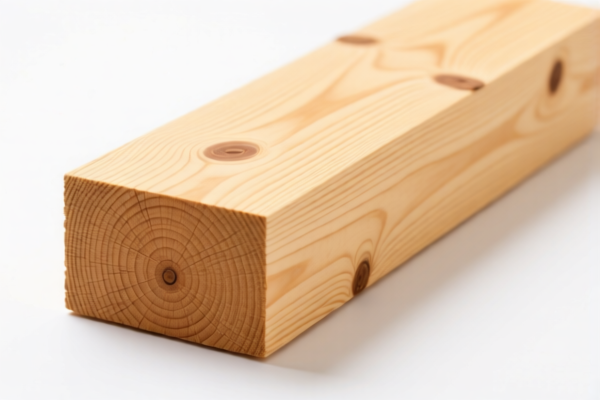
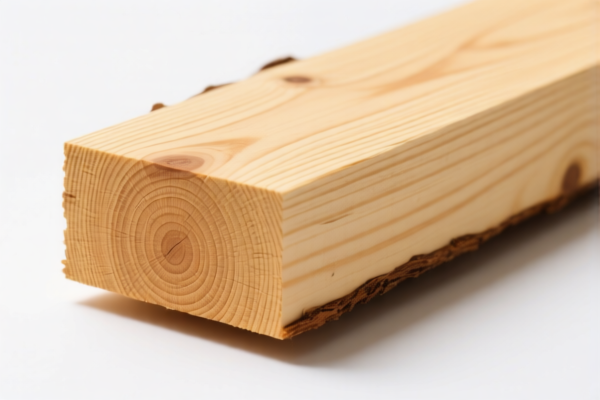
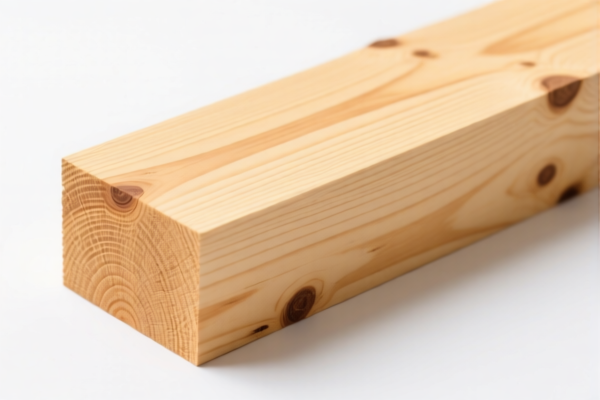
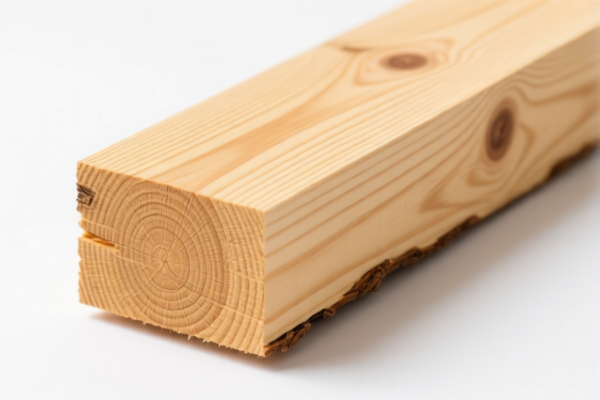
AI Analysis
🌲 Southern Yellow Pine Wood (Sawn Timber)
🌐 HS Code Reference & Customs Clearance Guide | 2026 Latest Tariff Analysis | Professional Strategy for US Importers
📌 I. Product Definition & Classification: Do You Know Your "Southern Yellow Pine"?
Southern Yellow Pine (SYP) is not a single species but a commercial grouping of several Pinus species native to the southeastern United States. In international trade, specifically under US Customs regulations, these woods are grouped for tariff purposes based on their treatment status and roughness.
The Two Critical Categories: 1. Rough SYP (Unplaned/Unfinished): Lumber that has been sawn but not planed, sanded, or otherwise finished. It retains the texture of the saw blade. 2. Other SYP (Planed/Sanded/Treated): Lumber that has been processed beyond simple sawing, or has undergone chemical treatment.
⚠️ Key Distinction Point:
- If the wood is "Rough" (not planed/sanded) → It falls under HS Code4407.11.00.46.
- If the wood is "Other" (planed, sanded, or treated) → It falls under HS Code4407.11.00.47.
- Note: Both categories apply to specific species: Loblolly (Pinus taeda), Longleaf (Pinus palustris), Pitch (Pinus rigida), Shortleaf (Pinus echinata), Slash (Pinus elliottii), and Virginia (Pinus virginiana).
📦 II. HS Code Classification Details (2026 Latest Tariff Authority)
| HS Code | Product Description | Specific Species Covered | Treatment/Finish Status |
|---|---|---|---|
4407.11.00.46 |
Wood of Pine (Pinus spp.), Sawn, Rough | Southern Yellow Pine (All listed species) | NOT TREATED & ROUGH (Not planed/sanded) |
4407.11.00.47 |
Wood of Pine (Pinus spp.), Sawn, Other | Southern Yellow Pine (All listed species) | NOT TREATED but NOT ROUGH (Planed, Sanded, etc.) |
🔍 Important Reminder:
- "Rough" in customs terminology means the surface has not been planed or sanded to a smooth finish. It is essentially raw lumber ready for further processing or construction.
- "Other" in this context usually implies the wood has been planed, sanded, or otherwise finished, making it suitable for direct use in furniture or interior applications, but still NOT chemically treated.
- Chemical Treatment: If the wood is pressure-treated (e.g., for outdoor use), it does NOT fall under these two codes. It would likely fall under a different subheading (often requiring different tax treatment). The codes provided here are strictly for "Not Treated" wood.
💰 III. 2026 Latest Tariff Rate Breakdown (Including Duties & Surcharges)
✅ Applicable Country: United States (US)
✅ Origin: China (CN) (Assuming import from China, as is common in trade data queries)
✅ Effective Date: Current applicable rates based on USITC and Section 301/IEEPA regulations.
🎯 1. 4407.11.00.46 —— Southern Yellow Pine, Rough, Not Treated
| Item | Detail |
|---|---|
| Base Tariff Rate | 0.0% (Ad Valorem) |
| Section 301 Surcharge (25%) | +25.0% |
| Total Tax Rate | 25.0% |
| Tax Calculation | CIF Value × 25% |
| De Minimis Eligibility | ❌ No (De Minimis value exemption does not apply to goods subject to Section 301 tariffs from China) |
| Legal Authority | USITC HTSUS Chapter 44, Section 301 Tariff List |
📌 Explanation:
- Base Rate 0%: Standard MFN (Most Favored Nation) duty for sawn wood is often low or zero.
- 25% Surcharge: This is the critical cost driver. Under US Trade Law Section 301, specific Chinese-origin wood products are subject to a 25% additional duty.
- Total Impact: For every $10,000 CIF value, you pay $2,500 in additional duties. This significantly impacts profitability.
🎯 2. 4407.11.00.47 —— Southern Yellow Pine, Other (Planed/Sanded), Not Treated
| Item | Detail |
|---|---|
| Base Tariff Rate | 0.0% (Ad Valorem) |
| Section 301 Surcharge (25%) | +0.0% (Exempt) |
| Total Tax Rate | 0.0% |
| Tax Calculation | $0 |
| De Minimis Eligibility | ✅ Yes (Potentially, if under $800, but Section 301 status must be verified) |
| Legal Authority | USITC HTSUS Chapter 44 |
📌 Explanation:
- Base Rate 0%: Standard duty is zero.
- No Surcharge: Certain processed wood products or specific sub-categories may be excluded from the 25% Section 301 surcharge. Crucially, code4407.11.00.47shows a total tax of 0.0%.
- Cost Advantage: This code offers a 25% cost saving compared to the "Rough" code.
- Verification Required: Always verify with a customs broker that the specific product (planed/sanded SYP) qualifies for this exemption, as tariff lists can change.
🛠️ IV. Customs Clearance Practical Advice (Avoid Pitfalls)
✅ 1. Preparation Checklist (Essential Documents)
| Document | Required? | Description |
|---|---|---|
| ✅ Commercial Invoice | ✔️ | Must clearly state: "Southern Yellow Pine," species (e.g., Pinus Taeda), dimensions, quantity, and HS Code. |
| ✅ Packing List | ✔️ | Detail weight, volume, and packaging type. |
| ✅ Phytosanitary Certificate | ✔️ | Mandatory for wood products. Issued by the exporting country's agricultural authority to prove the wood is pest-free. |
| ✅ Fumigation Certificate | ✔️ | Often required alongside phytosanitary cert to prove treatment against insects. |
| ✅ Bill of Lading | ✔️ | Proof of shipment. |
| ✅ ISPM 15 Marking Proof | ✔️ | Ensure wooden pallets/crates have the official ISPM 15 stamp. Loose wood may require additional proof. |
✅ 2. Classification Strategy (Key Tips)
🔥 “Rough = 25% Duty; Planed = 0% Duty (Verify!)”
| Scenario | Correct HS Code | Expected Tax | Risk of Misclassification |
|---|---|---|---|
| Raw, unplaned lumber | 4407.11.00.46 |
25% | Low risk if correctly described as "Rough." |
| Planed/Sanded lumber | 4407.11.00.47 |
0% | High Risk if misdeclared as "Rough" (you overpay) or if actually "Treated" (you evade duty). |
| Pressure-Treated Wood | NOT these codes | Varies (Usually higher) | Critical Error: Do not use these codes. Treated wood has different regulatory requirements and potentially different duty rates. |
✅ 3. Special Considerations
| Situation | Recommendation |
|---|---|
| Mixed Shipments | If a container has both rough and planed wood, separate the HS Codes on the invoice and packing list. Do not lump them together. |
| Origin Proof | Ensure the certificate of origin clearly states the species as "Southern Yellow Pine" or lists the specific Pinus species (Taeda, Palustris, etc.) to qualify for the correct subheading. |
| Fumigation Timing | Arrange fumfumigation_ before shipment. Wood with pests will be rejected, destroyed, or re-exported at your expense. |
| Pre-Ruling | For large, regular shipments, consider applying for a US Customs Border Protection (CBP) Pre-Ruling to confirm the HS Code and duty rate. This provides legal certainty. |
🌍 V. Global Market Comparison (2026 Latest)
| Country/Region | Recommended HS Code | Duty Rate (from China) | Certification | Notes |
|---|---|---|---|---|
| 🇺🇸 USA | 4407.11.00.46 (Rough) |
25% | Phytosanitary + ISPM 15 | High duty. Consider sourcing from non-China origins (e.g., Vietnam, Malaysia) for 0% duty. |
| 🇺🇸 USA | 4407.11.00.47 (Planed) |
0% | Phytosanitary + ISPM 15 | Low duty. Verify exemption status with broker. |
| 🇨🇳 China | 4407.11.00 |
5-10% | N/A | Different tariff structure. |
| 🇪🇺 EU | 4407.10 |
0-20% | FLEGT/EUTR Compliance | EU has strict timber regulations (EUTR). |
| 🇯🇵 Japan | 4407.10 |
5% | Phytosanitary | Generally lower duties for processed wood. |
📌 Conclusion:
- USA is the most challenging market for Chinese-origin SYP due to the 25% Section 301 tariff on "Rough" wood.
- Strategy: If possible, source Southern Yellow Pine from non-China countries (e.g., Southeast Asia) to avoid the 25% surcharge entirely.
- Processing Advantage: If the wood can be planed/sanded in China before export,4407.11.00.47may offer a 0% duty advantage, but verify this exemption is still active.
📌 VI. Common Mistakes & Pitfalls (Lessons Learned)
❌ Mistake 1: Declaring "Planed" wood as "Rough" to avoid scrutiny, then being caught.
👉 Consequence: Misclassification penalties, back duties, and potential fraud investigations.
❌ Mistake 2: Using "Treated" wood under these codes.
👉 Consequence: Customs will reject the entry. Treated wood often requires different reporting and may be subject to different environmental regulations.
❌ Mistake 3: Ignoring the Phytosanitary Certificate.
👉 Consequence: The shipment will be held at the port, leading to demurrage charges and potential destruction.
❌ Mistake 4: Assuming all "Pine" is the same.
👉 Consequence: Incorrect species identification can lead to wrong HS code and incorrect duty assessment.
✅ Correct Approach:
"Southern Yellow Pine (Pinus Taeda), Sawn, Planed, Not Treated, Quantity: 10,000 BF, Origin: China, HS Code: 4407.11.00.47, Attached: Phytosanitary Cert."
🎯 VII. Conclusion: Professional Clearance, Cost Savings, Efficiency!
🎯 Remember the Mantra:
🔹 "Rough Wood = 25% Duty (Expensive!); Planed Wood = 0% Duty (Check Exemption!); Treated Wood = Different Code!"
🔹 "Phytosanitary Cert is King. No Cert, No Entry."
🔹 "HS Code Determines Your Cost. Wrong Code, Wrong Cost."
📌 Pro Tip:
If your Southern Yellow Pine is sourced from Vietnam, Malaysia, or other non-China origins, the Section 301 25% surcharge does not apply. This can save you $2,500 per $10,000 CIF value. Always evaluate your supply chain for tariff optimization.
📣 Immediate Action:
📞 Contact a Licensed Customs Broker
📄 Prepare Phytosanitary Certificate
🔍 Verify HS Code with CBP if unsure
🚀 Optimize your supply chain to avoid 25% duty!
✨ Professional Clearance Starts with Accurate Classification!
💼 Every Dollar Saved on Duty is Pure Profit!
Customer Reviews
About HS Code Classification
The Harmonized System (HS) is an internationally standardized nomenclature developed by the World Customs Organization (WCO) to classify traded products. Over 200 countries use the HS system as the basis for customs tariffs, trade statistics, and import/export regulations.
Each HS code follows a hierarchical structure:
- Chapter (2 digits) — Broad category of goods (e.g., Chapter 84: Machinery and Mechanical Appliances)
- Heading (4 digits) — More specific grouping within the chapter
- Subheading (6 digits) — Internationally standardized breakdown, used by all WCO member countries
- National subdivisions (8-10 digits) — Country-specific extensions for further classification, such as US HTSUS 10-digit codes
Correct HS code classification is essential for smooth customs clearance, accurate duty payment, and compliance with trade regulations. Misclassification can lead to customs delays, overpayment of duties, or penalties.
When importing from CN to US, the applicable tariff rates may include:
- Most-Favored-Nation (MFN) rate — The standard duty rate applied to WTO members
- General rate — Applied to countries without trade agreements
- Trade remedy duties — Additional tariffs such as Section 301 (anti-dumping), Section 232 (national security), or countervailing duties
The information provided on this page is for reference purposes only. For official classification, please consult with your local customs authority or a licensed customs broker.