soybean specific herbicide
CN → US| HS Code | Tariff Rate | Origin | Destination | Doc |
|---|---|---|---|---|
| 2930201000 | 41.5% | CN | US | Official Doc |
| 3808935040 | 40.0% | CN | US | Official Doc |
| 2930209010 | 38.7% | CN | US | Official Doc |
| 3808931500 | 41.5% | CN | US | Official Doc |
| 3808931500 | 41.5% | CN | US | Official Doc |
Product Images
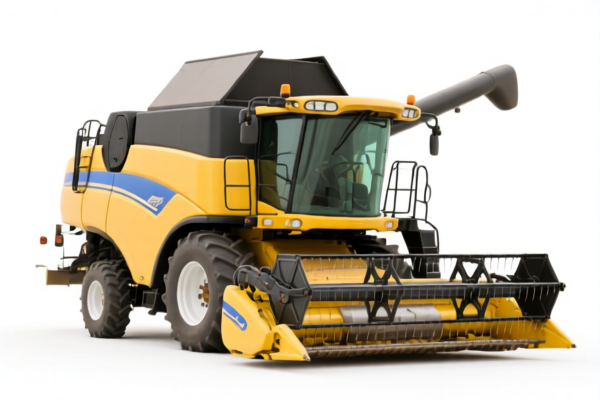
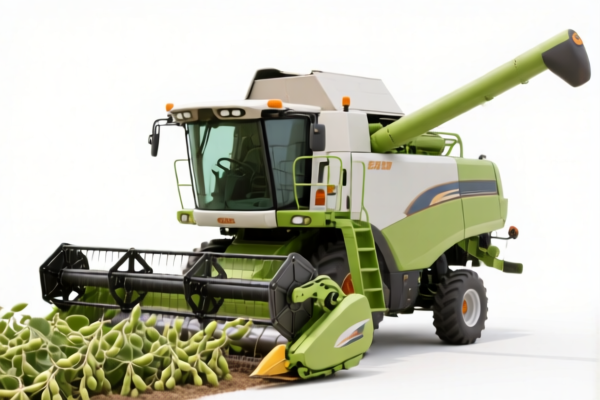
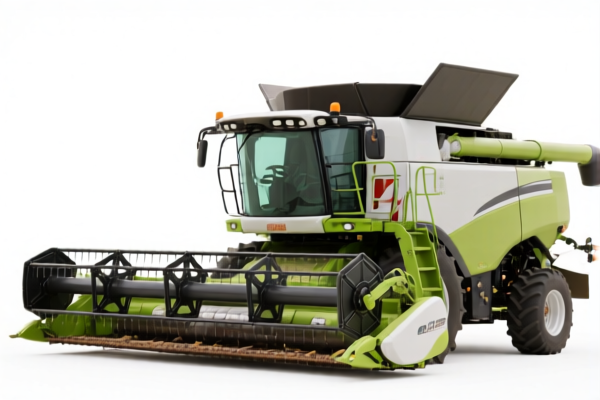

AI Analysis
🌱 Soybean Specific Herbicide: HS Code Classification & Customs Clearance Guide (2026 Update)
🌐 HS Code Reference & Customs Strategy | 2026 Latest Tariff Analysis | Professional Clearance Protocol
📌 I. Product Definition & Classification: What Exactly is a "Soybean Specific Herbicide"?
A Soybean Specific Herbicide is a specialized agrochemical formulation designed to control weeds in soybean fields while remaining safe for the soybean crop. In international trade, these are generally classified as pesticides, specifically herbicicides.
Depending on the active ingredient’s chemical composition, they fall into two primary categories: 1. Organic Sulfur Compounds: If the active ingredient is a specific organic sulfur compound (e.g., certain sulfonylureas or thiocarbamates), it is classified under Chapter 29 (Organic Chemicals). 2. Miscellaneous Herbicide Preparations: If the active ingredient does not fall under specific organic chemical headings (or is a mixture/preparation containing other active ingredients), it is classified under Chapter 38 (Miscellaneous Chemical Products).
⚠️ Key Distinction Point:
- If the product is a pure chemical entity or defined by its specific organic sulfur structure → Chapter 29 (e.g.,2930.20...)
- If the product is a formulated mixture, preparation, or contains aromatic/modified aromatic agents not specified in Ch. 29 → Chapter 38 (e.g.,3808.93...)
📦 II. HS Code Classification Details (2026 Latest Tariff Authority Comparison)
| HS Code | Product Description | Applicable Scenario | Chemical Basis |
|---|---|---|---|
2930.20.10.00 |
Soybean Herbicide, Organic Sulfur Compound Pesticide | Pure organic sulfur active ingredients (e.g., specific thiocarbamates) | ✅ Organic Sulfur |
3808.93.50.40 |
Soybean Herbicide, Other Herbicide Ingredients | Formulated mixtures, other active herbicide components not in Ch. 29 | ✅ Other Herbicides |
2930.20.90.10 |
Soybean Herbicide, Organic Sulfur Compound Pesticide (Other) | Other organic sulfur compounds not specifically listed in 2930.20.10 | ✅ Organic Sulfur |
3808.93.15.00 |
Soybean Herbicide, Containing Aromatic/Modified Aromatic Agents | Formulations with aromatic-based active ingredients | ✅ Aromatic Agents |
3808.93.15.00 |
Corn-Specific Herbicide, Other Herbicide Ingredients | Note: Included in dataset, likely similar formulation class | ✅ Other Herbicides |
🔍 Important Reminder:
- Chapter 38 (3808) is the most common classification for commercial herbicide formulations (mixtures with carriers, emulsifiers, etc.).
- Chapter 29 (2930) applies only if the product is a specific organic sulfur chemical itself, not necessarily a finished formulation.
- Always verify the Active Ingredient (AI): If AI is a known organic sulfur compound, check2930; if it’s a broad-spectrum or proprietary mix,3808is safer.
💰 III. 2026 Latest Tariff Rate Breakdown (Including Additional Duties, Policy Surcharges)
✅ Applicable Country: United States (US)
✅ Country of Origin: China (CN)
✅ Effective Date: From November 10, 2025 (including subsequent imports)
🎯 1. 2930.20.10.00 —— Soybean Herbicide, Organic Sulfur Compound
| Item | Details |
|---|---|
| Basic Duty | 6.5% (ad valorem) |
| USITC Additional Duty | +25.0% (Section 301 Tariff) |
| 122 Clause Tariff | +10.0% (Specific trade measure) |
| Total Tariff Rate | 41.5% |
| Tax Calculation | CIF Value × 41.5% |
| De Minimis Eligibility | ❌ Not Eligible (Denied) |
| Legal Basis Path | USITC:2930.20.10.00 → SECTION301:25% → CLAUSE122:10% |
📌 Explanation:
- 6.5% Base Duty: Standard MFN rate for organic sulfur compounds.
- 25% Section 301: Standard retaliatory tariff on Chinese chemical products.
- 10% 122 Clause: Additional tariff under specific trade enforcement clauses.
- Total: 41.5% – This is a high-cost classification. Accurate chemical identification is critical.
🎯 2. 3808.93.50.40 —— Soybean Herbicide, Other Herbicide Ingredients
| Item | Details |
|---|---|
| Basic Duty | 5.0% (ad valorem) |
| USITC Additional Duty | +25.0% (Section 301 Tariff) |
| 122 Clause Tariff | +10.0% (Specific trade measure) |
| Total Tariff Rate | 40.0% |
| Tax Calculation | CIF Value × 40.0% |
| De Minimis Eligibility | ❌ Not Eligible (Denied) |
| Legal Basis Path | USITC:3808.93.50.40 → SECTION301:25% → CLAUSE122:10% |
📌 Note:
- Slightly lower base duty (5.0%) compared to Ch. 29 (6.5%).
- Applies to formulated herbicides where the active ingredient doesn’t fit neatly into Ch. 29.
🎯 3. 2930.20.90.10 —— Soybean Herbicide, Organic Sulfur Compound (Other)
| Item | Details |
|---|---|
| Basic Duty | 3.7% (ad valorem) |
| USITC Additional Duty | +25.0% (Section 301 Tariff) |
| 122 Clause Tariff | +10.0% (Specific trade measure) |
| Total Tariff Rate | 38.7% |
| Tax Calculation | CIF Value × 38.7% |
| De Minimis Eligibility | ❌ Not Eligible (Denied) |
| Legal Basis Path | USITC:2930.20.90.10 → SECTION301:25% → CLAUSE122:10% |
📌 Explanation:
- Lowest Total Rate (38.7%) among Ch. 29 entries.
- Applies to organic sulfur compounds not specifically listed in2930.20.10.
- Critical: Must prove the chemical structure is indeed an organic sulfur compound.
🎯 4. 3808.93.15.00 —— Soybean/Corn Herbicide, Containing Aromatic Agents
| Item | Details |
|---|---|
| Basic Duty | 6.5% (ad valorem) |
| USITC Additional Duty | +25.0% (Section 301 Tariff) |
| 122 Clause Tariff | +10.0% (Specific trade measure) |
| Total Tariff Rate | 41.5% |
| Tax Calculation | CIF Value × 41.5% |
| De Minimis Eligibility | ❌ Not Eligible (Denied) |
| Legal Basis Path | USITC:3808.93.15.00 → SECTION301:25% → CLAUSE122:10% |
📌 Note:
- Includes Corn-Specific Herbicides (as per dataset).
- High base duty (6.5%) due to aromatic composition.
- Common for glyphosate-based or pyridine-based formulations.
🛠️ IV. Customs Clearance Practical Advice (Real-World Pitfall Avoidance Guide)
✅ 1. Documentation Checklist (Mandatory)
| Document | Required | Notes |
|---|---|---|
| ✅ Product Specification Sheet | ✔️ | Must list Active Ingredient (AI), percentage, formulation type (e.g., EC, WG, SL) |
| ✅ Certificate of Analysis (COA) | ✔️ | Confirms chemical composition and purity |
| ✅ MSDS / SDS | ✔️ | Safety Data Sheet, required for hazardous material handling |
| ✅ Product Label & Photos | ✔️ | Clear image of label showing AI, brand, registration number |
| ✅ EPA Registration Number | ✔️ | If imported to the US, EPA registration is mandatory for pesticides |
| ✅ Commercial Invoice | ✔️ | Must state "Herbicide for Soybeans" and HS Code explicitly |
| ✅ Packing List | ✔️ | Net/Gross weight, packaging material (drums, bags, etc.) |
| ✅ Certificate of Origin (CO) | ✔️ | For preferential tariff claims (if applicable, though rare for China-US) |
✅ 2. Declaration Strategy (Key Tips)
🔥 "Know the AI, Pick the Chapter, Declare Accurately, Avoid Penalties!"
| Scenario | Correct Declaration | Wrong Practice |
|---|---|---|
| Pure Organic Sulfur Chemical | 2930.20.10.00 or 2930.20.90.10 |
Misclassifying as 3808 → Potential audit |
| Formulated Herbicide Mixture | 3808.93.50.40 or 3808.93.15.00 |
Misclassifying as 2930 → Incorrect tax base |
| Aromatic-Based Herbicide | 3808.93.15.00 |
Overlooking aromatic content → Compliance risk |
| Corn-Specific Herbicide | 3808.93.15.00 |
Not distinguishing crop specificity if formulation differs |
📌 Critical Tip:
- If the product is a formulation (mixed with solvents, surfactants), it must go to Chapter 38 unless the AI is a specific Ch. 29 chemical and customs allows it.
- EPA Registration is non-negotiable for US imports. No registration = Seizure & Destroyed.
✅ 3. Special Cases Handling
| Scenario | Handling Advice |
|---|---|
| OEM/White-Label Products | Provide client contract + formulation specs to justify AI classification |
| New Active Ingredients | Request Pre-Ruling from US CBP if AI is not clearly listed |
| Hybrid Formulations | If AI fits Ch. 29, try to classify under 2930; if not, use 3808 |
| Samples for Testing | Even samples require EPA registration; do not bypass customs |
🌍 V. Global Market Comparison (2026 Latest)
| Country/Region | Recommended HS Code | Duty Rate | Certification | Notes |
|---|---|---|---|---|
| 🇺🇸 United States | 3808.93.50.40 / 2930.20... |
38.7% – 41.5% | EPA Registration + SDS | High additional tariffs (301 + 122) |
| 🇨🇳 China | 3808.93 / 2930.20 |
5% – 10% | China EPA + MSDS | No additional tariffs |
| 🇪🇺 European Union | 3808.93 |
0% – 6.5% | EU BPR Registration | Strict biocide regulations |
| 🇧🇷 Brazil | 3808.93 |
14% | Ibama Registration | Major soybean market, high volume |
| 🇦🇺 Australia | 3808.93 |
5% | APVMA Registration | No additional tariffs |
📌 Conclusion:
- US Market is the most costly due to 301 + 122 clauses.
- EPA Registration is the biggest hurdle for US imports.
- China/EU have lower tariffs but strict environmental certifications.
📌 VI. Common Errors & Pitfall Guide (Lessons Learned)
❌ Error 1: Declaring formulated herbicide as "Chemical Raw Material" (2930)
👉 Consequence: Customs may reclassify to 3808 and impose higher duties + penalties.
❌ Error 2: Missing EPA Registration Number on Invoice
👉 Consequence: Shipment blocked or seized by US Customs.
❌ Error 3: Misidentifying Aromatic vs. Non-Aromatic Ingredients
👉 Consequence: Incorrect HS Code (3808.93.15.00 vs 3808.93.50.40) → Tax discrepancies.
❌ Error 4: Ignoring 122 Clause Tariffs
👉 Consequence: Underpayment of duties → Audit + Back Taxes + Fines.
✅ Correct Practice:
"Soybean Herbicide, Formulation Type: Emulsifiable Concentrate, Active Ingredient: [Chemical Name] [X]%, EPA Reg. No. [XXX-XXX], HS Code:
3808.93.50.40"
🎯 VII. Conclusion: Precise Classification, Smooth Clearance, Cost Optimization!
🎯 Key Takeaways:
🔹 "Formulation = Chapter 38, Pure Chemical = Chapter 29"
🔹 "EPA Registration is Mandatory for US Imports"
🔹 "301 + 122 Clauses Add ~35% to Base Duty"
🔹 "Document AI, Formula, and Registration Number Clearly"
📌 Pro Tip:
If your soybean herbicide is originally from Vietnam, Mexico, or Thailand, you may qualify for IEEPA Exemptions or FTAA/USMCA Benefits, reducing total tariffs to 0% – 10%.
Recommend Applying for Advance Ruling with US CBP before shipment.
📣 Action Item:
📞 Contact a licensed customs broker + Provide EPA Registration Number + Submit HS Code Pre-Ruling Request
🚀 Ensure your soybean herbicide clears customs smoothly, saves costs, and reaches the farm on time!
✨ Professional Customs Clearance Starts with Accurate Classification!
💼 Every percentage point of duty matters in agrochemical trade!
Customer Reviews
About HS Code Classification
The Harmonized System (HS) is an internationally standardized nomenclature developed by the World Customs Organization (WCO) to classify traded products. Over 200 countries use the HS system as the basis for customs tariffs, trade statistics, and import/export regulations.
Each HS code follows a hierarchical structure:
- Chapter (2 digits) — Broad category of goods (e.g., Chapter 84: Machinery and Mechanical Appliances)
- Heading (4 digits) — More specific grouping within the chapter
- Subheading (6 digits) — Internationally standardized breakdown, used by all WCO member countries
- National subdivisions (8-10 digits) — Country-specific extensions for further classification, such as US HTSUS 10-digit codes
Correct HS code classification is essential for smooth customs clearance, accurate duty payment, and compliance with trade regulations. Misclassification can lead to customs delays, overpayment of duties, or penalties.
When importing from CN to US, the applicable tariff rates may include:
- Most-Favored-Nation (MFN) rate — The standard duty rate applied to WTO members
- General rate — Applied to countries without trade agreements
- Trade remedy duties — Additional tariffs such as Section 301 (anti-dumping), Section 232 (national security), or countervailing duties
The information provided on this page is for reference purposes only. For official classification, please consult with your local customs authority or a licensed customs broker.