speaker box
CN → US| HS Code | Tariff Rate | Origin | Destination | Doc |
|---|---|---|---|---|
| 8543709810 | 37.6% | CN | US | Official Doc |
| 8543709860 | 37.6% | CN | US | Official Doc |
| 8518210000 | 17.5% | CN | US | Official Doc |
| 8518220000 | 17.5% | CN | US | Official Doc |
| 8543709810 | 37.6% | CN | US | Official Doc |
Product Images
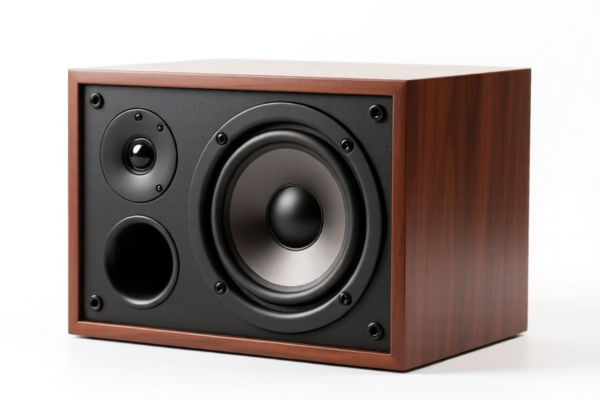
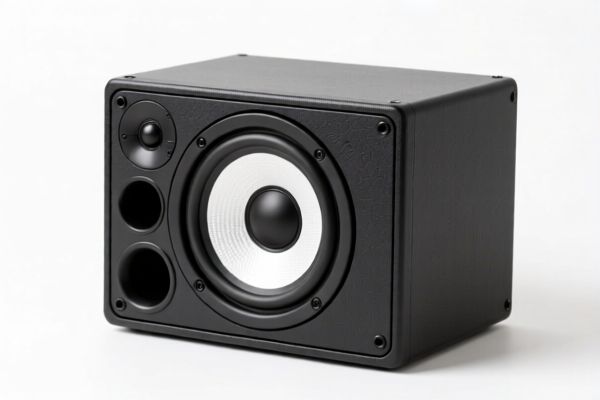
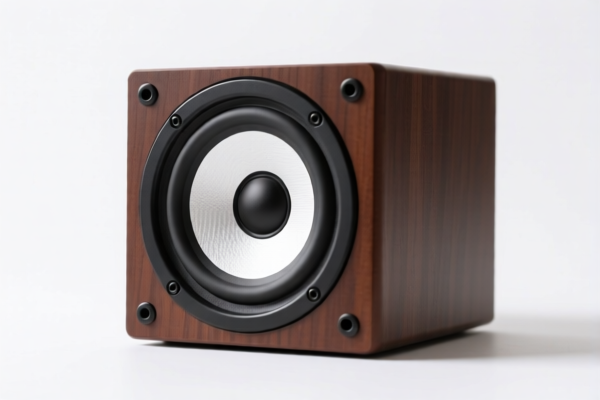
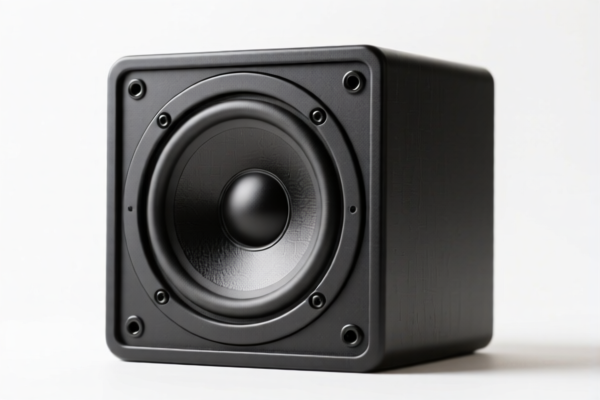
AI Analysis
🔊 Speaker Box (Audio Output Devices)
🌐 HS Code Reference & Customs Clearance Guide | 2024-2025 Latest Tariff Analysis | Professional Strategy
📌 I. Product Definition & Classification: Do You Really Understand "Speaker Boxes"?
A Speaker Box, in international trade, is generally categorized as an electro-acoustic device. Its classification depends heavily on its specific structure and functional independence. It is broadly divided into two main categories in customs classification:
Integrated Speakers (Complete Units): Devices with speakers installed in cabinets/enclosures, often with amplification circuits. Discrete Electro-Acoustic Equipment: Standalone audio output devices that may function independently or as part of a larger system, sometimes classified under "other machines."
⚠️ Key Distinction Point:
- If it is a standard speaker unit installed in a cabinet/box → It typically falls under Chapter 8518 (Speakers, Headphones, etc.).
- If it is a specialized audio output device with independent functionality or strongly associated with amplifiers → It may be classified under Chapter 8543 (Other electrical machines and apparatus).
📦 II. HS Code Classification Details (Latest Tariff Authority Comparison)
Based on the provided data, here are the four specific HS Codes for "Speaker Box" and their corresponding tax implications:
| HS Code | Product Description & Rationale | Applicable Scenario | Key Classification Feature |
|---|---|---|---|
8543.70.98.60 |
Speaker belongs to electro-acoustic equipment with independent functionality, classified as other machines/apparatus. | Specialized audio output devices, non-standard speakers | Independent function, not standard cabinet speaker |
8518.21.00.00 |
Speaker as a loudspeaker category, fitting the structure of speakers installed in a cabinet. | Standard box speakers, cabinet-mounted speakers | Speaker unit + Cabinet/Enclosure |
8543.70.98.10 |
Speaker as an audio output device, with strong关联性 (association) and co-existence with amplifiers. | Active speakers, integrated amp+speaker units | Audio output + Amplifier association |
8518.22.00.00 |
Speaker box contains speaker units, fitting the classification description of speakers installed in machine shells. | General cabinet speakers, shell-mounted units | Speaker unit + Machine Shell/Cabinet |
🔍 Important Note:
- Chapter 8518 (8518.21.00.00&8518.22.00.00) is for standard speakers installed in cabinets/shells.
- Chapter 8543 (8543.70.98.60&8543.70.98.10) is for other electro-acoustic machines, often involving independent functionality or amplifier integration.
- Tax rates vary significantly between these codes due to different tariff treatment (Base vs. Section 122 vs. Retaliatory tariffs).
💰 III. 2024-2025 Latest Tariff Rate Breakdown (Including Surcharge Policies)
✅ Applicable Country: United States (US)
✅ Origin: China (CN)
✅ Effective Time: Current trade war tariffs (Section 301 & IEEPA)
🎯 1. 8543.70.98.60 & 8543.70.98.10 – High Tariff Scenario
| Item | Content |
|---|---|
| Base Tariff | 2.6% (ad valorem) |
| Section 301 Surcharge | +25.0% (Retaliatory tariff) |
| Section 122 Tariff | +10.0% (Specific provision for certain electrical goods) |
| Total Tariff Rate | 37.6% |
| Tax Calculation | CIF Value × 37.6% |
| De Minimis Exemption | ❌ Not Eligible (High tariff items excluded) |
| Legal Basis | Standard USITC Schedule + Section 301 Footnotes + Section 122 |
📌 Explanation:
- These codes are classified under 8543, which is treated more strictly.
- The 25% Section 301 tariff applies to many Chinese-made electronic components and devices.
- The 10% Section 122 tariff is an additional safeguard duty.
- Total: 37.6% – This is a very high cost for importers. Must be factored into pricing.
🎯 2. 8518.21.00.00 & 8518.22.00.00 – Lower Tariff Scenario
| Item | Content |
|---|---|
| Base Tariff | 0.0% (ad valorem) |
| Section 301 Surcharge | +7.5% (Reduced rate for certain audio equipment) |
| Section 122 Tariff | +10.0% |
| Total Tariff Rate | 17.5% |
| Tax Calculation | CIF Value × 17.5% |
| De Minimis Exemption | ❌ Not Eligible |
| Legal Basis | Standard USITC Schedule + Section 301 (Excluded/Lower rate) + Section 122 |
📌 Important:
- These codes are classified under 8518 (Speakers), which often benefits from lower Section 301 rates (7.5% vs. 25%).
- The base tariff is 0%, significantly reducing the overall tax burden.
- Total: 17.5% – This is much more competitive for clearing goods.
- Recommendation: If your speaker box fits the definition of "speaker installed in a cabinet," aim for 8518 codes to save 20.1% in tariffs.
🛠️ IV. Customs Clearance Practical Advice (Avoid Pitfalls)
✅ 1. Document Checklist (All Required)
| Document | Required | Description |
|---|---|---|
| ✅ Product Spec Sheet | ✔️ | Must clearly state: Is it a speaker only? Does it include an amplifier? Is it in a cabinet? |
| ✅ Circuit Diagram | ✔️ | Critical for determining if it's "8543" (active/amp-integrated) or "8518" (passive speaker in cabinet) |
| ✅ Product Photos | ✔️ | Show the exterior (cabinet/shell), internal structure, and labels |
| ✅ Commercial Invoice | ✔️ | Must accurately describe the product as "Speaker Box" or "Audio Output Device" |
| ✅ Packing List | ✔️ | Detail components to avoid拆分申报 (split declaration) issues |
✅ 2. Classification Strategy (Key Tips)
🔥 "Cabinet = 8518 (17.5%), Independent/Amp = 8543 (37.6%)"
| Scenario | Correct HS Code | Tax Rate | Risk |
|---|---|---|---|
| Standard speaker in a wooden/plastic box | 8518.21.00.00 or 8518.22.00.00 |
17.5% | Low if structure is clear |
| Active speaker with built-in amp & power | 8543.70.98.10 |
37.6% | High tax, may be reclassified if amp is separate |
| Standalone audio output device (no cabinet) | 8543.70.98.60 |
37.6% | High tax, strict scrutiny |
| Loose speaker unit (no box) | Not applicable in this data | N/A | May fall under different headings |
✅ 3. Special Cases & Handling
| Situation | Recommendation |
|---|---|
| Active vs. Passive | If the speaker has a built-in amplifier, customs may classify it under 8543. Ensure your spec sheet clarifies this. |
| OEM/Custom Cabinets | Provide design drawings to prove it's a "cabinet" for a speaker, not a standalone machine. |
| Mixed Shipments | Do not mix 8518 and 8543 products in one HS code line. Declare separately. |
| Pre-Ruling | Strongly Recommended: Apply for an Advance Ruling from US Customs if the classification is ambiguous. Saves costly delays. |
🌍 V. Global Market Comparison (2024-2025)
| Country/Region | Recommended HS Code | Tariff (CN Origin) | Certifications | Notes |
|---|---|---|---|---|
| 🇺🇸 USA | 8518.21.00.00 |
17.5% | FCC + RoHS | Lowest among options; prefer 8518 over 8543 |
| 🇺🇸 USA | 8543.70.98.60 |
37.6% | FCC + RoHS | High tariff; avoid if possible |
| 🇨🇳 China | 8518.21.00.00 |
3.5% | CCC | Lower base tariff |
| 🇪🇺 EU | 8518.21.00.00 |
4.0% | CE + RoHS | No Section 301/122 surcharges |
| 🇦🇺 Australia | 8518.21.00.00 |
5.0% | RCM | Standard rate |
📌 Conclusion:
- The USA is the most challenging market due to Section 301 and Section 122 tariffs.
- Choosing the right HS Code (8518 vs. 8543) can save you 20.1% in taxes.
- Ensure your product description matches the 8518 definition ("speaker installed in a cabinet") to qualify for the lower rate.
📌 VI. Common Mistakes & Pitfalls (Lessons Learned)
❌ Mistake 1: Classifying an active speaker with built-in amp as a passive speaker (8518).
👉 Consequence: Customs may reclassify to 8543 → Back-taxes of 20.1% + penalties.
❌ Mistake 2: Describing the product vaguely as "Audio Equipment" without specifying structure.
👉 Consequence: Customs assumes worst-case scenario → 37.6% rate.
❌ Mistake 3: Ignoring the 10% Section 122 tariff in calculations.
👉 Consequence: Underestimating landed cost → Profit margin erosion.
✅ Correct Approach:
"Passive Speaker Box, Wooden Cabinet, Driver Unit Model XYZ, No Built-in Amplifier, FCC Certified"
→ Target HS Code:8518.21.00.00→ Tax: 17.5%
🎯 VII. Conclusion: Precise Classification, Cost Optimization
🎯 Key Takeaway:
🔹 "Cabinet Structure = 17.5% | Independent/Amp = 37.6%"
🔹 "Prove the Cabinet, Save 20%!"
🔹 "Document the Circuit, Avoid Re-Classification!"
📌 Pro Tip:
If your product is not of Chinese origin (e.g., Vietnam, Mexico), Section 301 tariffs do not apply. The tax rate may drop to just the base + Section 122 (if applicable).
Action:
📞 Consult a licensed customs broker.
📄 Provide detailed technical specs.
🚀 Clear customs smoothly, maximize profit!
✨ Professional Clearance Starts with Accurate Classification!
💼 Every Percent Counts!
Customer Reviews
About HS Code Classification
The Harmonized System (HS) is an internationally standardized nomenclature developed by the World Customs Organization (WCO) to classify traded products. Over 200 countries use the HS system as the basis for customs tariffs, trade statistics, and import/export regulations.
Each HS code follows a hierarchical structure:
- Chapter (2 digits) — Broad category of goods (e.g., Chapter 84: Machinery and Mechanical Appliances)
- Heading (4 digits) — More specific grouping within the chapter
- Subheading (6 digits) — Internationally standardized breakdown, used by all WCO member countries
- National subdivisions (8-10 digits) — Country-specific extensions for further classification, such as US HTSUS 10-digit codes
Correct HS code classification is essential for smooth customs clearance, accurate duty payment, and compliance with trade regulations. Misclassification can lead to customs delays, overpayment of duties, or penalties.
When importing from CN to US, the applicable tariff rates may include:
- Most-Favored-Nation (MFN) rate — The standard duty rate applied to WTO members
- General rate — Applied to countries without trade agreements
- Trade remedy duties — Additional tariffs such as Section 301 (anti-dumping), Section 232 (national security), or countervailing duties
The information provided on this page is for reference purposes only. For official classification, please consult with your local customs authority or a licensed customs broker.