spice jars rack
CN → US| HS Code | Tariff Rate | Origin | Destination | Doc |
|---|---|---|---|---|
| 7323999080 | 88.4% | CN | US | Official Doc |
| 7323995030 | 60.0% | CN | US | Official Doc |
| 7323999030 | 88.4% | CN | US | Official Doc |
| 3924104000 | 13.4% | CN | US | Official Doc |
| 6912004810 | 19.8% | CN | US | Official Doc |
Product Images
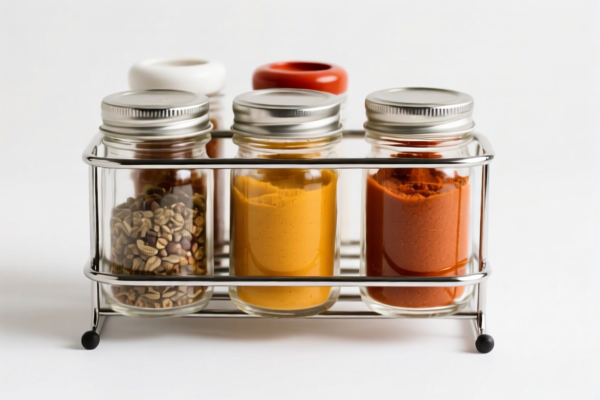
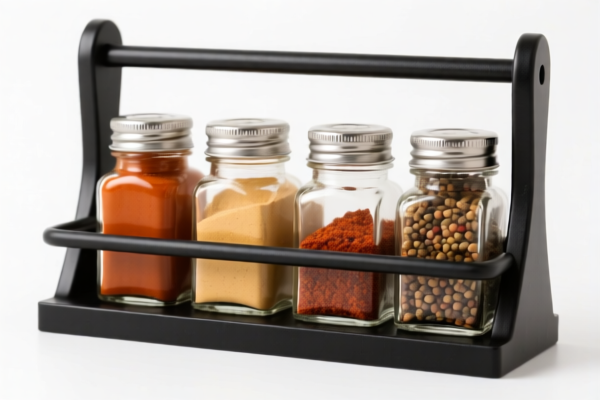
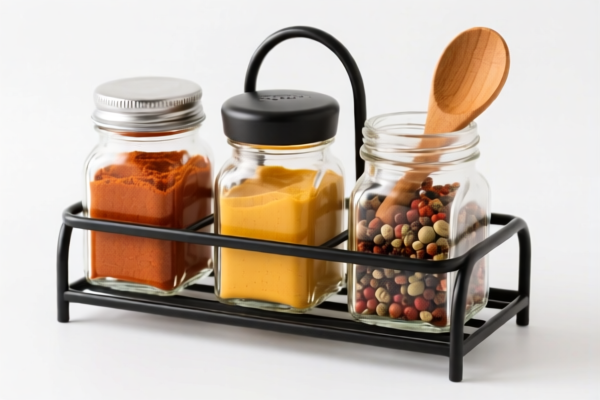
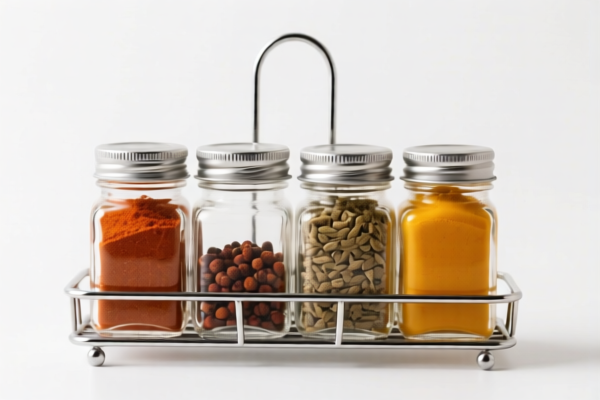
AI Analysis
🌿 Spice Jars & Racks (Kitchen Organizers)
🌐 HS Code Reference & Customs Clearance Guide | 2024/2026 Latest Tariff Analysis | Professional Clearance Strategy
📌 Part 1: Product Definition & Classification: Do You Really Understand "Spice Jars & Racks"?
Spice jars and racks are essential kitchen organizers designed to store, display, and organize spices, herbs, and condiments. In international trade, they fall under Chapter 73 (Articles of Iron or Steel) or other materials like plastic and ceramic. The classification depends heavily on the material and function:
Metal Spice Racks/Jars: Made primarily of iron or steel, often coated (e.g., black finish), used for holding spice containers or as containers themselves.
Plastic/Ceramic Spice Jars: Made from non-metallic materials, used for storage.
⚠️ Key Distinction:
- If made of iron/steel, it falls under HS 7323;
- If made of plastic, it falls under HS 3924;
- If made of ceramic, it falls under HS 6912.
📦 Part 2: HS Code Classification Details (2024/2026 Latest Tariff Authority Comparison)
| HS Code | Product Description | Material | Use Case |
|---|---|---|---|
7323.99.90.80 |
Spice Rack | Iron/Steel (Black) | Kitchen/Tableware, Metal |
7323.99.50.30 |
Spice Jar (Cylindrical) | Iron/Steel | Kitchen/Tableware, Metal |
7323.99.90.30 |
Spice Jar (General Metal) | Iron/Steel | Kitchen/Tableware, Metal |
3924.10.40.00 |
Spice Jar | Plastic | Kitchen/Tableware, Plastic |
6912.00.48.10 |
Spice Jar | Ceramic | Kitchen/Tableware, Ceramic |
🔍 Important Note:
- Metal items are subject to additional tariffs (e.g., Section 232 or Section 301 in the US);
- Non-metal items (plastic/ceramic) have lower or zero additional tariffs in some cases.
💰 Part 3: 2024/2026 Latest Tariff Rate Breakdown (Including Additional Taxes)
✅ Applicable Country: United States (US)
✅ Origin: China (CN)
✅ Effective Date: Current rates apply as of 2024–2026
🎯 1. 7323.99.90.80 —— Black Spice Rack (Iron/Steel)
| Item | Content |
|---|---|
| Base Tariff | 3.4% |
| Additional Tariff (Section 301) | +25.0% |
| Section 122 Tariff (Steel/Aluminum/Copper) | +10.0% |
| Total Tariff | 88.4% |
| Tax Calculation | CIF Value × 88.4% |
| De Minimis Exemption? | ❌ No |
| Legal Basis Path | IEEPA:9903.01.25 → USITC:7323.99.90.80 → FOOTNOTE:122 |
📌 Explanation:
- This item is classified as a metal tableware article;
- Subject to Section 301 tariffs (25%) and Section 122 tariffs (10%) on steel products;
- Total tax burden is very high, requiring proactive customs planning.
🎯 2. 7323.99.50.30 —— Spice Jar (Iron/Steel, Cylindrical)
| Item | Content |
|---|---|
| Base Tariff | 0.0% |
| Additional Tariff (Section 301) | 0.0% |
| Section 122 Tariff (Steel/Aluminum/Copper) | +50.0% |
| Total Tariff | 60.0% |
| Tax Calculation | CIF Value × 60.0% |
| De Minimis Exemption? | ❌ No |
| Legal Basis Path | IEEPA:9903.01.24 → USITC:7323.99.50.30 → FOOTNOTE:122 |
📌 Note:
- Even though base tariff is 0%, the Section 122 steel tariff (50%) applies;
- Total tax rate is 60%, which is still high but lower than7323.99.90.80.
🎯 3. 7323.99.90.30 —— Spice Jar (General Metal)
| Item | Content |
|---|---|
| Base Tariff | 3.4% |
| Additional Tariff (Section 301) | +25.0% |
| Section 122 Tariff (Steel/Aluminum/Copper) | +10.0% |
| Total Tariff | 88.4% |
| Tax Calculation | CIF Value × 88.4% |
| De Minimis Exemption? | ❌ No |
| Legal Basis Path | IEEPA:9903.01.25 → USITC:7323.99.90.30 → FOOTNOTE:122 |
📌 Note:
- Same as7323.99.90.80;
- Applies to any metal spice jar not specifically categorized under7323.99.50.30.
🎯 4. 3924.10.40.00 —— Spice Jar (Plastic)
| Item | Content |
|---|---|
| Base Tariff | 3.4% |
| Additional Tariff (Section 301) | 0.0% |
| Section 122 Tariff | 0.0% (Not applicable to plastic) |
| Total Tariff | 13.4% |
| Tax Calculation | CIF Value × 13.4% |
| De Minimis Exemption? | ❌ No |
| Legal Basis Path | IEEPA:9903.01.24 → USITC:3924.10.40.00 |
📌 Note:
- Plastic items are not subject to Section 122 tariffs;
- Only subject to Section 301 if applicable (here 0%);
- Lowest tax rate among metal/plastic options.
🎯 5. 6912.00.48.10 —— Spice Jar (Ceramic)
| Item | Content |
|---|---|
| Base Tariff | 9.8% |
| Additional Tariff (Section 301) | 0.0% |
| Section 122 Tariff | 0.0% (Not applicable to ceramic) |
| Total Tariff | 19.8% |
| Tax Calculation | CIF Value × 19.8% |
| De Minimis Exemption? | ❌ No |
| Legal Basis Path | IEEPA:9903.01.24 → USITC:6912.00.48.10 |
📌 Note:
- Ceramic items are not subject to Section 122 tariffs;
- Total tax rate is 19.8%, moderate compared to metal items.
🛠️ Part 4: Customs Clearance Practical Advice (Avoid Pitfalls)
✅ 1. Document Checklist (Must-Have)
| Document | Required | Description |
|---|---|---|
| ✅ Product Specification Sheet | ✔️ | Include dimensions, material, capacity, usage |
| ✅ Product Photos (with label) | ✔️ | Clear image of product, brand, model, material |
| ✅ Commercial Invoice | ✔️ | State clearly: "Spice Jar/Rack, Material: [Metal/Plastic/Ceramic]" |
| ✅ Packing List | ✔️ | Show quantity, weight, packaging type |
| ✅ Certificate of Origin (CO) | ✔️ | If non-China origin, may qualify for preferential rates |
| ✅ Third-party Test Reports | ✔️ | FDA, LFGB, RoHS (if applicable) |
✅ 2. Declaration Tips (Key Mnemonics)
🔥 “Material Determines Code, Metal High Tax, Plastic/Ceramic Low!”
| Scenario | Correct Declaration | Wrong Practice |
|---|---|---|
| Metal Spice Rack | 7323.99.90.80 |
Declare as plastic → 13.4% instead of 88.4% |
| Plastic Spice Jar | 3924.10.40.00 |
Declare as metal → 88.4% instead of 13.4% |
| Ceramic Spice Jar | 6912.00.48.10 |
Declare as metal → 88.4% instead of 19.8% |
| Metal Spice Jar | 7323.99.50.30 or 7323.99.90.30 |
Vague description → Risk of misclassification |
✅ 3. Special Cases
| Case | Handling Advice |
|---|---|
| Mixed Material (e.g., Metal Rack with Plastic Jars) | Declare based on primary material; if metal dominates, use 7323 |
| Set (Rack + Jars) | Declare as whole set; avoid splitting into multiple items |
| OEM Custom Products | Provide design drawings to prove material composition |
| High-Value Items | Consider Advance Ruling to confirm HS Code and tariff rate |
🌍 Part 5: Global Market Comparison (2024/2026 Latest)
| Country/Region | Recommended HS Code | Tariff (China Origin) | Certification Requirements | Notes |
|---|---|---|---|---|
| 🇺🇸 USA | 7323.99.90.80 |
88.4% (Metal) 13.4% (Plastic) 19.8% (Ceramic) |
FDA, LFGB, Prop 65 | Metal items face high additional tariffs |
| 🇨🇳 China | 7323.99.90.80 |
5–10% | CCC, RoHS | No additional tariffs |
| 🇪🇺 EU | 7323.99.90.80 |
0–4% | CE, LFGB | No additional tariffs |
| 🇦🇺 Australia | 7323.99.90.80 |
5% | RCMA, LFGB | No additional tariffs |
| 🇯🇵 Japan | 7323.99.90.80 |
0–3% | PSE, LFGB | No additional tariffs |
📌 Conclusion:
- USA has the highest tariffs for metal spice jars/racks due to Section 301 and Section 122;
- Plastic and ceramic items have significantly lower tax burdens;
- Consider material substitution (e.g., plastic instead of metal) for US market to reduce costs.
📌 Part 6: Common Mistakes & Pitfalls (Lessons Learned)
❌ Mistake 1: Declaring a metal spice rack as plastic
👉 Consequence: Customs audit, back taxes + penalties (~75% difference!)
❌ Mistake 2: Splitting a set (rack + jars) into separate items
👉 Consequence: Each item taxed separately, total tax may exceed 100%
❌ Mistake 3: Vague description: "Kitchen Organizer"
👉 Consequence: Customs cannot determine material → Delayed clearance or rejection
❌ Mistake 4: Ignoring Section 122 tariffs for steel products
👉 Consequence: Unexpected 50% additional tax on steel items
✅ Correct Practice:
"Metal Spice Rack, Black Finish, Iron/Steel Construction, Holds 12 Glass Jars, Model SR-2024, FDA Compliant"
🎯 Part 7: Conclusion: Professional Declaration, Save Time, Reduce Costs!
🎯 Remember Mnemonics:
🔹 "Material First, Code Follows, Metal High, Plastic Low!"
🔹 "HS Code Saves Money, Wrong Code Costs Thousands!"
📌 Pro Tip:
If your product is originated from Vietnam, Mexico, or Thailand, you may apply for IEEPA Exemption, reducing tariffs to 0–5%.
Recommend Advance Ruling before shipment to avoid clearance risks.
📣 Immediate Action:
📞 Contact Professional Customs Broker + Provide Product Photos + Apply for HS Code Advance Ruling
🚀 Ensure Smooth Clearance, Boost Profits, Escape Tariff Traps!
✨ Professional Clearance Starts with Accurate Classification!
💼 Every Dollar of Cost Deserves Precise Calculation!
Customer Reviews
About HS Code Classification
The Harmonized System (HS) is an internationally standardized nomenclature developed by the World Customs Organization (WCO) to classify traded products. Over 200 countries use the HS system as the basis for customs tariffs, trade statistics, and import/export regulations.
Each HS code follows a hierarchical structure:
- Chapter (2 digits) — Broad category of goods (e.g., Chapter 84: Machinery and Mechanical Appliances)
- Heading (4 digits) — More specific grouping within the chapter
- Subheading (6 digits) — Internationally standardized breakdown, used by all WCO member countries
- National subdivisions (8-10 digits) — Country-specific extensions for further classification, such as US HTSUS 10-digit codes
Correct HS code classification is essential for smooth customs clearance, accurate duty payment, and compliance with trade regulations. Misclassification can lead to customs delays, overpayment of duties, or penalties.
When importing from CN to US, the applicable tariff rates may include:
- Most-Favored-Nation (MFN) rate — The standard duty rate applied to WTO members
- General rate — Applied to countries without trade agreements
- Trade remedy duties — Additional tariffs such as Section 301 (anti-dumping), Section 232 (national security), or countervailing duties
The information provided on this page is for reference purposes only. For official classification, please consult with your local customs authority or a licensed customs broker.