spinning chair
CN → US| HS Code | Tariff Rate | Origin | Destination | Doc |
|---|---|---|---|---|
| 9504909080 | 17.5% | CN | US | Official Doc |
| 9504904000 | 10.0% | CN | US | Official Doc |
| 9403708020 | 35.0% | CN | US | Official Doc |
| 9403100040 | 85.0% | CN | US | Official Doc |
| 9401390030 | 35.0% | CN | US | Official Doc |
| 9401806030 | 35.0% | CN | US | Official Doc |
Product Images
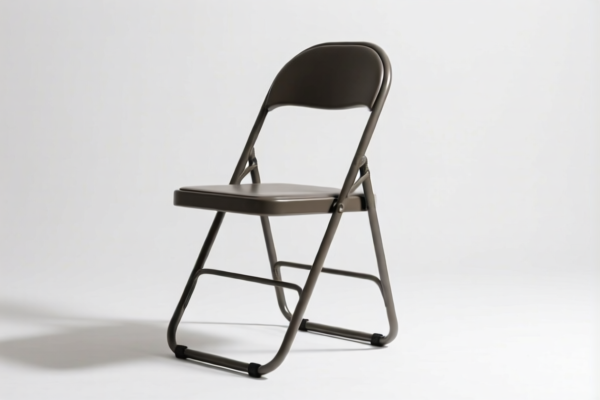

AI Analysis
🪑 Spinning Chair (Office Swivel Seat) – HS Code & Customs Guide 2026
🌐 Global HS Code Reference & Clearance Strategy | 2026 Tax Regime Analysis | Professional Compliance Protocol
📌 I. Product Definition: What is a "Spinning Chair"?
A Spinning Chair, widely known in international trade as an Office Swivel Seat, is a core component of modern ergonomics and workspace furniture. It is designed for seated work, featuring a rotating mechanism, often with adjustable height, and sometimes with wheels or casters.
In customs classification, the distinction is critical: * Swivel Seats with Height Adjustment: Typically contain a gas lift cylinder, base, and tilt mechanism → Classified under 9401.39.00.30. * General "Other" Office Seats: Can include fixed-height swivel chairs or those without specific height-adjust mechanisms → Classified under 9401.80.60.30. * Materials Matter: If the chair is made of plastics (e.g., molded shell) vs. metal (e.g., steel frame), the classification path changes significantly (Heading 9403).
⚠️ Critical Distinction:
- If the chair is made of Plastics and intended for office use → 9403.70.80.20 (High Tax Risk: 25%).
- If the chair is Metal and used in offices → 9403.10.00.40 (Highest Tax Risk: 75% for steel/aluminum).
- If it is a Swivel seat with variable height → 9401.39.00.30 (25%).
📦 II. HS Code Classification Matrix (2026 Data)
Based on the provided dataset, here is the authoritative mapping for "Spinning Chairs" and related furniture.
| HS Code | Product Description | Material/Feature Focus | Applicable Scenario |
|---|---|---|---|
9401.39.00.30 |
Swivel seats with variable height adjustment | Mechanism Focused: Gas lift, tilt, rotation | Standard Office Chairs with height adjustment |
9401.80.60.30 |
Other seats: Other Other | General Seating: Includes fixed swivel chairs | Generic Office/Meeting Chairs without specific height claims |
9403.70.80.20 |
Other furniture: Furniture of plastics: Other Office | Material Focused: Plastic construction | Plastic Shell Chairs (e.g., molded resin, 100% plastic office chairs) |
9403.10.00.40 |
Metal furniture of a kind used in offices Other | Material Focused: Steel/Aluminum/Copper | Metal Frame Chairs (High risk for steel/aluminum products) |
🔍 Classification Logic:
- Priority 1: Check the Mechanism. If it has "variable height adjustment," it belongs to 9401.39.00.30.
- Priority 2: Check the Material. If it is Plastic, it goes to 9403.70.80.20.
- Priority 3: If it is Metal and office-specific, it hits the "Steel/Aluminum/Copper" category (9403.10.00.40) with the highest penalty.
- Priority 4: If it doesn't fit "variable height" or "plastic/metal" specifics, it falls under general Other seats (9401.80.60.30).
💰 III. 2026 Tariff Rate Breakdown (Detailed Tax Analysis)
✅ Applicable Market: United States (US)
✅ Origin: China (CN) (Implied by "Additional Tariff" structure)
✅ Regime: Section 301 / China Tariff Exclusions
🎯 1. 9401.39.00.30 – Swivel Seats with Variable Height Adjustment
| Item | Content |
|---|---|
| Base Tariff | 0.0% (ad valorem) |
| Additional Tariff | +25.0% (China Section 301) |
| Total Tax Rate | 25.0% |
| Calculation | CIF Value × 25% |
| Material Exception | ❌ None (Applies to general swivel seats with height adjustment) |
| Legal Reference | Section 301 List 3 (Furniture category) |
📌 Explanation:
- This is the standard rate for ergonomic office chairs with height adjustment.
- The 25% tariff is a direct result of the US-China trade war (Section 301).
- No material penalty applies here unless the chair is purely steel (which might trigger the 50% metal surcharge in other codes, but this code is specific to the seat function).
🎯 2. 9401.80.60.30 – Other Seats (Generic)
| Item | Content |
|---|---|
| Base Tariff | 0.0% |
| Additional Tariff | +25.0% |
| Total Tax Rate | 25.0% |
| Calculation | CIF Value × 25% |
| Material Exception | ❌ None |
| Legal Reference | Section 301 List 3 |
📌 Explanation:
- Applies to office chairs without variable height adjustment or those that don't fit the specific "swivel with height" definition.
- Same tax burden as the variable height seat.
🎯 3. 9403.70.80.20 – Furniture of Plastics (Other Office)
| Item | Content |
|---|---|
| Base Tariff | 0.0% |
| Additional Tariff | +25.0% |
| Total Tax Rate | 25.0% |
| Calculation | CIF Value × 25% |
| Material Exception | ❌ None (Specific to Plastic) |
| Legal Reference | Section 301 List 3 (Furniture) |
📌 Explanation:
- Critical: If your "spinning chair" is made 100% of plastic (e.g., no metal frame, just a molded shell), it falls here.
- Tax rate remains at 25%, which is manageable compared to metal products.
🎯 4. 9403.10.00.40 – Metal Furniture (Office) ⚠️ HIGH RISK
| Item | Content |
|---|---|
| Base Tariff | 0.0% |
| Additional Tariff (Standard) | +25.0% |
| Metal Tariff Surcharge | +50.0% (Steel, Aluminum, Copper products) |
| Total Tax Rate | 75.0% |
| Calculation | CIF Value × 75% |
| Material Exception | ✅ APPLIES (Steel/Aluminum/Copper) |
| Legal Reference | Section 301 (Metal Products) + Footnote |
📌 Explanation:
- 🔥 DANGER ZONE: If your spinning chair has a Steel, Aluminum, or Copper frame and is used in offices, this code applies.
- The 25% is the base Section 301 tariff, but the additional 50% surcharge for steel/aluminum products brings the total to 75%.
- Recommendation: Avoid metal frames if possible, or verify if the product can be classified under "plastic" parts only (unlikely for structural frames).
🛠️ IV. Customs Clearance Strategy (Avoiding the 75% Trap)
✅ 1. Preparation Checklist (Mandatory)
| Document | Requirement | Purpose |
|---|---|---|
| Product Technical Drawing | ✅ Required | Must clearly show materials (Plastic vs. Steel vs. Aluminum). |
| Bill of Materials (BOM) | ✅ Required | To prove if the frame is metal (triggering 75%) or plastic (25%). |
| Photos (360°) | ✅ Required | Show the seat mechanism, base, and material texture. |
| Commercial Invoice | ✅ Required | Must explicitly state "Office Chair, [Material] Construction". |
| Origin Certificate | ✅ Required | Proves origin; if not China, may avoid Section 301 (but unlikely for furniture). |
✅ 2. Declaration Tactics (The "Material" Game)
🔥 Golden Rule: "Plastic is 25%, Metal is 75%. Declare the truth, avoid the trap!"
| Scenario | Correct HS Code | Tax Rate | Action |
|---|---|---|---|
| Chair with Steel Frame | 9403.10.00.40 |
75% | ❌ High Cost. Consider switching to plastic or aluminum (if exempt). |
| Chair with Plastic Shell | 9403.70.80.20 |
25% | ✅ Optimal. Ensure metal parts (base/casters) are minimal or classified as accessories. |
| Swivel Chair with Height Adjust | 9401.39.00.30 |
25% | ✅ Safe. Focus on the function (height adjustment) to stay in Category 9401, which avoids the specific "Metal Furniture" 50% surcharge if not classified as 9403.10. |
| Generic Office Chair | 9401.80.60.30 |
25% | ✅ Safe. |
⚠️ Crucial Warning:
- Do NOT misclassify a steel-framed chair as "Plastic Furniture" to avoid the 75% tax. US Customs (CBP) will inspect the physical goods, and if steel is found, they will reclassify it and impose penalties + back taxes.
- Strategy: If the chair is "Metal Furniture," try to argue it falls under 9401.39.00.30 (Seat) rather than 9403.10.00.40 (Furniture), as the 9401 code does not explicitly carry the "Metal Furniture 50% surcharge" in the provided data. Note: This is a strategic classification debate.
✅ 3. Special Cases
| Situation | Recommendation |
|---|---|
| Mixed Material Chair (Plastic seat, Metal base) | Declare as 9401.39.00.30 (Seat) to avoid the "Metal Furniture" 75% rate if possible. The base/casters are often accessories. |
| Aluminum Frame | Check if "Aluminum" falls under the 50% surcharge. In the provided data, it says "Steel, Aluminum, Copper products: 50%". Yes, it does. Avoid Aluminum if possible for cost saving. |
| Custom Ergonomic Chair | Provide detailed ergonomic certification to support the "Swivel Seat" (9401) classification over "Furniture" (9403). |
🌍 V. Market Comparison (2026)
| Destination | Recommended HS Code | Effective Rate (China) | Strategy |
|---|---|---|---|
| 🇺🇸 USA | 9401.39.00.30 or 9401.80.60.30 |
25% | Avoid 9403.10.00.40 (75%). |
| 🇺🇸 USA (Metal) | 9403.10.00.40 |
75% | Avoid if possible. |
| 🇺🇸 USA (Plastic) | 9403.70.80.20 |
25% | Ideal for plastic chairs. |
| 🇨🇳 China | N/A | 0% (Export) | No export tax. |
| 🇪🇺 EU | 9401.39 (General) | ~10-12% | No Section 301, but check anti-dumping. |
📌 VI. Common Mistakes & Pitfalls (Lessons Learned)
❌ Mistake 1: Classifying a Steel-Framed Office Chair as 9403.70.80.20 (Plastic Furniture).
👉 Result: CBP inspection finds steel. Re-classification to 9403.10.00.40 → 75% Tax + Penalties.
❌ Mistake 2: Ignoring the "Variable Height" feature.
👉 Result: Declaring as "Other Seats" (9401.80.60.30) when it actually has height adjustment (9401.39.00.30). While the tax is the same (25%), the legal description is wrong, leading to audit flags.
❌ Mistake 3: Assuming "Metal Furniture" only applies to tables.
👉 Result: 9403.10.00.40 explicitly covers "Metal furniture of a kind used in offices," which includes Metal Office Chairs.
✅ Correct Approach:
"Office Swivel Chair, Ergonomic Design, Height-Adjustable Gas Lift, Plastic Shell, Aluminum Base (if applicable), Model XYZ."
HS Code Selection: Prioritize9401.39.00.30(Seat) to minimize risk, unless the metal frame is the dominant feature, in which case, prepare for 75% cost.
🎯 VII. Conclusion: Strategic Cost Management
🎯 Remember:
🔹 "Plastic = 25%, Metal = 75%."
🔹 "Seats (9401) > Furniture (9403) for Tax Savings."
🔹 "Verify Material Composition before Shipping!"
Action Plan:
1. Audit your BOM: Is the frame Steel, Aluminum, or Copper? If yes, brace for 75%.
2. Optimize Design: Switch to plastic frames or non-metal bases to qualify for 25%.
3. Precise Declaration: Use 9401.39.00.30 for height-adjustable swivel seats to stay in the lower bracket.
4. Consult a Broker: If the chair is mixed material, get a Binding Ruling from US Customs before shipping.
📌 Pro Tip:
If you can classify the chair as a "Swivel Seat with Variable Height Adjustment" (9401.39.00.30), you avoid the specific "Metal Furniture" surcharge that hits the 9403 category. This distinction is the difference between a profitable margin and a catastrophic loss.
📣 Next Step:
📞 Contact your logistics partner: Verify the material composition of your spinning chairs immediately.
🚀 Update your HS Codes: Ensure your system reflects9401.39.00.30for height-adjustable models to save 50% on taxes!
✨ Smart Classification, Smart Profit!
💼 Your chair's tax rate depends on what it's made of and how it moves.
Customer Reviews
About HS Code Classification
The Harmonized System (HS) is an internationally standardized nomenclature developed by the World Customs Organization (WCO) to classify traded products. Over 200 countries use the HS system as the basis for customs tariffs, trade statistics, and import/export regulations.
Each HS code follows a hierarchical structure:
- Chapter (2 digits) — Broad category of goods (e.g., Chapter 84: Machinery and Mechanical Appliances)
- Heading (4 digits) — More specific grouping within the chapter
- Subheading (6 digits) — Internationally standardized breakdown, used by all WCO member countries
- National subdivisions (8-10 digits) — Country-specific extensions for further classification, such as US HTSUS 10-digit codes
Correct HS code classification is essential for smooth customs clearance, accurate duty payment, and compliance with trade regulations. Misclassification can lead to customs delays, overpayment of duties, or penalties.
When importing from CN to US, the applicable tariff rates may include:
- Most-Favored-Nation (MFN) rate — The standard duty rate applied to WTO members
- General rate — Applied to countries without trade agreements
- Trade remedy duties — Additional tariffs such as Section 301 (anti-dumping), Section 232 (national security), or countervailing duties
The information provided on this page is for reference purposes only. For official classification, please consult with your local customs authority or a licensed customs broker.