spiral bevel gear
CN → US| HS Code | Tariff Rate | Origin | Destination | Doc |
|---|---|---|---|---|
| 8708407570 | 37.5% | CN | US | Official Doc |
| 8483905080 | 37.5% | CN | US | Official Doc |
| 8708407580 | 37.5% | CN | US | Official Doc |
| 8483409000 | 37.5% | CN | US | Official Doc |
| 8708407580 | 37.5% | CN | US | Official Doc |
Product Images
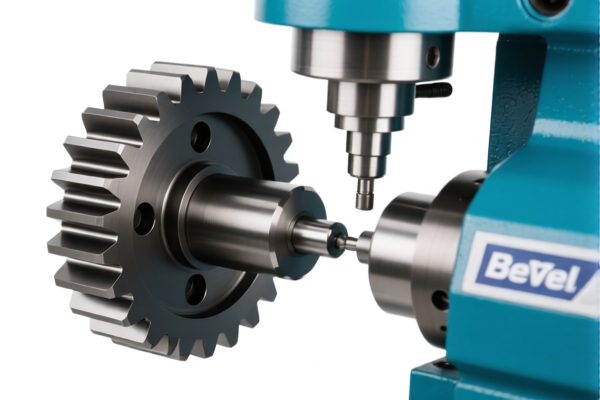
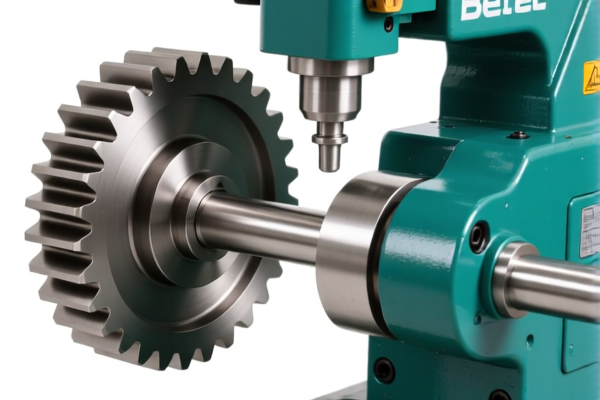
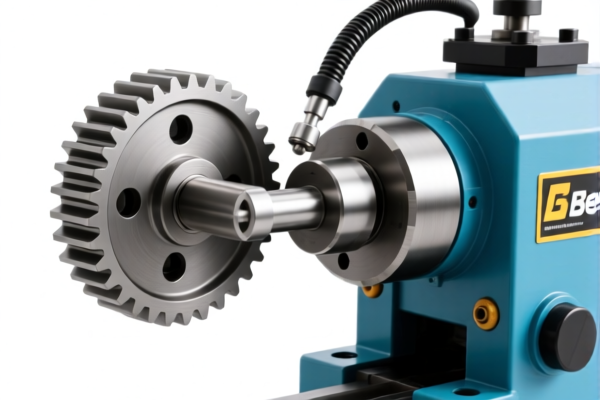
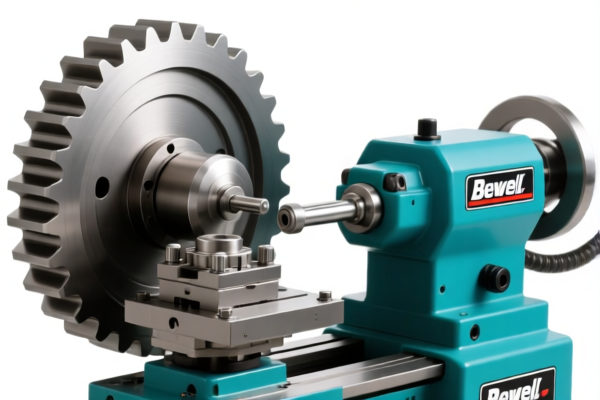
AI Analysis
🦷 Spiral Bevel Gears: The Ultimate HS Code Classification & Duty Guide (2026)
🌐 HS Code Reference & Customs Clearance Guide | 2026 Latest Tariff Analysis | Professional Strategy
📌 Product Definition: What Exactly is a "Spiral Bevel Gear"?
A Spiral Bevel Gear is a type of bevel gear where the teeth are curved and helical. Unlike straight bevel gears, spiral bevel gears engage gradually, allowing for smoother, quieter, and higher-load operations. They are critical components in differential drives, aviation powerplants, marine propulsion, and industrial machinery.
In international trade, classification depends heavily on end-use (general machinery vs. automotive) and material form (forged vs. machined). Misclassification can lead to severe duty penalties due to the "Section 301" and "IEEPA" surcharges applicable to Chinese-origin goods entering the US.
⚠️ Critical Distinction:
- Is it a standalone gear for general machinery? → Chapter 84
- Is it a part of a vehicle transmission? → Chapter 87
- Note: Material inference suggests these are metallic (steel/alloy), which is standard for this component.
📦 Section 1: HS Code Classification Matrix (2026 Authoritative Mapping)
Based on the provided data, here is the precise mapping of Spiral Bevel Gears to specific HS Codes, summaries, and tax implications.
| HS Code | Product Description & Summary | Key Classification Logic |
|---|---|---|
| 8483.40.90.00 | Spiral Bevel Gear (General Machinery) • Summary: Belongs to the "Gears" category; fits the definition of gear units with no material/form conflicts. • Use: Industrial machinery, general power transmission. |
Classified under 84.83 (Transmission shafts, cranks, bearings, gears, etc.). This is the "General Machinery" bucket. |
| 8708.40.75.80 | Part of Motor Vehicle Transmission • Summary: Classified as a transmission part for vehicles; inferred as metallic; no conflict with non-forged steel rules. • Use: Cars, trucks, commercial vehicles. |
Classified under 87.08 (Parts and accessories of motor vehicles). Specifically for transmissions. |
| 8708.99.16.00 | Other Vehicle Parts (General) • Summary: Gear-like spare part; fits power transmission morphology; inferred metallic; reasonable match for "Other" category. • Use: Vehicles, but not strictly transmission-specific or falls under residual "Other parts". |
Classified under 87.08 but in the "Other parts" sub-heading (99.16). Often used if a specific transmission sub-code doesn't fit perfectly or for broader vehicle accessories. |
| 8708.40.75.70 | Transmission Part (Steel/Machined) • Summary: Gear part for transmissions; inferred to meet steel characteristics; no material/form conflicts. • Use: Vehicle transmissions, likely machined steel gears. |
Classified under 87.08 (Transmission parts). Similar to 80, but distinct sub-code possibly reflecting specific manufacturing process (e.g., machined vs. forged) or minor dimensional/usage nuance. |
| 8483.90.50.80 | Gear Parts/Accessories (General) • Summary: Spiral bevel gear fits gear usage definition; classified as spare parts with no obvious material conflict. • Use: General machinery spare parts/accessories. |
Classified under 84.83 (Parts of transmission shafts, gears, etc.). This is the "Parts" bucket for Chapter 84. |
🔍 Key Insight:
- Chapter 84 Codes (8483.xxxx): For gears used in industrial, marine, or general mechanical applications.
- Chapter 87 Codes (8708.xxxx): For gears used as parts of motor vehicles (cars, trucks, buses).
- Material Assumption: All summaries infer metallic (steel) composition, which is standard for spiral bevel gears due to high torque requirements.
💰 Section 2: 2026 Tariff Rate Breakdown (US Import from China)
✅ Destination: United States (US)
✅ Origin: China (CN)
✅ Applicable Policies: Section 301 Tariffs, IEEPA 122-Clause Tariffs
🎯 1. 8483.40.90.00 & 8483.90.50.80 — General Machinery Gears
These codes fall under Chapter 84. They attract the highest combined tax burden in this dataset.
| Item | Detail |
|---|---|
| Base Duty | 2.5% (Most Favored Nation Rate) |
| Section 301 (Add-on) | +25.0% |
| 122-Clause (IEEPA) | +10.0% |
| Total Effective Duty | 37.5% |
| Calculation | CIF Value × 37.5% |
| De Minimis Exemption | ❌ Denied (High value thresholds excluded by Section 301) |
| Legal Path | HTSUS:8483.40.90 / 8483.90.50 → USITC Footnote 301 → IEEPA 122 |
📌 Explanation:
- The 25% Section 301 tariff is applied to most Chinese-origin machinery parts.
- The 10% IEEPA 122-Clause tariff is an additional surcharge targeting specific Chinese imports.
- Total: 37.5%. This is a heavy cost driver.
🎯 2. 8708.40.75.80 & 8708.40.75.70 — Vehicle Transmission Parts
These codes fall under Chapter 87 (Auto Parts). Interestingly, they share the same high tax rate as the general machinery gears in this specific dataset.
| Item | Detail |
|---|---|
| Base Duty | 2.5% |
| Section 301 (Add-on) | +25.0% |
| 122-Clause (IEEPA) | +10.0% |
| Total Effective Duty | 37.5% |
| Calculation | CIF Value × 37.5% |
| De Minimis Exemption | ❌ Denied |
📌 Note: While some auto parts may have lower base duties, the Section 301 and IEEPA add-ons push the total to 37.5%. Do not assume auto parts are automatically cheaper in this specific 2026 context.
🎯 3. 8708.99.16.00 — Other Vehicle Parts (Lower Base Duty)
This code offers a slightly better base duty rate, though the add-ons remain the same.
| Item | Detail |
|---|---|
| Base Duty | 0.0% |
| Section 301 (Add-on) | +25.0% |
| 122-Clause (IEEPA) | +10.0% |
| Total Effective Duty | 35.0% |
| Calculation | CIF Value × 35.0% |
| De Minimis Exemption | ❌ Denied |
📌 Strategy: If your spiral bevel gear can be classified under 8708.99.16.00 (e.g., as a general vehicle accessory rather than a direct transmission component), you save 2.5% on the base duty. Total: 35.0%.
🛠️ Section 3: Customs Clearance Practical Advice (Avoid Pitfalls)
✅ 1. Documentation Checklist (Essential)
| Document | Requirement | Purpose |
|---|---|---|
| Product Specification Sheet | ✔️ Must-Have | Detail tooth profile, modulus, pressure angle, material (e.g., 20CrMnTi), and heat treatment. |
| Application Statement | ✔️ Must-Have | Explicitly state: "Used in [Specific Machine Model]" or "Part for [Vehicle Make/Model] Transmission". |
| Material Declaration | ✔️ Must-Have | Confirm it is not a forged rough blank (which might fall under different headings like 8483.90.50.80 vs 8483.40.90.00). |
| Commercial Invoice | ✔️ Must-Have | Clear description: "Spiral Bevel Gear, Steel, Machined, for Transmission". Avoid vague terms like "Mechanical Part". |
| Packing List | ✔️ Must-Have | List net/gross weight accurately. |
| Certificate of Origin | ✔️ Must-Have | To prove Chinese origin (triggers Section 301/IEEPA). |
✅ 2. Classification Strategy (Key Decision Points)
| Scenario | Recommended HS Code | Why? |
|---|---|---|
| Gear for Industrial Reducer | 8483.40.90.00 |
It’s a primary gear in a power transmission system. |
| Gear for Car Differential | 8708.40.75.80 |
It’s a specific part of a motor vehicle transmission. |
| Spare Gear for General Maintenance | 8708.99.16.00 |
If not strictly defined as a transmission part, use "Other Parts" to benefit from 0% base duty. |
| Gear Blank/Rough Form | 8483.90.50.80 |
If it’s a machined but not finished gear, or a part/accessory. |
🔥 "Golden Rule":
Define End-Use Precisely.
- If you say "Auto Part," use 8708.
- If you say "Industrial Gear," use 8483.
- Ambiguity leads to Customs delays and reclassification.
✅ 3. Common Mistakes & Consequences
| Mistake | Consequence |
|---|---|
| Listing as "Mechanical Component" | Customs may assign a default high-duty code or request a bond, delaying release by 2+ weeks. |
| Ignoring Material | If deemed "Forged," it might trigger different rules. Most spiral bevel gears are cut/machined, not forged. |
| Misidentifying Auto Parts | Declaring a transmission gear as "Industrial" (8483) when it’s for a truck can lead to penalties for false declaration. |
| Assuming De Minimis Applies | ❌ Do not rely on $800 exemption. Section 301 goods from China are excluded from de minimis. |
🌍 Section 4: Global Market Comparison (2026)
| Market | Recommended HS Code (Example) | Est. Total Duty (CN Origin) | Notes |
|---|---|---|---|
| 🇺🇸 USA | 8483.40.90.00 or 8708.40.75.80 |
35.0% – 37.5% | High due to Section 301 + IEEPA. |
| 🇨🇳 China | 8483.40.90.00 |
~5% – 8% | Standard import duty for industrial gears. |
| 🇪🇺 EU | 8483.40.90 |
~0% – 2.7% | No Section 301. Check for anti-dumping on specific steel products. |
| 🇯🇵 Japan | 8483.40.90 |
~0% – 3% | Favorable trade terms, but verify CPTPP benefits. |
📌 Conclusion:
The US market is the most expensive for Spiral Bevel Gears from China due to layered tariffs.
- Target Duty: 35.0% (if classified under8708.99.16.00).
- Worst Case: 37.5% (if classified under8483or specific8708.40codes).
📌 Section 5: Pro Tips for Cost Optimization
- Pre-Import Ruling: Apply for a US Customs Border Protection (CBP) Pre-Import Ruling. This legally binds the customs broker to a specific HS Code, avoiding post-import audits.
- Material Verification: Ensure documentation clearly states "Machined Steel", not "Forged," to align with
8483.40or8708.40rather than raw material headings. - Packaging Strategy: Avoid shipping loose gears with "assembly kits" if possible, as kits may be classified differently (sometimes higher duty).
- Supplier Declaration: Require suppliers to provide a "Statement of Origin" confirming Chinese manufacture, as this triggers the 301/IEEPA duties. Hiding origin is illegal and risky.
🎯 Final Summary: Action Plan
| Step | Action |
|---|---|
| 1. Confirm End-Use | Is it for a Car (8708) or Machine (8483)? |
| 2. Select HS Code | Use 8708.99.16.00 (35% total) if possible for auto parts. Use 8483.40.90.00 (37.5% total) for industrial. |
| 3. Prepare Docs | Specification, Origin Certificate, Invoice with precise description. |
| 4. Calculate Cost | Add 35-37.5% to CIF value. Budget accordingly. |
| 5. File Entry | Use a licensed customs broker experienced in Section 301 goods. |
🚀 Pro Tip:
"Classify for End-Use, Not Just Shape."
A spiral bevel gear in a Ford F-150 is an auto part (8708).
The same gear in a wind turbine gearbox is a machine part (8483).
Choose wisely to optimize duty within legal bounds.
✨ Professional Classification Starts with Precision!
💼 Your profit margin depends on your HS Code!
Customer Reviews
About HS Code Classification
The Harmonized System (HS) is an internationally standardized nomenclature developed by the World Customs Organization (WCO) to classify traded products. Over 200 countries use the HS system as the basis for customs tariffs, trade statistics, and import/export regulations.
Each HS code follows a hierarchical structure:
- Chapter (2 digits) — Broad category of goods (e.g., Chapter 84: Machinery and Mechanical Appliances)
- Heading (4 digits) — More specific grouping within the chapter
- Subheading (6 digits) — Internationally standardized breakdown, used by all WCO member countries
- National subdivisions (8-10 digits) — Country-specific extensions for further classification, such as US HTSUS 10-digit codes
Correct HS code classification is essential for smooth customs clearance, accurate duty payment, and compliance with trade regulations. Misclassification can lead to customs delays, overpayment of duties, or penalties.
When importing from CN to US, the applicable tariff rates may include:
- Most-Favored-Nation (MFN) rate — The standard duty rate applied to WTO members
- General rate — Applied to countries without trade agreements
- Trade remedy duties — Additional tariffs such as Section 301 (anti-dumping), Section 232 (national security), or countervailing duties
The information provided on this page is for reference purposes only. For official classification, please consult with your local customs authority or a licensed customs broker.