spiral decorations
CN → US| HS Code | Tariff Rate | Origin | Destination | Doc |
|---|---|---|---|---|
| 7018905000 | 41.6% | CN | US | Official Doc |
| 3926400090 | 15.3% | CN | US | Official Doc |
| 9505906000 | 10.0% | CN | US | Official Doc |
| 7018105000 | 35.0% | CN | US | Official Doc |
| 9505105020 | 10.0% | CN | US | Official Doc |
Product Images
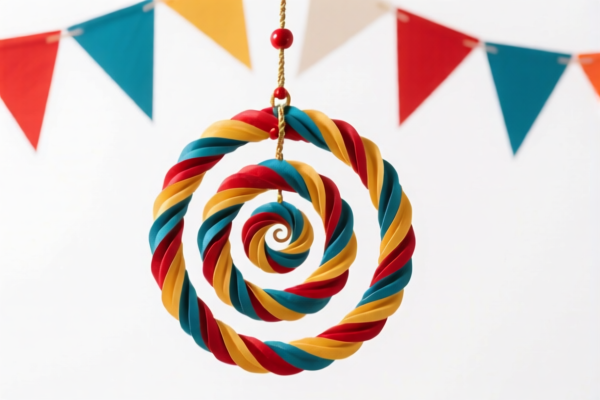


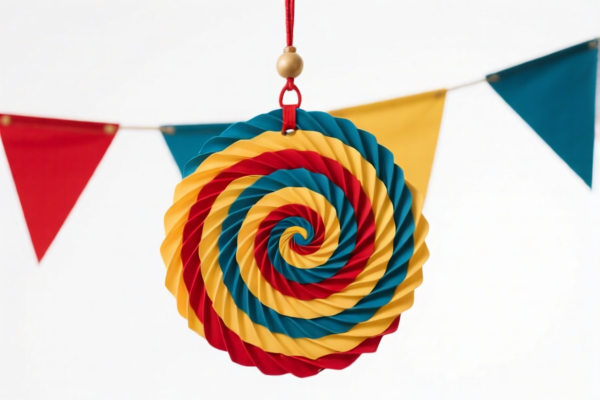
AI Analysis
🌀 Spiral Decorations (Spiral Hanging Ornaments)
🌐 HS Code Reference & Customs Clearance Guide | 2024/2025 Latest Tariff Analysis | Professional Clearance Strategy
📌 I. Product Definition & Classification: What Exactly Are "Spiral Decorations"?
Spiral decorations, often referred to as "springs," "twists," or "hanging spirals," are lightweight, non-structural decorative items used primarily for festive celebrations (Christmas, Halloween, carnivals) or general party ambiance. They are typically made of plastic, glass, or metallic materials and are designed to hang from ceilings, trees, or walls.
In international trade, their classification is highly sensitive to material composition. A minor change in material can shift the HS Code from a low-tax "Festival Item" to a high-tax "Glass/Plastic Article," significantly impacting duty costs.
⚠️ Key Distinction Point: - If made of Plastic and used for general decoration → Potentially 3926 or 9505 (Festival). - If made of Glass → Strictly 7018 (Glass articles). - Crucial Risk: The "122 Clause" (Section 301/Trade War tariffs) applies heavily to most categories unless specifically exempted.
📦 II. HS Code Classification Details (Detailed Breakdown)
Based on the provided data, here are the five possible classifications, ranked by strategic tax advantage and logical fit.
1️⃣ 🏆 Best Option: Festival/Entertainment Use (Lowest Tax)
| HS Code | Product Description | Applicability | Total Tax |
|---|---|---|---|
9505.90.60.00 |
Other festive, carnival, or other entertainment articles | General Party Decor: Non-specific to one holiday, used for general entertainment/decoration. | 10.0% |
9505.10.50.20 |
Christmas decorations | Specific Holiday: Specifically designed for Christmas (e.g., spiral tree toppers, Christmas-themed spirals). | 10.0% |
🔍 Strategic Note:
- Both codes fall under "Festive/Carnival Articles".
- Base Tariff: 0%, Section 301 (Add-on): 0%, 122 Clause (China Surcharge): 10%.
- Total Effective Rate: 10%.
- Why choose this? It offers the lowest tax burden (10%) compared to material-based classifications (15.3%-41.6%).
- Condition: You must prove the item's primary purpose is festive/entertainment, not just a generic plastic/glass item.
2️⃣ 🥈 Second Best: Plastic-Based Decoration
| HS Code | Product Description | Applicability | Total Tax |
|---|---|---|---|
3926.40.00.90 |
Other articles of plastic (Decorative) | Plastic Material: Made primarily of plastic, not specifically for festive use (generic decor). | 15.3% |
🔍 Strategic Note:
- Base Tariff: 5.3%, Section 301: 0%, 122 Clause: 10%.
- Total Effective Rate: 15.3%.
- Why choose this? If the item is plastic but not explicitly marketed for a specific festival (e.g., generic wedding centerpieces), this is the fallback.
- Risk: Lower than glass, but higher than festival items.
3️⃣ ⚠️ High Risk: Glass-Based Decoration
| HS Code | Product Description | Applicability | Total Tax |
|---|---|---|---|
7018.90.50.00 |
Other glass small articles | Glass Material: Made of glass (e.g., glass spirals). | 41.6% |
7018.10.50.00 |
Glass small articles (other) | Glass Material: Alternative glass classification. | 35.0% |
🔍 Strategic Warning:
- Glass items face severe tariffs.
-7018.90.50.00: Base 6.6% + Section 301 25% + 122 Clause 10% = 41.6%.
-7018.10.50.00: Base 0% + Section 301 25% + 122 Clause 10% = 35.0%.
- Why avoid this? Unless the product is undeniably glass and cannot be classified as a festival item, the tax burden is 3.5x higher than the plastic/festival options.
💰 III. Detailed Tariff Structure & Legal Basis
✅ Applicable Country: United States (US)
✅ Origin: China (CN)
✅ Key Surcharge: "122 Clause" (Refers to Section 301/Trade War additional duties on Chinese goods)
🎯 1. The "Festival" Route (HS 9505.90.60.00 / 9505.10.50.20)
| Component | Rate | Legal Basis |
|---|---|---|
| Base Tariff | 0.0% | General Rate of Duty |
| Section 301 (Add-on) | 0.0% | Exempt from certain China-specific add-ons (if applicable) |
| 122 Clause (China Surcharge) | 10.0% | Additional duty on Chinese-origin goods |
| TOTAL EFFECTIVE TAX | 10.0% | Most Cost-Effective |
📌 Explanation:
- The "122 Clause" is a shorthand for the 10% additional duty imposed on many Chinese imports.
- Crucially, these HS codes do NOT carry the 25% Section 301 tariff, resulting in a massive savings.
🎯 2. The "Plastic" Route (HS 3926.40.00.90)
| Component | Rate | Legal Basis |
|---|---|---|
| Base Tariff | 5.3% | General Rate of Duty |
| Section 301 (Add-on) | 0.0% | Exempt |
| 122 Clause (China Surcharge) | 10.0% | Additional duty on Chinese goods |
| TOTAL EFFECTIVE TAX | 15.3% | Moderate Cost |
🎯 3. The "Glass" Route (HS 7018.90.50.00)
| Component | Rate | Legal Basis |
|---|---|---|
| Base Tariff | 6.6% | General Rate of Duty |
| Section 301 (Add-on) | 25.0% | Section 301 List 4B |
| 122 Clause (China Surcharge) | 10.0% | Additional duty on Chinese goods |
| TOTAL EFFECTIVE TAX | 41.6% | High Cost - Avoid if possible |
🛠️ IV. Customs Clearance Recommendations (Practical Guide)
✅ 1. Documentation Checklist (Must-Haves)
To qualify for the lower tax rates (10% or 15.3%), you must provide robust evidence.
| Document | Requirement | Purpose |
|---|---|---|
| Product Photos | Clear images of the spiral, showing hooks, packaging, and festive context | Prove it is a "decoration" or "festival item" |
| Material Specification | Detailed bill of materials (BOM) | Confirm if it's plastic, glass, or mixed. Plastic is preferred for lower tax. |
| Marketing Materials | Brochures, website screenshots showing "Christmas," "Party," "Carnival" usage | Support classification under HS 9505 (Festival articles) |
| Commercial Invoice | Describe item as "Plastic Spiral Christmas Decoration" or "Party Spiral Ornament" | Avoid generic terms like "Glass Ornament" if it's plastic |
| Origin Certificate | Proof of Chinese origin | Required for calculating the 10% 122 Clause surcharge |
✅ 2. Classification Strategy (Decision Tree)
🔥 "Material First, Purpose Second!"
| Scenario | Recommended HS Code | Why? |
|---|---|---|
| Plastic + Christmas/Party Theme | 9505.10.50.20 or 9505.90.60.00 |
Best Case: 10% tax. Proves festive use. |
| Plastic + General Decor (No Holiday) | 3926.40.00.90 |
Good Case: 15.3% tax. Proves plastic material. |
| Glass + Any Theme | 7018.90.50.00 |
Worst Case: 41.6% tax. Glass is heavily taxed. |
| Mixed Material (Plastic + Metal Hook) | 9505.90.60.00 (if plastic is primary) |
Argue for festive use. The minor metal hook doesn't change the primary character. |
✅ 3. Critical Warnings & Pitfalls
| Mistake | Consequence | Solution |
|---|---|---|
| Mislabeling Plastic as Glass | Pay 41.6% instead of 15.3% | Ensure material specs clearly state "Plastic" or "PVC" |
| Claiming "Festival" for Generic Items | Customs rejection or audit | Only claim HS 9505 if marketing/promo material supports festive use |
| Ignoring the 122 Clause | Unexpected 10% surcharge | Budget for the 10% additional duty on ALL Chinese goods unless exempt |
| Using Generic "Decoration" Description | Ambiguity leading to higher duty | Use specific terms: "Spiral Plastic Christmas Ornament" |
🌍 V. Global Market Comparison (Quick Reference)
| Region | Recommended HS Code | Est. Tax (China Origin) | Key Requirement |
|---|---|---|---|
| 🇺🇸 USA | 9505.90.60.00 |
10% (Best) | Prove festive use; Accept 10% surcharge |
| 🇪🇺 EU | Varies by Material | 0% - 4.5% | CE Marking; No Section 301 equivalent |
| 🇨🇳 China | Varies | 0% - 10% | CCC Certification (if applicable) |
📌 Conclusion for US Market:
- Always aim for9505if the product is plastic and festive.
- Avoid7018unless it is genuinely glass and you have no choice.
- The 10% "122 Clause" is unavoidable for Chinese goods, but the 0% Section 301 on9505is the key to saving thousands of dollars.
📌 VI. Final Clearance Advice
- Pre-Classification Ruling: If importing large volumes, apply for an Advance Ruling from US CBP to confirm
9505.90.60.00is acceptable. - Marketing Alignment: Ensure your product listing, tags, and packaging explicitly mention "Christmas," "Party," or "Festival" to support the HS 9505 classification.
- Material Verification: Double-check that any "metal" parts are minimal (e.g., a tiny hook) and do not make the product "primarily metal."
🚀 Pro Tip:
"Plastic + Party = 10%. Glass = 41.6%. Choose wisely!"
By selecting the correct HS Code and providing the right documentation, you can reduce your tax liability by over 30% compared to incorrect classification.
✨ Professional Customs Clearance Starts with Accurate Classification!
💼 Every percentage point saved is pure profit!
Customer Reviews
About HS Code Classification
The Harmonized System (HS) is an internationally standardized nomenclature developed by the World Customs Organization (WCO) to classify traded products. Over 200 countries use the HS system as the basis for customs tariffs, trade statistics, and import/export regulations.
Each HS code follows a hierarchical structure:
- Chapter (2 digits) — Broad category of goods (e.g., Chapter 84: Machinery and Mechanical Appliances)
- Heading (4 digits) — More specific grouping within the chapter
- Subheading (6 digits) — Internationally standardized breakdown, used by all WCO member countries
- National subdivisions (8-10 digits) — Country-specific extensions for further classification, such as US HTSUS 10-digit codes
Correct HS code classification is essential for smooth customs clearance, accurate duty payment, and compliance with trade regulations. Misclassification can lead to customs delays, overpayment of duties, or penalties.
When importing from CN to US, the applicable tariff rates may include:
- Most-Favored-Nation (MFN) rate — The standard duty rate applied to WTO members
- General rate — Applied to countries without trade agreements
- Trade remedy duties — Additional tariffs such as Section 301 (anti-dumping), Section 232 (national security), or countervailing duties
The information provided on this page is for reference purposes only. For official classification, please consult with your local customs authority or a licensed customs broker.