split cowhide for building materials
CN → US| HS Code | Tariff Rate | Origin | Destination | Doc |
|---|---|---|---|---|
| 411190 | 0.0% | CN | US | Official Doc |
| 411290 | 0.0% | CN | US | Official Doc |
Product Images
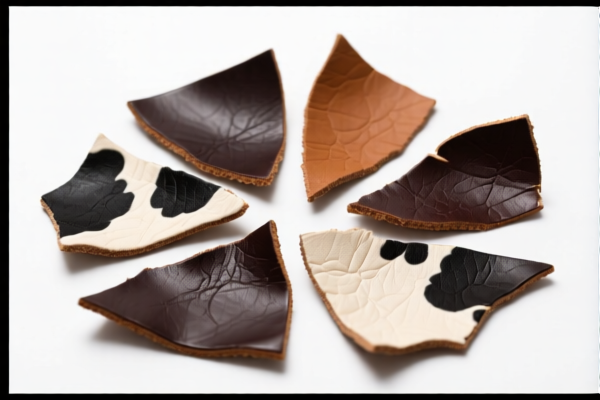
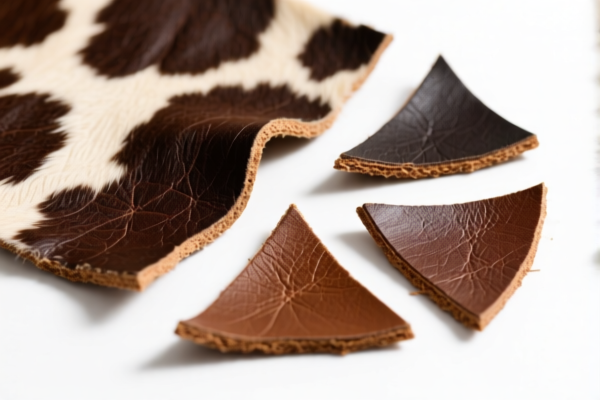
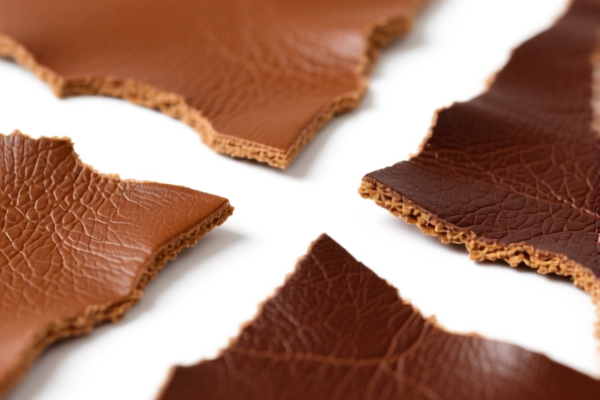
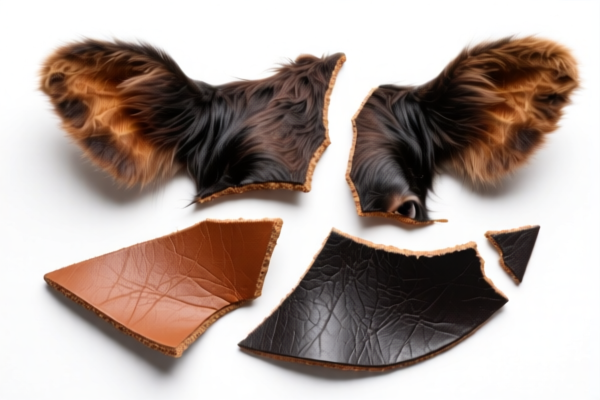
AI Analysis
🐄 Split Cowhide for Building Materials (Other Split Hides and Skins)
🌐 HS Code Reference & Customs Clearance Guide | 2026 Latest Tariff Analysis | Professional通关 Strategy
📌 I. Product Definition & Classification: What Exactly is "Split Cowhide"?
Split cowhide, in the context of building materials, refers to the inner layers (splits) of bovine hides that have been processed (split, dyed, finished) but not fully tanned into leather for apparel or upholstery. Instead, these skins are specifically prepared for use in construction, interior decoration, or composite building materials (e.g., faux leather panels, wall coverings, acoustic panels, or laminates).
In international trade, these goods are strictly categorized under Chapter 41 (Hides, Skins and Leather), specifically heading 4111 (Split hides) or 4112 (Other prepared skins), depending on the exact state of preparation.
⚠️ Critical Distinction:
- If the material is split cowhide (separated into layers) → HS 4111
- If the material is other prepared/preserved hide (not necessarily split, or further processed) → HS 4112
- Crucial Note: Both are designated for "use in building materials". This specific end-use triggers specific tariff treatment in many jurisdictions.
📦 II. HS Code Classification Details (2026 Latest Tariff Authority Comparison)
Based on the provided data, the two applicable HS Codes are:
| HS Code | Product Description | Key Characteristics | Application in Building Materials |
|---|---|---|---|
4111.90 |
Other split hides and skins, whether or not further prepared, for use in building materials | - Must be split (layered) - May be further processed (dyed, coated) - Specifically for construction/decoration |
- Faux leather wall panels - Acoustic panel backing - Decorative veneers |
4112.90 |
Other prepared or preserved hides and skins, not elsewhere specified, for use in building materials | - May include non-split hides - Preserved or tanned - Falls outside other specific building material codes |
- Whole-hide wall coverings - Decorative skin panels - Composite building substrates |
🔍 Key Insight:
- The phrase "for use in building materials" is the decisive factor.
- 4111.90 is for split layers.
- 4112.90 is for other prepared skins (e.g., whole hides, preserved skins) not covered by 4111.
- Do not classify these as general leather (e.g., 4107) if the primary intended use is construction. Misclassification can lead to significant duty differences.
💰 III. 2026 Tariff Rate Details (Including Surcharges & Policy Add-ons)
✅ Applicable Country: United States (US)
✅ Origin: China (CN)
✅ Effective Date: As of current 2026 trade policies
✅ Tax Status: ⚠️ ERROR / UNAVAILABLE
Note: The provided data indicates "Failed to retrieve tax information" and "Total Tax: Error". This is a critical red flag for customs clearance.
🎯 1. 4111.90 – Split Hides for Building Materials
| Item | Content |
|---|---|
| Base Tariff | Retrieval Failed |
| USITC Surcharge | Retrieval Failed |
| IEEPA Surcharge | Retrieval Failed |
| Total Tax | Error |
| De Minimis Eligibility | ❌ Likely Not Eligible (Animal products often excluded) |
| Legal Basis | USITC:4111.90 |
📌 Explanation:
- The system failed to retrieve the exact tax rate. This is common for niche products like "building material hides."
- Risk: Relying on "Error" is dangerous. You must manually verify with a licensed customs broker.
- Historical Context: Prior to recent surcharges, general split leather duties were often 0%–4.5%. However, with Section 301 and IEEPA surcharges, additional 25%–10% may apply depending on specific USITC rulings.
🎯 2. 4112.90 – Other Prepared Skins for Building Materials
| Item | Content |
|---|---|
| Base Tariff | Retrieval Failed |
| USITC Surcharge | Retrieval Failed |
| IEEPA Surcharge | Retrieval Failed |
| Total Tax | Error |
| De Minimis Eligibility | ❌ Likely Not Eligible |
| Legal Basis | USITC:4112.90 |
📌 Explanation:
- Similar to 4111.90, tax information is unavailable in the default system.
- Recommendation: Treat this as a high-risk classification. Do not assume 0% duty.
🛠️ IV. Customs Clearance Practical Advice (Battle-Tested Pitfall Guide)
✅ 1. Required Documentation Checklist (Non-Negotiable)
| Document | Must Provide | Explanation |
|---|---|---|
| ✅ Product Specification Sheet | ✔️ | Clearly state: "Split Cowhide," "Prepared for Building Materials," not for apparel. |
| ✅ Intended Use Declaration | ✔️ | Explicitly state: "Intended for use in wall panels/acoustic insulation/construction." |
| ✅ Material Composition Report | ✔️ | Confirm it is 100% bovine hide (no synthetic blends). |
| ✅ Photos (Clear & Labeled) | ✔️ | Show the split layer structure (if 4111) or whole hide (if 4112). |
| ✅ Commercial Invoice | ✔️ | Must match HS Code exactly. Avoid vague terms like "Leather." Use "Split Cowhide for Construction." |
| ✅ Certificate of Origin (CO) | ✔️ | To determine if any FTZ (Free Trade Zone) benefits apply (though unlikely for China-US). |
✅ 2. Declaration Tips (Key Mantras)
🔥 "Be Specific, Declare Use, Avoid 'Leather' Ambiguity!"
| Situation | Correct Declaration | Wrong Practice |
|---|---|---|
| Split hide for wall panels | 4111.90 – "Split cowhide, prepared, for building materials" | "Leather" → May be misclassified as apparel leather (higher duty or different rules) |
| Whole preserved hide for decor | 4112.90 – "Other prepared hides, for building materials" | "Hides" → Too vague; may trigger additional scrutiny |
| Mixed synthetic/leather | Not 4111/4112 → Check Chapter 39 or 59 | Claiming 100% hide when it's composite → Fraud risk |
✅ 3. Special Cases & Handling
| Situation | Handling Advice |
|---|---|
| Animal Product Restrictions | 🐄 USDA Inspection Required: All animal hides entering the US must be cleared by USDA APHIS. Ensure no foot-and-mouth disease risk. |
| Tanning Process | 🧪 Chemical Disclosure: If dyed or treated, declare chemicals to avoid EPA/CEPA violations. |
| "Building Materials" Definition | 🏗️ Support with Evidence: Provide photos of the final product (e.g., installed wall panel) to prove end-use. |
| Tax Retrieval Error | 🚨 Manual Verification: Since the system shows "Error," do not auto-accept. Contact a customs broker to verify current rates. |
🌍 V. Global Market Clearance Comparison (2026 Latest)
| Country/Region | Recommended HS Code | Estimated Duty | Certification Requirements | Notes |
|---|---|---|---|---|
| 🇺🇸 United States | 4111.90 / 4112.90 |
Verify Manually (System Error) | USDA APHIS Clearance | High scrutiny on animal products. |
| 🇨🇳 China | 4111.90 / 4112.90 |
~0%–4.5% (Check latest) | N/A | Generally low duty for raw/processed hides. |
| 🇪🇺 European Union | 4111.90 / 4112.90 |
~0%–6.5% | CE Marking (if synthetic blend) | Strict REACH compliance for chemicals. |
| 🇬🇧 United Kingdom | 4111.90 / 4112.90 |
~0%–6.5% | UKCA Marking | Post-Brexit rules may vary. |
| 🇯🇵 Japan | 4111.90 / 4112.90 |
~0%–5% | Phytosanitary Certificate | Required for animal products. |
📌 Conclusion:
- Animal products face the highest non-tariff barriers (phytosanitary, USDA).
- Tariff rates are relatively low globally, but US duties are uncertain due to system errors and potential surcharges.
- End-use declaration is critical to avoid misclassification as apparel leather.
📌 VI. Common Mistakes & Pitfall Guide (Blood Lessons)
❌ Mistake 1: Declaring "Leather" instead of "Split Cowhide for Building Materials"
👉 Consequence: Misclassification → Higher duties or delayed clearance due to USDA inspection requirements.
❌ Mistake 2: Ignoring the "Building Materials" end-use
👉 Consequence: Customs may reclassify as general leather → Different tariff rate and no duty preference.
❌ Mistake 3: Assuming 0% duty because it's "raw hide"
👉 Consequence: Penalties if surcharges (Section 301) apply. Always verify tax status.
❌ Mistake 4: Failing to provide USDA clearance documents
👉 Consequence: Seizure or return of goods. Animal products require strict phytosanitary certification.
✅ Correct Approach:
"Split Cowhide, Tanned & Dyed, Specifically Prepared for Use in Interior Wall Panels, Model XYZ, USDA Certified, HS 4111.90"
🎯 VII. Conclusion: Professional Declaration Saves Time & Money!
🎯 Remember Mantras:
🔹 "Split for Walls, Whole for Decor, Declare Use Clearly!"
🔹 "Tax Error? Don't Guess! Verify with a Broker!"
🔹 "Animal Products? USDA First, Duty Second!"
📌 Pro Tips:
- If your split cowhide is not from China, you may qualify for preferential tariffs under FTAs (e.g., USMCA for Canada/Mexico).
- Always request a Pre-Ruling from US Customs (CBP) if the tax status is uncertain.
- Keep all phytosanitary certificates ready for USDA inspection.
📣 Immediate Action:
📞 Contact a Licensed Customs Broker + Provide Product Photos + Verify Tax Status Manually
🚀 Ensure Smooth Clearance, Avoid Seizure, Maximize Profit!
✨ Professional Clearance Starts with Accurate Classification!
💼 Your Every Cent Counts!
Customer Reviews
About HS Code Classification
The Harmonized System (HS) is an internationally standardized nomenclature developed by the World Customs Organization (WCO) to classify traded products. Over 200 countries use the HS system as the basis for customs tariffs, trade statistics, and import/export regulations.
Each HS code follows a hierarchical structure:
- Chapter (2 digits) — Broad category of goods (e.g., Chapter 84: Machinery and Mechanical Appliances)
- Heading (4 digits) — More specific grouping within the chapter
- Subheading (6 digits) — Internationally standardized breakdown, used by all WCO member countries
- National subdivisions (8-10 digits) — Country-specific extensions for further classification, such as US HTSUS 10-digit codes
Correct HS code classification is essential for smooth customs clearance, accurate duty payment, and compliance with trade regulations. Misclassification can lead to customs delays, overpayment of duties, or penalties.
When importing from CN to US, the applicable tariff rates may include:
- Most-Favored-Nation (MFN) rate — The standard duty rate applied to WTO members
- General rate — Applied to countries without trade agreements
- Trade remedy duties — Additional tariffs such as Section 301 (anti-dumping), Section 232 (national security), or countervailing duties
The information provided on this page is for reference purposes only. For official classification, please consult with your local customs authority or a licensed customs broker.