sponge
CN → US| HS Code | Tariff Rate | Origin | Destination | Doc |
|---|---|---|---|---|
| 4016100000 | 35.0% | CN | US | Official Doc |
| 3926909989 | 22.8% | CN | US | Official Doc |
| 6117809570 | 32.1% | CN | US | Official Doc |
| 4016996050 | 37.5% | CN | US | Official Doc |
| 3926904590 | 13.5% | CN | US | Official Doc |
Product Images
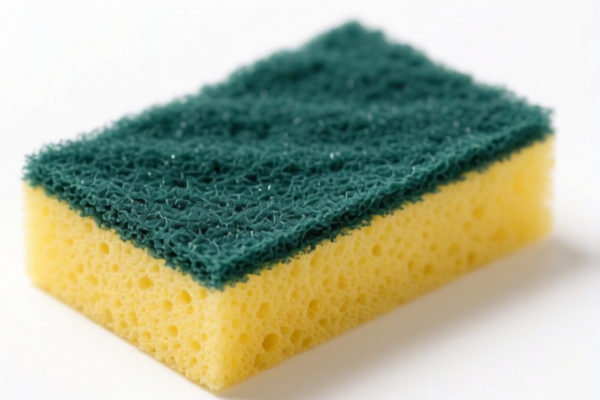
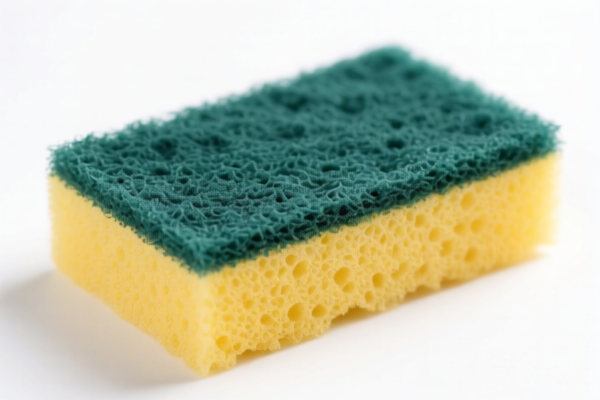
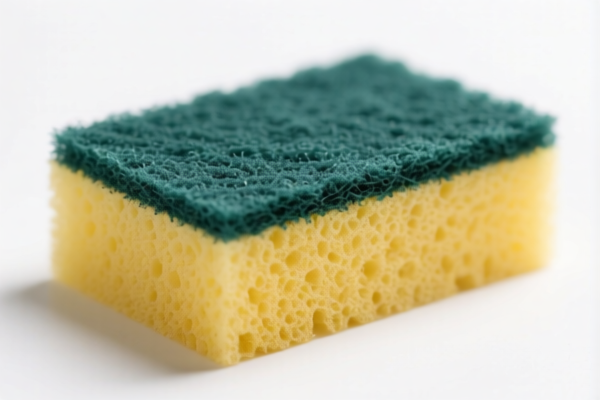
AI Analysis
🌿 Sponge (Sponge套 / Sponge Cover) – Comprehensive HS Code & Tariff Guide (2026 Update)
🌐 HS Code Classification & Customs Clearance Strategy | 2026 Latest Tariff Breakdown | Expert-Level Compliance Guide
📌 One: Product Definition & Classification – What Exactly Is a “Sponge” in Global Trade?
A sponge (especially in the form of a sponge套 or sponge cover) is a porous, soft, flexible material used for cleaning, cushioning, sealing, or protective purposes. In international trade, its classification depends heavily on material composition and functional form.
⚠️ Critical Insight:
- If the sponge is made from rubber (natural or synthetic) → likely rubber-based product
- If the sponge is made from polyurethane or plastic foam → classified as plastic
- If used as a clothing accessory (e.g., a sleeve, cover, or sock-like item) → may fall under textile or apparel parts🔍 Key Question:
Is it a standalone foam piece? Or a wearable or functional cover?
📦 Two: HS Code Classification Matrix (2026 Official Tariff List)
| HS Code | Product Description | Material Assumption | Form / Function | Tax Rate |
|---|---|---|---|---|
4016.10.00.00 |
Other vulcanized rubber products (e.g., sponge-like rubber foam) | Vulcanized rubber / synthetic rubber | Porous, flexible, non-specific use | 35.0% |
3926.90.99.89 |
Other plastic articles (foam/sponge-like) | Polyurethane or plastic foam | Foam, cushioning, sealing | 22.8% |
6117.80.95.70 |
Other accessories for clothing (e.g., sleeve, cover, sock) | Non-cotton, non-wool, non-man-made fiber | Wearable, textile-like cover | 32.1% |
4016.99.60.50 |
Other vulcanized rubber products (non-specific use) | Sulfurized rubber or elastomer | General-purpose rubber foam | 37.5% |
3926.90.45.90 |
Other plastic articles – seals, gaskets, washers | Plastic/resin foam | Used as sealant, pad, or ring | 13.5% |
✅ Important Note:
Only one HS code applies per shipment. The correct choice depends on material, function, and design intent.
💰 Three: 2026 Tariff Breakdown (U.S. Customs – China-Origin Goods)
✅ Applicable Country: United States (US)
✅ Origin: China (CN)
✅ Effective Date: November 10, 2025 (including subsequent imports)
🎯 1. 4016.10.00.00 – Other Vulcanized Rubber Products (Sponge-like Rubber)
| Item | Detail |
|---|---|
| Base Duty | 0.0% (ad valorem) |
| USITC Section 301 Duty | +25.0% (from U.S. Trade Act 301) |
| IEEPA Section 122 Duty | +10.0% (International Emergency Economic Powers Act) |
| Total Effective Duty | 35.0% |
| Tax Calculation | CIF Value × 35.0% |
| De Minimis Threshold | ❌ Not applicable (denied) |
| Legal Basis Path | IEEPA:9903.01.25 → IEEPA:9903.01.24 → USITC:4016.10.00.00 → FOOTNOTE:9903.88.01 |
📌 Why This Applies:
- The product is sponge-like, with a porous structure typical of vulcanized rubber foam
- No evidence of textile or plastic origin → ruled out as plastic
- Fits “other rubber products” under General Rule of Interpretation (GRI) 3(b)
🎯 2. 3926.90.99.89 – Other Plastic Articles (Foam/Sponge Type)
| Item | Detail |
|---|---|
| Base Duty | 5.3% |
| USITC Section 301 Duty | +7.5% |
| IEEPA Section 122 Duty | +10.0% |
| Total Effective Duty | 22.8% |
| Tax Calculation | CIF Value × 22.8% |
| De Minimis Threshold | ❌ Not applicable |
| Legal Basis Path | IEEPA:9901.25 → IEEPA:9903.01.24 → USITC:3926.90.99.89 → FOOTNOTE:9903.88.01 |
📌 Why This Applies:
- The sponge is made from polyurethane or synthetic foam
- It is not rubber-based, but a plastic foam product
- Used as cushion, seal, or padding → fits “other plastic articles”
- No conflict with textile or rubber categories
🎯 3. 6117.80.95.70 – Other Accessories for Clothing (Sponge Cover as Wearable)
| Item | Detail |
|---|---|
| Base Duty | 14.6% |
| USITC Section 301 Duty | +7.5% |
| IEEPA Section 122 Duty | +10.0% |
| Total Effective Duty | 32.1% |
| Tax Calculation | CIF Value × 32.1% |
| De Minimis Threshold | ❌ Not applicable |
| Legal Basis Path | IEEPA:9903.01.25 → IEEPA:9903.01.24 → USITC:6117.80.95.70 → FOOTNOTE:9903.88.01 |
📌 Why This Applies:
- The sponge is shaped like a sleeve, cover, or sock
- Designed to fit over limbs or body parts
- Made from non-textile, synthetic material → not cotton/wool/fiber
- Falls under "other accessories" in Chapter 61 (Apparel)
🎯 4. 4016.99.60.50 – Other Vulcanized Rubber Products (General Use)
| Item | Detail |
|---|---|
| Base Duty | 2.5% |
| USITC Section 301 Duty | +25.0% |
| IEEPA Section 122 Duty | +10.0% |
| Total Effective Duty | 37.5% |
| Tax Calculation | CIF Value × 37.5% |
| De Minimis Threshold | ❌ Not applicable |
| Legal Basis Path | IEEPA:9903.01.25 → IEEPA:9903.01.24 → USITC:4016.99.60.50 → FOOTNOTE:9903.88.01 |
📌 Why This Applies:
- The sponge is not clearly plastic, and not wearable
- Made from rubber or elastomer (common in industrial/sports foam)
- No specific use defined → falls under general rubber product
- Highest tax rate due to high USITC + IEEPA duties
🎯 5. 3926.90.45.90 – Other Plastic Articles – Seals, Gaskets, Washers
| Item | Detail |
|---|---|
| Base Duty | 3.5% |
| USITC Section 301 Duty | 0.0% |
| IEEPA Section 122 Duty | +10.0% |
| Total Effective Duty | 13.5% |
| Tax Calculation | CIF Value × 13.5% |
| De Minimis Threshold | ❌ Not applicable |
| Legal Basis Path | IEEPA:9903.01.24 → USITC:3926.90.45.90 → FOOTNOTE:9903.88.01 |
📌 Why This Applies:
- The sponge is used as a seal, washer, or gasket
- Designed for mechanical or industrial use
- Not wearable, not clothing accessory
- Lowest tax rate among all options
- No USITC 301 duty if used in non-consumer, non-electronic applications
🛠️ Four: Customs Clearance Best Practices (Pro Tips to Avoid Delays & Fines)
✅ 1. Documentation Checklist (Mandatory)
| Document | Required? | Purpose |
|---|---|---|
| ✅ Product Specification Sheet | ✔️ | Material, density, dimensions, intended use |
| ✅ Material Safety Data Sheet (MSDS) | ✔️ | Prove composition (rubber vs. plastic) |
| ✅ Product Photos (360° + close-ups) | ✔️ | Show structure, texture, form |
| ✅ Third-Party Test Report | ✔️ | ISO, RoHS, REACH, FDA (if applicable) |
| ✅ Commercial Invoice | ✔️ | Clearly state: “Sponge Cover for Industrial Use” or “Plastic Foam Pad” |
| ✅ Certificate of Origin (CO) | ✔️ | Critical for tariff eligibility |
| ✅ Packing List | ✔️ | Confirm no拆分申报 (no split declaration) |
✅ 2.申报技巧(Key Rules to Remember)
🔥 “Material First, Form Second, Use Last!”
| Scenario | Correct HS Code | Wrong Code | Risk |
|---|---|---|---|
| Sponge made of polyurethane foam, used as seal | 3926.90.45.90 |
4016.10.00.00 |
Higher tax, misclassification |
| Sponge shaped like a sleeve, worn on hand/foot | 6117.80.95.70 |
3926.90.99.89 |
Higher tax, wrong category |
| Sponge made of vulcanized rubber, no clothing use | 4016.99.60.50 |
3926.90.99.89 |
Higher tax, misclassification |
| Sponge is non-specific, porous, rubber-like | 4016.10.00.00 |
3926.90.45.90 |
Higher tax, wrong material |
✅ 3. Special Cases & Mitigation Strategies
| Situation | Recommended Action |
|---|---|
| Sponge used in medical devices | Apply for medical device exemption; submit FDA documentation |
| Sponge for industrial machinery | Use 3926.90.45.90 → only 13.5% tax |
| Sponge sold as fashion accessory | Use 6117.80.95.70 → 32.1% tax |
| Sponge with mixed material (rubber + plastic) | Declare based on dominant material; provide lab test |
| Sponge used in electronics (e.g., speaker pad) | Use 3926.90.45.90 → no USITC duty |
🌍 Five: Global Customs Comparison (2026)
| Country | Recommended HS Code | Base Duty | Additional Taxes | Notes |
|---|---|---|---|---|
| 🇺🇸 United States | Depends on material | 0–14.6% | +25% (USITC) +10% (IEEPA) | All 5 codes apply with high duties |
| 🇨🇳 China | 3926.90.99.89 or 4016.10.00.00 |
5% | None | No extra tariffs |
| 🇪🇺 European Union | 3926.90.99.89 |
0% (if CE) | None | No IEEPA/USITC |
| 🇦🇺 Australia | 3926.90.99.89 |
5% | None | No extra duties |
| 🇯🇵 Japan | 3926.90.99.89 |
0% | None | No additional taxes |
📌 Insight:
- Only the U.S. applies IEEPA + USITC tariffs on Chinese-origin sponges
- China, EU, Japan, Australia have no extra duties → ideal for export
📌 Six: Common Mistakes & How to Avoid Them
❌ Mistake 1: Using 3926.90.99.89 for a rubber-based sponge
👉 Result: Higher tax, misclassification → penalties, delays
❌ Mistake 2: Declaring a wearable sponge sleeve as 3926.90.45.90
👉 Result: Wrong category → audit risk, fines
❌ Mistake 3: Not providing material test report
👉 Result: Customs may reclassify → higher duty, seizure
❌ Mistake 4: Splitting shipment into “sponge + cover”
👉 Result: Each item taxed separately → up to 89.5% total!
✅ Correct Declaration Example:
“Plastic Foam Pad, 50mm x 30mm x 10mm, for Industrial Sealing, Made of Polyurethane, Model XYZ, RoHS & REACH Certified”
🎯 Seven: Final Verdict – Choose Wisely, Save Big
🔹 Lowest Tax:
3926.90.45.90→ 13.5% (if used as seal/washer)
🔹 Highest Tax:4016.99.60.50→ 37.5% (if rubber-based, non-specific)
🔹 Wearable? →6117.80.95.70→ 32.1%
🔹 No USITC? → Use3926.90.45.90→ only 13.5%!✅ Pro Tip:
If your sponge is used in machinery, electronics, or industrial tools, use3926.90.45.90→ save up to 24% in duties!
📣 Call to Action: Get Ahead of the Game!
📞 Contact a U.S. Customs Broker + Submit Product Photos + Request HS Code Pre-Ruling
🚀 Get your HS code confirmed before shipment – avoid delays, fines, and rejections!
✨ Smart Classification = Lower Costs = Faster Clearance!
💼 Your product’s fate is in the HS code. Get it right the first time.
📌 Bonus Tip:
If your sponge is produced in Vietnam, Mexico, Thailand, or Malaysia, you may qualify for IEEPA/USITC duty exemptions → 0% or 5% total duty!
🚨 Don’t wait until customs holds your shipment!
✅ Pre-approve your HS code today!
🎯 Your Sponge. Your Tax. Your Future.
📦 Accurate Classification. Zero Surprises. Maximum Profit.
Customer Reviews
About HS Code Classification
The Harmonized System (HS) is an internationally standardized nomenclature developed by the World Customs Organization (WCO) to classify traded products. Over 200 countries use the HS system as the basis for customs tariffs, trade statistics, and import/export regulations.
Each HS code follows a hierarchical structure:
- Chapter (2 digits) — Broad category of goods (e.g., Chapter 84: Machinery and Mechanical Appliances)
- Heading (4 digits) — More specific grouping within the chapter
- Subheading (6 digits) — Internationally standardized breakdown, used by all WCO member countries
- National subdivisions (8-10 digits) — Country-specific extensions for further classification, such as US HTSUS 10-digit codes
Correct HS code classification is essential for smooth customs clearance, accurate duty payment, and compliance with trade regulations. Misclassification can lead to customs delays, overpayment of duties, or penalties.
When importing from CN to US, the applicable tariff rates may include:
- Most-Favored-Nation (MFN) rate — The standard duty rate applied to WTO members
- General rate — Applied to countries without trade agreements
- Trade remedy duties — Additional tariffs such as Section 301 (anti-dumping), Section 232 (national security), or countervailing duties
The information provided on this page is for reference purposes only. For official classification, please consult with your local customs authority or a licensed customs broker.