sponge eraser
CN → US| HS Code | Tariff Rate | Origin | Destination | Doc |
|---|---|---|---|---|
| 6307102028 | 22.8% | CN | US | Official Doc |
| 4016990500 | 20.9% | CN | US | Official Doc |
| 4016100000 | 35.0% | CN | US | Official Doc |
| 6307102030 | 22.8% | CN | US | Official Doc |
Product Images
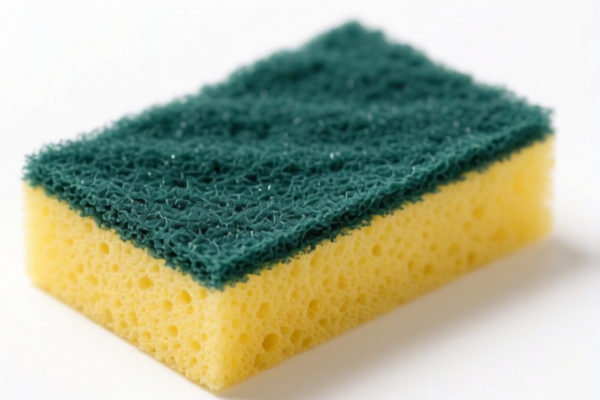
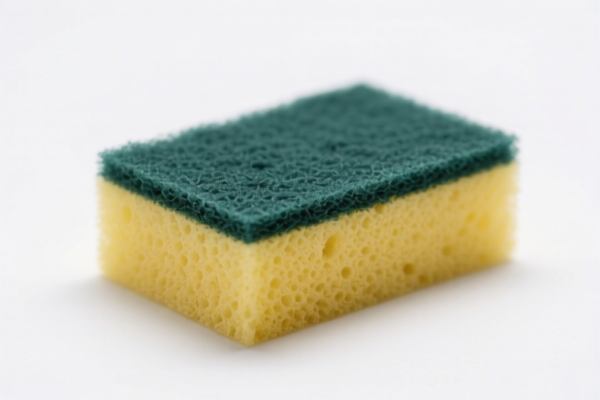
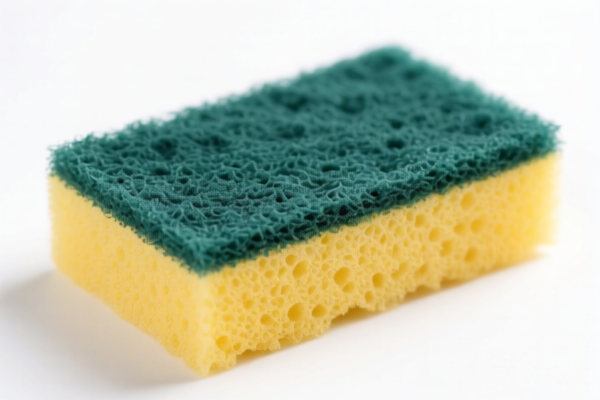
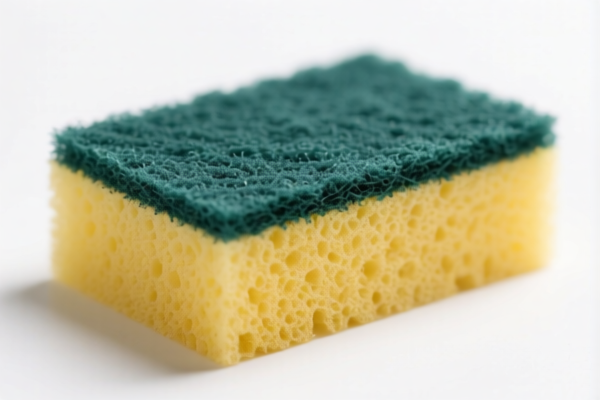
AI Analysis
🧽 Sponge Erasers: HS Code Classification & 2026 Customs Clearance Guide
🌐 HS Code Reference & Customs Clearance Guide | 2026 Latest Tariff Analysis | Professional Clearance Strategy
📌 I. Product Definition & Classification: Do You Really Understand "Sponge Erasers"?
Sponge Erasers are cleaning tools primarily used for household or industrial scrubbing. In international trade, they are often misclassified due to ambiguity between their material (rubber/PU) and their function (cleaning cloth/rags).
They are generally categorized into two main types based on customs interpretation: 1. Textile/Non-Woven Cleaning Cloths: Made from synthetic fibers, sponge-like texture, classified as "Cleaning Cloths." 2. Rubber/Polyurethane Products: Made from vulcanized rubber or polyurethane foam, classified as "Rubber Articles."
⚠️ Key Distinction Point:
- If the product is fabric-based, knitted, or non-woven with a sponge-like feel → Classified as Cleaning Cloth (6307.10)
- If the product is solid foam rubber, polyurethane, or vulcanized rubber → Classified as Rubber Article (4016)
📦 II. HS Code Classification Details (2026 Latest Tariff Authority Comparison)
Based on the provided data, here are the four possible HS Code classifications for Sponge Erasers:
| HS Code | Product Description | Application Scenario | Material Type |
|---|---|---|---|
6307.10.20.28 |
Cleaning cloth / wiping product, non-cotton, other materials | Household cleaning, non-woven or synthetic fiber sponge | ✅ Non-cotton textile/synthetic |
4016.99.05.00 |
Other vulcanized rubber articles, household items | Household cleaning supplies made of PU or rubber foam | ✅ Vulcanized Rubber / PU |
4016.10.00.00 |
Cellular rubber products (sponge rubber) | Products with honeycomb porous structure made of rubber/synthetic rubber | ✅ Cellular/Honeycomb Rubber |
6307.10.20.30 |
Other cleaning cloths, sponge-like fiber products | General cleaning rags, no material conflict with "other cleaning cloth" | ✅ Sponge-like Fiber |
🔍 Key Reminder:
- Textile-based sponges (soft, fabric-like) fall under 6307.10.
- Rubber/PU-based sponges (foam, elastic, porous) fall under 4016.
- Misclassification can lead to significant tariff differences (e.g., 22.8% vs. 35.0%).
💰 III. 2026 Latest Tariff Rate Details (Including Additional Taxes & Policy Surcharges)
✅ Applicable Country: United States (US)
✅ Origin: China (CN)
✅ Effective Time: Current tariffs apply (including Section 301 and IEEPA surcharges)
🎯 1. 6307.10.20.28 & 6307.10.20.30 —— Cleaning Cloths (Textile/Synthetic Fiber)
| Item | Content |
|---|---|
| Base Tariff | 5.3% (ad valorem) |
| Section 301 Surcharge | +7.5% |
| Section 122 Tariff | +10% |
| Total Tariff | 22.8% |
| Tax Calculation | CIF Value × 22.8% |
| De Minimis Exemption | ❌ Not Eligible (High total tariff exceeds typical de minimis thresholds for risk) |
| Legal Basis Path | USITC:6307.10.20.28 → Section 301: 7.5% → Section 122: 10% |
📌 Explanation:
- "Base Tariff 5.3%": Standard Most-Favored-Nation (MFN) rate for cleaning cloths.
- "Section 301 Surcharge 7.5%": Additional tariff on Chinese goods under U.S. Trade Law Section 301.
- "Section 122 Tariff 10%": Additional tariff under Section 122 of the Trade Expansion Act of 1962 (national security/import relief).
- Total: 22.8%. This is the most common classification for soft, fabric-based sponge erasers.
🎯 2. 4016.99.05.00 —— Other Vulcanized Rubber Articles (Household)
| Item | Content |
|---|---|
| Base Tariff | 3.4% |
| Section 301 Surcharge | +7.5% |
| Section 122 Tariff | +10% |
| Total Tariff | 20.9% |
| Tax Calculation | CIF Value × 20.9% |
| De Minimis Exemption | ❌ Not Eligible |
| Legal Basis Path | USITC:4016.99.05.00 → Section 301: 7.5% → Section 122: 10% |
📌 Explanation:
- "Base Tariff 3.4%": Lower base rate for rubber articles.
- "Section 301 Surcharge 7.5%": Same as above.
- "Section 122 Tariff 10%": Same as above.
- Total: 20.9%. This is the lowest total tariff among the four options, suitable for polyurethane (PU) foam sponges.
🎯 3. 4016.10.00.00 —— Cellular Rubber Products (Honeycomb Structure)
| Item | Content |
|---|---|
| Base Tariff | 0.0% |
| Section 301 Surcharge | +25.0% |
| Section 122 Tariff | +10% |
| Total Tariff | 35.0% |
| Tax Calculation | CIF Value × 35.0% |
| De Minimis Exemption | ❌ Not Eligible |
| Legal Basis Path | USITC:4016.10.00.00 → Section 301: 25.0% → Section 122: 10% |
📌 Explanation:
- "Base Tariff 0.0%": No duty for cellular rubber articles.
- "Section 301 Surcharge +25.0%": Higher than the 7.5% rate for other rubber articles. This applies to specific rubber subheadings.
- "Section 122 Tariff 10%": Same as above.
- Total: 35.0%. This is the highest tariff option. Apply only if the product is strictly defined as honeycomb-structured rubber.
🛠️ IV. Customs Clearance Practical Advice (Real-World Pitfall Avoidance Guide)
✅ 1. Required Document Checklist (Essential)
| Document | Required | Description |
|---|---|---|
| ✅ Product Specification Sheet | ✔️ | Material composition (e.g., 100% PU, Non-woven polyester), density, size |
| ✅ Product Photos | ✔️ | Clear images showing texture, packaging, and any labels |
| ✅ Material Safety Data Sheet (MSDS) | ✔️ | For chemical composition verification (especially for PU/Rubber) |
| ✅ Commercial Invoice | ✔️ | Clearly state "Sponge Eraser" or "Cleaning Sponge" |
| ✅ Packing List | ✔️ | Weight and quantity details |
| ✅ Bill of Lading/Air Waybill | ✔️ | Standard shipping documents |
✅ 2. Declaration Tips (Key Mnemonic)
🔥 "Material Defines Code, Function Supports it, Tax Saves the Day!"
| Scenario | Correct HS Code | Risk if Misclassified |
|---|---|---|
| Soft, fabric-like sponge (Non-woven/Synthetic) | 6307.10.20.28 or 6307.10.20.30 |
If declared as Rubber → 35.0% (Overpay) |
| PU Foam Sponge (Elastic, porous, rubber-like) | 4016.99.05.00 |
If declared as Cloth → 22.8% (Underpay, potential penalty) |
| Honeycomb Rubber Block (Industrial/Structural) | 4016.10.00.00 |
If declared as Other Rubber → 20.9% (Overpay) |
| Mixed Package (Cloth + Sponge) | Primary Function Test | Split declaration may trigger 89.5% on parts |
📌 Note:
- PU Sponges are often classified under4016.99.05.00(20.9%) for cost savings.
- Non-Woven Sponges fall under6307.10.20.28(22.8%).
- Avoid4016.10.00.00unless you are certain the product is a specialized honeycomb rubber article, as the 35.0% total tax is significantly higher.
✅ 3. Special Handling Cases
| Case | Handling Suggestion |
|---|---|
| OEM Custom Sponges | Provide design drawings and material specs to justify HS Code. |
| Sponge + Plastic Handle | Declare as Single Item (Sponge Eraser). Do not split. |
| Sponge with Cleaning Solution | May be classified as Chemical Product or Kit. Different HS Code applies. |
| Industrial vs. Household | If used for industrial scrubbing, still likely 4016 or 6307, but provide use-case proof. |
🌍 V. Global Major Market Clearance Comparison (2026 Latest)
| Country/Region | Recommended HS Code | Tariff | Certification Requirements | Notes |
|---|---|---|---|---|
| 🇺🇸 USA | 4016.99.05.00 or 6307.10.20.28 |
20.9% - 22.8% | None | High tariffs due to Section 301 & 122 |
| 🇨🇳 China | 6307.10.20.28 or 4016.99.05.00 |
5% - 6.5% | CCC (if applicable) | Lower duties, no surcharges |
| 🇪🇺 EU | 6307.10.90 or 4016.93 |
0% - 4% | CE (if applicable) | Favorable rates |
| 🇦🇺 Australia | 6307.10.00 or 4016.93 |
5% | RCM | Moderate duties |
| 🇯🇵 Japan | 6307.90.00 or 4016.93 |
0% - 3% | PSE (if applicable) | Low duties |
📌 Conclusion:
- USA is the most expensive market due to Section 301 (7.5% or 25%) and Section 122 (10%) surcharges.
- China, EU, Japan offer much lower duty rates.
- Recommendation: For US imports, carefully choose between4016.99.05.00(20.9%) and6307.10.20.28(22.8%) based on material composition.
📌 VI. Common Errors & Pitfall Avoidance (Lessons Learned)
❌ Error 1: Declaring PU Foam Sponges as "Cleaning Cloth" (6307.10)
👉 Consequence: If Customs determines it’s rubber, you may face retroactive duties or penalties for misclassification. However, 4016.99.05.00 (20.9%) is lower than 6307.10.20.28 (22.8%), so this might be a cost-saving move if legally justifiable.
❌ Error 2: Declaring Non-Woven Sponges as "Rubber Articles" (4016)
👉 Consequence: Customs will reject the declaration. You must reclassify to 6307.10, causing delays.
❌ Error 3: Ignoring Section 122 Tariff
👉 Consequence: All four HS Codes in the data include a 10% Section 122 surcharge. Failing to include this in cost calculations leads to unexpected expenses.
❌ Error 4: Using "Sponge" without specifying material
👉 Consequence: Customs may assign the highest possible duty (35.0%) for uncertainty.
✅ Correct Approach:
"PU Foam Cleaning Sponge, Household Use, 10x10cm, Made of Polyurethane" →
4016.99.05.00
"Non-Woven Synthetic Fiber Cleaning Cloth, Sponge Texture" →6307.10.20.28
🎯 VII. Conclusion: Professional Declaration Saves Money!
🎯 Remember the Mnemonic:
🔹 "PU Foam is Rubber (4016), Non-Woven is Cloth (6307)."
🔹 "Section 122 Adds 10%, Section 301 Adds 7.5% or 25%."
🔹 "Check Material First, Then Choose Code, Avoid 35% Pitfall!"
📌 Pro Tip:
- If your sponge is Polyurethane (PU) Foam, aim for 4016.99.05.00 (20.9%) – the lowest total tax.
- If your sponge is Non-Woven Fabric, you must use 6307.10.20.28 (22.8%).
- Avoid 4016.10.00.00 unless it’s a specialized honeycomb rubber product, as the 35.0% total tax is too high.
📣 Immediate Action:
📞 Contact a professional customs broker + Provide Material Spec Sheet + Apply for HS Code Ruling if unsure.
🚀 Let your sponge erasers clear customs smoothly, reduce costs, and boost profits!
✨ Professional Customs Clearance Starts with Accurate Classification!
💼 Every cent of your cost deserves precise calculation!
Customer Reviews
About HS Code Classification
The Harmonized System (HS) is an internationally standardized nomenclature developed by the World Customs Organization (WCO) to classify traded products. Over 200 countries use the HS system as the basis for customs tariffs, trade statistics, and import/export regulations.
Each HS code follows a hierarchical structure:
- Chapter (2 digits) — Broad category of goods (e.g., Chapter 84: Machinery and Mechanical Appliances)
- Heading (4 digits) — More specific grouping within the chapter
- Subheading (6 digits) — Internationally standardized breakdown, used by all WCO member countries
- National subdivisions (8-10 digits) — Country-specific extensions for further classification, such as US HTSUS 10-digit codes
Correct HS code classification is essential for smooth customs clearance, accurate duty payment, and compliance with trade regulations. Misclassification can lead to customs delays, overpayment of duties, or penalties.
When importing from CN to US, the applicable tariff rates may include:
- Most-Favored-Nation (MFN) rate — The standard duty rate applied to WTO members
- General rate — Applied to countries without trade agreements
- Trade remedy duties — Additional tariffs such as Section 301 (anti-dumping), Section 232 (national security), or countervailing duties
The information provided on this page is for reference purposes only. For official classification, please consult with your local customs authority or a licensed customs broker.